In this issue:
Good work doesn’t always get recognized
Why Leaders Need to Get Better at Advocacy
The STAR Technique: How it works
Applying the STAR Technique in Practice
The 4 Prompts Method
Real-world leadership scenarios where STAR helps
Common pitfalls and how to avoid them
Final Thoughts
Good work doesn’t always get recognized
A few years ago, I came out of a calibration discussion (with 20+ other managers) with a nagging feeling.
One of my team members, who I had recommended for promotion, had come up in the conversation. He was a Sr. Software Engineer, and I strongly believed that he was already performing at the next level of Principal Engineer. He wasn’t just technically strong, he also demonstrated strong technical leadership, communication, and ownership.
But as the discussion unfolded, I felt that my case wasn’t landing as strongly as it should have. Ultimately, he was dropped from the promotee list as “not yet ready”.
After the meeting, I kept replaying the meeting in my head, thinking “I didn’t do justice to his work.” I thought I could have presented more compelling examples and story to support his case.
I’ve seen this play out with other managers, too.
One of the responsibilities of a manager is not just to support their team while they do the work. It’s also to advocate for them when they’re not in the room.
And that’s where many good leaders fall short.
Even though they genuinely care about their team members, they reply on “vague praise” when the moment actually needs structured evidence.
That’s when I started appreciating the value of a simple framework that most people only associate with interviews: The STAR Technique.
In this article, we will discuss how you can use this simple technique to advocate for yourself and your team with clarity, credibility and confidence.
Why Leaders Need to Get Better at Advocacy
Contrary to popular assumption, I believe that one of the most important parts of leadership happens when your team members are not in the room.
That’s when you’re often asked to make a judgment call.
Is this person ready for more?
Did this project really create impact?
Should this person get the opportunity, the visibility, or the promotion?
And in those moments, good intentions are not enough.
You may know that your team member is strong, that he stepped up, and made a difference. But if you can’t explain that clearly and convincingly, it will likely not make an impact on the others in the room.
Here’s the uncomfortable truth:
A lot of strong work gets undervalued not because it lacked substance, but because it lacked advocacy.
And this doesn’t just apply to your team. It applies to you, too.
There will be moments when you need to make the case for your own readiness, your own impact, or your own growth. Maybe it’s a bigger role, or a more challenging assignment, or even a seat at a more strategic table.
In all of these moments, whether for your team or yourself, the challenge is the same:
You need to translate ‘great work done’ into an ‘impactful story’ that people can understand, trust, and remember.
That’s where the STAR Technique becomes useful.
The STAR Technique: How it works
The STAR Technique is a simple framework for turning experience into a clear, compelling story. It gives structure to your examples so that other people can quickly understand what happened, what was at stake, what was done, and why it mattered.
It has four elements or parts:
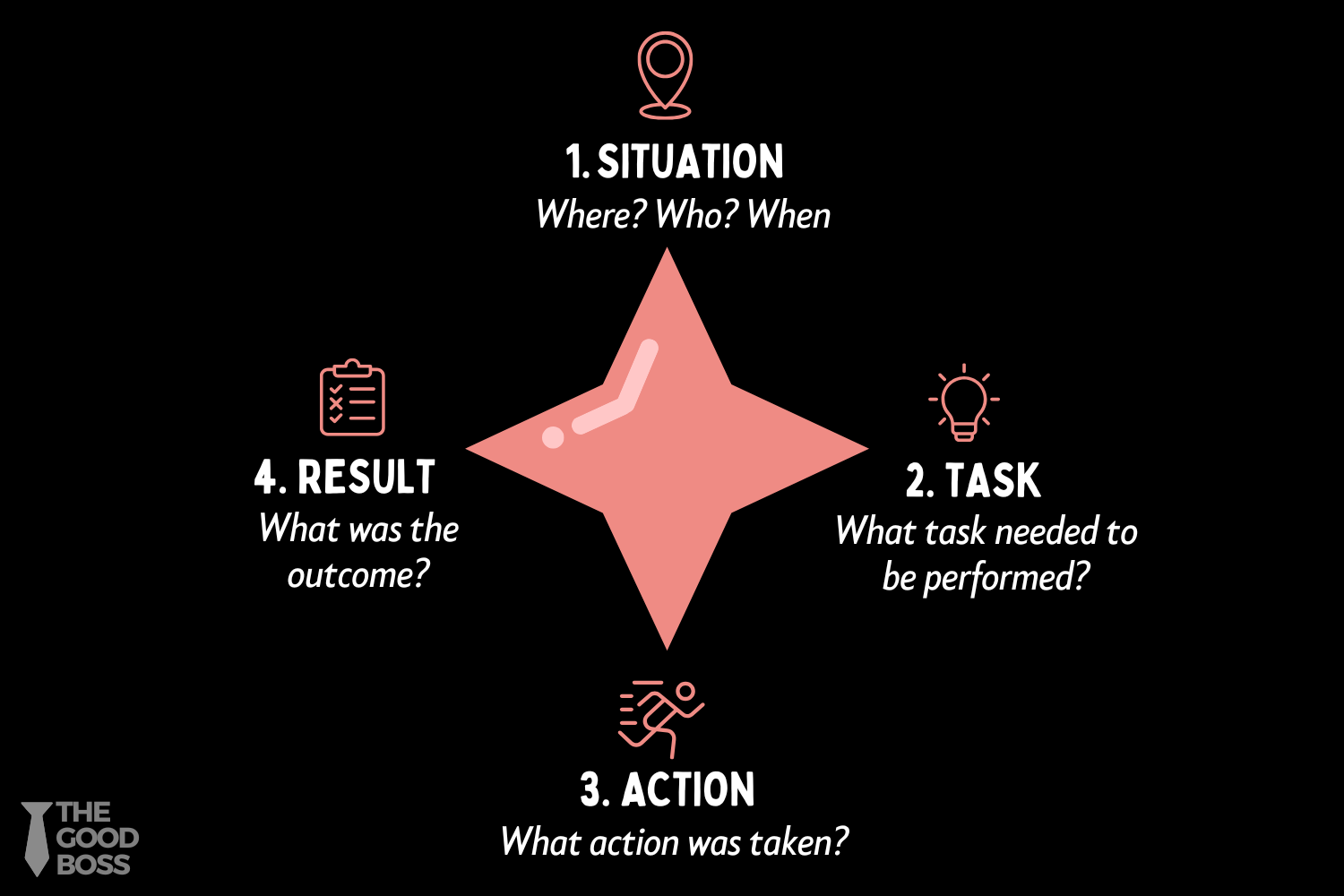
Situation
Start by setting the stage. What was happening, and why did it matter? Keep this to the point, with just enough context for the listener to understand the environment you or your team member were operating in.
Task
Next, make the challenge clear. What needed to be done? What problem were you trying to solve, or what responsibility were you stepping into? This is where you define the stakes.
Action
Then, get specific about what was actually done. What steps did you or your team take? This is where many leaders stay too high level. Be clear about the actions that made the difference, especially your or your team member’s role in it.
Result
Finally, highlight the outcome. What changed because of those actions? What improved, got delivered, or moved forward? Include numbers, anecdotes, or any other evidence to back this up. This is the part people remember.
As you can tell from the flow above, STAR helps you move from opinion to evidence. And that’s what makes it so powerful when you need to advocate for yourself or your people. People can challenge your opinions, but it’s way harder to challenge hardcore evidence.
Applying the STAR Technique in Practice
For the rest of this article, we will focus our attention on putting the STAR technique into practice in your own organization. As we do that, don’t forget to download the STAR Technique Worksheet.
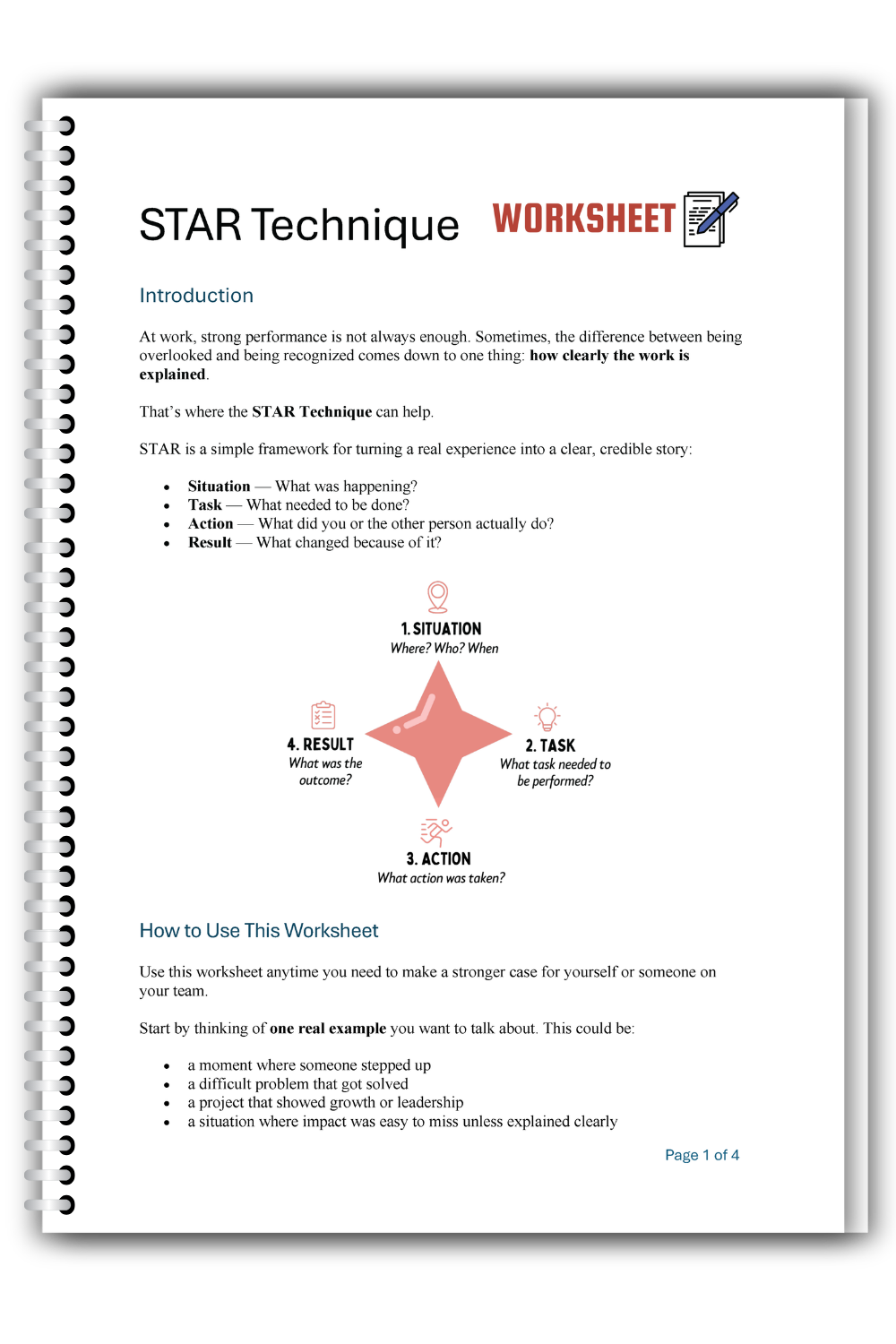
Use this worksheet to:
Turn a real moment into a clear, specific story worth advocating for
Make sure the impact, not just the effort, comes through
Practice saying it out loud before you’re in the room that matters
How to download the worksheet
This worksheet is part of the Worksheets Collection, available to all paid subscribers to The Good Boss.
👉🏻 Upgrade to paid now and get instant access to the entire collection, including this worksheet.
If you prefer the standalone worksheet, you can purchase it from here.
The 4 Prompts Method