

In this issue:
Part 1: Understanding Dreamboxing
What is Dreamboxing?
How Dreamboxing Works
Part 2: Applying Dreamboxing
The 3 Steps to Stop Dreaming and Start DOING
Real-World Leadership Scenarios
Dreamboxing Worksheet
Part 3: Going From Here
Common Pitfalls and How to Avoid Them
Recommended Resources
Final Thoughts
✨
You’ve seen it before.
Your team is fired up, and the energy is real and palpable. Big, bold ideas are flying across the room.
The vision you set out to the team is bold, and the direction is clear. You walk out of the room thinking, “We’re finally on to something.”
And then… nothing.
Weeks pass, everyone’s busy, but somehow the big idea fades into the background. No one is talking about it anymore.
What happened?
Here’s the harsh truth: Dreaming is easy. Doing is hard.
This is a pattern I’ve seen again and again in my teams, in other leaders, and in myself as well. I’ve been the person with the big vision who couldn’t get it over the line. I’ve seen other leaders burn themselves out doing something that didn’t matter.
Over the years, I found that what’s missing is a mindset shift - a structured approach to turn big ideas into actual results.
So I built a model to help with that mindset shift. I call it Dreamboxing.
It’s a system to help leaders move through three critical phases: Dream → Drive → Do.
Not just once. But over and over.
In this post, I will dive deep into this framework, and help you lock your dreams and finally start doing.
Ready to dive in? Let’s go!

Part 1: Understanding Dreamboxing
Let’s start with the core idea behind Dreamboxing: what it is, and why it matters.
Let me clarify: this isn’t a new productivity hack or a fancy framework.
It’s a simple mindset shift I had to make myself after too many bold ideas lost track, and too many projects got stuck halfway.
If you’ve ever felt like you had the vision, but struggled to make it stick, this is for you.
What is Dreamboxing?
Dreamboxing is a mental model that helps you turn vision into disciplined execution.
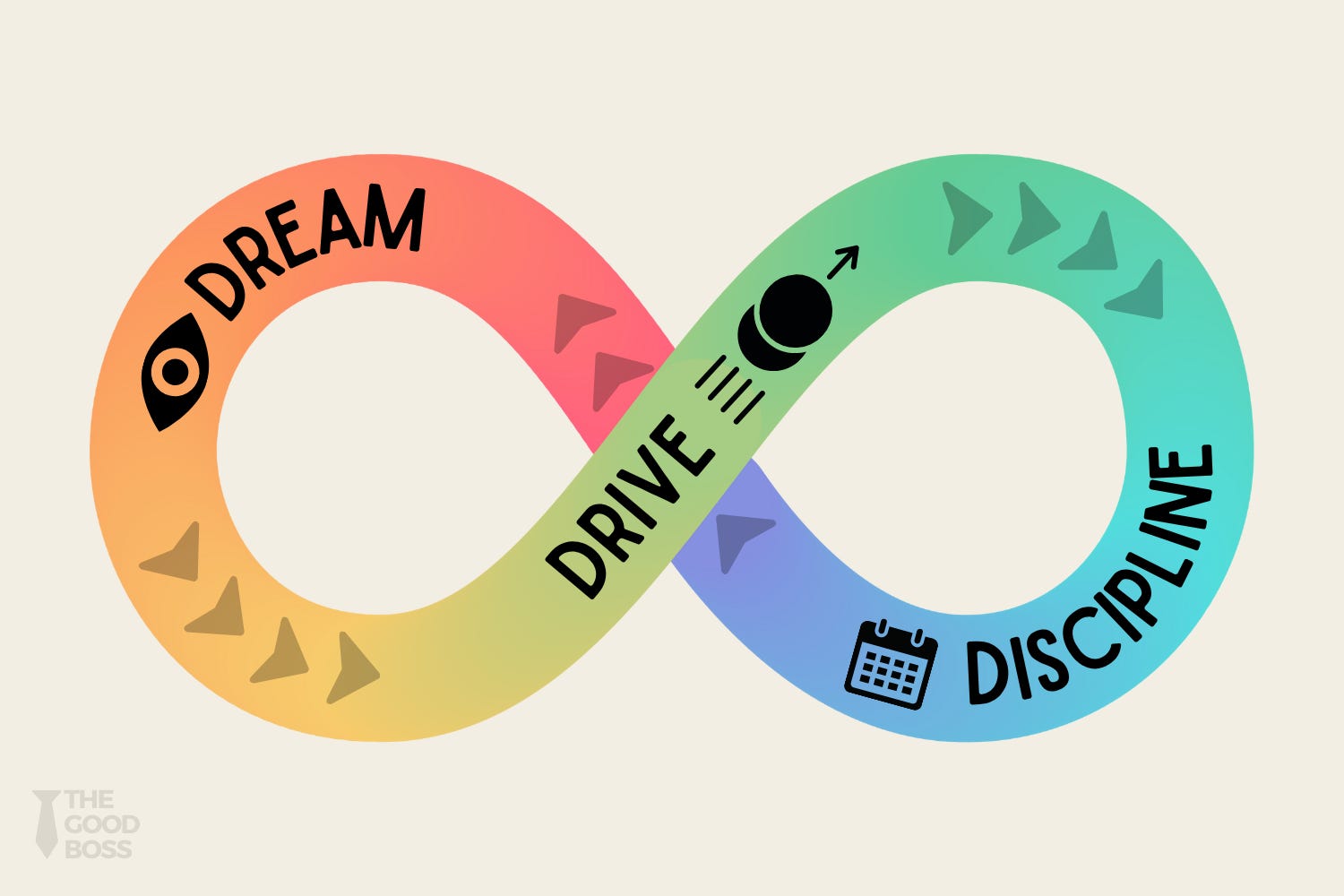
It breaks the process down into three stages:
Dream: The idea, the ambition, the thing you want to create
Drive: The energy, the push, the initial surge that gets things moving
Do (aka Discipline): The system, the habits that lead to results
Most leaders are naturally good at one or two of these. Some are great a coming up with bold ideas, while others are great task masters. Very few are good at all three.
Dreamboxing helps you build awareness:
What phase are you in right now?
Where are you stuck?
What do you need to move forward?
And more importantly, it helps you cycle through these stages intentionally, instead of getting stuck in one.
How Dreamboxing Works
Okay, so now let’s dive into each of the three stages, one by one.
1. Dream
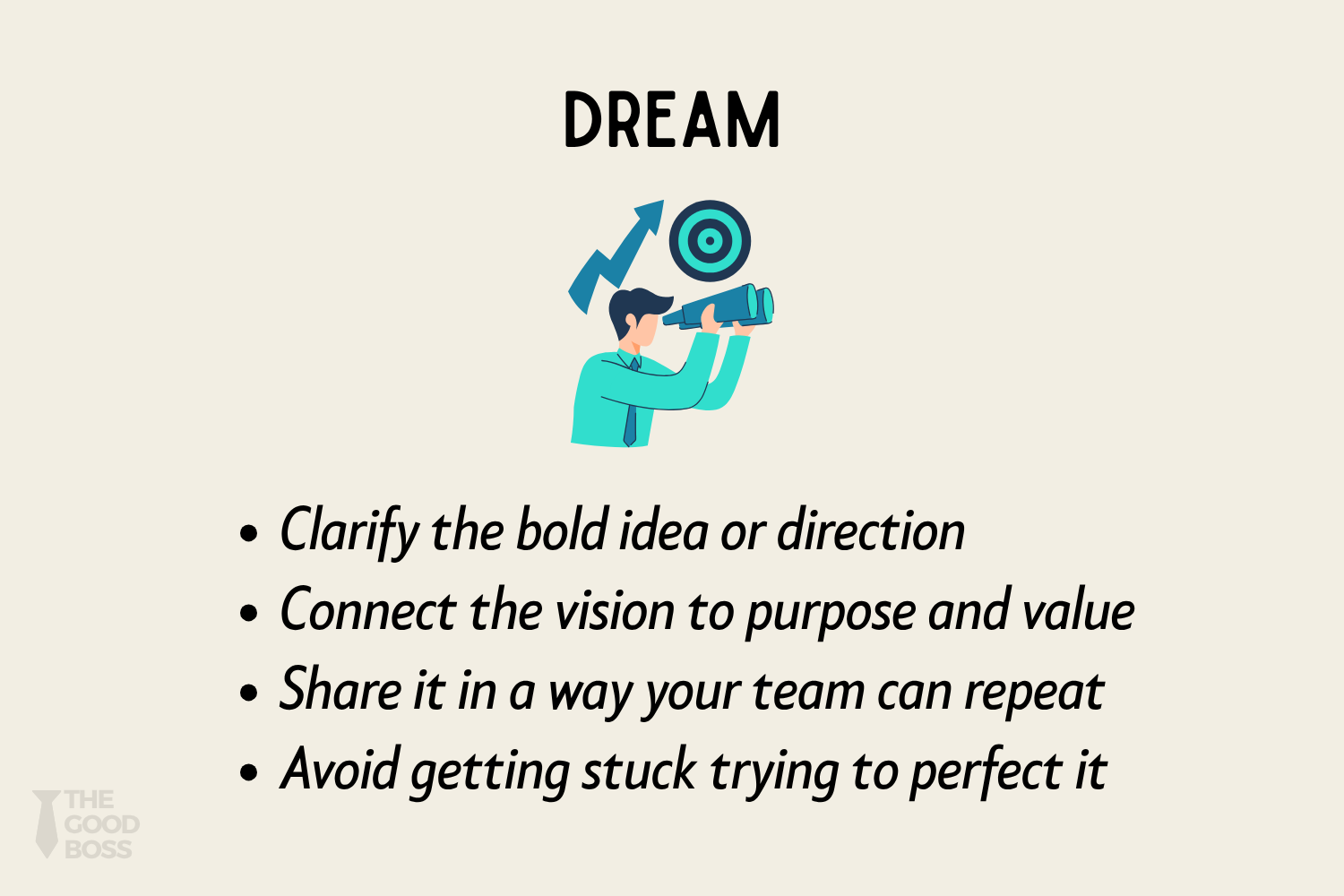
I once had this bold idea for a product that would completely change how people interacted with documents on the go.
It wasn’t obvious at the time. In fact, most people thought it was too early. But I could see the shift coming. I could imagine what it would feel like to zoom, swipe, and annotate documents on a small screen, with a smooth, intuitive experience.
The vision was clear in my head, and I was genuinely excited about what we could build. So I started refining it, trying to perfect it before taking the first step. And eventually, the energy started to fade.
That’s the danger of the Dream phase. You feel like you’re making progress, but you’re just circling the idea.
Signs you’re stuck in Dream:
You keep revising the same strategy or vision doc, but nothing’s shipping.
You feel productive, but can’t point to actual progress.
You’re waiting for “buy-in” or “alignment” that never seems to arrive.
You’re hesitant to start because it’s “not quite ready yet.”
The team is nodding, but not moving.
👉🏼 The dream doesn’t need to be flawless. It just needs to be sharp enough to move.
2. Drive
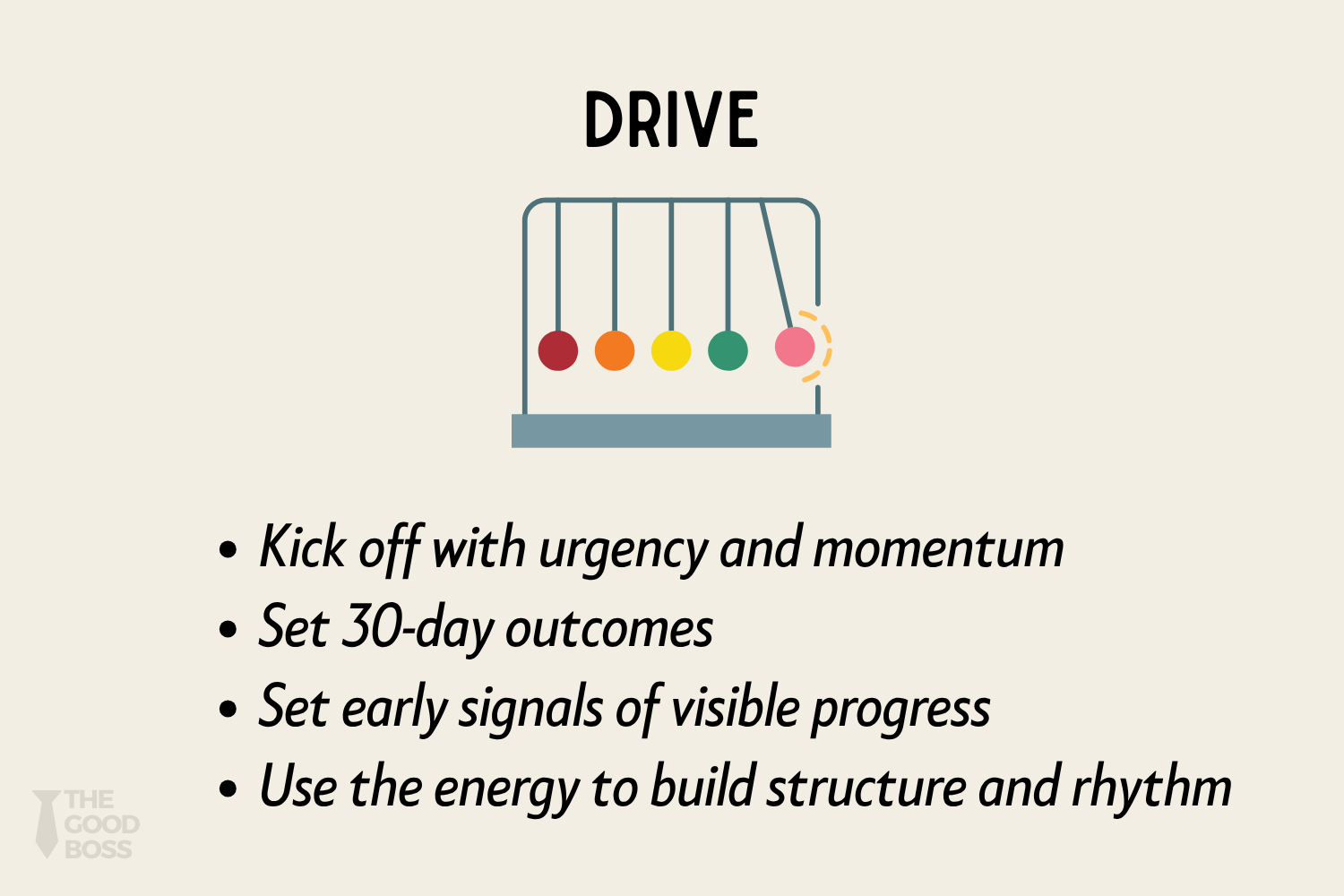
When I finally kicked off the project, things took off fast.
The team was excited, and started building prototypes and reacting to early feedback. We iterated quickly, and we were all excited.
But after a few months, we hit a wall.
We had speed, but no structure, and our progress started to feel scattered. The team was busy, but we weren’t making progress. We were stuck in the Drive phase.
Signs you’re stuck in Drive:
Everyone’s busy, but no one can explain what’s actually been delivered.
There’s constant motion, but no system or review.
You’re reacting instead of executing.
Deadlines are slipping, but no one’s pausing to reflect.
The initial energy is fading, and frustration is rising.
👉🏼 Motion does not always equal progress.
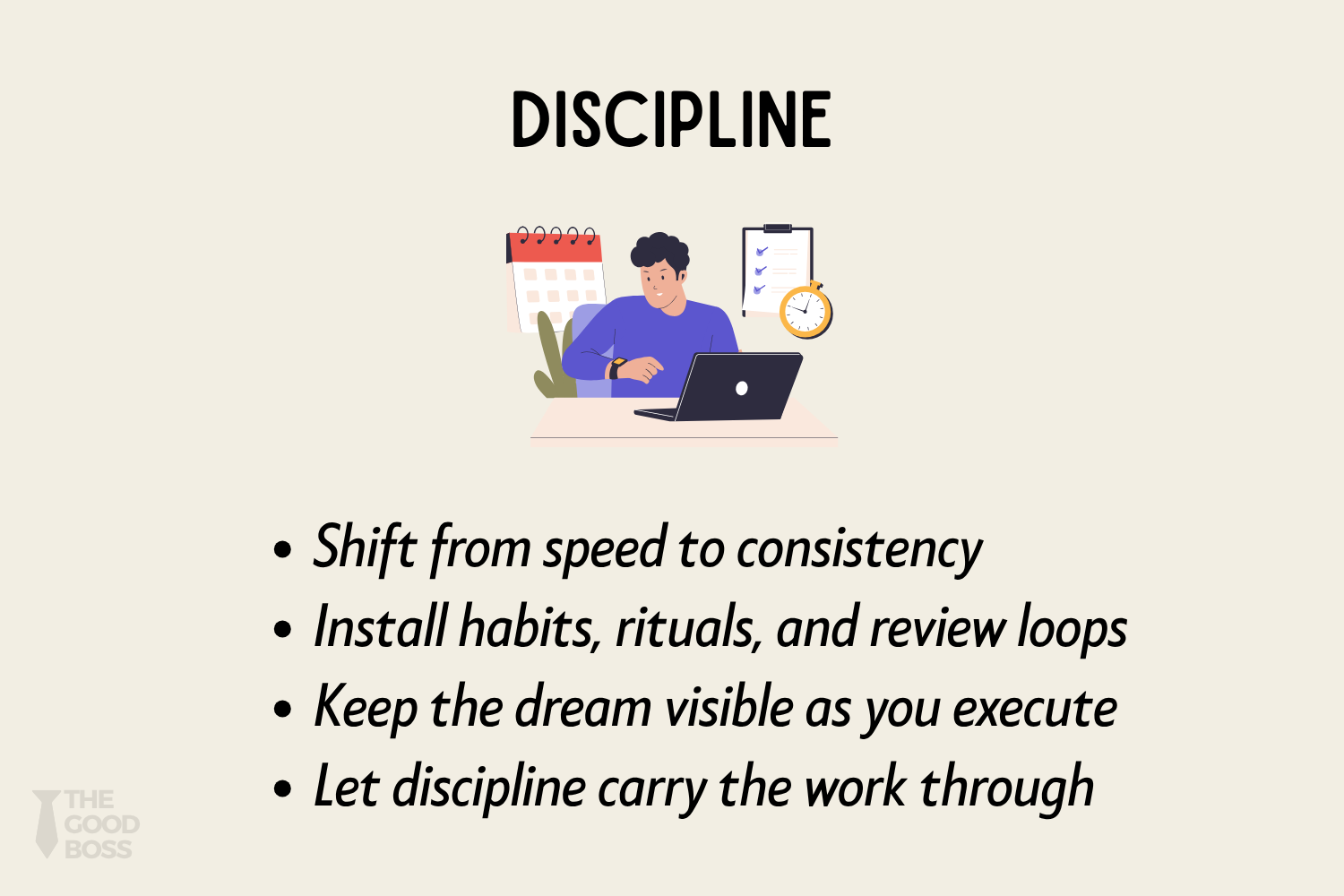
3. Do (Discipline)
The most important leadership lessons I’ve learned didn’t come during the exciting kickoff phase. They came deep into long, quiet projects, the ones that take months or years to complete, and where progress is rarely visible from the outside.
This is the Do phase.
It’s where you build systems, repeat habits, and stick with the plan even when it feels like you’re not moving fast.
For me, that looked like running the same meeting every Monday, reviewing the same data sets every week, and checking in with stakeholders regularly, even when there was nothing new to say.
The Do phase is critical, but it can’t run on its own.
Signs you’re stuck in Do:
The work is happening, but no one remembers why it matters.
You’re running on autopilot - systems exist, but no one’s questioning them.
The team is disengaged, even though everything “looks fine” on paper.
It’s been weeks since you revisited the original vision or outcome.
There’s delivery, but no sense of purpose.
👉🏼 Making progress is only useful when it’s in the right direction.
P.S. If you’re enjoying reading this article, I’ll appreciate it if you would take 2 seconds and hit the ❤️ button and share/restack 🔁 it with others who might find it helpful. You can also subscribe to The Good Boss for more posts like this every week. Thank you! 🙏
Part 2: Applying Dreamboxing
Understanding the model is one thing. Living it day after day, across projects, across teams, is another.
Dreamboxing only works when you put it into practice. The most effective leaders I’ve seen don’t just move through Dream → Drive → Do once per year. They repeat the cycle intentionally, across every major initiative, across every quarter, sometimes even across every week.
In this section, we’ll look at how you can apply Dreamboxing in your role as a leader.
First, we’ll break down the 3 Steps to Apply Dreamboxing (that is, stop dreaming and start doing), a simple process that helps you move from grand dreams to consistent results.
Then, we’ll walk through a few real-world leadership scenarios where this mindset shift makes all the difference.
Finally, we’ll introduce the Dreamboxing Worksheet, a practical, repeatable tool to help you translate vision into habits in your own leadership role.
Whether you’re leading a team, launching a new strategy, or just trying to bring your own ideas to life, this part is for you.
👉🏼 If you’d like to see how these tools, scenarios and worksheets fit together as part of a broader practice system, you can explore the ⚙️ The Good Boss Practitioner space - where leaders apply these frameworks in real situations.
The 3 Steps to Stop Dreaming and Start DOING
You’ve seen the theory. Now let’s talk practice.
Here’s how you actually move through the Dreamboxing loop in your day-to-day leadership so you can stop dreaming and start doing.