
🧱 Lego Serious Play: How to Turn Quiet Teams into Thinking Teams (and Have Fun Along the Way)
A hands-on way to surface ideas, tensions, and risks from your team

Have you ever left a meeting knowing your team had more to say, but didn’t say it?
I’ve been there many times.
I had asked for input, and a few team members spoke, but most didn’t.
On the meeting notes, we looked aligned. But as I left the meeting, something didn’t feel right. I could sense the undercurrents:
Ideas were sitting just below the surface
Some concerns didn’t get spoken out loud
Some tensions never got expressed
At first, I thought they weren’t prepared, or they just didn’t care enough to speak up.
But I was terribly wrong, because the reality was that I hadn’t created the space or environment for the team to speak up with their ideas or their concerns.
Which leads to the real question.
So how do you surface all those ideas from your team, especially the ones no one says out loud?
In this week’s issue, we’re going to look at 🧱 Lego Serious Play, a fun yet powerful method leaders use to make team thinking visible.
And yes, if you or your team already like LEGO, there’s a good chance this will be enjoyable too. I promise.
⚙️ Practitioner Resources: This framework includes the Lego Serious Play Worksheet and the Lego Serious Play Mind-map.
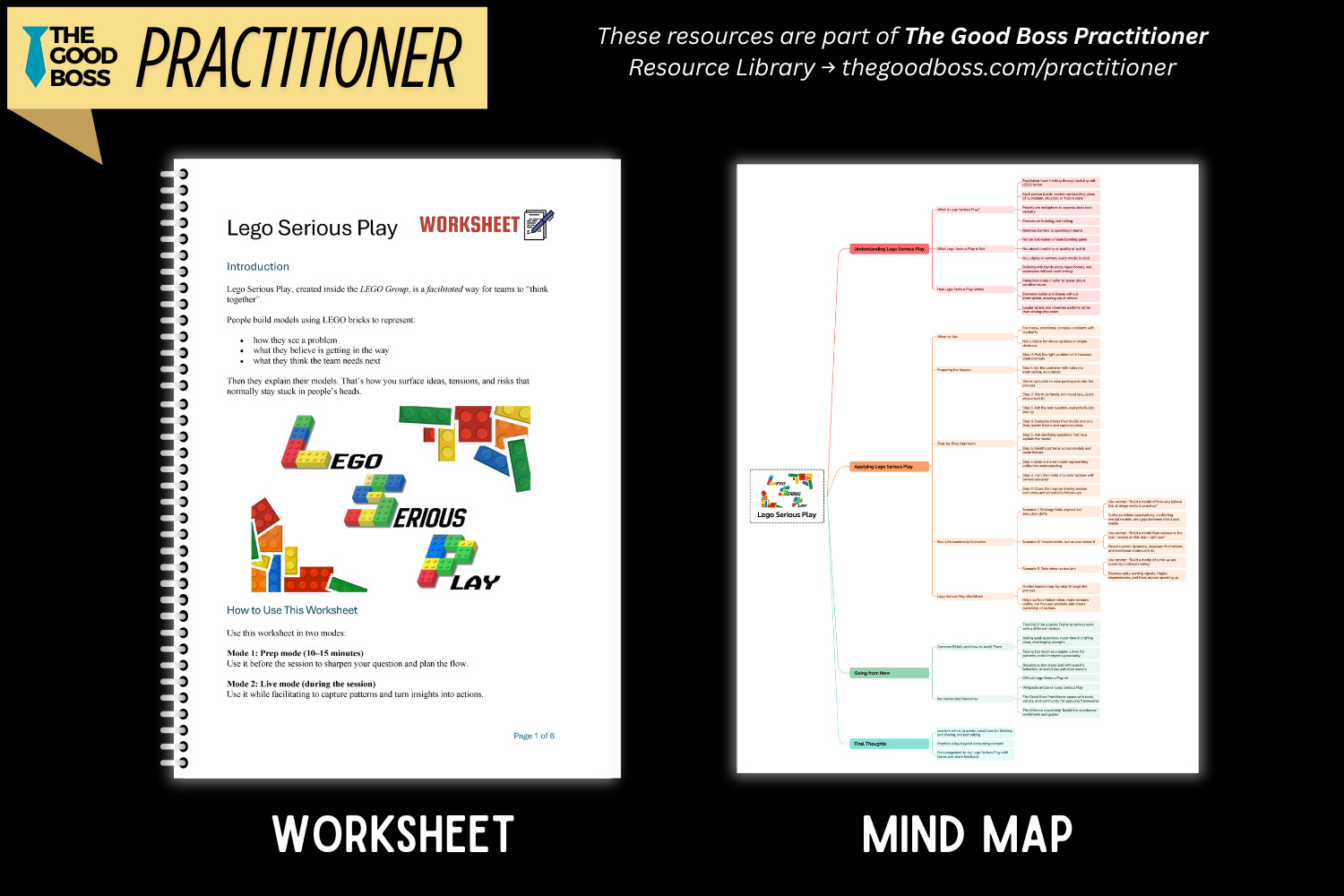
Existing Practitioners: Download these from your Resource Library.
Not a member yet? Join the ⚙️ Practitioner Ecosystem to unlock these resources, along with full Substack paid access, The Leader’s Playbook, the complete Practice Worksheets library, System Posters & Mind-maps, and the private practitioner community.
Part 1: Understanding Lego Serious Play
Before we talk about how to use this with your team, it helps to slow down and understand what this method really is. And just as important, what it isn’t.
What is Lego Serious Play?
Lego Serious Play, created inside the LEGO Group, is a facilitated way for teams to “think together”.
And they do this by building, not talking.
Each person uses LEGO bricks to build models that represent how they see a problem, a situation, or a future state. Those models act as metaphors. People then explain what they built, and why.
The shift is subtle, but powerful.
Instead of asking people to find the right words, you give them something to point at.
And removes the barriers of speaking that many team members face at work.
What Lego Serious Play is not
This matters, especially for skeptical leaders.
Even though it can be fun, this is not an icebreaker or a team bonding game.
And for those of you screaming “but I’m not creative”, this is not about being creative with LEGO either.
It doesn’t matter how “nice” your build is - nobody’s going to judge your creation, and there are no winners. (Phew!)
Every model is valid, because every model reflects how someone is thinking.
That’s the point.
How Lego Serious Play works
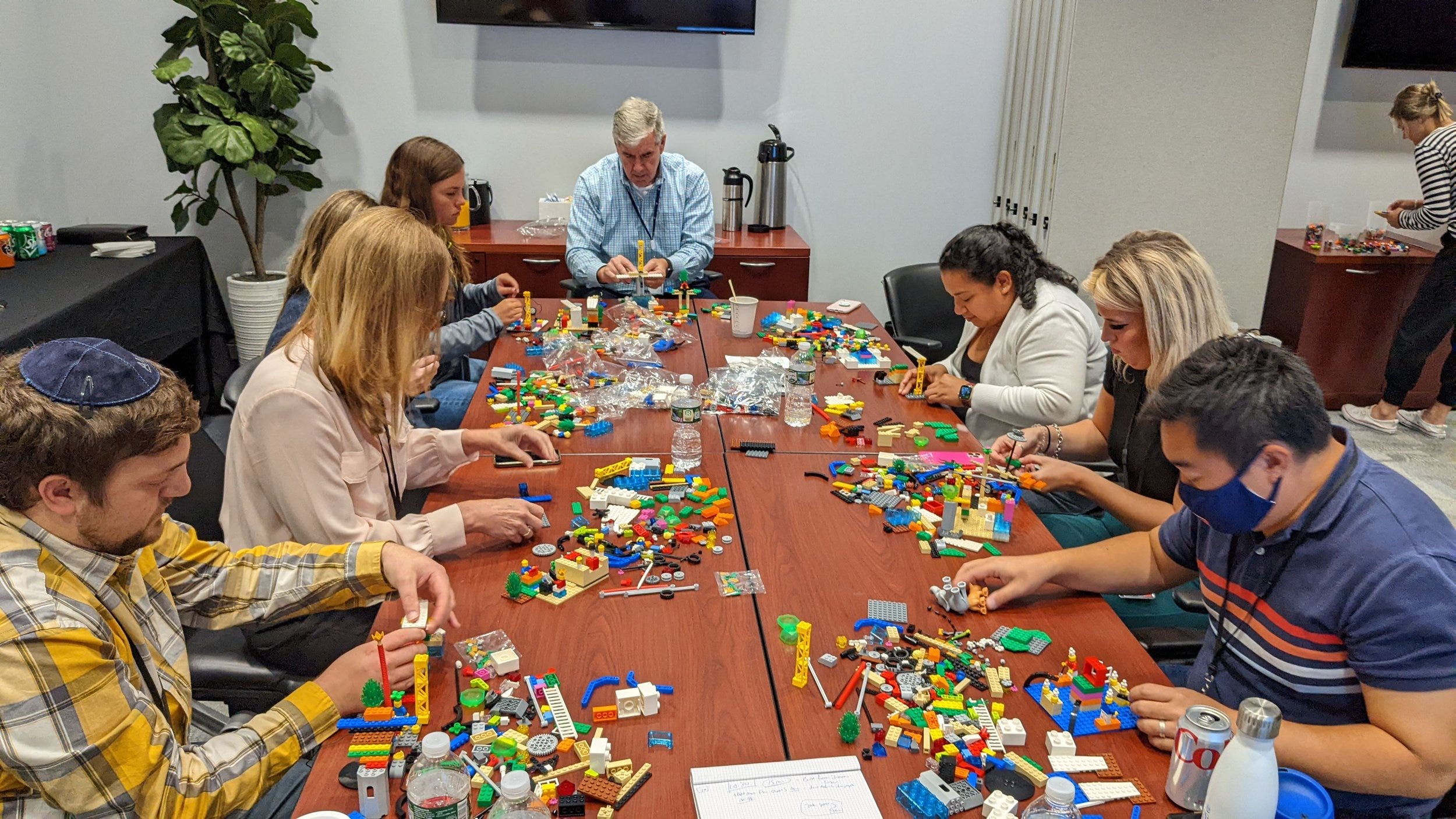
The method rests on a few simple ideas.
First, your hands know things your mouth doesn’t.
When people build with their hands, they don’t have time to overthink. So, what shows up is often more honest and “real”.
Second, metaphors make it safer to speak.
It’s easier to say, “This part of the system feels fragile,” when you can point to a shaky tower instead of calling someone out.
Third, everyone gets equal airtime.
Each person builds, explains, and noone interrupts or talks over each other. This guarantees that you will get something from every single person, not just the loud ones.
As a leader, this changes your role.
Contrary to a typical meeting, as a leader, you are no longer “driving the discussion”.
You’re simply observing and listening for patterns.
Enjoying the read? Hit the ❤️ button and share/restack 🔁 it with others who might find it helpful. You can also subscribe to The Good Boss for more posts like this every week. Thank you! 🙏
Part 2: Applying Lego Serious Play
The goal of Lego Serious Play is to surface ideas and suggestions from your team.
Many times, these could be ideas they didn’t know how to say, or risks they never felt comfortable adding to slides.
In this section, you’ll learn how to apply Lego Serious Play in your role as a leader.
Here’s what we’re going to walk through.
We’ll start with a simple, repeatable way to run a Lego Serious Play session, without overthinking it.
Then we’ll look at real leadership situations where this method works better than discussion.
Finally, we’ll make it practical with a Lego Serious Play Worksheet and the Lego Serious Play Mind-map you can reuse with your own team.
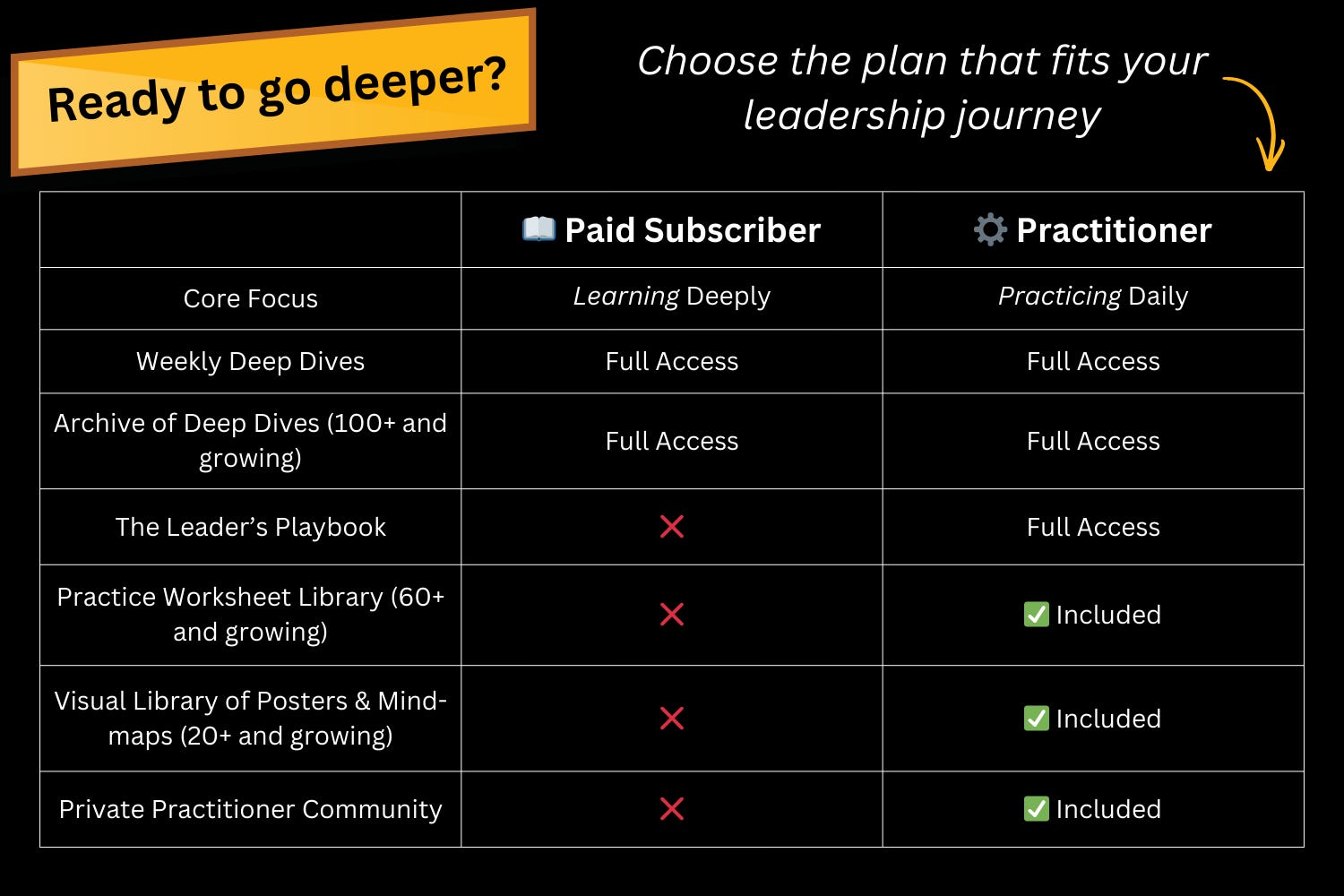
If you’re not already a member, choose your path:
⚙️ Become a Practitioner - Explore the Full Ecosystem (Best Value 💎) → Best for leaders who want to not only learn, but also practice daily by applying these frameworks in real situations. As a Practitioner, you get complimentary access to the entire resource library, including full Substack paid access, The Leader’s Playbook, the complete collection of Practice Worksheets, System Posters & Mind-maps, and exclusive access to the practitioner community.
📖 Become a Paid Subscriber - Unlock the Deep Dives → Best for leaders who want to learn the frameworks with intellectual deep dives. Unlocks the full version of every paid post, and the complete archive.