Have you ever left a meeting knowing your team had more to say, but didn’t say it?
I’ve been there many times.
I had asked for input, and a few team members spoke, but most didn’t.
On the meeting notes, we looked aligned. But as I left the meeting, something didn’t feel right. I could sense the undercurrents:
Ideas were sitting just below the surface
Some concerns didn’t get spoken out loud
Some tensions never got expressed
At first, I thought they weren’t prepared, or they just didn’t care enough to speak up.
But I was terribly wrong, because the reality was that I hadn’t created the space or environment for the team to speak up with their ideas or their concerns.
Which leads to the real question.
So how do you surface all those ideas from your team, especially the ones no one says out loud?
In this week’s issue, we’re going to look at 🧱 Lego Serious Play, a fun yet powerful method leaders use to make team thinking visible.
And yes, if you or your team already like LEGO, there’s a good chance this will be enjoyable too. I promise.
Part 1: Understanding Lego Serious Play
Before we talk about how to use this with your team, it helps to slow down and understand what this method really is. And just as important, what it isn’t.
What is Lego Serious Play?
Lego Serious Play, created inside the LEGO Group, is a facilitated way for teams to “think together”.
And they do this by building, not talking.
Each person uses LEGO bricks to build models that represent how they see a problem, a situation, or a future state. Those models act as metaphors. People then explain what they built, and why.
The shift is subtle, but powerful.
Instead of asking people to find the right words, you give them something to point at.
And removes the barriers of speaking that many team members face at work.
What Lego Serious Play is not
This matters, especially for skeptical leaders.
Even though it can be fun, this is not an icebreaker or a team bonding game.
And for those of you screaming “but I’m not creative”, this is not about being creative with LEGO either.
It doesn’t matter how “nice” your build is - nobody’s going to judge your creation, and there are no winners. (Phew!)
Every model is valid, because every model reflects how someone is thinking.
That’s the point.
How Lego Serious Play works
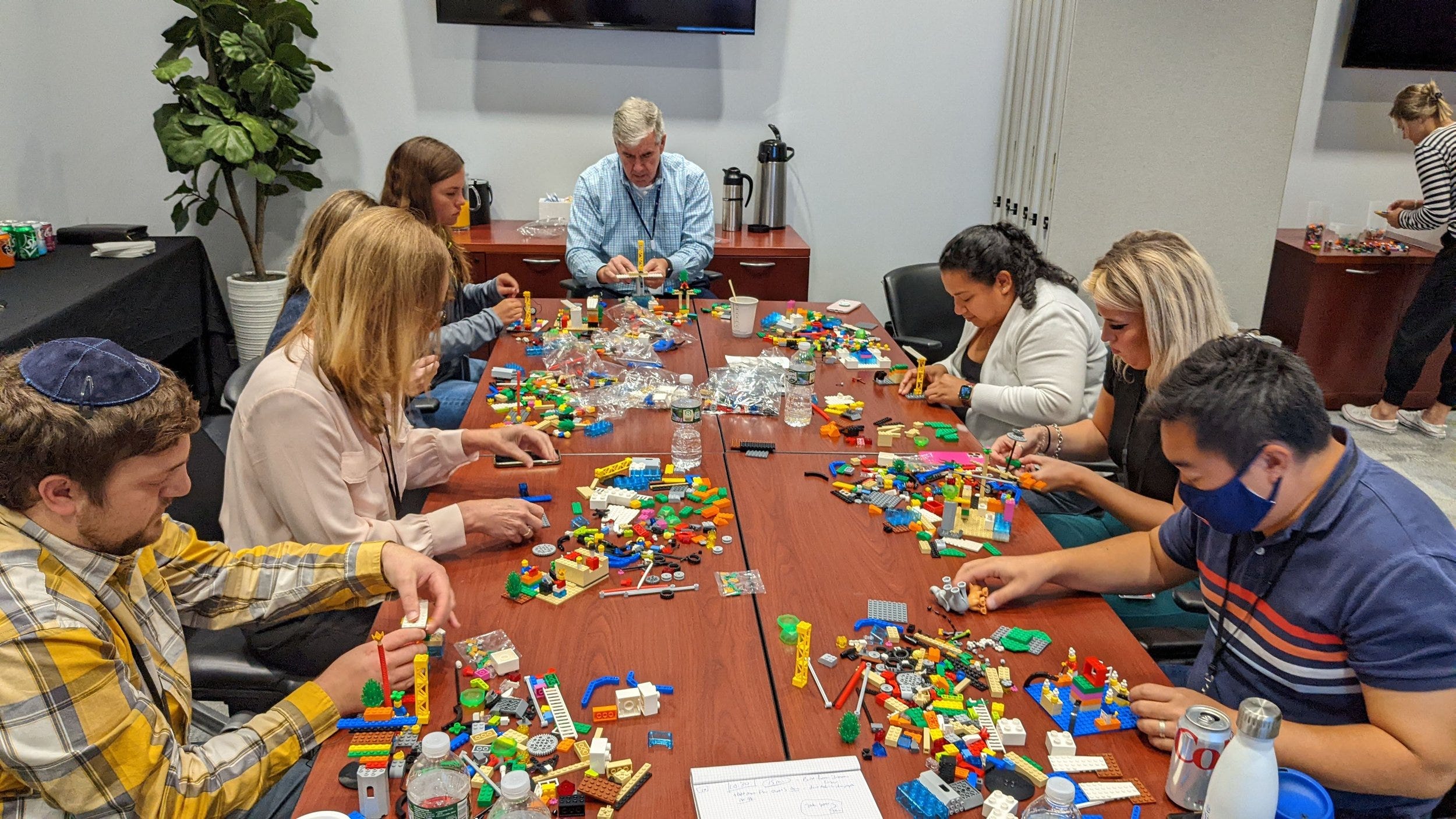
The method rests on a few simple ideas.
First, your hands know things your mouth doesn’t.
When people build with their hands, they don’t have time to overthink. So, what shows up is often more honest and “real”.
Second, metaphors make it safer to speak.
It’s easier to say, “This part of the system feels fragile,” when you can point to a shaky tower instead of calling someone out.
Third, everyone gets equal airtime.
Each person builds, explains, and noone interrupts or talks over each other. This guarantees that you will get something from every single person, not just the loud ones.
As a leader, this changes your role.
Contrary to a typical meeting, as a leader, you are no longer “driving the discussion”.
You’re simply observing and listening for patterns.
Part 2: Applying Lego Serious Play
For the rest of this article, we will focus our attention on putting Lego Serious Play into practice in your own organization. As we do that, don’t forget to download the Lego Serious Play Worksheet.
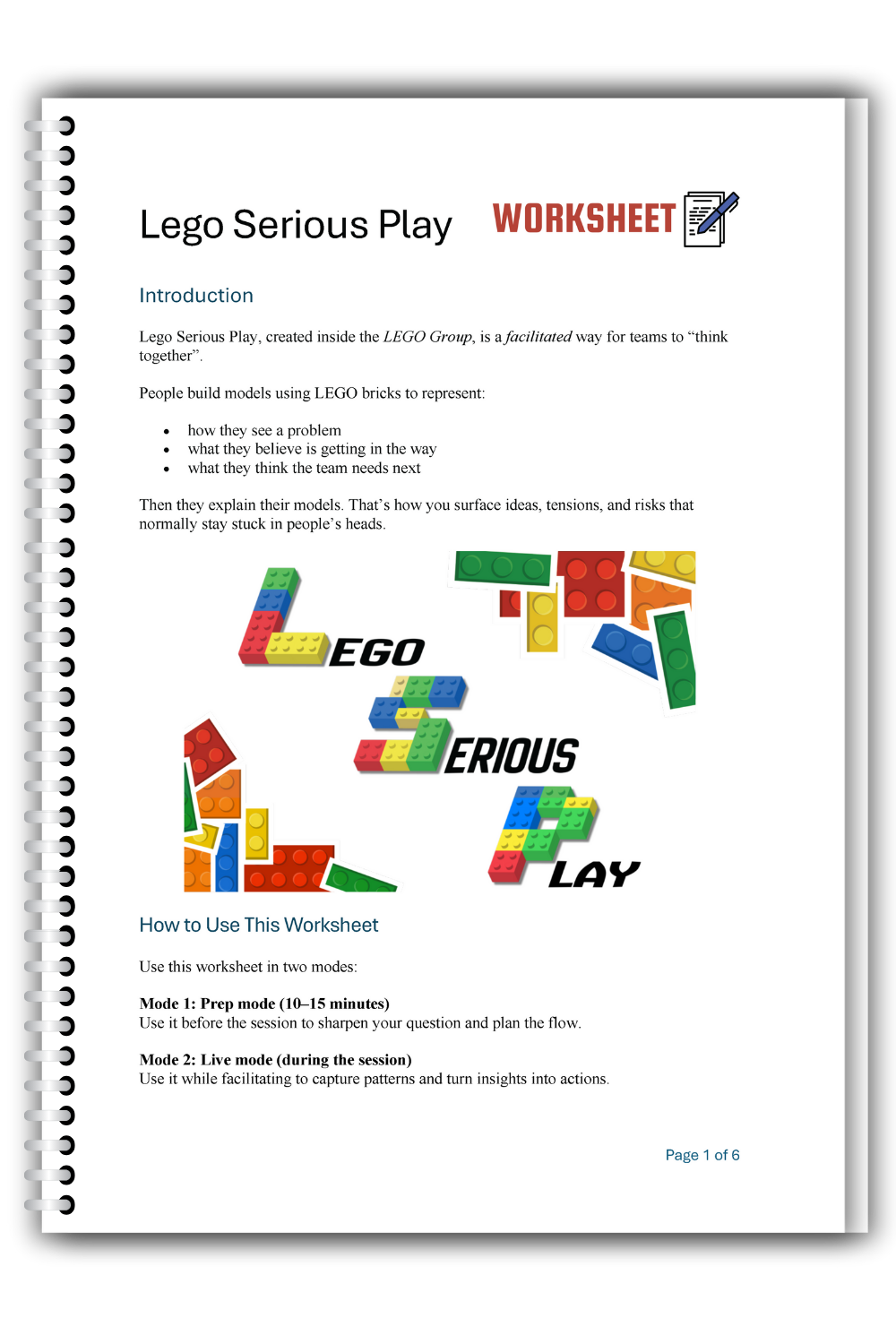
Use this worksheet to:
Facilitate a session that gets your team’s honest thinking on the table
Turn individual perspectives into a shared understanding of what’s really going on
End with real commitments, not just a good discussion
How to download the worksheet
This worksheet is part of the Worksheets Collection, available to all paid subscribers to The Good Boss.
👉🏻 Upgrade to paid now and get instant access to the entire collection, including this worksheet.
If you prefer the standalone worksheet, you can purchase it from here.
The step-by-step approach to applying Lego Serious Play
Here’s a step-by-step approach you can use as a leader. Keep it small the first time - 45 to 75 minutes is enough.