

In this issue:
Part 1: Understanding the SBI Model
What is the SBI Model?
How the SBI Model Works
Part 2: Applying the SBI Model
The “Spot → Write → Deliver” Approach to Apply SBI
Real-Life Leadership Scenarios
The SBI Feedback Model Worksheet
Part 3: Going from Here
Common Pitfalls and How to Avoid Them
Recommended Resources
Final Thoughts
✨
I still remember one of the first times I had to give tough feedback as a new manager.
One of my team members - let’s call him Bryan - had a habit of speaking over others in meetings. It wasn’t a big deal, but when I saw it kept happening, I knew I had to say something. So, in our 1:1, I gave what I thought was “constructive” feedback:
“Hey Bryan, I’ve been getting a sense that something’s off in meetings. You might want to watch how you come across.”
When I said those words, Bryan looked confused. And then he quickly became defensive. The rest of the 1:1 went into a back-and-forth blame-defense game, and grew tense with every passing minute, until finally we had to end it when my phone rang, and I launched a swift escape.
Phew.
I was glad it ended, but disappointed it didn’t go the way I expected. I went home frustrated. The fact is that I really valued Bryan as a team member, and wanted to genuinely help me.
But I didn’t know how to say it better.
In this post, we will discuss the SBI Feedback Model, one of the most powerful frameworks I have come across that you can use to deliver feedback that actually lands, without the awkwardness.
Ready to dive in? Let’s go!

Part 1: Understanding the SBI Model
Sometimes, feedback goes wrong not because you said the wrong thing, but because you said the right thing in the wrong way.
That’s where the SBI model comes in.
What is the SBI Model?
SBI stands for Situation – Behavior – Impact. It’s a simple 3-step framework designed to make feedback clearer, more focused, and less emotionally loaded.
It was developed by the Center for Creative Leadership (CCL), a global leader in leadership training. Their research showed that most feedback falls short because it’s either too vague or too personal. SBI was created to fix that.
The core idea is simple:
When giving feedback, describe what happened, what the person did, and what effect it had.
That’s it.
It sounds almost too simple. But in practice, it’s one of the most powerful tools I’ve come across in my leadership journey.
Let’s break it down and understand each of the three components of the model.
Situation
What was the specific time and place?
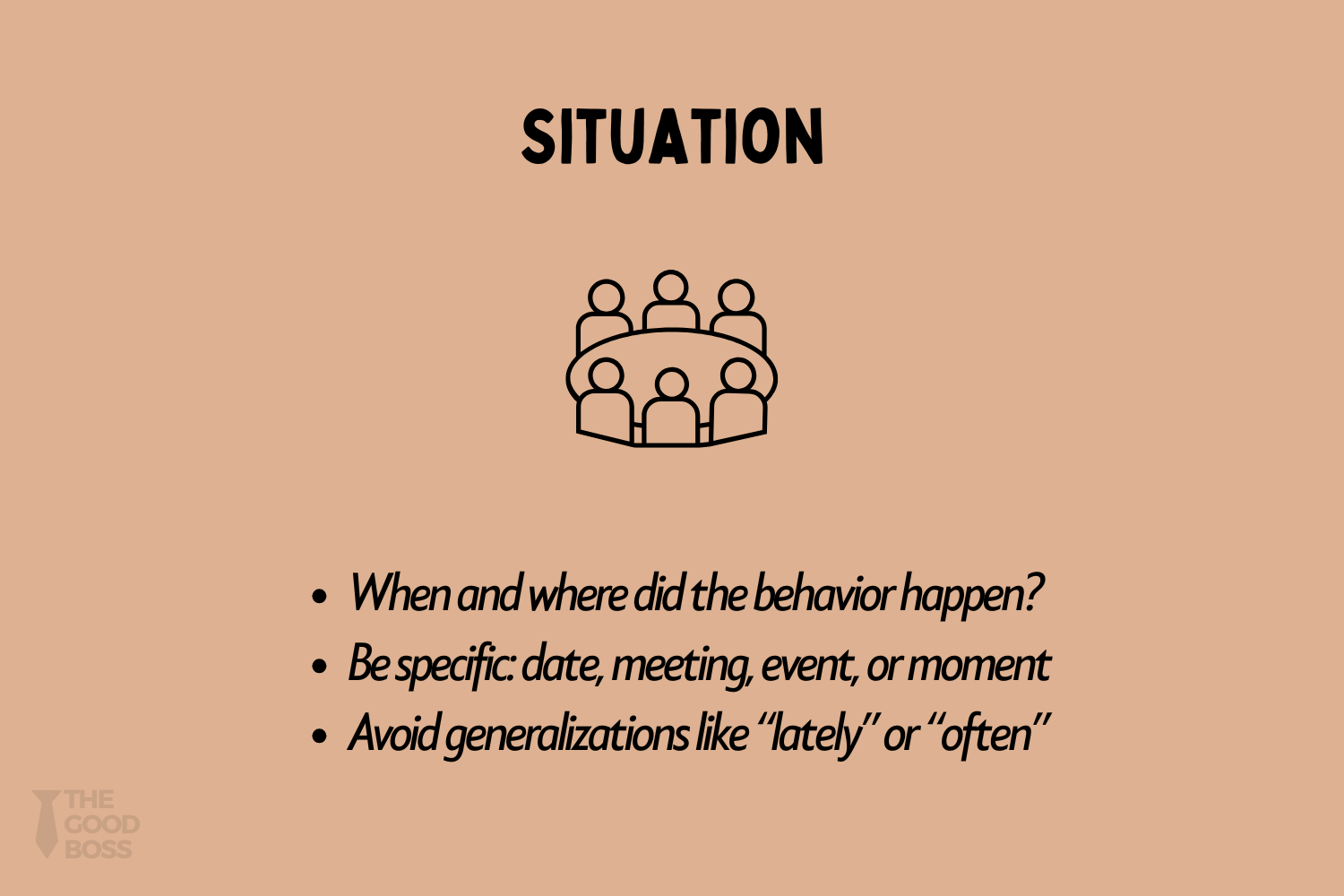
This is the anchor.
You want to describe the context clearly, so the person knows exactly what moment you’re referring to.
Think of it like setting the scene.
Good:
“In this morning’s sprint review…”
“During the customer call yesterday…”
“At Tuesday’s all-hands meeting…”
Not helpful:
“Lately…”
“You always…”
“You tend to…”
👉🏼 Takeaway: If the person doesn’t know what moment you’re talking about, they’ll either get confused or defensive. Anchoring to a specific situation brings clarity and focus.
Behavior
What did the person actually say or do?
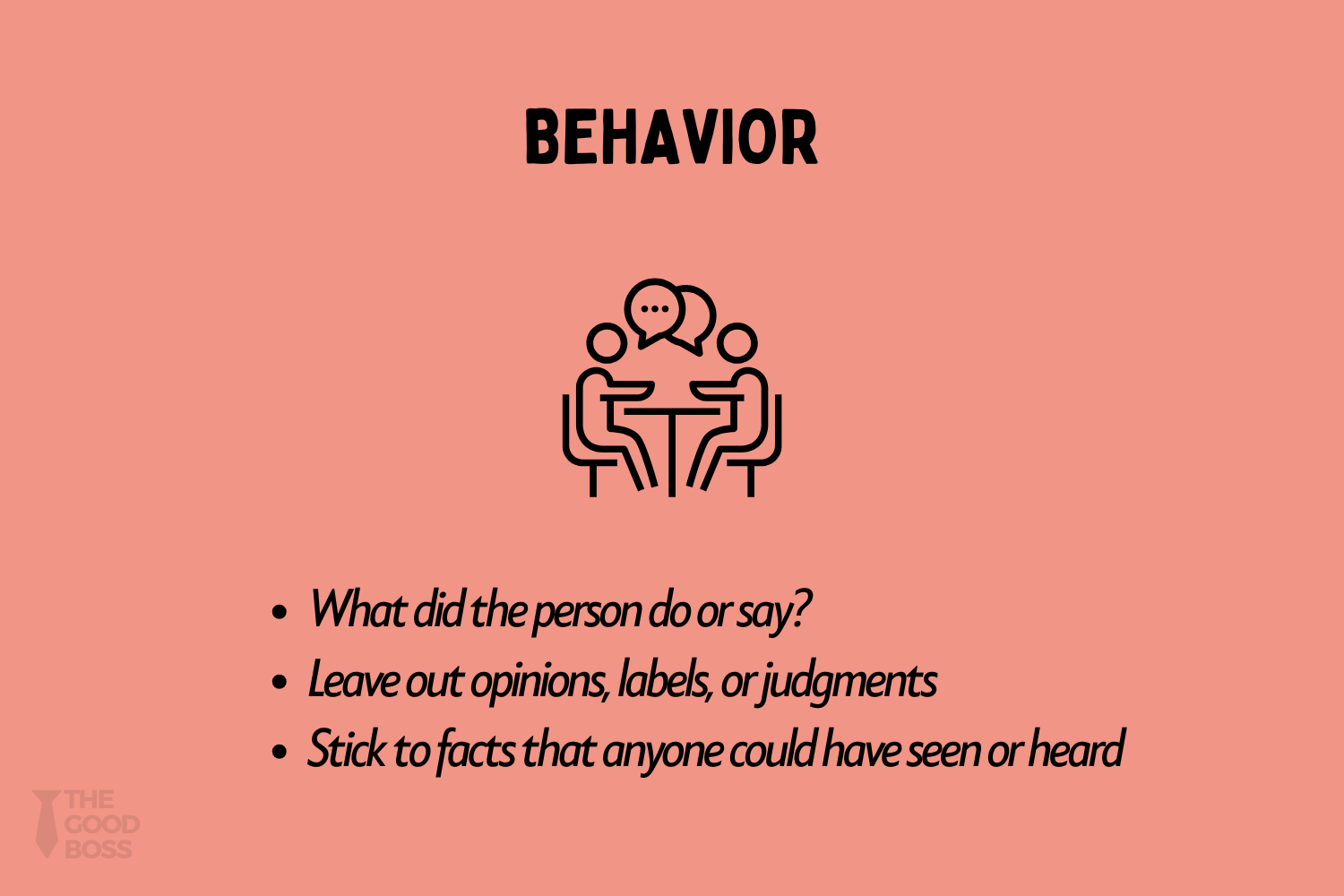
This is the heart of the feedback, and where most of us mess up.
The goal is to describe only what you observed, not what you felt, assumed, or interpreted.
Good:
“You interrupted Miguel while he was mid-sentence.”
“You raised your voice during the conversation with the client.”
“You arrived 15 minutes late to the planning meeting.”
Not helpful:
“You were rude.”
“You weren’t being professional.”
“You don’t respect other people’s time.”
The moment you move from observation to interpretation, the conversation turns into a debate.
“I wasn’t being rude.”
“That’s not what I meant.”
Sound familiar?
👉🏼 Takeaway: Those are judgments, not behaviors. Note that people can’t correct a judgment, only an action.
Impact
What effect did the behavior have on you, the team, or the work?
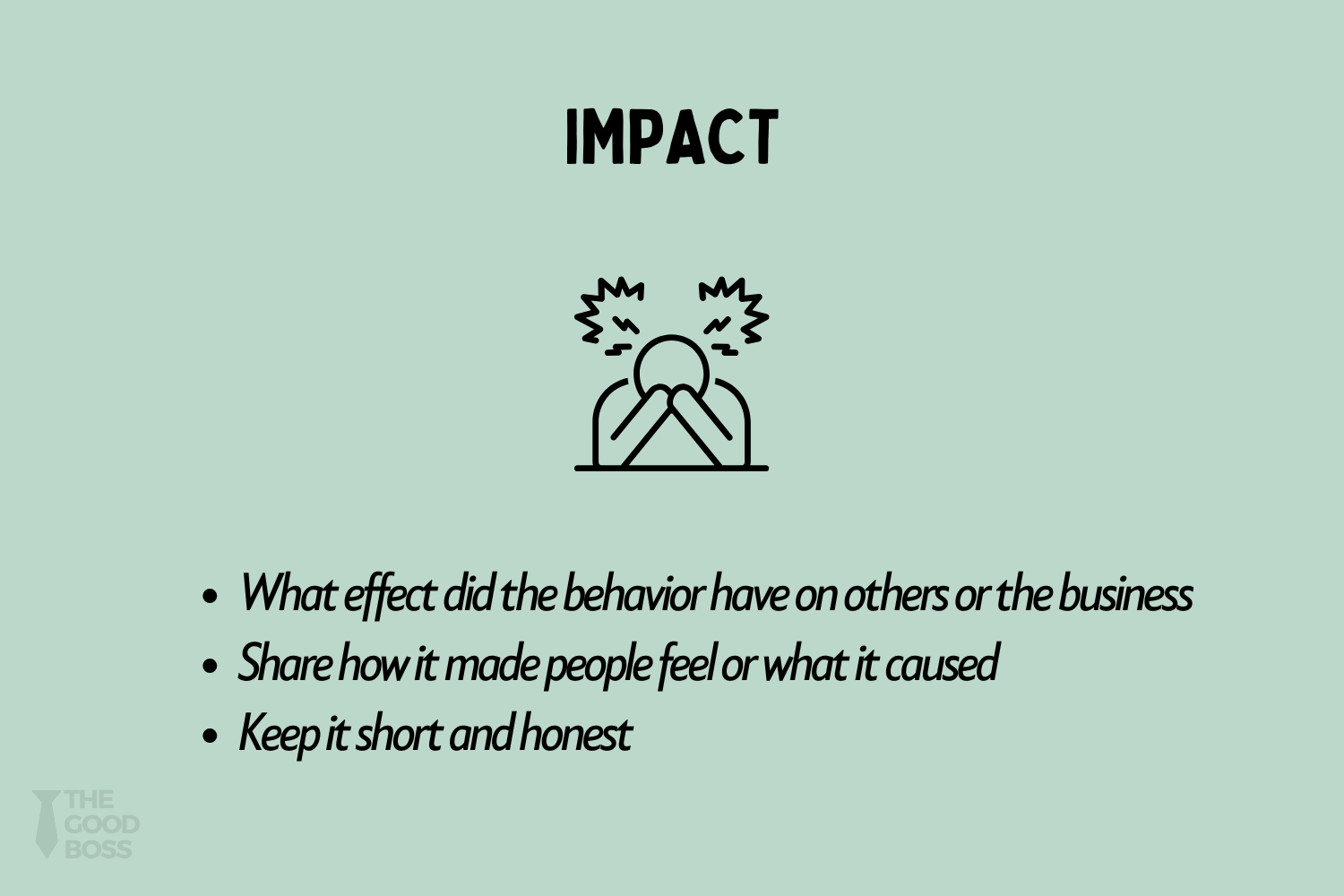
This is the part that invites awareness.
It shows the person how their actions affect others, something they might not see on their own.
Good:
“It made it hard for the team to follow the discussion.”
“It created tension in the room, and people went quiet.”
“It helped us refocus and move forward more quickly.”
👉🏼 Takeaway: People don’t change because you say so. They change when they understand how their actions land. The “Impact” part builds that bridge.
How the SBI Model Works
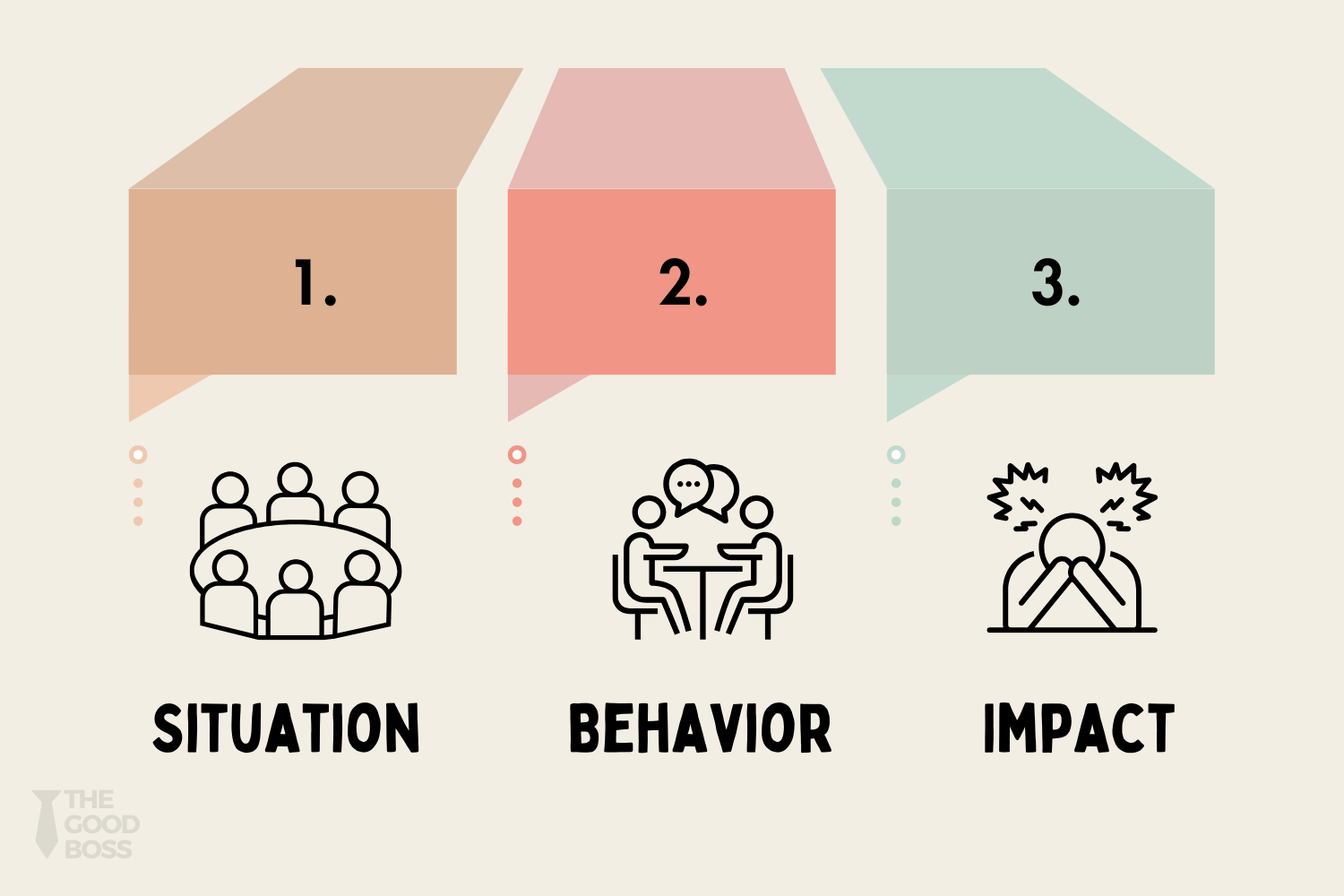
Here’s what a full SBI statement sounds like:
“In yesterday’s design review (Situation), you interrupted Asha and Miguel when they were sharing their updates (Behavior). It made it hard for them to contribute, and I noticed the conversation shut down after that (Impact).”
It’s direct but respectful, and it’s specific without being personal. It gives the person a clear path forward, which is the key.
Here’s a positive version:
“During this morning’s sprint planning (Situation), you summarized the team’s concerns clearly before moving forward (Behavior). It helped align everyone and saved us a lot of time (Impact).”
Notice how both examples:
Focus on observable actions
Use real situations as anchors
Show the effect of those actions
That’s the power of SBI.
Enjoying the read? I’ll appreciate it if you would take 2 seconds and hit the ❤️ button and share/restack 🔁 it with others who might find it helpful. You can also subscribe to The Good Boss for more posts like this every week. Thank you! 🙏
Part 2: Applying the SBI Model
Learning a feedback model is one thing. Using it in a real conversation, especially one that’s emotionally charged, is something else.
In this section, you’ll learn how to take the SBI model from theory to practice.
We’ll start with learning “Spot → Write → Deliver” approach to help you craft effective feedback using SBI.
Then, I’ll walk you through a few common leadership scenarios, and how SBI changes the conversation, and the impact, in each one.
Finally, you’ll get access to the SBI Feedback Model Worksheet, a simple tool to help you build confidence and clarity when giving feedback in your own leadership situation.
👉🏼 If you’d like to see how these tools, scenarios and worksheets fit together as part of a broader practice system, you can explore the ⚙️ The Good Boss Practitioner space - where leaders apply these frameworks in real situations.
The “Spot → Write → Deliver” Approach to Apply SBI
Follow these three steps to craft your feedback using the SBI model: