

A few years ago, one of my managers came to me with a situation.
One of his team members, Matthew - a senior engineer, was frustrated for lack of growth and was thinking about leaving. The manager saw Matthew as a high performer, and didn’t want to risk losing him, so he wanted to promote him.
It seemed like a simple fix, and I approved it.
But the “fix” didn’t last long.
A few weeks later, two other engineers on the same team came to the manager asking for a promotion. One of them had actually been doing the next level work for longer than Matthew, and was resentful for not being picked for the promotion.
Within a month, the team had three people who felt that they deserved a promotion, and the manager was spending 90% of his 1:1s negotiating instead of actually coaching them.
The manager had made a reasonable call that seemed right in the moment, and let’s face it - we all do this from time to time. But he didn’t realize the cascading impact of that.
In this post, we will discuss Second-Order Thinking, which is a powerful model that can help you avoid such situations. Here’s what we will cover:
Where Second-Order Thinking Comes From
How It Works: Following the Chain
Why Managers Get Hit Hardest
Applying Second-Order Thinking in Practice
The Ripple Check
Common Pitfalls (and How to Avoid Them)
Final Thoughts

Where Second-Order Thinking Comes From
The idea of second-order thinking is likely quite old, but most people attribute the idea to Howard Marks, the co-founder of Oaktree Capital.
In his investor memos, and later in his 2011 book The Most Important Thing, Marks described what he called “second-level thinking.”
His example was around investing in stocks:
A first-level thinker says, “This is a good company, so let’s buy it.”
A second-level thinker says, “This is a good company, but everyone else already thinks so, and the price reflects that, so it’s probably overpriced.”
Here’s another example, closer to our everyday lives.
I’m from Singapore, and it’s a popular tourist destination for its many attractions, including Universal Studios Singapore (USS).
A few years ago, if a local resident wanted to visit Universal Studios, they would typically book a Monday or Tuesday because weekends are super busy with tourists.
But over time, the tourists themselves picked up on this, and started booking their visits on Mondays and Tuesdays, and guess what - now Mondays have become one of the busiest days… who would’ve thought!
How It Works: Following the Chain
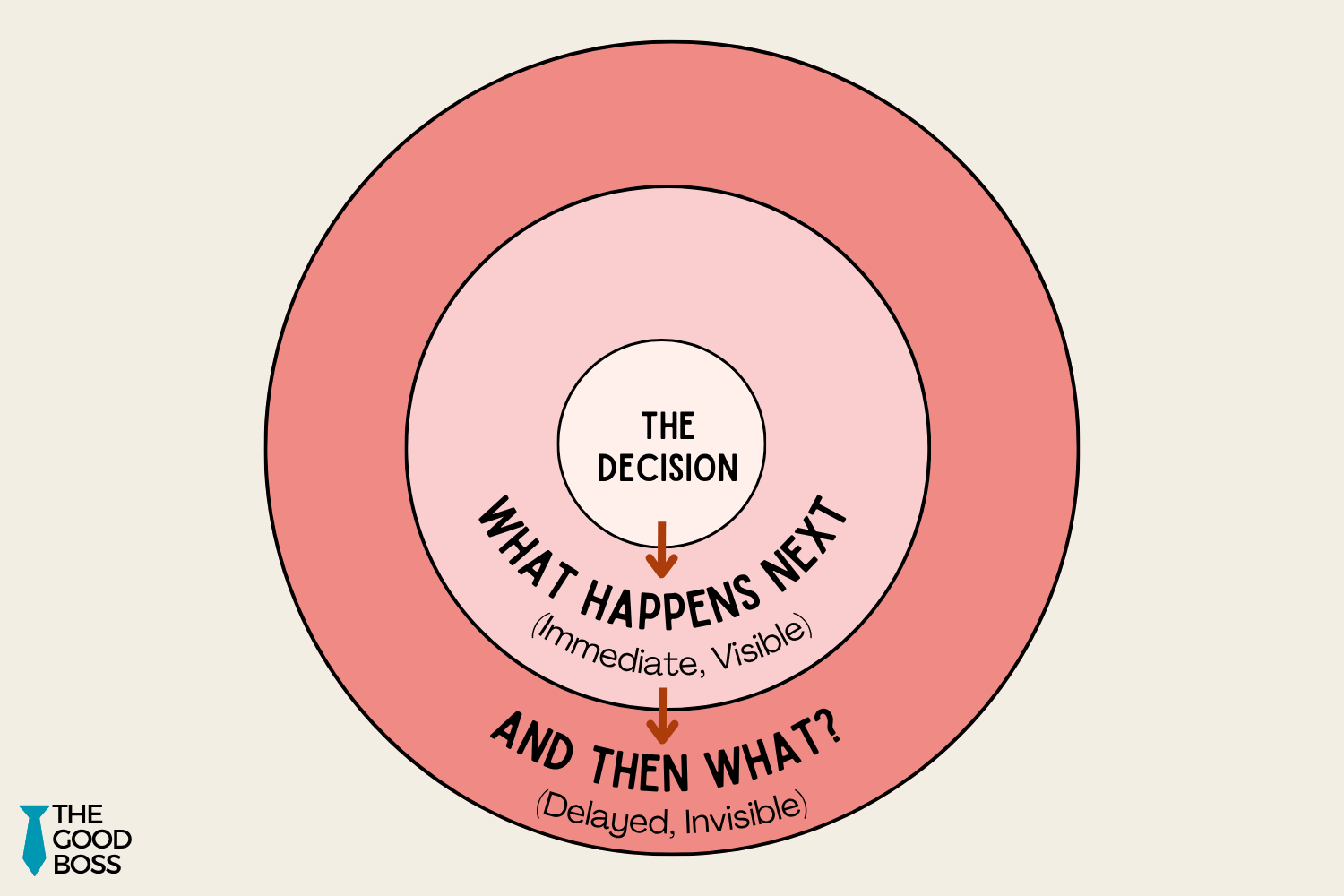
Here’s a simple frame to understand how this works:
First-order thinking asks “What happens next?”
Second-order thinking keeps going and asks “And then what?”
Remember the decision my manager made about promoting Matthew? That was a first-order decision.
Second-order effects are the ones that follow from the first. In my experience, they share three traits:
They show up later. Maybe weeks or even months after the decision, long after you’ve moved on. Similar to what we noticed weeks after promoting Matthew.
They land on other people. These are typically your peers, your teams, or people who weren’t even involved in the original decision.
They often push the opposite way from the first-order effect. Just like we saw with Matthew’s case, fixing it for one person created frustration for others.
Here’s another example that I’ve seen play out: A team misses a deadline, so the manager adds a daily status check-in. Here’s how this plays out:
First-order effect: the check-in creates more visibility, and the next deadline looks more “in control”.
Second-order effect: senior engineers who are now pulled into the daily status meeting end up losing 30-60 mins per day. They start feeling micromanaged, and worse - they stop raising real issues or risks in the meeting because they notice that th eupdates are starting to become a performance.
Third-order effect: the next deadline slips anyway.
In a nutshell: the first-order effect seemed reasonable, but the second and higher order effects told a different story.
Why Managers Get Hit Hardest
As we discussed, this effect is not just limited to leadership or team situations, but I’ve seen it hit managers hardest because of two reasons:
First, your team or stakeholders adapt. Every exception you grant, every miss you ignore, and every person you promote tells your team what actually works here. And guess what - they learn and adapt to that quickly.
Second, it’s hard to know the higher order impacts due to timing. Typically, first-order results show up in the current moment - today or this week. But second-order effects show up much later - maybe after a few weeks or months - and by the time you may have moved on, or the team has moved on, and nobody even realizes by the time the effect becomes visible.
One more thing I’ve seen: the higher you are in the leadership hierarchy, the less you’re likely to see of the second order effect because you’re further apart from the team.
Applying Second-Order Thinking in Practice
For the rest of this article, we will focus our attention on putting the Second-order Thinking model into practice in your own organization. As we do that, don’t forget to download the Second-Order Thinking Worksheet.
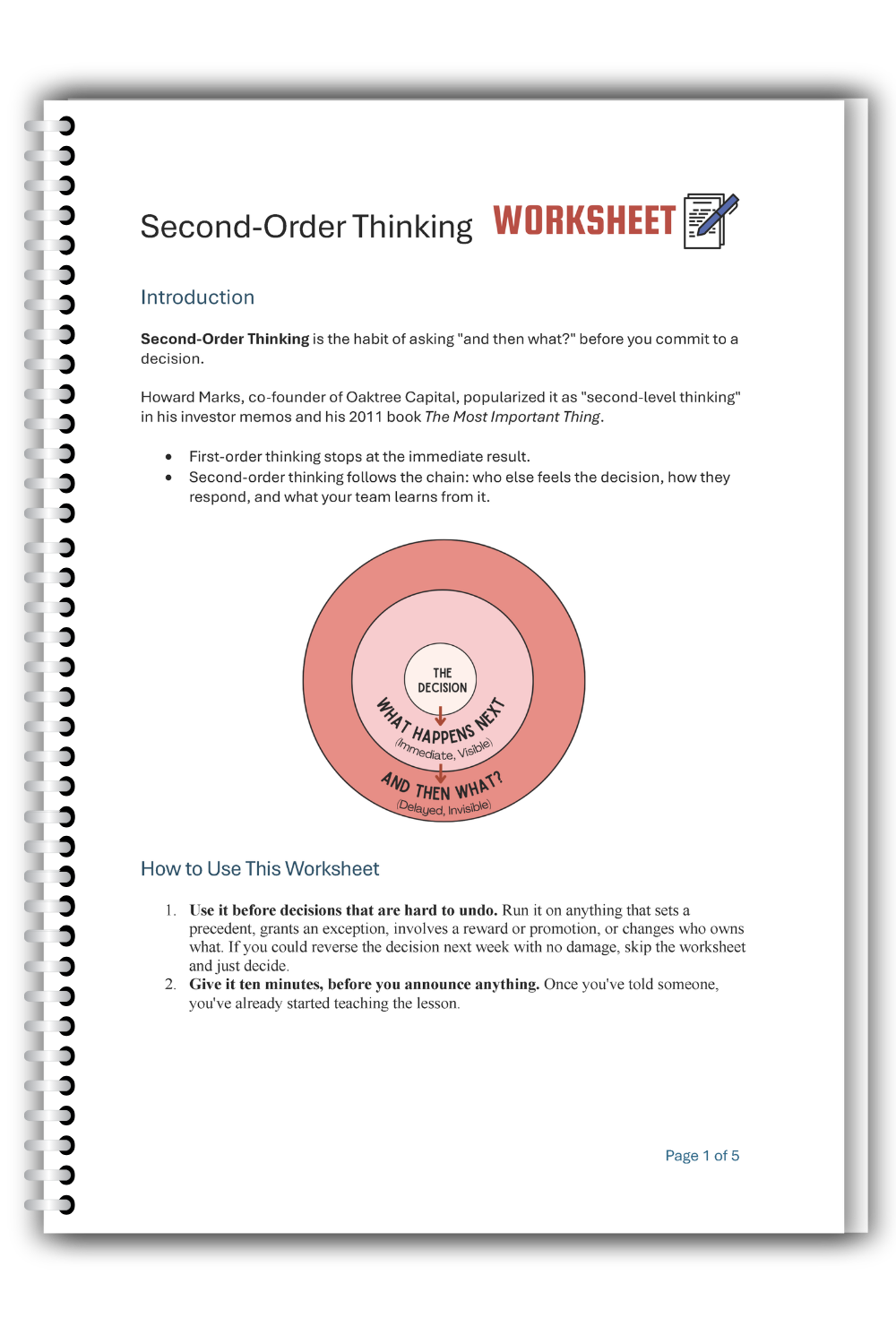
Use this worksheet to:
Catch ripples before they spread
Spot who else feels decisions
Avoid precedents you’ll regret
How to download the worksheet
This worksheet is part of the Worksheets Collection, available to all paid subscribers to The Good Boss.
👉🏻 Upgrade to paid now and get instant access to the entire collection, including this worksheet.
If you prefer the standalone worksheet, you can purchase it from here.
The Ripple Check
Here’s a simple check you can run in less than 10 minutes before you commit to anything that’s hard to undo. I call it the Ripple Check.