A few weeks ago, I was at an offsite with my leadership team.
We were looking back at why so many of our releases had been delayed. As we unpacked the pattern, one root cause stood out: our CI/CD system was unstable. It kept creating delays, rework, and last-minute fire drills. Needless to say, it was a source of frustration for everyone.
By the end of the discussion, we were “aligned”. We all agreed this was a real problem, and one we had to fix.
I left the room feeling good. We had clarity at last. I assumed that clarity would lead to action.
But guess what - it didn’t.
That’s when I realized something uncomfortable: Agreement means nothing if nothing changes.
Why Most Change Efforts Fail
What I experienced at that offsite is not unusual. In fact, it’s how most change efforts play out.
You identify a problem, discuss it in detail, and align on what needs to be done. The conversation feels “productive”. Everyone understands the issue, and there is agreement on the path forward.
But then things stall.
The new behavior doesn’t show up on the ground. The old patterns creep back up. A few weeks later, you find yourself having the exact same conversation again, wondering why nothing really changed.
Why does this happen? Because nothing actually shifted in how your team thinks and acts. They may “agree” with you, but they aren’t really bought in.
If you start paying attention, you’ll see this pattern everywhere.
A team agrees to improve quality, but deadlines keep taking priority.
A group commits to better collaboration, but silos remain.
A leader sets a new direction, but the team keeps working the old way.
On the surface, everything looks “right”. There is alignment, clarity, and a shared understanding of the problem. But underneath, something is missing.
And until you see what that is, you will keep solving the wrong problem.
Most leaders assume that change fails because people don’t “understand”. So they respond by explaining more, adding detail, and repeating the message in different ways.
But understanding alone was never the issue, and that’s why nothing actually changes.
The Psychology of Change
The mistake most leaders make is assuming that people are rational.
If something makes sense, they believe people will do it. It feels logical, almost obvious. After all, if the reasoning is sound and the benefits are clear, why wouldn’t people act? I had the same exact belief, too.
But that’s not how people work.
Think about your own life for a moment. There are things you already understand that you should be doing. You know you should exercise more, or spend less time on your phone, or have that difficult conversation you’ve been putting off. The logic is not missing, and the benefits are clear. And yet, you struggle to take action.
That gap between knowing and doing is where most change efforts break down.
And the reason is simple. Humans are emotional beings, and we don’t act based on logic alone. We act based on a combination of logic, emotion, and instinct.
No doubt - logic is important. It helps us understand the issue at hand, and answers the question, “Does this make sense?”
But understanding, by itself, rarely creates movement. For something to move, it has to matter. You need to care about the outcome in a real, deep way. It has to connect to something you value, something you feel.
Remember what I mentioned earlier - we are, at the very core, emotional beings.
But logic and emotions are also not enough for real change. There is still one more “barrier”, if you like.
Change often involves risk. It asks people to step into uncertainty, to try something new, to let go of what feels familiar. For humans, and for that matter, any living being, that’s uncomfortable. We crave familiarity, and our fear hormones (aka adrenaline) get triggered the moment we’re faced with something unfamiliar.
So you end up in a situation where people understand the change, and may even agree with it, but still don’t act because one of the deeper drivers of action is missing.
And unless you address those drivers, no amount of explaining will create real change.
The 3 Conditions for Change
So, what are those drivers for real change?
In my experience, change happens only when three conditions are present. Miss even one, and you’re likely to struggle with driving the change.
I call these the three conditions for change or the Change Triangle.
Let’s look at each of these conditions in a bit more detail.
Condition #1: Willingness (Head)
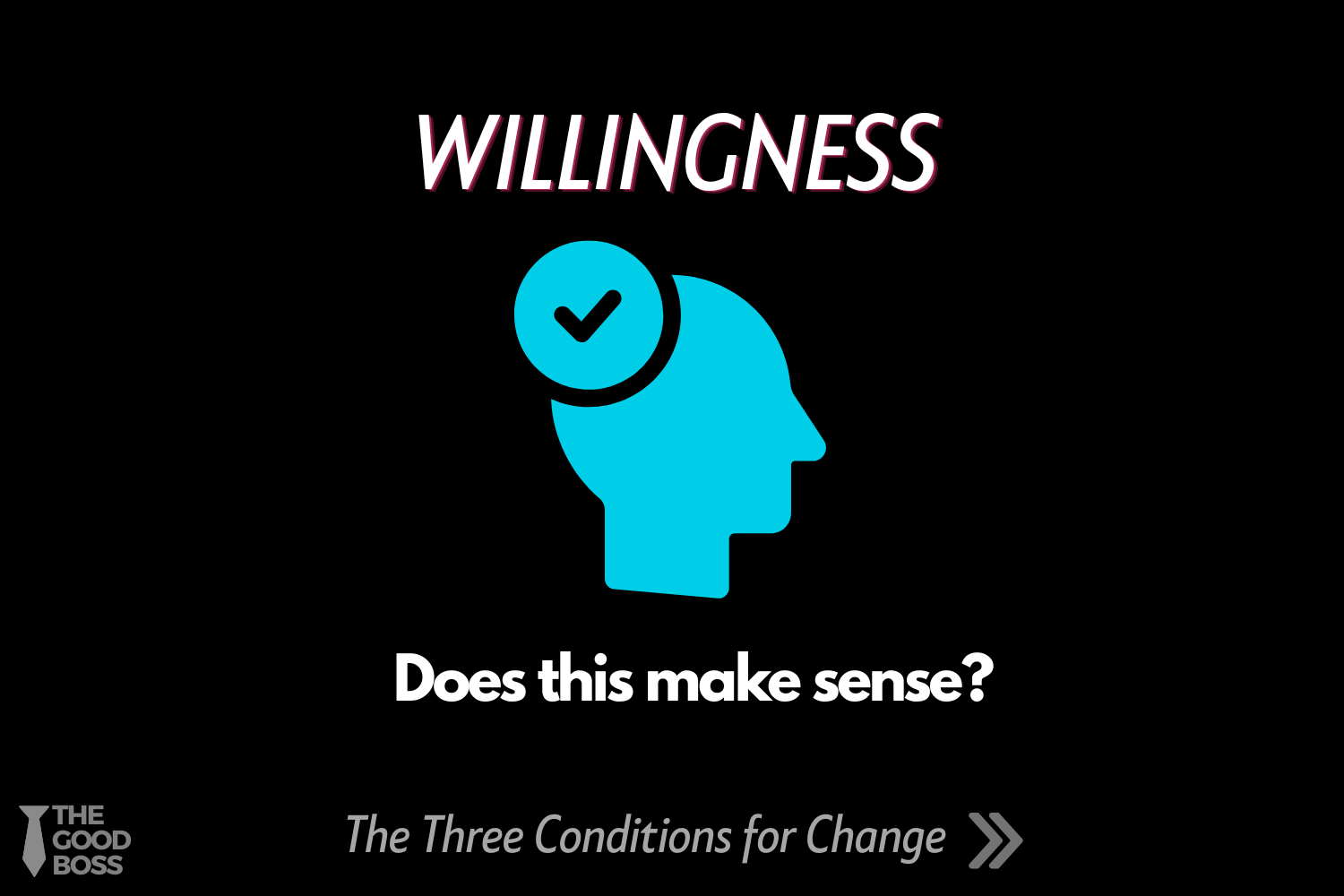
Willingness lives in the head. This is where our logical brain works to ‘understand’ the issue at hand.
Your team needs to see the problem, make sense of it, and believe that the change is valid. Without this, you will only get confusion. They will ask basic questions, or simply won’t get the “need” to change.
This is where most leaders spend their time. They explain the problem, share the data, and walk through the reasoning.
Condition #2: Desire (Heart)
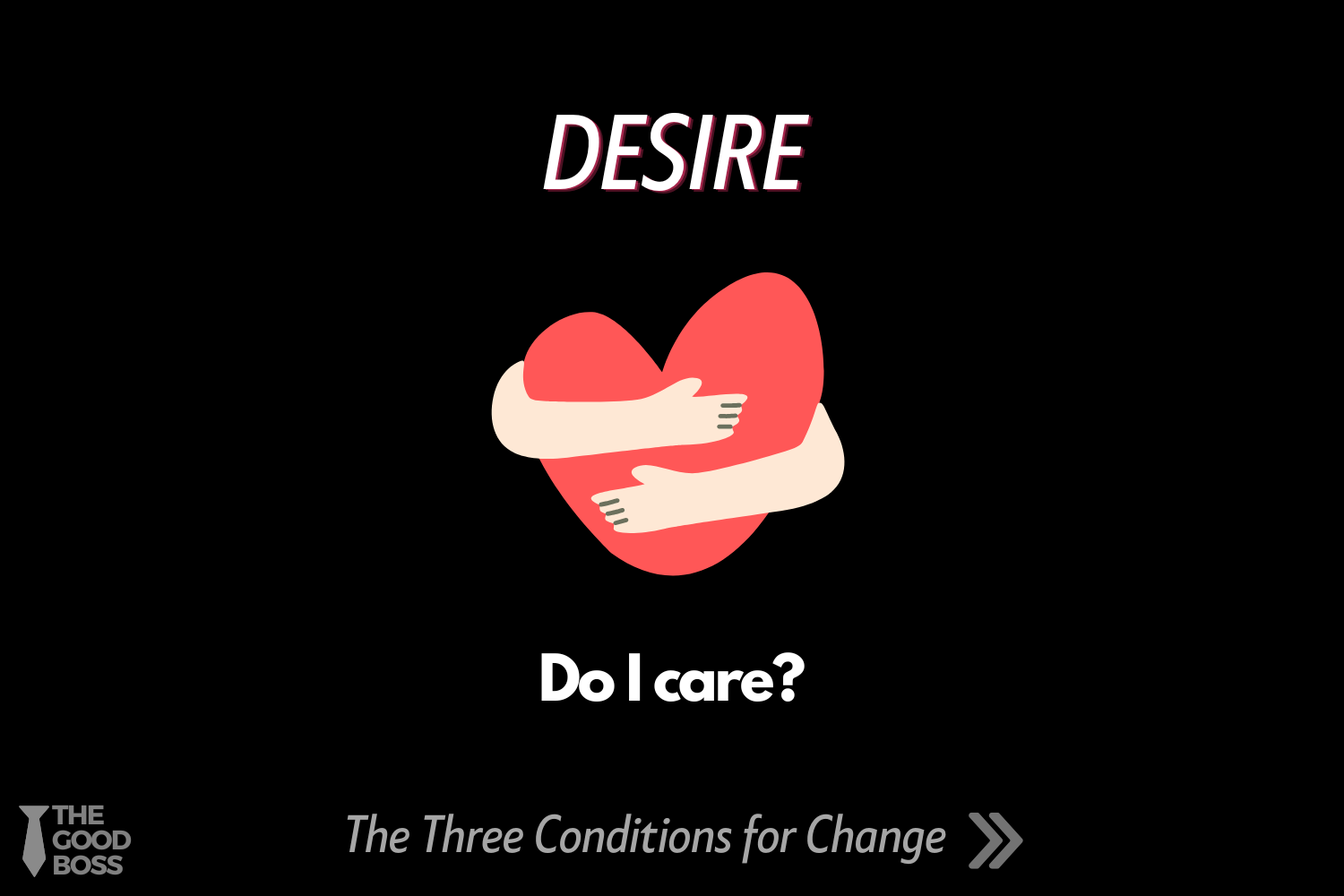
Desire lives in the heart. This is about whether people actually care.
Do they want this change to happen? Does it connect to something that matters to them, whether that’s pride in their work, less frustration, or better outcomes for their team?
When desire is missing, you may not see open resistance. You may see something more dangerous. Your team members will nod, agree, but not fully ‘align’ with the need for change. They will see the change as someone else’s priority, not theirs.
Condition #3: Courage (Gut)
Courage comes from the gut. This is what turns intent into action.
Now, let’s face it: change often involves risk. It means trying something new, exposing gaps, or stepping out of a comfortable routine. Even when your team understands the change and wants it, they may still hesitate.
When courage is missing, you see delays, avoidance, and a tendency to fall back on old habits, especially under pressure.
How These Three Conditions Work Together
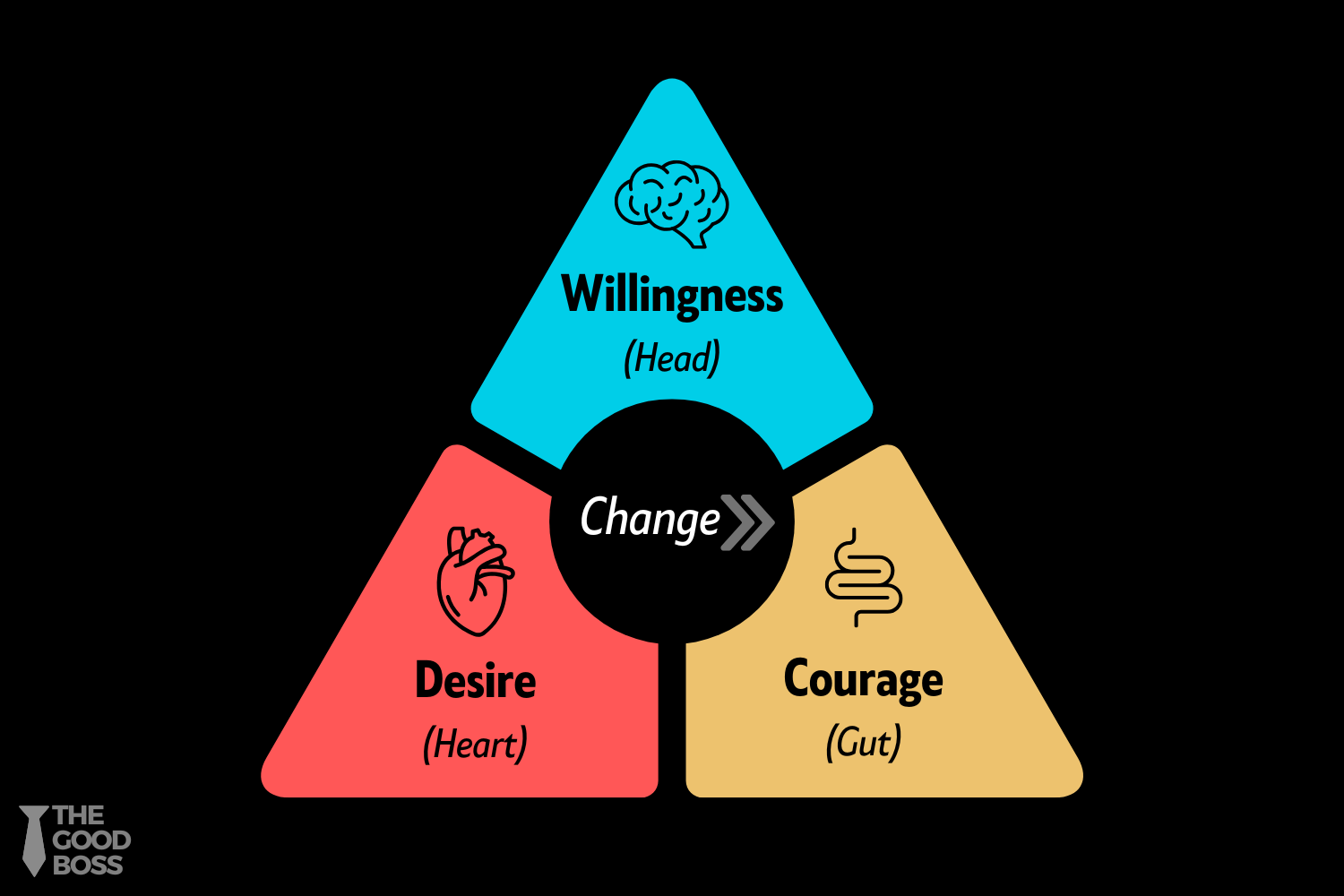
As we discussed, each of these conditions matters individually. But real change only happens when all three come together.
You can have willingness without desire. That’s when people understand the change, but don’t care enough to act.
You can have desire without courage. That’s when people want the change, but hesitate when it’s time to take action.
You can have courage without willingness. That’s when people aren’t afraid to plunge into action, but they don’t know which direction to go, so the action becomes pointless.
The way I think about this is simple.
Willingness gives you clarity.
Desire gives you energy.
Courage gives you movement.
To make any change effective, you need all three.
So how do you drive change effectively? Let’s look into that next.
Applying the Three Conditions for Change in Practice
For the rest of this article, we will focus our attention on putting the 3 conditions for change into practice in your own organization. As we do that, don’t forget to download the 3 Conditions for Change Worksheet.
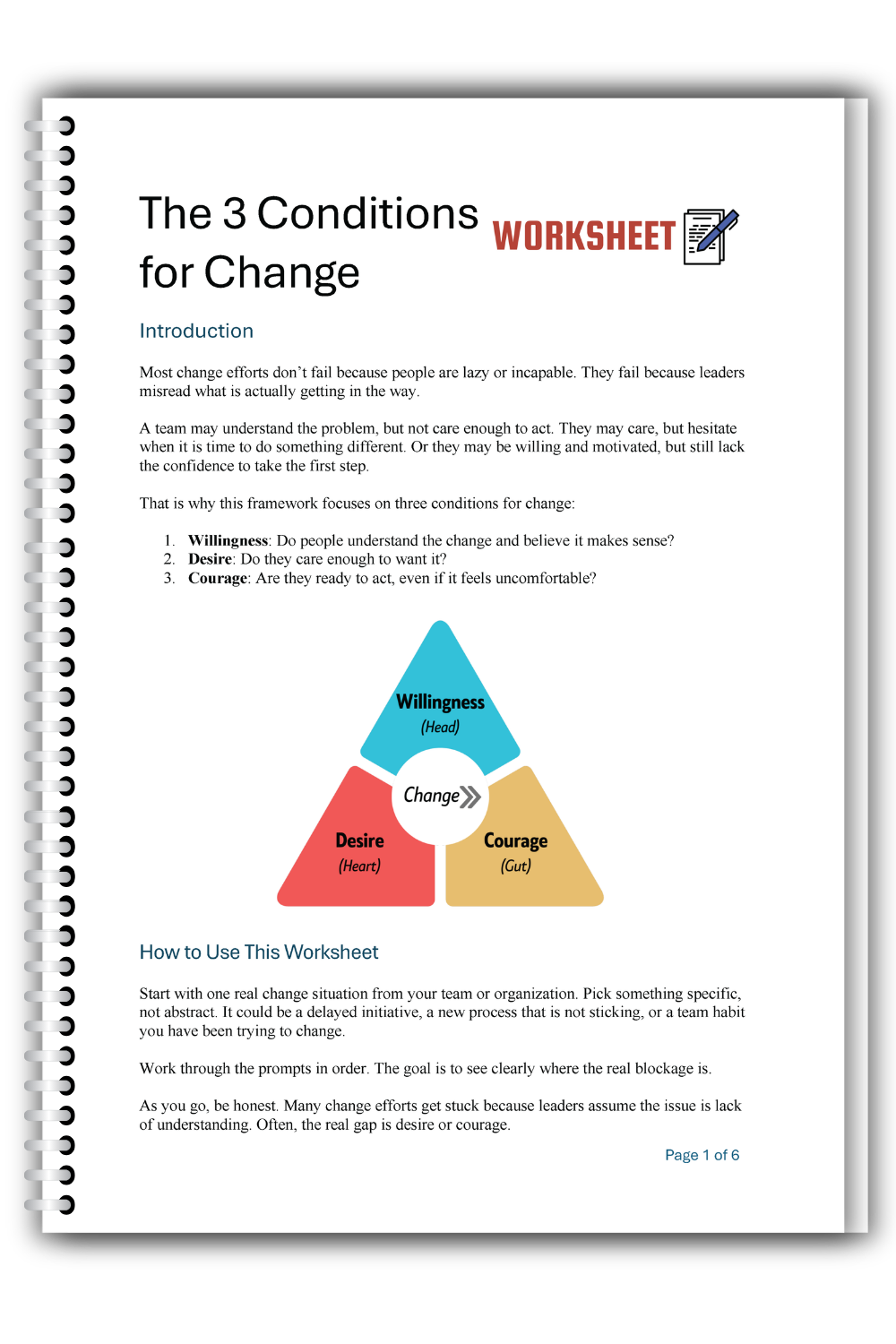
Use this worksheet to:
Find out whether your change effort is stuck on willingness, desire, or courage
Get a leadership move that actually targets the real blockage
Turn the diagnosis into one small step you can act on this week
How to download the worksheet
This worksheet is part of the Worksheets Collection, available to all paid subscribers to The Good Boss.
👉🏻 Upgrade to paid now and get instant access to the entire collection, including this worksheet.
If you prefer the standalone worksheet, you can purchase it from here.
How to Drive Change in Your Team