

Many managers I speak to say they feel stuck in the weeds - stretched thin and constantly in ‘reactive’ mode.
They’re juggling meetings, reacting to escalations, chasing decisions, setting goals, managing people… and they rarely get time to think about the future.
Most of these managers stay tactical because they’ve never built the systems that let them operate strategically.
In this post, I’ll walk you through 6 systems that will take you from manager to strategic leader. Each one helps you tackle a core leadership responsibility, and I’ll show you specific frameworks you can use (many of which I’ve written about before) to build your own toolkit.
Here’s a preview of what we’re going to talk about.
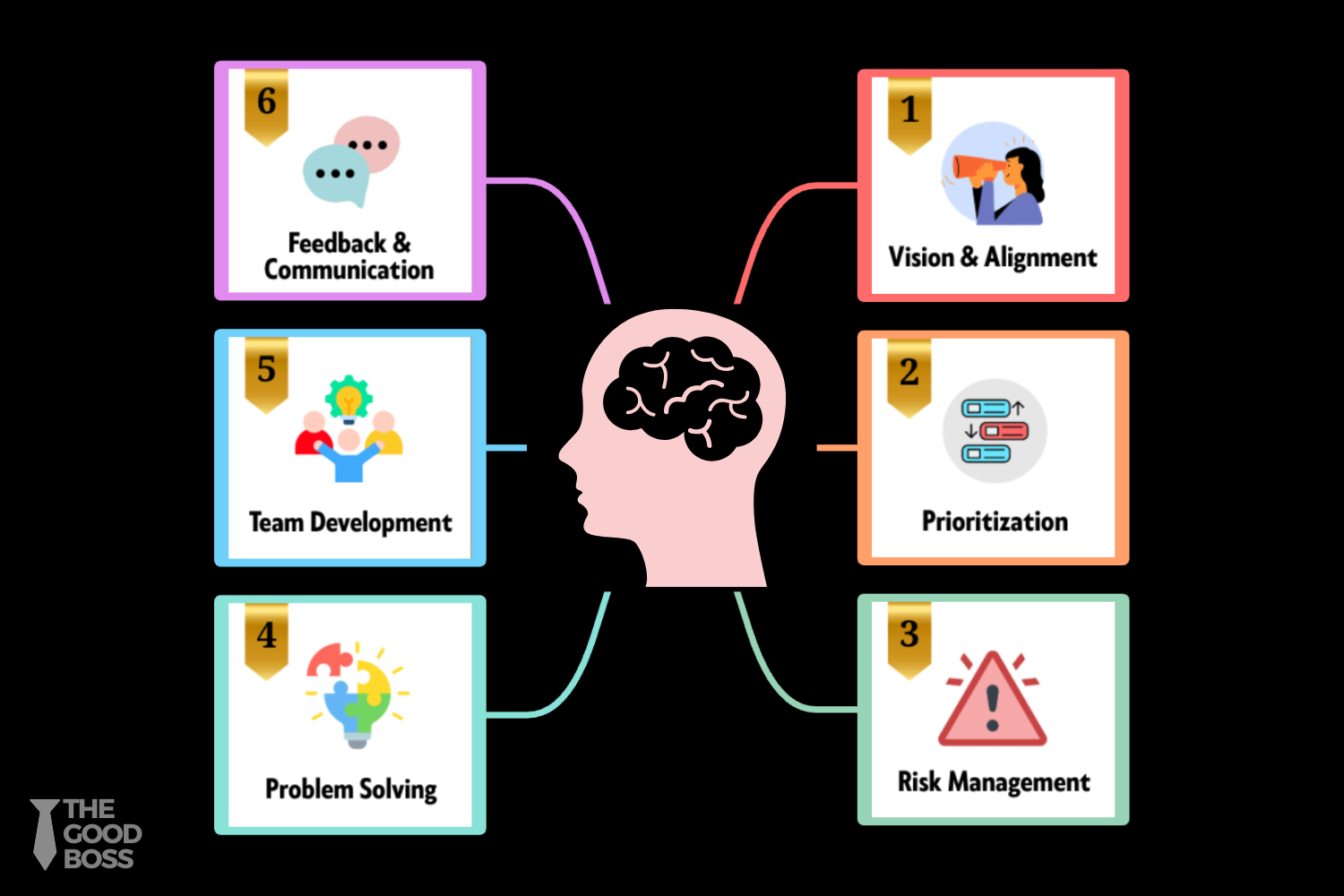
Let’s get into it.

System #1. Vision & Alignment
“If you don’t know where you’re going, any road will take you there.”
At a fast-growing health tech startup, Priya had just been promoted to Director of Engineering. She was sharp, ambitious, and also deeply technical.
Her team, however, was struggling.
They had launched three features in two months, and none of them seemed to move the needle on the overall business. After some introspection, Priya recognized that all her teams were busy, but none of them were “aligned.”
During a product review, the product head asked a simple question: “What problem are we solving this quarter?” The room went quiet, and Priya realized she hadn’t shared a compelling vision with her team. Everyone had their ‘version’ of the vision.
This is the cost of missing a clear vision: you get busyness without actual impact.
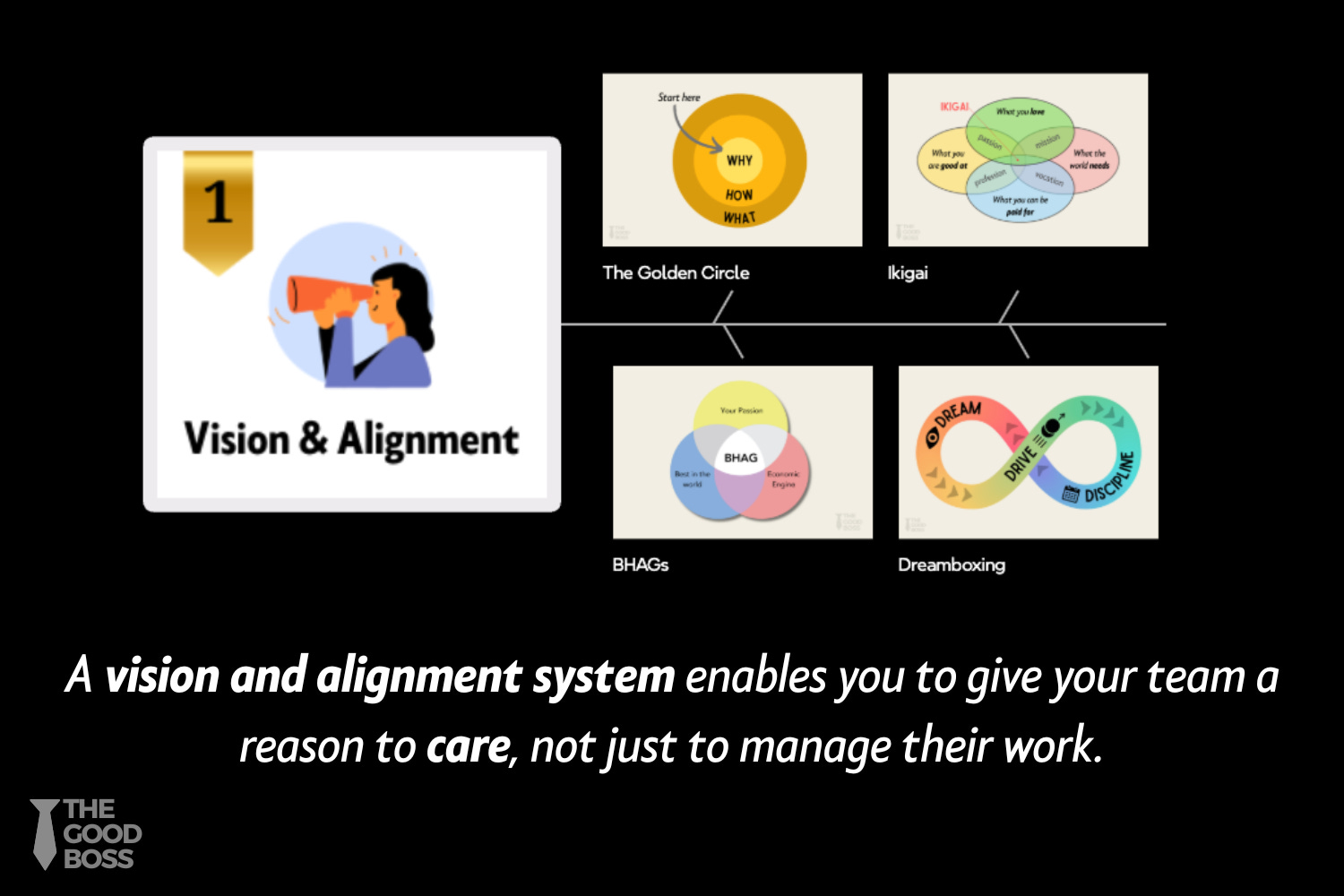
A vision and alignment system enables you to give your team a reason to care, not just to manage their work.
🔧 Frameworks to Build It:


System #2. Prioritization & Decision Making
“The essence of strategy is choosing what not to do.” — Michael Porter
Alex, a senior product manager at a global SaaS company, was falling behind. His team was juggling five active features, three stakeholder requests, and a long list of bugs that was only getting longer.
Each week, new “urgent” tasks were popping up from all directions, and he was making decisions in a state of panic. Despite working late nights, his teams were always feeling behind.
Alex and his team were working hard, so the issue wasn’t a lack of effort. It was the lack of a system for prioritization and decision-making.
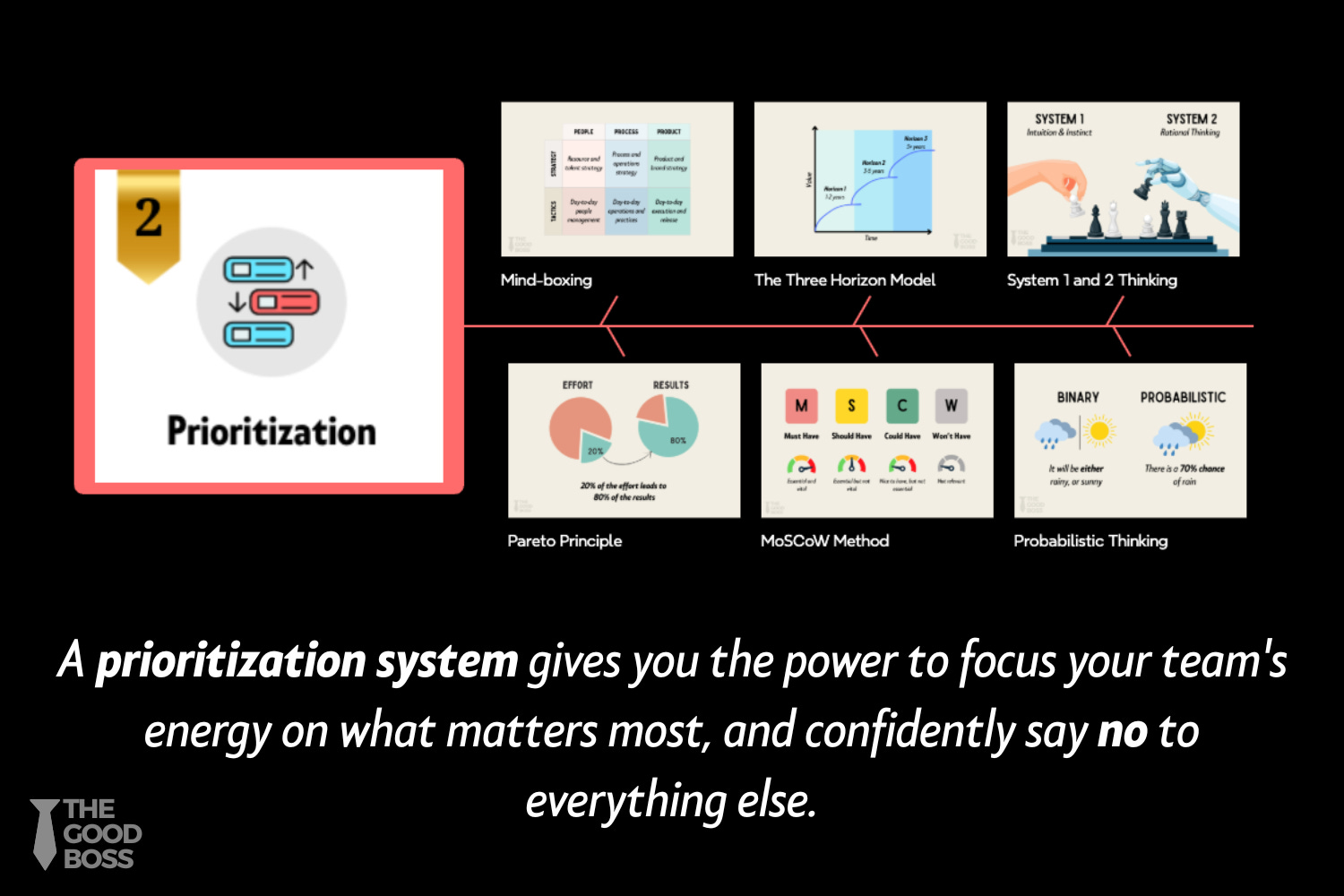
Without a framework, every decision can feel personal or political. But with a prioritization and decision-making system, you create objectivity, and you shift from chaos to decisiveness. You can say “no” gracefully and confidently, and invest your time in what actually moves the needle.
🔧 Frameworks to Build It:


System #3. Risk Management
“An ounce of prevention is worth a pound of cure.” — Benjamin Franklin
At an e-commerce scale-up, Kiran led platform engineering that supported millions of online transactions. Everything was running smoothly for months, until the Black Friday sale season came, and the system started to fail.
With a peak in transactions during that period, the platform APIs started to fail as the load was well beyond what they were designed to handle, and a third-party vendor rate-limited their APIs. The incident caused thousands of failed transactions and a PR nightmare, not to mention the huge loss in revenue.
Kiran had flagged it months ago, “What’s our fallback if the vendor rate-limits us?”, but this critical question got buried under the backlog.
This is how risk bites: slowly, and then all at once. The reality is that most leaders ignore risk because they have no system to see it early and act on it wisely.
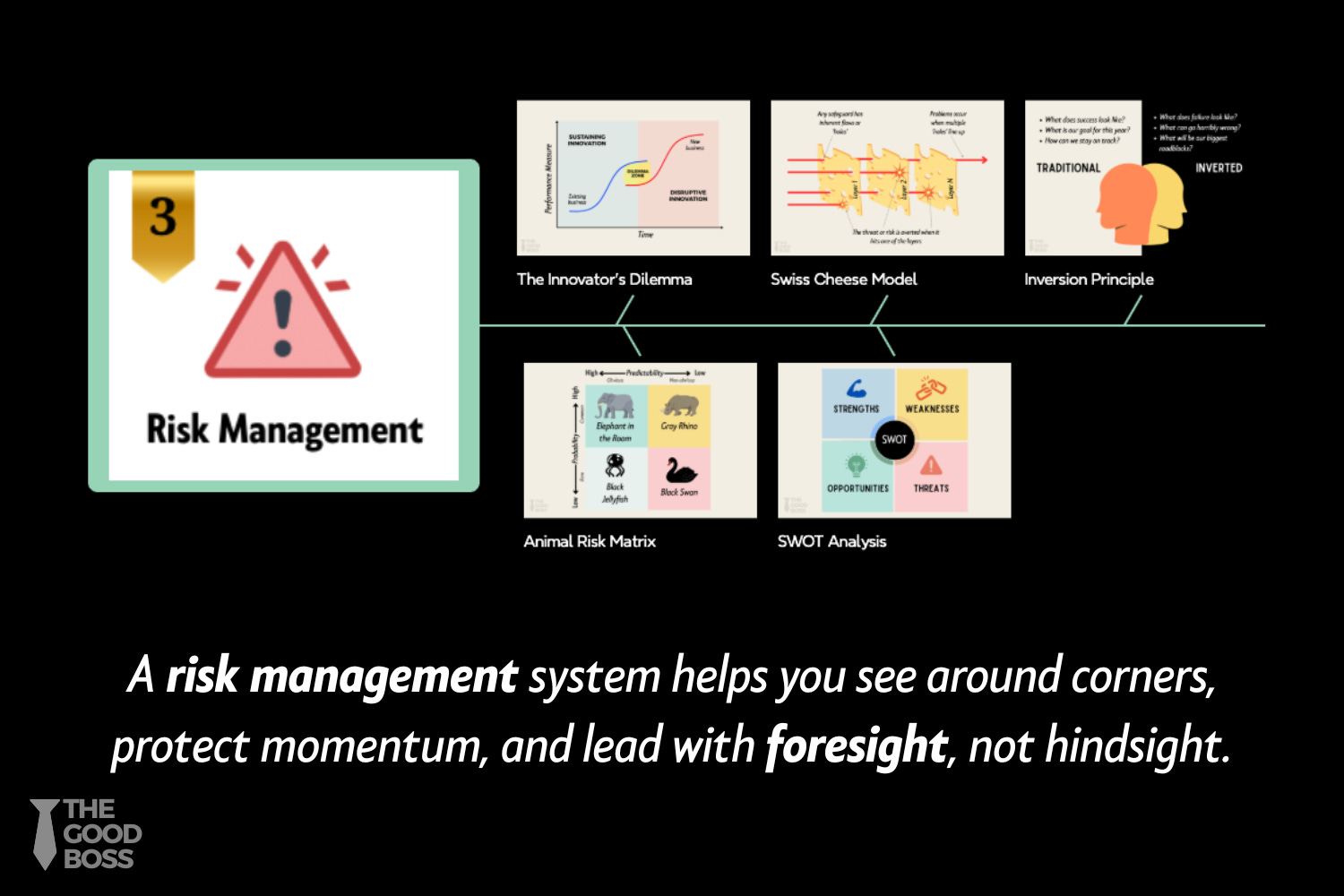
A great risk management system helps you spot weaknesses and blind spots, and prepare for failure when it happens. When you systemize risk, you lead with foresight, not hindsight.
🔧 Frameworks to Build It:


Enjoying the read? Hit the ❤️ button and share/restack 🔁 it with others who might find it helpful. You can also subscribe to The Good Boss for more posts like this every week. Thank you! 🙏
System #4. Problem Solving
“If I had an hour to solve a problem, I’d spend 55 minutes thinking about the problem and 5 minutes thinking about solutions.” — Albert Einstein
Ravi was the operations lead at a logistics startup. When deliveries started missing SLAs, his team responded with more work hours, more tracking sheets and more check-ins.
But none of that worked, and the same issues kept recurring. Every time something went wrong, Ravi added more process, more people or more pressure. But he never stopped to ask: Why is this happening in the first place?
One day, a junior analyst in Ravi’s team shared a humble insight: 90% of late deliveries came from just two routes with outdated address data. This helped them to solve the root cause, and address the issue permanently.
Let’s face it: most leaders are trained to act quickly, because it makes them “look decisive”. But without a structured approach to understanding and solving problems, you risk fixing symptoms and missing root causes.
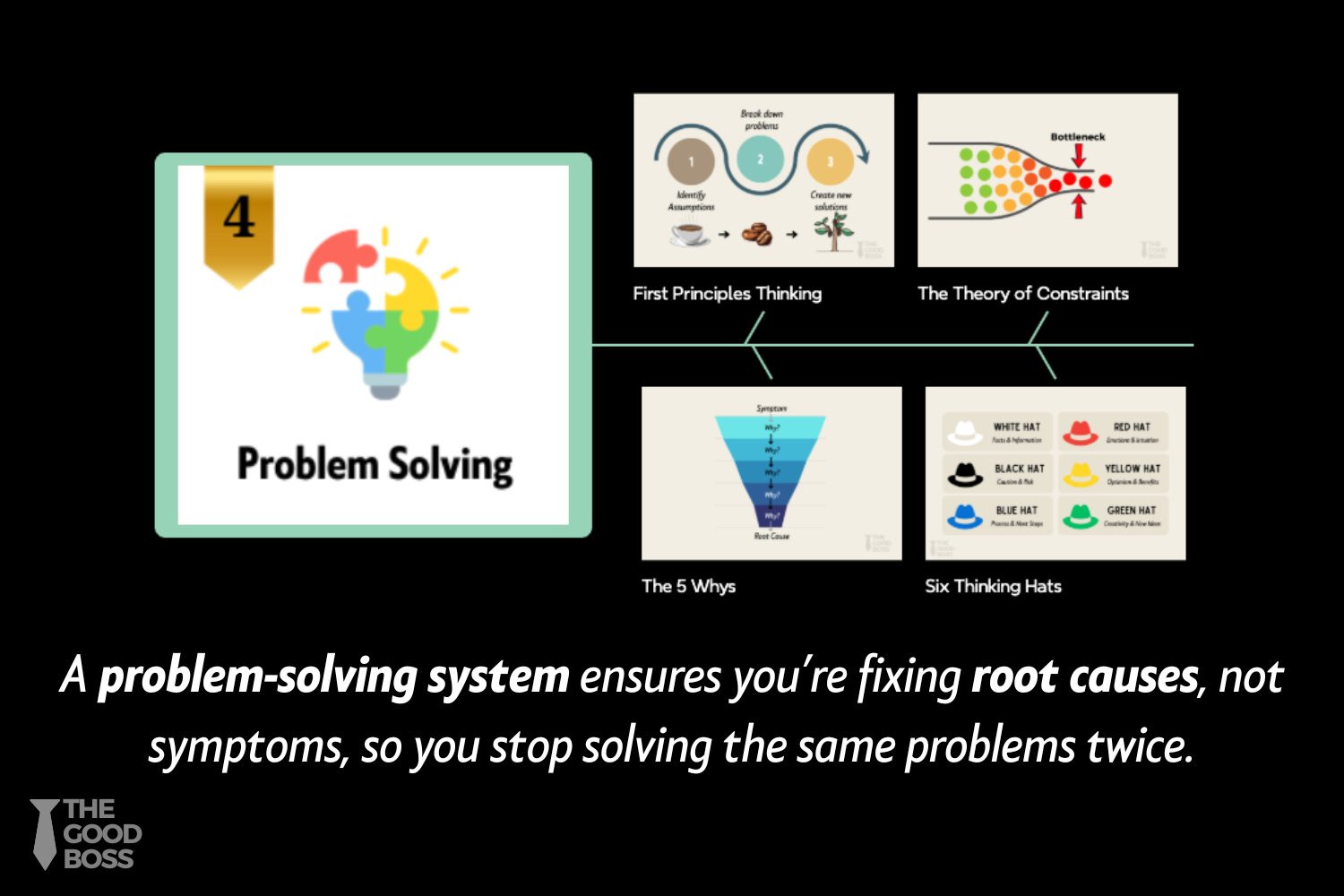
A problem-solving system helps leaders slow down before speeding up. It helps them ask better questions, instead of jumping to the answers.
🔧 Frameworks to Build It:


System #5. Team Development
“Great things in business are never done by one person. They’re done by a team of people.” — Steve Jobs
Dana managed a product team in a high-growth startup. Individually, her team members were top performers, but together, they couldn’t agree on anything.
The team standups were passive-aggressive, and cross-functional meetings spiraled into turf wars. Some of the junior team members were afraid to speak up, and her team, despite all the energy and talent, missed critical deadlines.
Dana thought she had a hiring problem, but in reality, she had a trust problem.
Too many leaders focus on what their team delivers, and not enough on how the team works together.
Great teams aren’t born out of thin air. They’re built through intentional systems that grow trust, and build a culture of psychological safety.
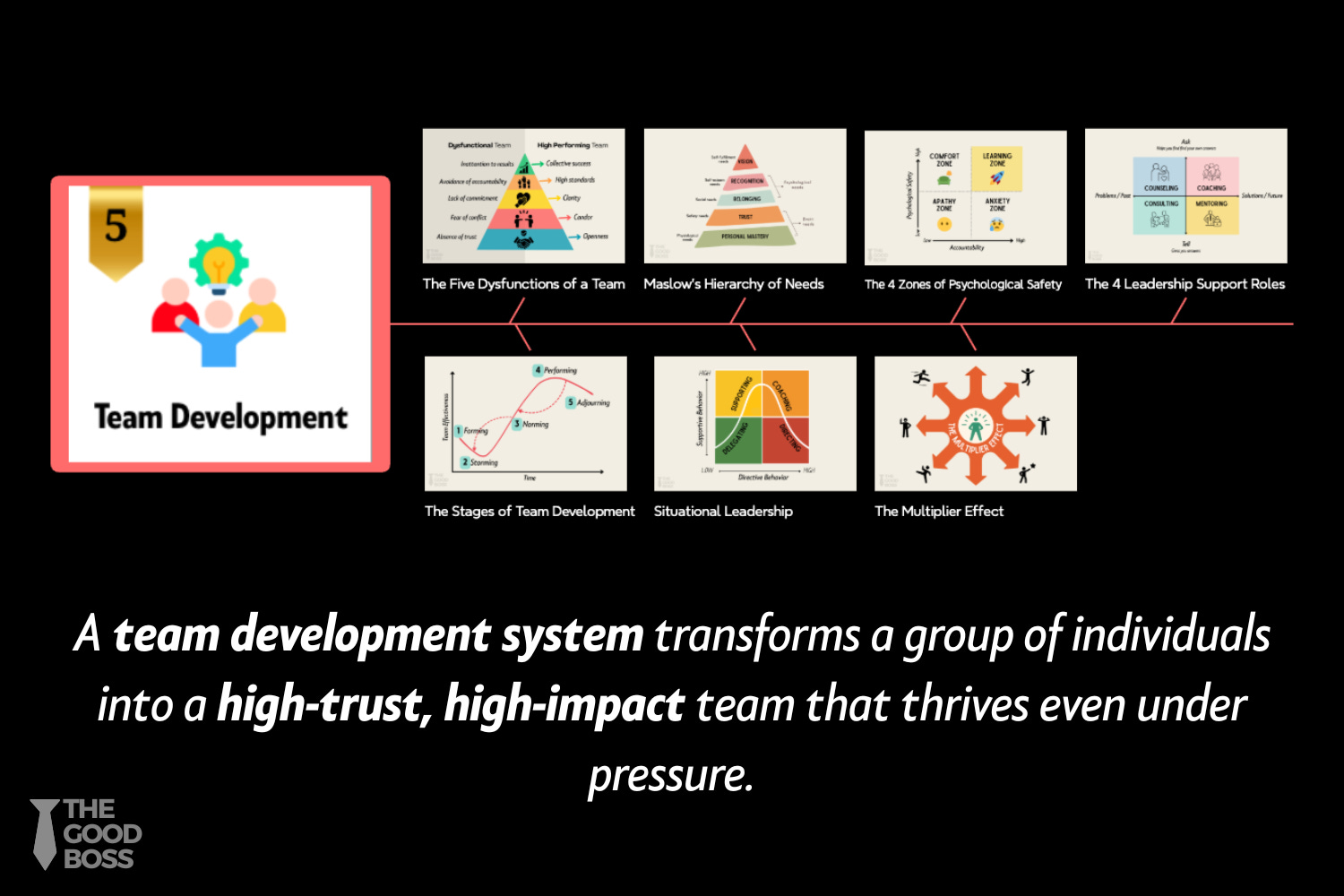
This team development system allows you to tap into the potential of your team members, and multiply their collective impact.
🔧 Frameworks to Build It:


System #6. Feedback & Communication
“The single biggest problem in communication is the illusion that it has taken place.” — George Bernard Shaw
James, a VP of Sales, was shocked when his star rep resigned. In her exit interview, she said, “I never knew if I was doing well or not. I just felt… invisible.”
James had thought he was giving regular feedback. But in reality, what he was doing was giving vague passing praise, or doing rushed performance reviews with unclear expectations.
In another incident, someone on James’s team misinterpreted a decision as criticism of his work, and became disengaged for weeks.
Communication is the life-blood of a healthy organization, yet most managers treat it as a side-task. And when they neglect to pay attention, their teams become disengaged and their business results slow down.
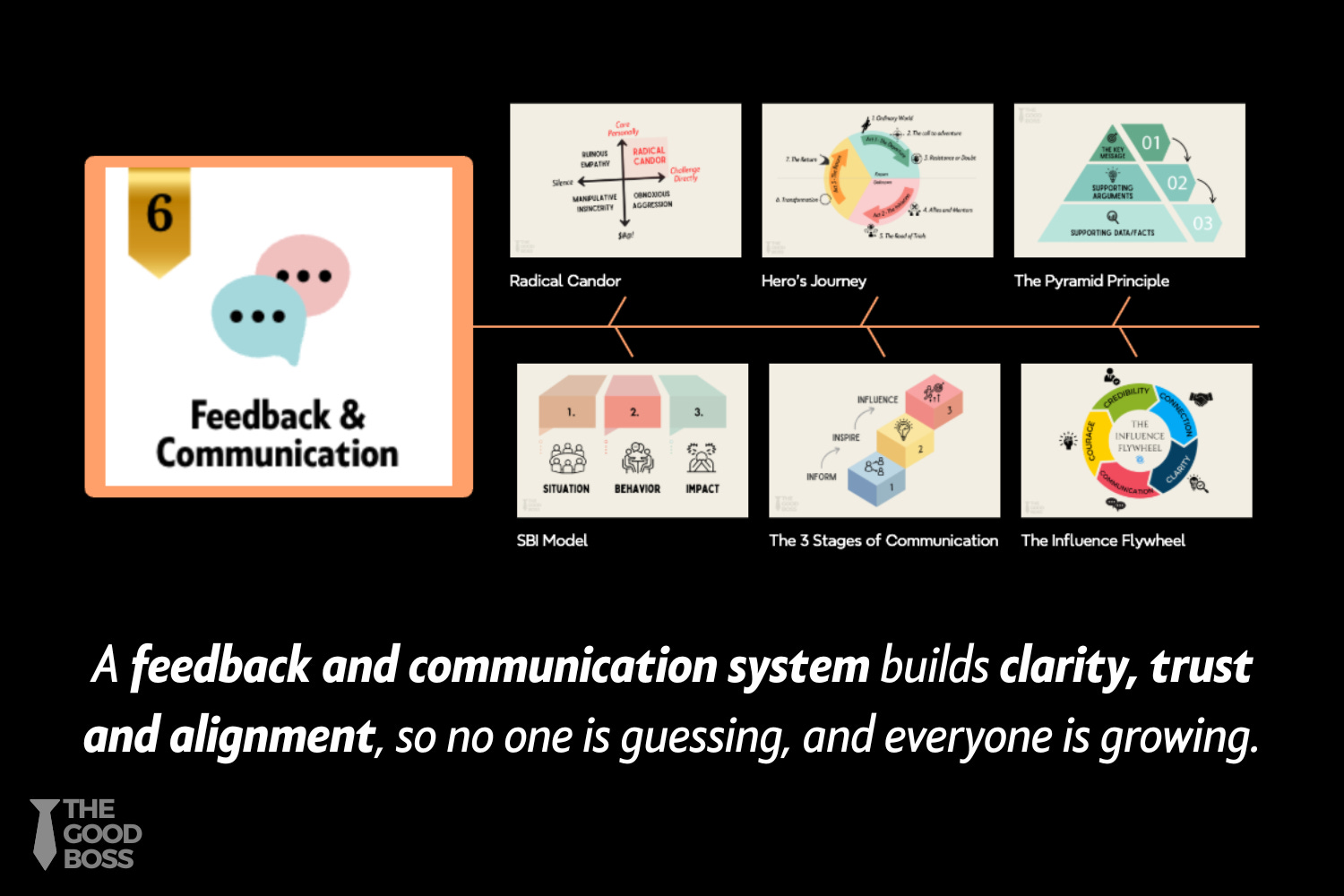
A great feedback and communication system allows you to provide actionable feedback that lands, and to make communication impactful and persuasive.
🔧 Frameworks to Build It:


Feedback is a gift! 💬 If you’re finding this post helpful, would you do me a favor and leave a quick testimonial here, and as a thank-you, I’ll send you a free copy of my book! It only takes a couple of minutes - thank you! 🙏
Final Thoughts
If you want to become a more strategic leader, the path isn’t more hustle, it’s better systems.
Systems free you from constant firefighting, and help you think long-term, communicate clearly, and scale your leadership beyond just your own effort.
Here’s where to start:
Feeling scattered? Build your Prioritization system.
Team drifting? Revisit your Vision & Alignment system.
Blind to risk? You need a Risk Management system.
Low trust or morale? Time to focus on Team Development.
Constant misunderstandings? Strengthen Feedback & Communication.
So, which system will you build this week? Let me know in the comments below!
The Ultimate Leadership Toolkit
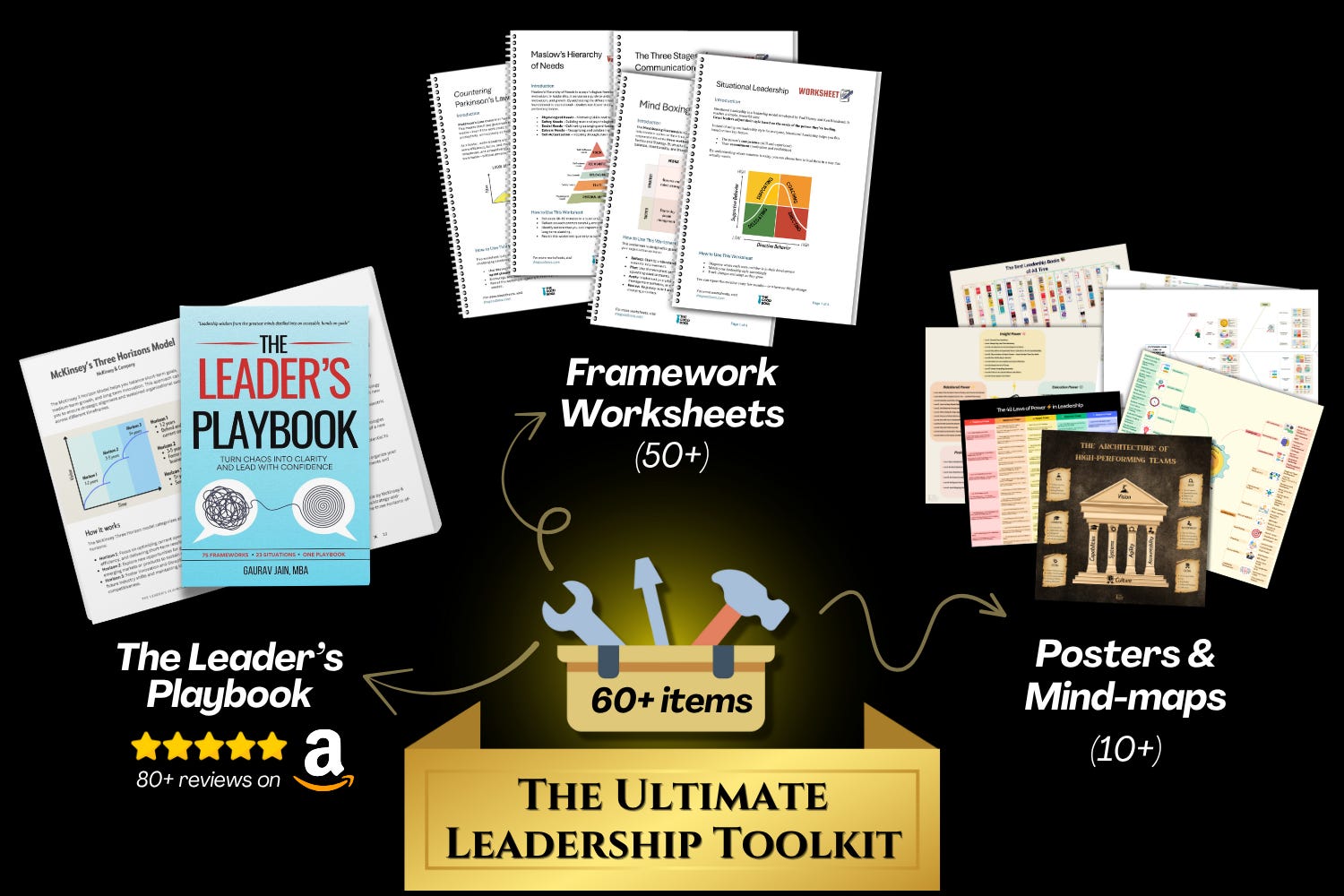
🚀 If you found this post helpful, you’ll love The Ultimate Leadership Toolkit, your complete system to lead with clarity, calm, and confidence.
Built on The Leadership Mastery System™, it helps you master leadership in three proven steps: Learn → Apply → Connect. You’ll get 60+ ready-to-use tools, worksheets, mind maps, and guides to help you turn insight into action. 👇

The Good Boss is funded by paid subscriptions from readers like yourself. If you aren’t already, consider becoming a paid subscriber to receive the full experience! Thank you! 🙏

PS: If you’re enjoying The Good Boss, I will appreciate it if you would hit the ❤️ button and share/restack 🔁 it with others who might find it helpful. Thank you!
Also, I’d love your feedback! 💬 Leave a quick testimonial here, and as a thank-you, I’ll send you a free copy of my book! It only takes a couple of minutes. Thank you! 🙏
The shift from manager to strategic leader isn’t just building six systems. It’s knowing which system is becoming the constraint.
I’ve watched experienced leaders spend months improving communication when the real bottleneck was decision-making. Others documented every process while their team still lacked a shared picture of success.
Systems matter, but leadership judgment is choosing the next system to strengthen. That’s where leverage lives.
This is awesome. One thing I miss is the concept of focus. In my experience, focus eats prioritization for breakfast. Opinions?