For decades, the experts said it couldn’t be done.
“The human body just wasn’t built for it,” they confidently said. “The lungs would collapse, and the heart would give out.”
A mile, under 4 minutes? Impossible.
Then, in 1954, a young British runner named Roger Bannister did it. He ran the mile in 3 minutes and 59.4 seconds.
A feat so unlikely, it stunned the world.
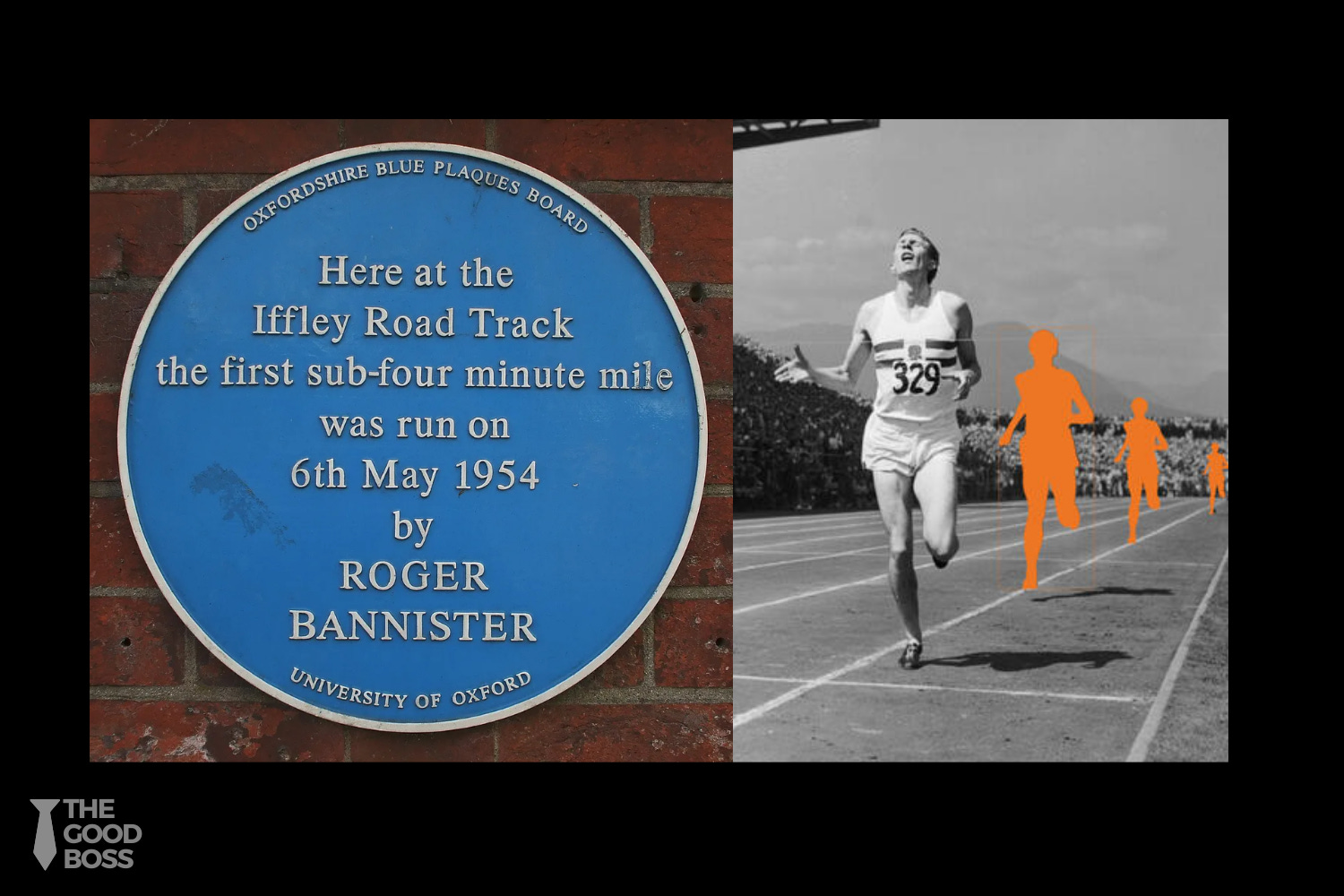
But here’s the twist:
Just 46 days later, someone else did it too. And not long after that, more runners joined the club.
As of 2025, more than 2,000 athletes have officially run the one-mile distance in less than four minutes.
So, what changed?
That’s exactly what we will find out in this post.
We will discuss this phenomenon, called The Bannister Effect, inspired by Roger Bannister, and how it can be applied in the context of leadership to lead high-performing teams.
Here’s what we will cover:
Part 1: Understanding the Bannister Effect
What is the Bannister Effect?
How the Bannister Effect Works in Teams
Part 2: Applying the Bannister Effect
3 Steps to Creating Bannister Moments
Real-Life Leadership Scenarios
The Bannister Effect Worksheet 📝
Part 3: Going from Here
Common Pitfalls to Avoid
Recommended Resources
Final Thoughts
Are you ready to dive in? Let’s go!

Part 1: Understanding the Bannister Effect
What is the Bannister Effect?
Let’s go back to 1954, when Roger Bannister ran the mile for the very first time in under 4 minutes.
As I mentioned earlier, right after that moment, many other runners achieved that feat in quick succession.
But what changed? Training? Equipment? Body?
None of that.
What changed was the belief.
The moment Roger Bannister crossed the finish line in 1954 was significant because it broke the mental barrier for thousands of other athletes. They knew, in that second, that it was possible to run a mile in less than 4 minutes, and that’s all they needed. We sometimes refer to that moment as The Bannister Moment, as illustrated below.
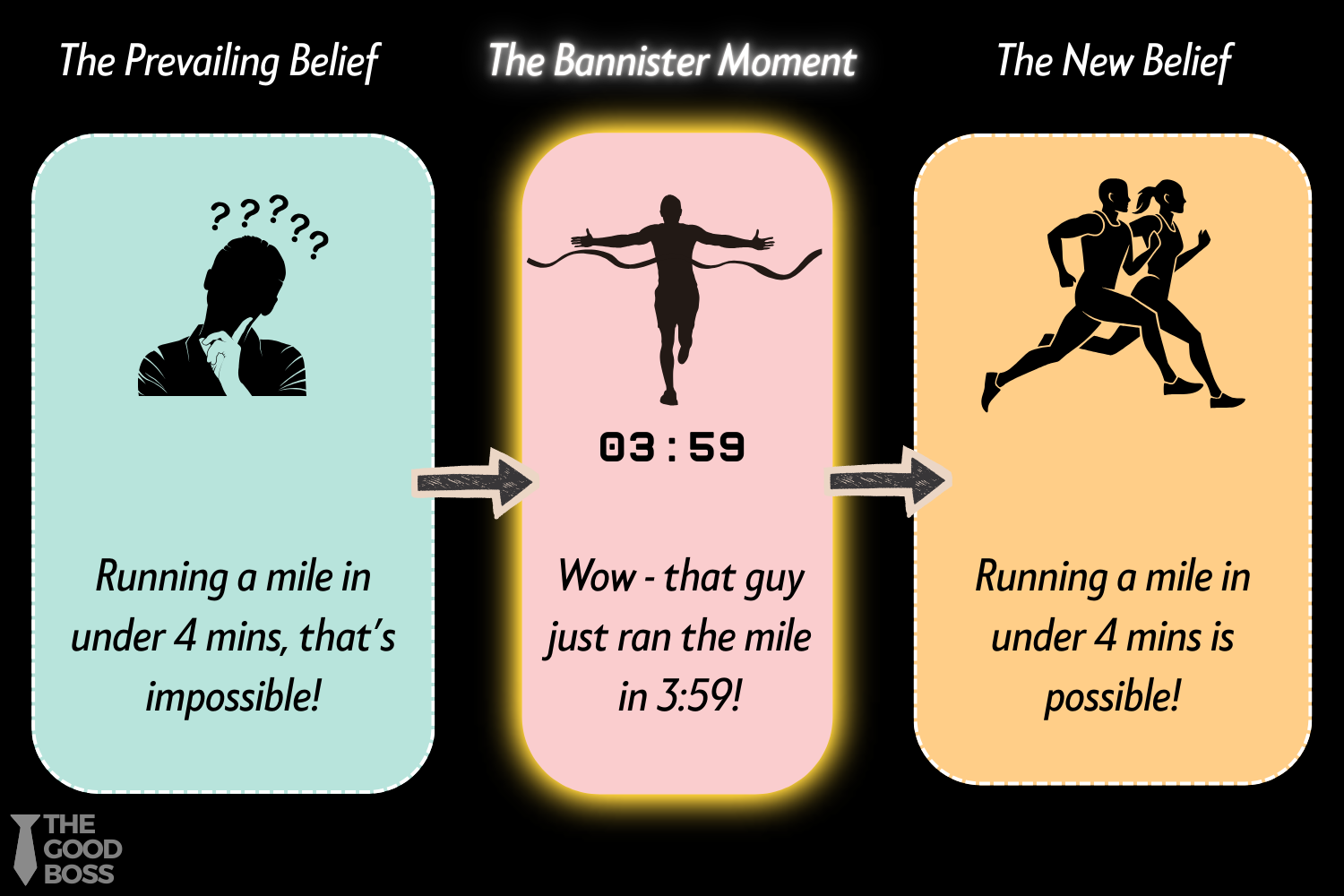
The Bannister Effect, in general, is what happens when one person breaks a mental barrier, and suddenly everyone else can too.
In teams, this shows up all the time.
The first person to speak up in a room full of silence.
The first junior teammate to challenge a senior idea.
The first team to try something new, while others stick to the old.
Once someone sees that something can be done, the mental weight lifts. It creates space for others to show up with courage.
How the Bannister Effect Works in Teams
Your team members don’t just operate on skill or motivation, they operate on belief.
Belief in what’s acceptable.
Belief in what’s rewarded.
Belief in what’s even possible.
When your team has limiting beliefs, their performance will be limited by the ‘invisible ceiling’ which is all in their heads.
But when they experience a Bannister Moment, they will break out of their limiting beliefs, and their performance will take a leap.
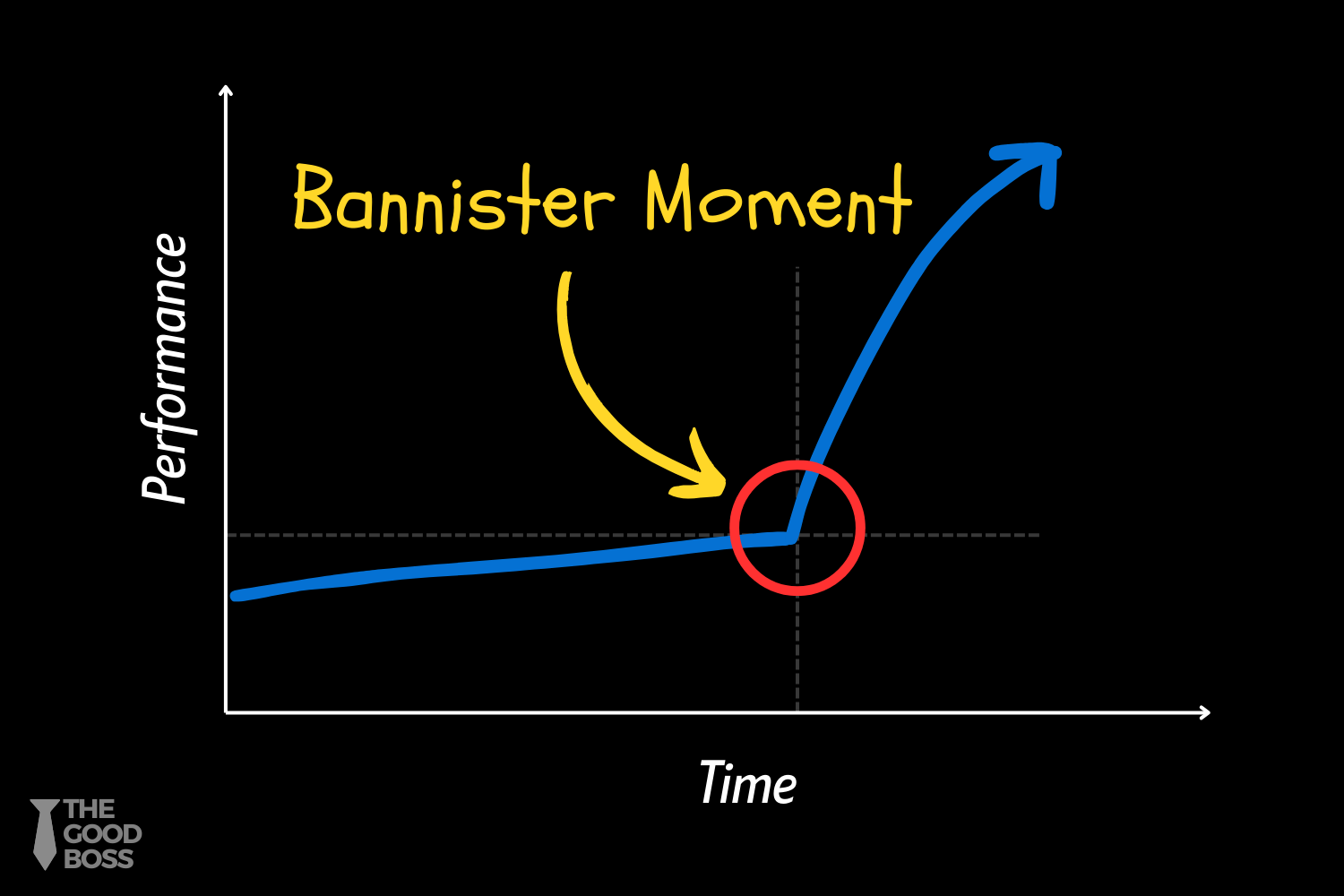
Note that belief is shaped by what your team members see, not what they’re told.
You can tell your team, “Take more risks.” But if no one ever takes one and gets praised for it, they won’t believe you mean it.
You can say, “Think big.” But if the boldest ideas always get shot down in review meetings, your words won’t matter.
You can say, “Take ownership.” But if every decision, every detail still goes through you, they’ll wait.
That’s how belief works. It’s fragile until it’s proven, and then it spreads like fire🔥.
Enjoying the read? Hit the ❤️ button and share/restack 🔁 it with others who might find it helpful. You can also subscribe to The Good Boss for more posts like this every week. Thank you! 🙏
Part 2: Applying the Bannister Effect
In this section, you’ll learn how to apply the Bannister Effect in your leadership role.
We’ll start with 3 simple ways you can create a Bannister moment in your team, even if you’re not in charge.
Then, we’ll walk through a few real-world leadership scenarios where this principle can unlock performance.
Finally, you’ll get a hands-on Bannister Effect Worksheet to help you uncover and challenge invisible limits in your team.
3 Steps to Creating Bannister Moments