
“The man who does not read has no advantage over the man who cannot read.”
— Mark Twain
📚
Books have always been my best teachers.
Long before I got pulled into the corporate world of business and leadership, books shaped how I think. As a child, I collected them like treasures, stacking them high until my parents gently reminded me that we were running out of space.
But space was never the real constraint. I always found room - shelves, tables, even under the bed - wherever they could fit. And when I wasn’t buying books, I was borrowing them from the local library (while slowly becoming best friends with the librarian - more on that another day!).
Reading is still my nightly ritual.
It’s how I slow down after a long day and get lost in the world hidden between those pages. It’s how I learn from people who’ve been there, made mistakes, and figured things out the hard way.
Books have shaped the way I think, the way I lead, and even the way I wrote my own book, The Leader’s Playbook (shameless plug - check it out if it interests you).
This is a curated collection of 147 of the best leadership books of all time, across 18 disciplines.
And in 2026, I’ve expanded and updated it, adding new books that reflect how leadership itself is evolving, especially in areas like AI and mental well-being.
But this isn’t just a random list.
As I worked through these books again, a familiar pattern stood out. The best leadership lessons tend to fall into a few broad layers.
Some books help you lead yourself better.
Some help you lead others.
Some focus on driving results.
And a few sharpen the strategic thinking that supports everything else.
If that idea sounds familiar, it’s because I’ve written about it before as The Leadership Stack - a simple way to think about leadership as layered, not linear.
What makes this collection different is that it’s not just a list of titles. Along the way, I’ve also distilled key insights from each discipline. And what fascinated me, again and again, was how often completely unrelated books echoed the same core lessons.
It’s a reminder that the principles of great leadership are universal.
So in many ways, you can think of this article as a book in itself, one that helps you navigate the vast world of leadership writing and find the titles that matter most to you right now.
So, are you ready to immerse yourself in the world of leadership wisdom?
Find a quiet corner. Grab a cuppa ☕️. And enjoy. (And don’t forget to thank me later.)
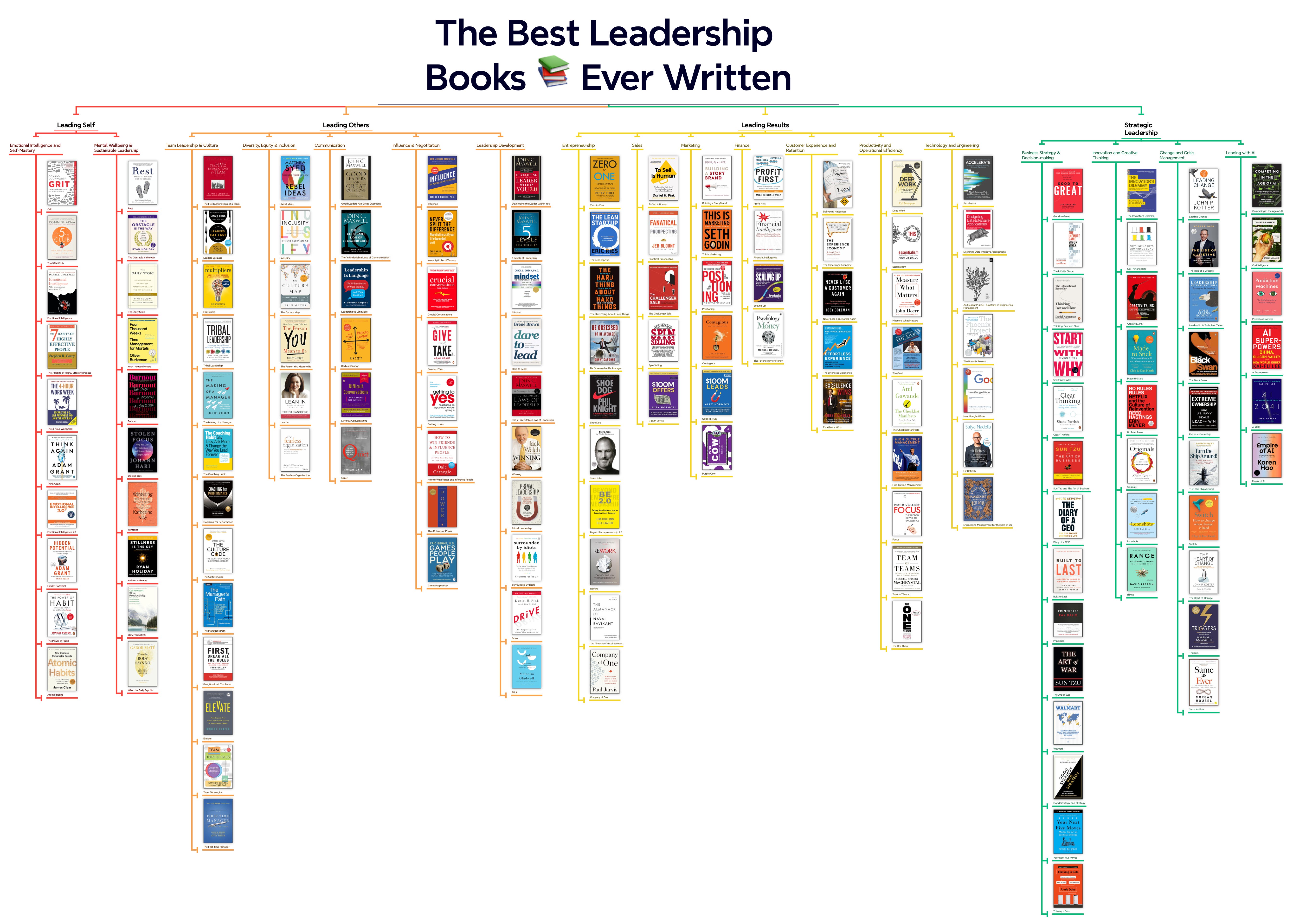
Here’s a sneak peek at the collection:
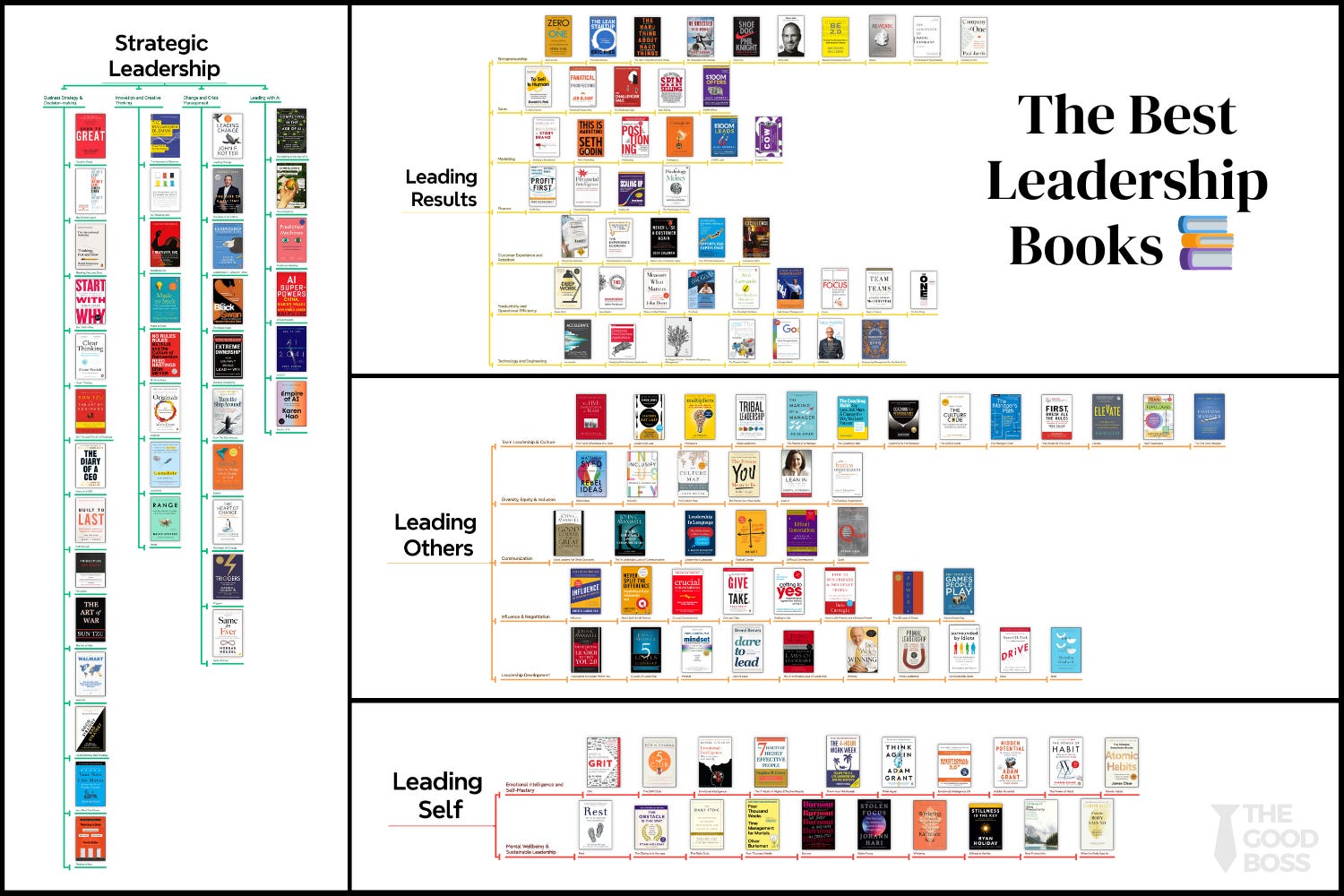
PS: Download a free copy of the original Mind-map and hi-res PDF version here.
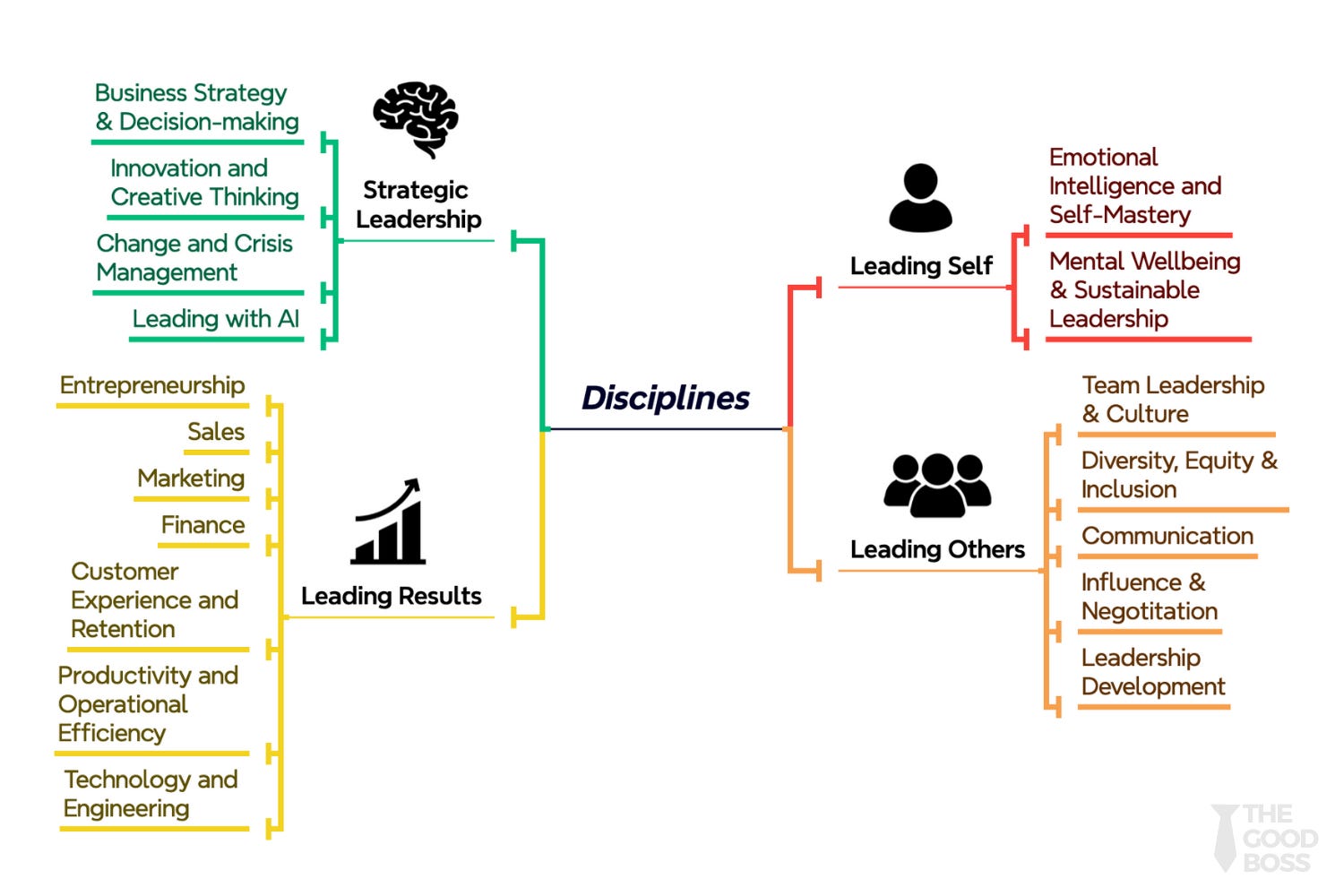
The 18 Disciplines
As mentioned earlier, I have organized the 18 disciplines across the leadership layers in The Leadership Stack, as follows:
Layer 1: Leading Self - How you show up as a leader
Disciplines in this layer:
Emotional Intelligence and Self-Mastery: Develop self-awareness, handle stress, and become a more empathetic and resilient leader.
Mental Wellbeing & Sustainable Leadership: Learn how to protect your energy, avoid burnout, and lead effectively over the long term without running yourself into the ground.
Layer 2: Leading Others - How you build trust and help people do their best work
Disciplines in this layer:
Team Leadership & Culture: Discover how to build great teams, boost collaboration, and create a positive, thriving workplace.
Diversity, Equity & Inclusion: Learn how to build inclusive teams and lead in ways that value and support everyone.
Communication: Improve how you share ideas, inspire your team, and connect with others through better communication.
Influence & Negotiation: Master the skills to persuade, negotiate, and lead even when you’re not in charge.
Leadership Development: Focus on growing your leadership skills and helping others become leaders too.
Layer 3: Leading Results - Turning leadership into outcomes
Disciplines in this layer:
Entrepreneurship: Learn how to start, grow, and lead a business from the ground up.
Sales: Build strong sales teams, boost revenue, and lead with confidence in sales.
Marketing: Strengthen your brand, connect with your audience, and lead marketing efforts that drive results.
Finance: Understand key financial concepts, manage budgets, and make smarter money decisions for your business.
Customer Experience and Retention: Focus on creating great experiences for your customers and keeping them loyal to your brand.
Productivity and Operational Efficiency: Learn how to get more done, improve workflows, and make your operations smoother.
Technology and Engineering: Lead tech projects and teams by blending technical knowledge with strong leadership.
Strategic Leadership (Across All Layers) - How you think, decide, and adapt
Disciplines in this layer:
Business Strategy & Decision-Making: Get tools and ideas to make smarter decisions and build strong, long-term plans.
Innovation and Creative Thinking: Find ways to think differently, spark new ideas, and drive innovation in your business.
Change and Crisis Management: Get the skills to guide your team through big changes and handle tough situations calmly.
Leading with AI: Understand how to use AI as a leadership tool to make better decisions, increase leverage, and lead teams confidently in an AI-driven world.
Now that we have a clear map of the disciplines, and how they fit together, let’s dive into each one, starting with Leading Self.

This layer focuses on how leaders manage themselves under pressure. It shapes emotional reactions, decision-making, and long-term sustainability. Most leadership challenges don’t start with skills or strategy. They start here.
Disciplines in this layer:
Emotional Intelligence & Self-Mastery
Mental Wellbeing & Sustainable Leadership
Discipline 1: Emotional Intelligence & Self-Mastery
Emotional intelligence and self-control are key to strong leadership.
Leaders who understand their own emotions, stay persistent and handle challenges well build trust and improve performance. Managing emotions and mindset helps leaders face difficulties calmly and set a positive example.
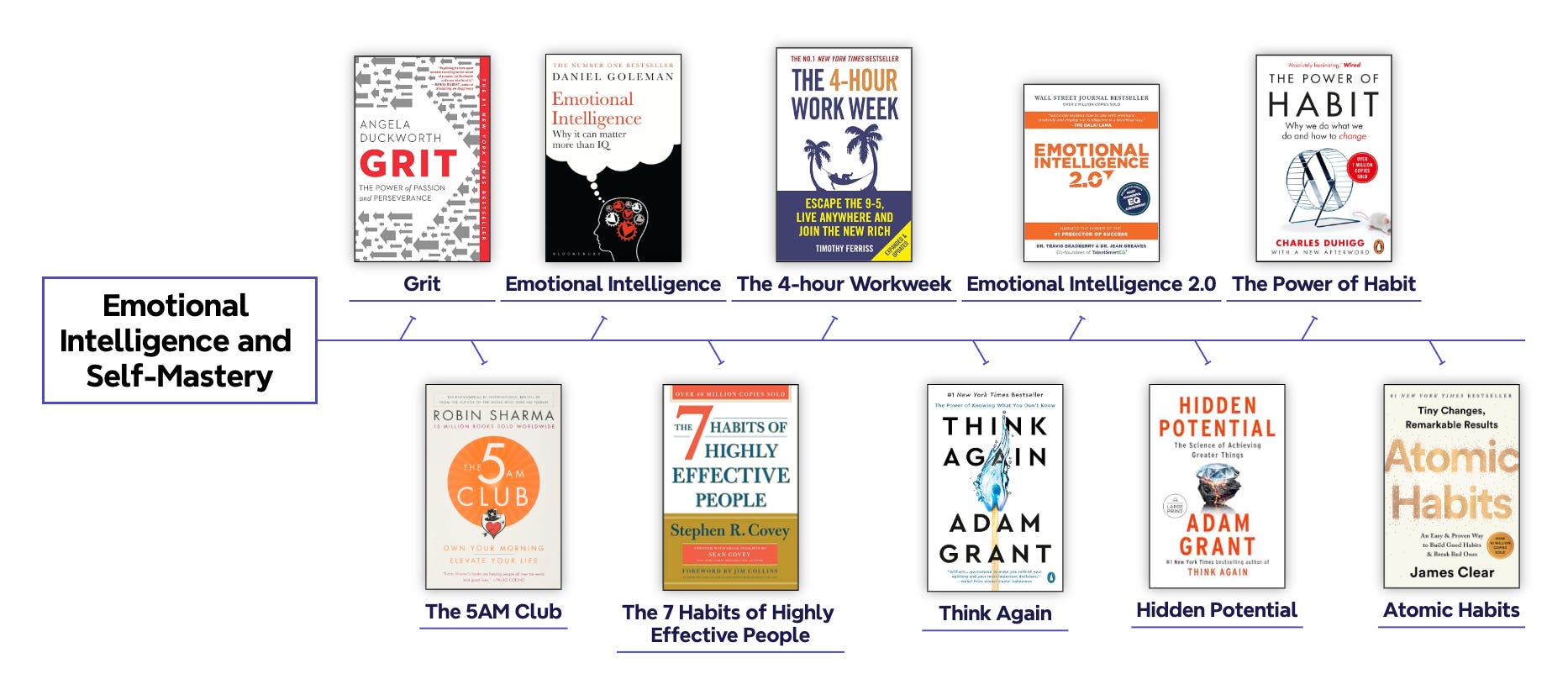
Key Insights on Emotional Intelligence & Self-Mastery:
Success comes from perseverance, not just talent.
In “Grit,” Angela Duckworth explains that consistent effort and passion for long-term goals are the true drivers of success.Daily reflection helps with emotional balance.
In “The Daily Stoic,” Ryan Holiday shares daily Stoic teachings that guide leaders to manage emotions, stay grounded, and reflect deeply.Turn challenges into opportunities.
In “The Obstacle Is the Way,” Ryan Holiday shows that setbacks can become strengths when leaders approach them as chances to grow.Emotional intelligence is key to great leadership.
In “Emotional Intelligence,” Daniel Goleman highlights that skills like empathy, self-awareness, and emotional control matter more than IQ for leadership success.Rest fuels productivity and creativity.
In “Rest,” Alex Soojung-Kim Pang reveals that intentional rest leads to higher productivity and long-term success, challenging the culture of overwork.
Books related to Emotional Intelligence & Self-Mastery:
Grit: The Power of Passion and Perseverance – Angela Duckworth
Rest: Why You Get More Done When You Work Less – Alex Soojung-Kim Pang
Think Again: The Power of Knowing What You Don’t Know – Adam Grant
Emotional Intelligence 2.0 – Travis Bradberry and Jean Greaves
The Power of Habit: Why We Do What We Do in Life and Business – Charles Duhigg
Frameworks related to Emotional Intelligence & Self-Mastery:


Discipline 2: Mental Wellbeing & Sustainable Leadership
Leadership is demanding, and over time, it can also be draining.
Many leaders are good at pushing through stress, solving problems, and putting others first. Fewer know how to slow down, recover, and protect their energy without guilt. Sustainable leadership is about recognizing limits early, not after burnout sets in.
This discipline focuses on how to lead effectively over years and decades, not just during intense sprints.
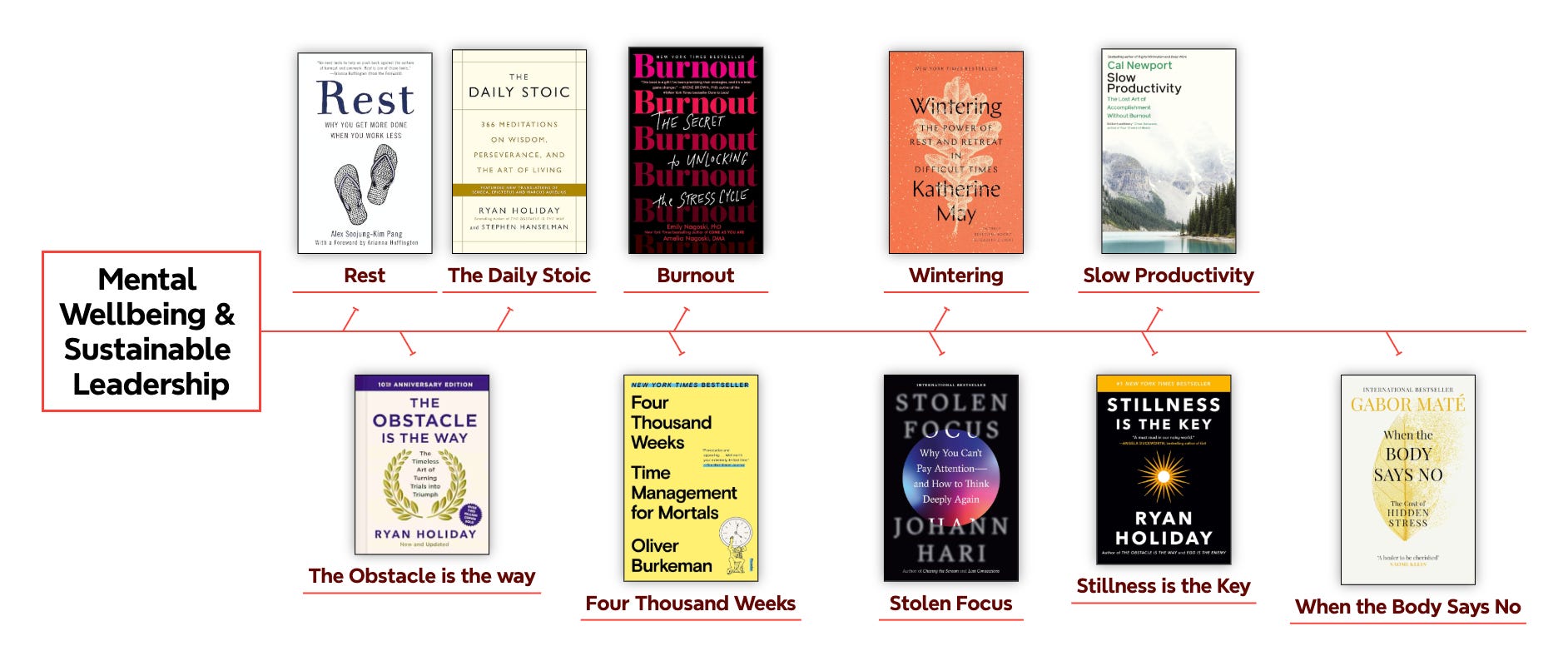
Key Insights on Mental Wellbeing & Sustainable Leadership:
Rest is not a reward. It’s a requirement.
In “Rest,” Alex Soojung-Kim Pang shows that deliberate rest improves performance, creativity, and decision-making over the long term.
Burnout isn’t a personal failure, it’s a biological signal.
In “Burnout,” Emily and Amelia Nagoski explain how stress cycles work and why completing them is essential for mental and emotional health.
Modern work is quietly destroying our ability to focus.
In “Stolen Focus,” Johann Hari explores how distraction, overload, and constant stimulation erode attention and mental clarity.
Stillness creates clarity in chaotic environments.
In “Stillness Is the Key,” Ryan Holiday shows how reflection and quiet thinking help leaders stay grounded under pressure.
Slowing down can actually lead to better results.
In “Slow Productivity,” Cal Newport argues for depth, quality, and sustainable pace over constant busyness.
Ignoring stress often leads to physical consequences.
In “When the Body Says No,” Gabor Maté explains how unresolved emotional stress shows up in the body, often years later.
Books related to Mental Wellbeing & Sustainable Leadership:
Rest: Why You Get More Done When You Work Less – Alex Soojung-Kim Pang
Burnout: The Secret to Unlocking the Stress Cycle - Emily Nagoski PhD and Amelia Nagoski DMA
Stolen Focus: Why You Can’t Pay Attention--and How to Think Deeply Again - Johann Hari
Wintering: The Power of Rest and Retreat in Difficult Times - Katherine May
Slow Productivity: The Lost Art of Accomplishment Without Burnout - Cal Newport
Frameworks related to Mental Wellbeing & Sustainable Leadership:


Enjoying the read? Hit the ❤️ button and share/restack 🔁 it with others who might find it helpful. You can also subscribe to The Good Boss for more posts like this every week. Thank you! 🙏

This layer focuses on how leaders work with people. It shapes trust, motivation, collaboration, and culture. Many leadership challenges don’t come from bad intent or poor strategy, they come from how leaders communicate, influence, and support their teams.
Disciplines in this layer:
Team Leadership & Culture
Diversity, Equity & Inclusion
Communication
Influence & Negotiation
Leadership Development
Discipline 3: Team Leadership & Culture
High-performing teams are built on trust, psychological safety, and a shared sense of purpose.
Leaders build strong cultures by empowering people, encouraging teamwork, and valuing ideas and feedback.
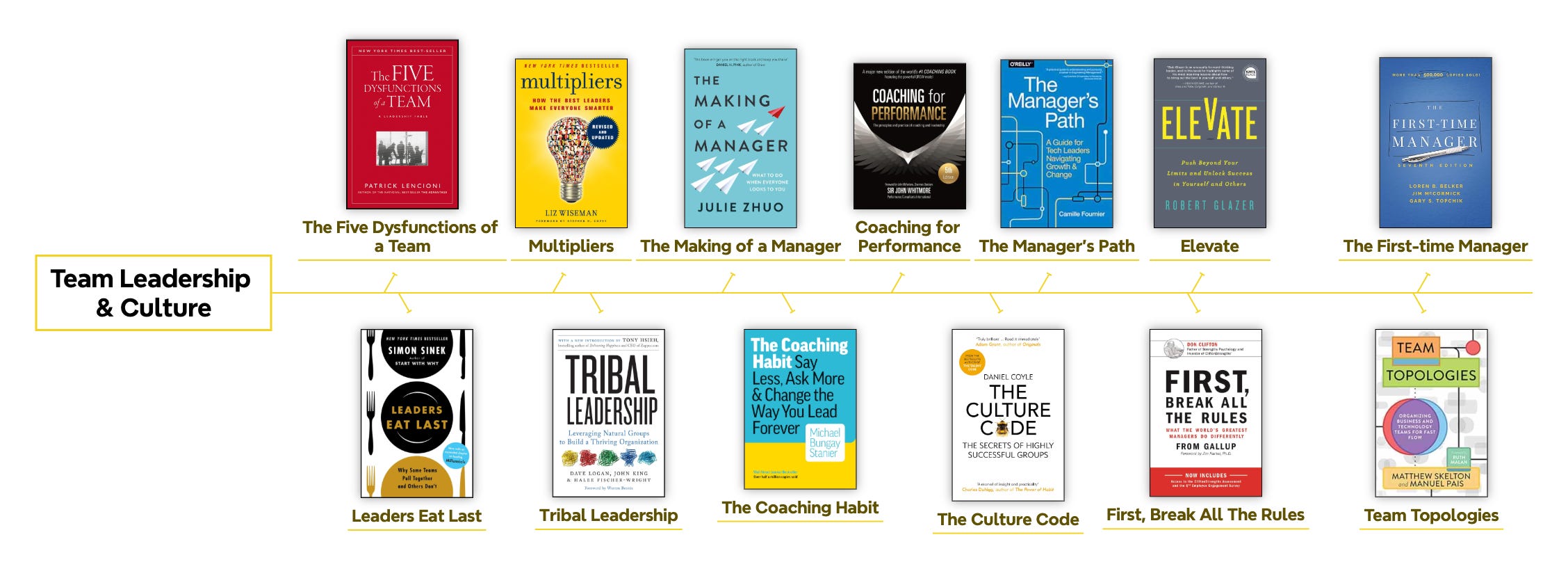
Key Insights on Team Leadership & Culture:
Trust is key to great teams.
In “The Five Dysfunctions of a Team,” Patrick Lencioni explains that without trust, teams avoid conflict, lose motivation, and underperform.
Put your team’s well-being first.
In “Leaders Eat Last,” Simon Sinek shows that teams do better when leaders focus on their health, safety, and personal growth.
Empower others to reach their potential.
In “Multipliers,” Liz Wiseman highlights that the best leaders help their teams grow, while poor leaders hold them back.
Culture shapes success.
In “The Culture Code,” Daniel Coyle explains that top teams succeed when they feel safe, supported, and part of a community.
Great leaders coach, not command.
In “The Coaching Habit,” Michael Bungay Stanier shows that leaders get better results by asking questions and guiding their teams instead of giving orders.
Books related to Team Leadership & Culture:
Tribal Leadership – Dave Logan, John King, and Halee Fischer-Wright
First, Break All The Rules – Marcus Buckingham and Curt Coffman
The First-Time Manager – Loren B. Belker, Jim McCormick, and Gary S. Topchik
Frameworks related to Team Leadership & Culture:


Discipline 4: Diversity, Equity & Inclusion (DEI)
Creating diverse, inclusive, and fair workplaces boosts innovation, engagement, and decision-making.
Leaders who prioritize inclusion build environments where people feel safe, valued, and motivated to do their best. This leads to better teamwork, higher morale, and stronger organizations.
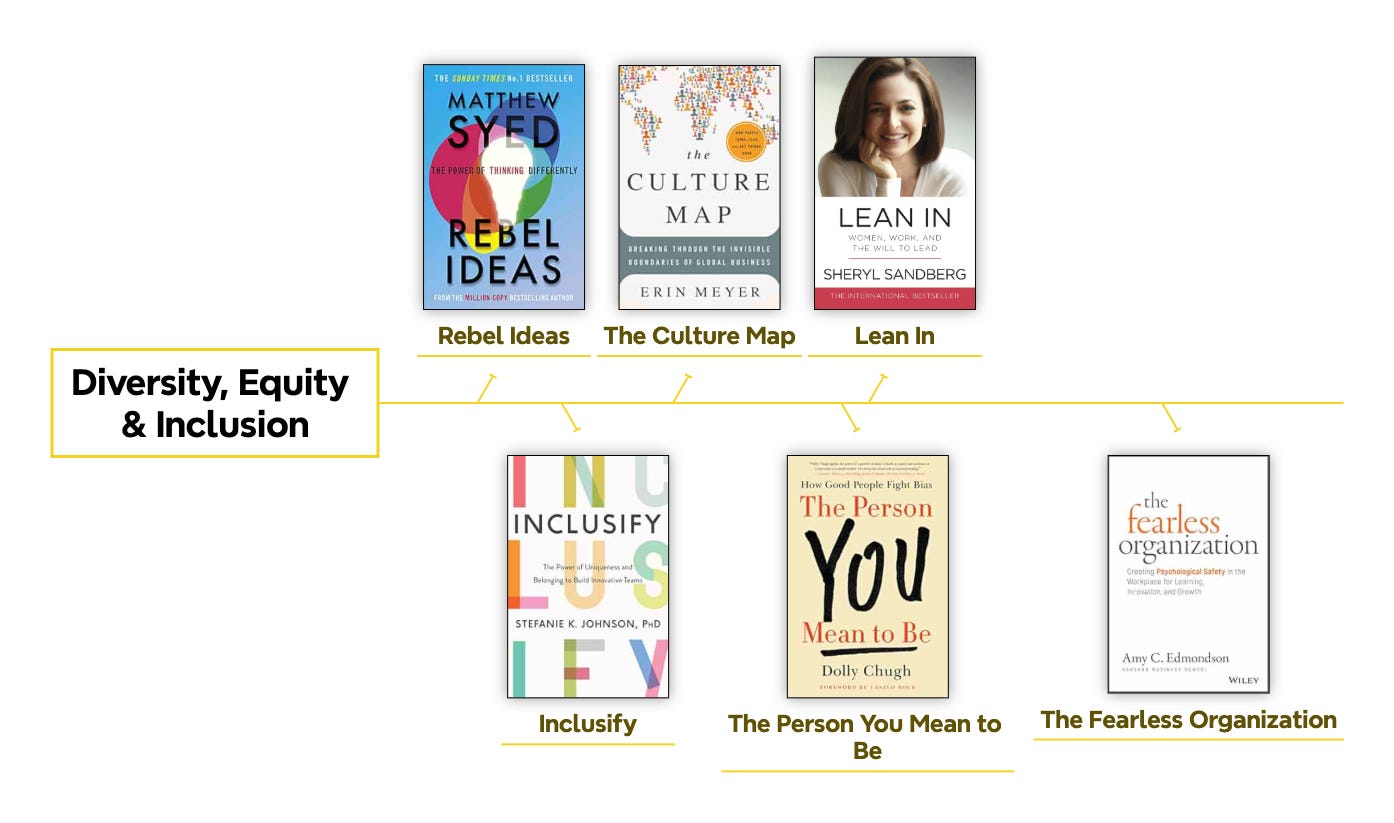
Key Insights on Diversity, Equity & Inclusion (DEI):
Teams perform best when they feel safe to speak up.
In “The Fearless Organization,” Amy Edmondson explains that creating a culture where people can share ideas without fear leads to better team performance.Women should embrace leadership roles.
In “Lean In,” Sheryl Sandberg encourages women to step into leadership positions and overcome the barriers that hold them back.Inclusion starts with self-awareness.
In “The Person You Mean to Be,” Dolly Chugh shows that recognizing and addressing personal biases is key to creating inclusive environments.Celebrate differences to build stronger teams.
In “Inclusify,” Stefanie K. Johnson explains that leaders who value and integrate diverse perspectives create more innovative and engaged teams.Diverse thinking leads to better decisions.
In “Rebel Ideas,” Matthew Syed demonstrates that teams with diverse backgrounds and ways of thinking outperform those that lack variety.
Books related to Diversity, Equity & Inclusion:
Inclusify: The Power of Uniqueness and Belonging to Build Innovative Teams – Stefanie K. Johnson
The Culture Map: Breaking Through the Invisible Boundaries of Global Business – Erin Meyer
The Person You Mean to Be: How Good People Fight Bias – Dolly Chugh
Lean In: Women, Work, and the Will to Lead – Sheryl Sandberg
The Fearless Organization: Creating Psychological Safety in the Workplace for Learning, Innovation, and Growth – Amy C. Edmondson
Frameworks related to Diversity, Equity & Inclusion:


Discipline 5: Communication
Good communication is essential for leadership – it aligns teams, solves conflicts, and motivates action.
Leaders need to be great at storytelling, giving feedback, and listening with empathy to keep their teams engaged and clear on goals.
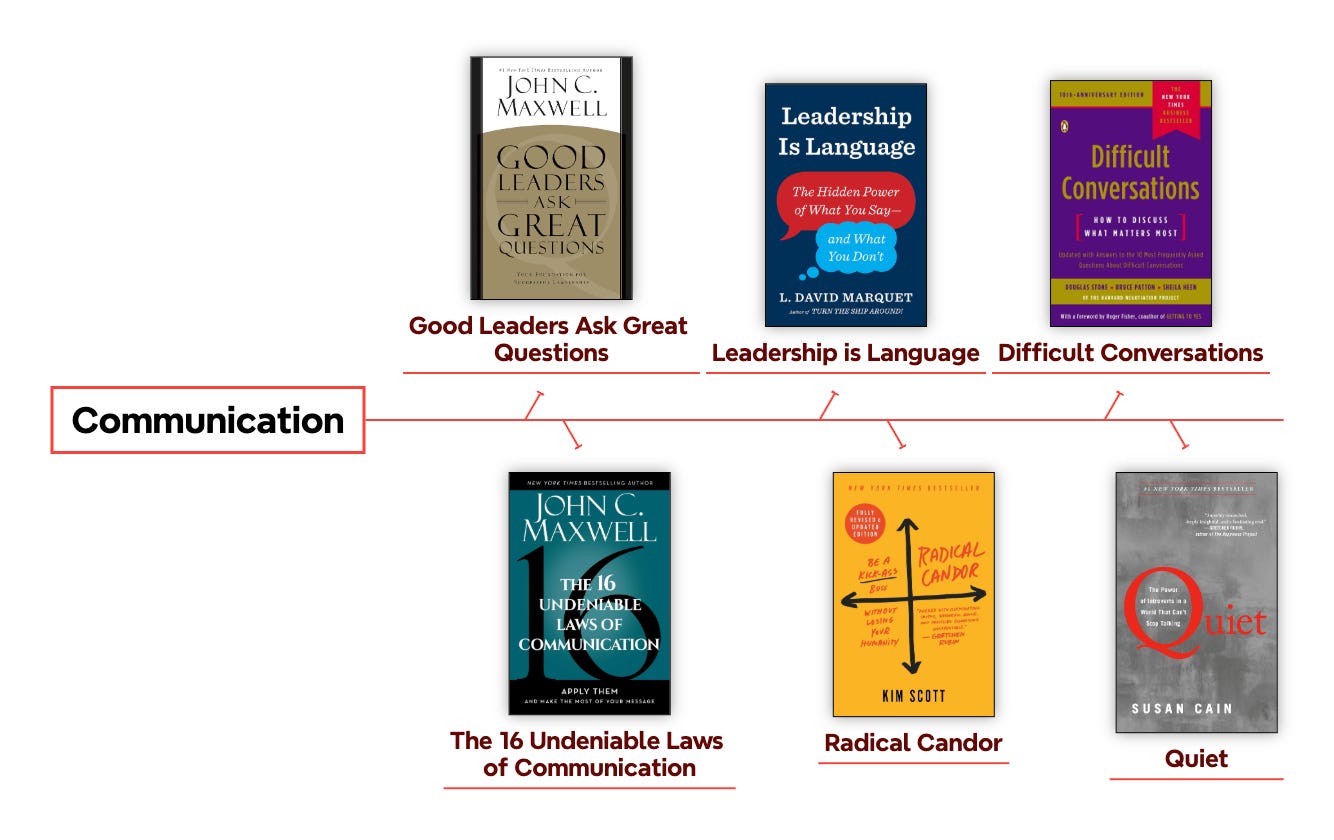
Key Insights on Communication:
Ask better questions to inspire growth.
In “Good Leaders Ask Great Questions,” John Maxwell shows that asking thoughtful questions leads to better decisions and stronger connections.
Give honest feedback with care.
In “Radical Candor,” Kim Scott explains how leaders can help their teams grow by being direct while showing empathy.
Listen to understand others.
In “Quiet,” Susan Cain highlights how introverted leaders succeed by listening carefully and creating space for others to share ideas.
Tailor your communication to the situation.
In “Leadership is Language,” David Marquet explains that shifting from giving orders to having open conversations leads to better team performance.
Books related to Communication:
Difficult Conversations – Douglas Stone, Bruce Patton, and Sheila Heen
Quiet: The Power of Introverts in a World That Can’t Stop Talking – Susan Cain
Frameworks related to Communication:


Discipline 6: Influence & Negotiation
Influence and negotiation are vital for leaders to shape culture, drive key decisions, and navigate office politics.
Great leaders build trust, communicate clearly, and find solutions that benefit everyone through empathy and strategy.
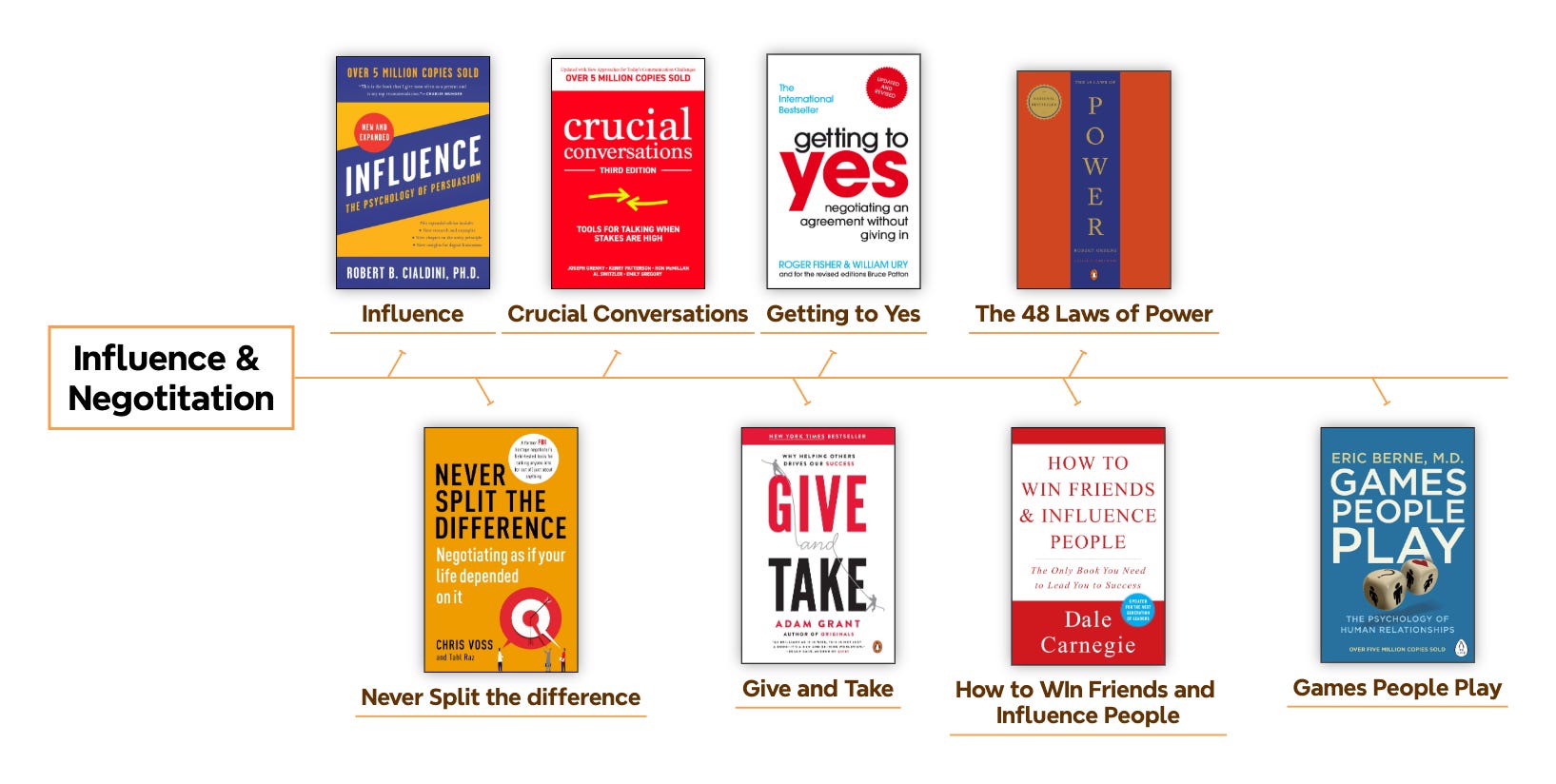
Key Insights on Influence & Negotiation:
Understand psychology to influence others.
In “Influence,” Robert Cialdini explains six key principles – like reciprocity and social proof – that shape how people make decisions.
Negotiate by finding win-win solutions.
In “Never Split the Difference,” Chris Voss shows how empathy and mirroring help build trust and lead to successful negotiations.
Helping others strengthens your influence.
In “Give and Take,” Adam Grant reveals that leaders who give without expecting immediate returns build lasting relationships and networks.
Difficult conversations shape leadership.
In “Crucial Conversations,” Patterson, Grenny, and McMillan explain how staying calm and clear during tough discussions improves relationships and resolves conflict.
Add value to build strong relationships.
In “How to Win Friends and Influence People,” Dale Carnegie shows that showing genuine interest in others helps build trust and influence.
Books related to Influence & Negotiation:
Influence: The Psychology of Persuasion – Robert B. Cialdini
Crucial Conversations: Tools for Talking When Stakes Are High – Kerry Patterson, Joseph Grenny, Ron McMillan, and Al Switzler
Getting to Yes: Negotiating Agreement Without Giving In – Roger Fisher, William Ury, and Bruce Patton
Frameworks related to Influence & Negotiation:


Discipline 7: Leadership Development
Great leaders motivate others, earn trust, and create lasting organizations. They focus on self-awareness, lead with empathy, and commit to personal and team growth.
Leadership is not about power – it’s about guiding, serving, and fostering an environment where people can succeed.
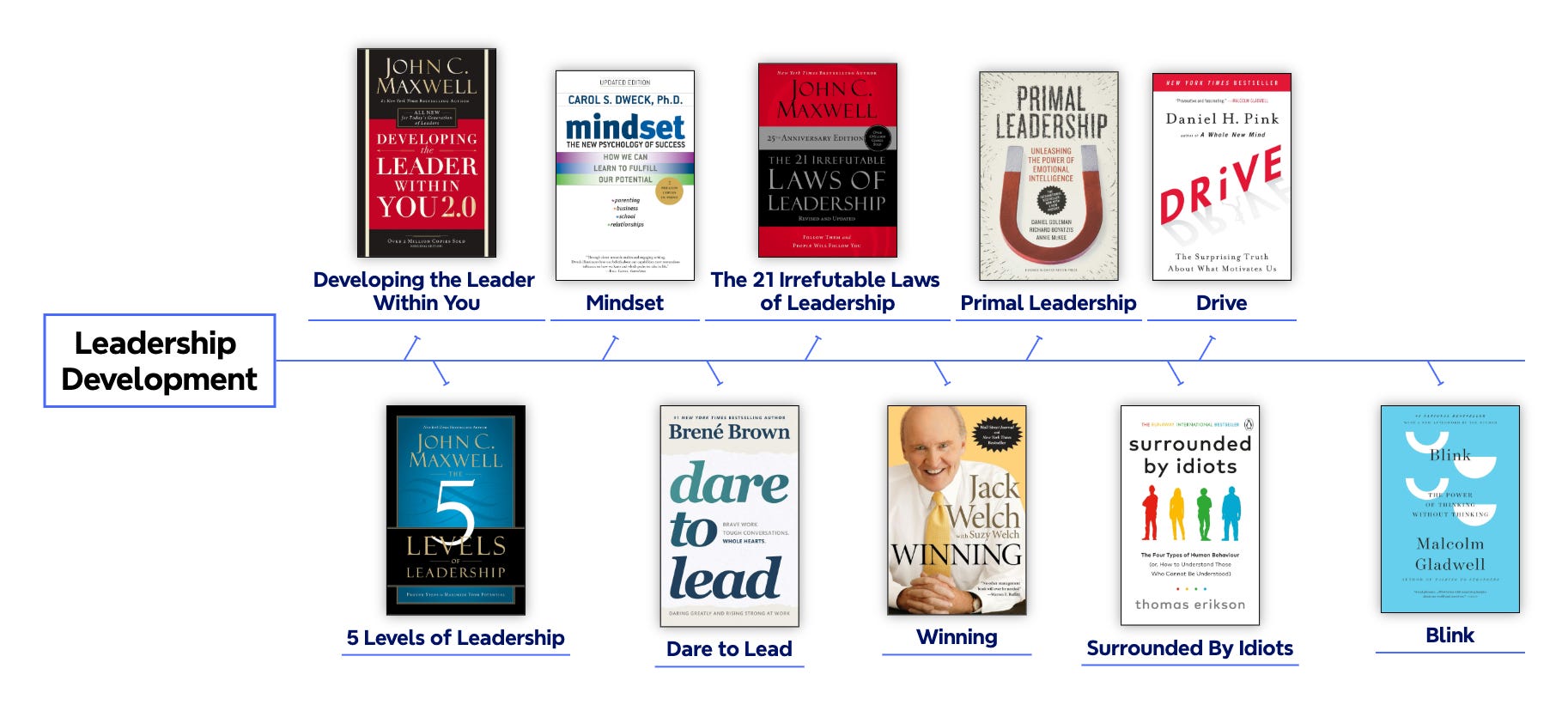
Key Insights on Leadership Development:
Leadership starts with knowing yourself.
In “Developing the Leader Within You,” John Maxwell explains that great leadership begins by understanding your strengths, weaknesses, and values.
A growth mindset builds better leaders.
In “Mindset,” Carol Dweck shows that leaders who see challenges as opportunities to grow become more resilient and effective.
Leadership is about influence, not titles.
In “5 Levels of Leadership,” John Maxwell explains that leadership grows by earning trust and respect, not by holding a position.
Vulnerability makes leaders stronger.
In “Dare to Lead,” Brené Brown shows that leaders who are open and authentic build deeper trust and stronger teams.
Emotional intelligence sets leaders apart.
In “Primal Leadership,” Daniel Goleman explains that self-awareness, empathy, and strong relationships are key to leadership success.
Books related to Leadership Development:
Primal Leadership – Daniel Goleman, Richard Boyatzis, and Annie McKee
Drive: The Surprising Truth About What Motivates Us – Daniel H. Pink
Blink: The Power of Thinking Without Thinking – Malcolm Gladwell
Frameworks related to Leadership Development:


Feedback is a gift! 💬 If you’re finding this post helpful, would you do me a favor and leave a quick testimonial here, and as a thank-you, I’ll send you a free copy of my book! It only takes a couple of minutes - thank you! 🙏

This layer focuses on execution and impact. It shapes how ideas turn into action, how teams align around goals, and how businesses grow and scale. Many leadership challenges don’t come from a lack of effort, they come from unclear priorities, weak systems, or poor execution.
Disciplines in this layer:
Entrepreneurship
Sales
Marketing
Finance
Customer Experience and Retention
Productivity and Operational Efficiency
Technology and Engineering
Discipline 8: Entrepreneurship
Entrepreneurship isn’t just about starting a business – it’s about finding new and creative ways to add value.
The most successful entrepreneurs stand out by thinking differently, staying focused on their goals, and constantly experimenting and learning from challenges.
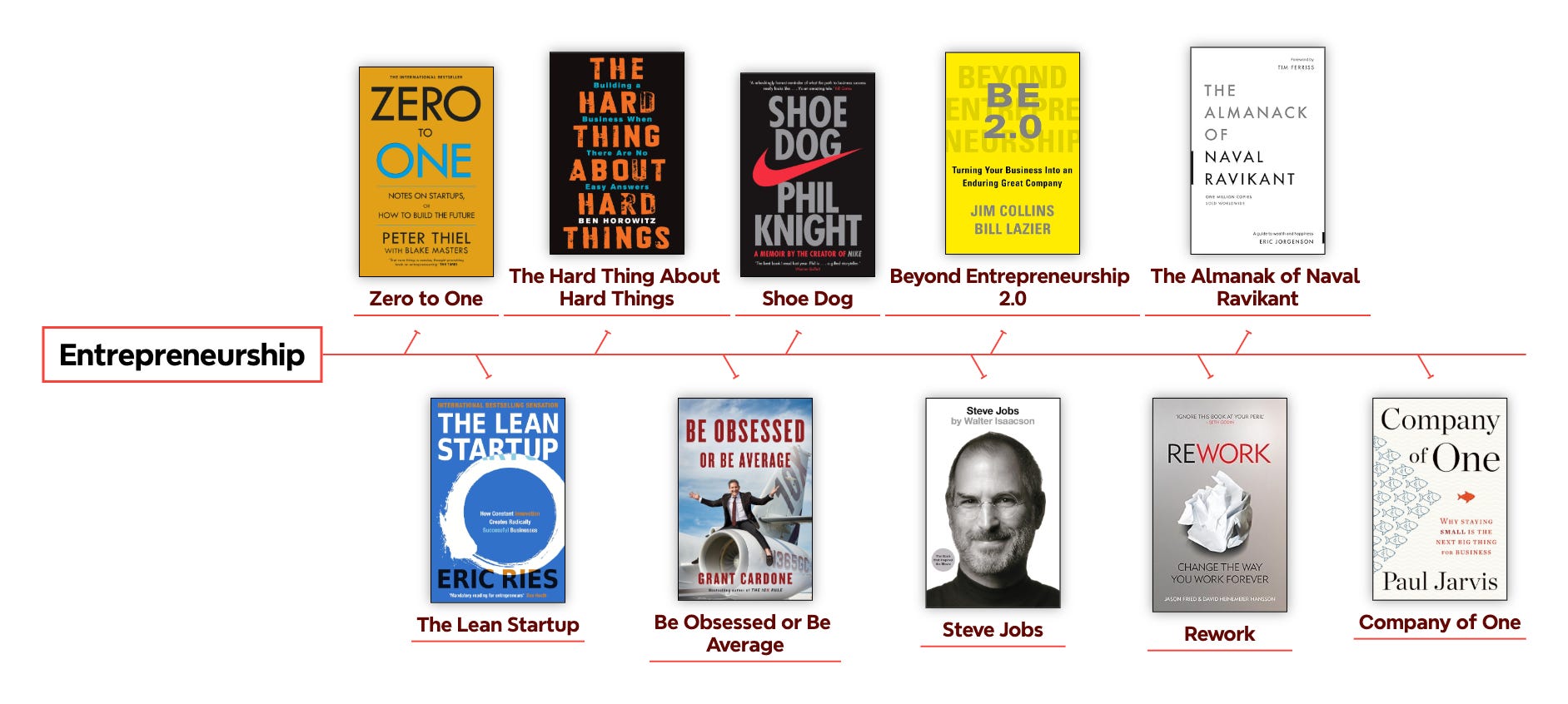
Key Insights on Entrepreneurship:
Create new markets instead of competing in existing ones. In “Zero to One,” Peter Thiel explains that competing with others limits profits, while the biggest success comes from offering something completely new.
Test and improve your ideas quickly.
In “The Lean Startup,” Eric Ries shows how launching a simple version of your product (MVP) and gathering feedback helps you refine your idea fast.Tackle tough decisions head-on.
In “The Hard Thing About Hard Things,” Ben Horowitz reminds us that entrepreneurship comes with difficult choices and no easy answers.Let your obsession drive success.
In “Be Obsessed or Be Average,” Grant Cardone highlights that being deeply focused and driven by your goals is what leads to extraordinary achievements.Focus relentlessly on the “Core Product.”
In “Steve Jobs,” Walter Isaacson shows how Jobs believed that success comes from focusing intensely on a few key products rather than spreading resources too thin.
Books related to Entrepreneurship:
Discipline 9: Sales
Sales today isn’t about pushing products – it’s about understanding customers, challenging their ideas, and showing how your solution fits their needs.
Modern sales focuses on adding value, building trust, and helping customers make decisions.
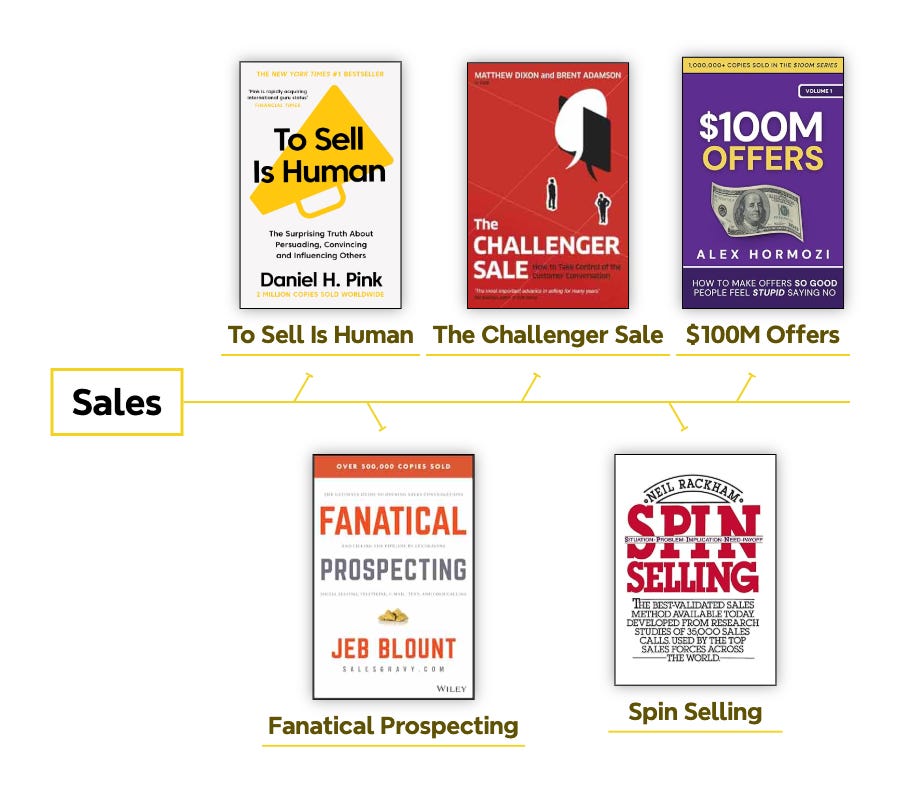
Key Insights on Sales:
Sales is about solving problems, not just persuading.
In “To Sell is Human,” Daniel Pink explains that sales is most effective when you help people identify and solve their problems, rather than simply pushing products.
Sell solutions, not just products.
In “The Challenger Sale,” Matthew Dixon and Brent Adamson show that the best salespeople challenge customer assumptions and present solutions to their problems.
Ask the right questions to find customer needs.
In “SPIN Selling,” Neil Rackham introduces a framework that helps salespeople uncover deeper problems by asking questions about situations, challenges, and goals.
Create offers too good to refuse.
In “$100M Offers,” Alex Hormozi explains how to build irresistible offers by reducing risk, bundling products, and adding guarantees to remove barriers for customers.
Books related to Sales:
Discipline 10: Marketing
Marketing is about telling stories, connecting emotionally, and understanding customers.
Great marketers use both creativity and data to make their messages impactful and drive action.
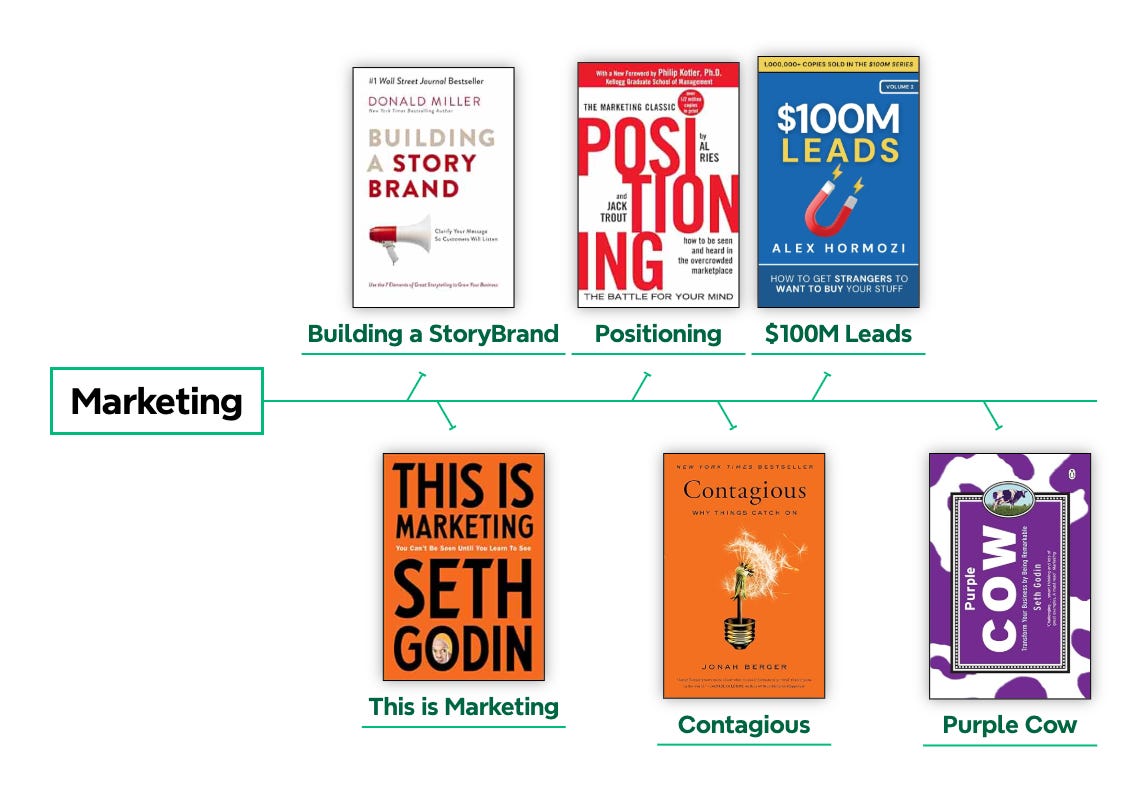
Key Insights on Marketing:
Emotion drives buying decisions.
In “This is Marketing,” Seth Godin explains that people make purchases based on emotion first and then justify them with logic.Use stories that connect with your audience.
In “Building a StoryBrand,” Donald Miller shows how framing the customer as the hero and your brand as the guide creates stronger connections and drives engagement.Stand out by being different, not by competing.
In “Purple Cow,” Seth Godin highlights that the best way to get noticed is to create products and campaigns that are bold, unique, and remarkable.
Books related to Marketing:
Positioning: The Battle for Your Mind – Al Ries and Jack Trout
Contagious: How to Build Word of Mouth in the Digital Age – Jonah Berger
Purple Cow: Transform Your Business by Being Remarkable – Seth Godin
Discipline 11: Finance
Understanding finance is key to growth and profit.
Leaders who manage cash flow, read financial statements, and use resources wisely set their businesses up for long-term success.
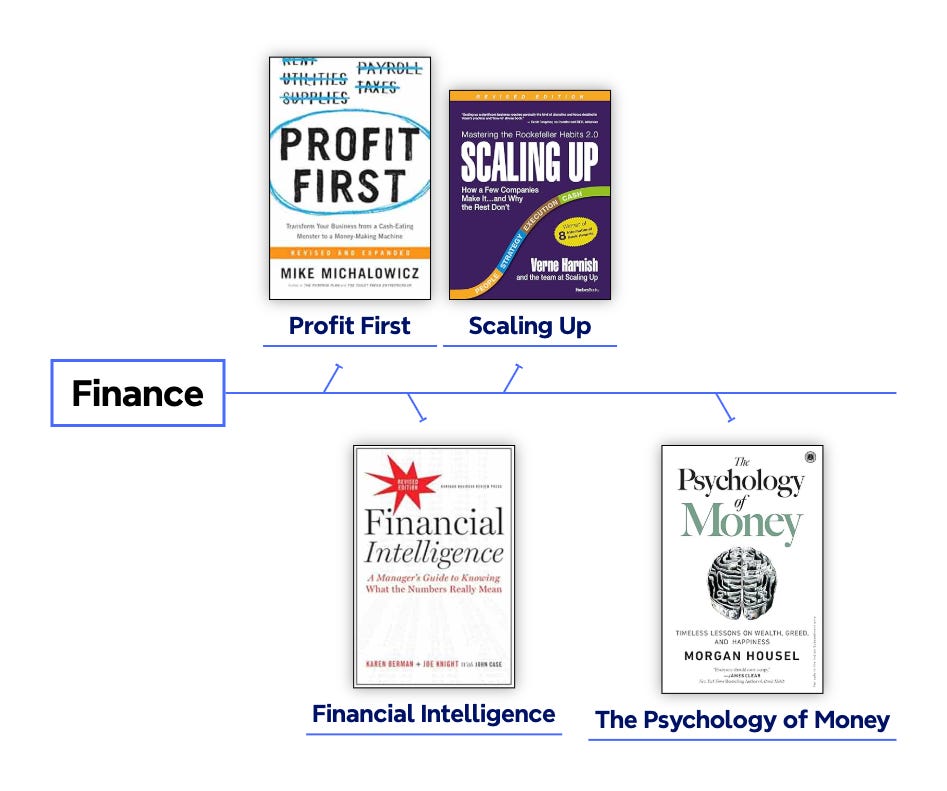
Key Insights on Finance:
Take profit first, not last.
In “Profit First,” Mike Michalowicz explains that businesses should set aside profit from every sale before paying expenses to ensure long-term success.Cash flow, not just revenue, fuels growth.
In “Scaling Up,” Verne Harnish warns that fast growth can lead to cash flow issues if not carefully managed, emphasizing the importance of monitoring liquidity.Know your financials to understand your business.
In “Financial Intelligence,” Karen Berman shows leaders how to read and interpret financial statements to track the health of their company.Control spending by managing expenses separately.
In “Profit First,” Mike Michalowicz suggests using different bank accounts for expenses, taxes, and profit to prevent overspending and maintain financial discipline.
Books related to Finance:
Financial Intelligence: A Manager’s Guide to Knowing What the Numbers Really Mean – Karen Berman and Joe Knight
Scaling Up: How a Few Companies Make It...and Why the Rest Don’t – Verne Harnish
Discipline 12: Customer Experience & Retention
Great customer experience drives long-term success and loyalty. Businesses that understand and exceed customer expectations stay ahead of competitors.
By building emotional connections and improving service, leaders keep customers engaged and loyal to their brand.
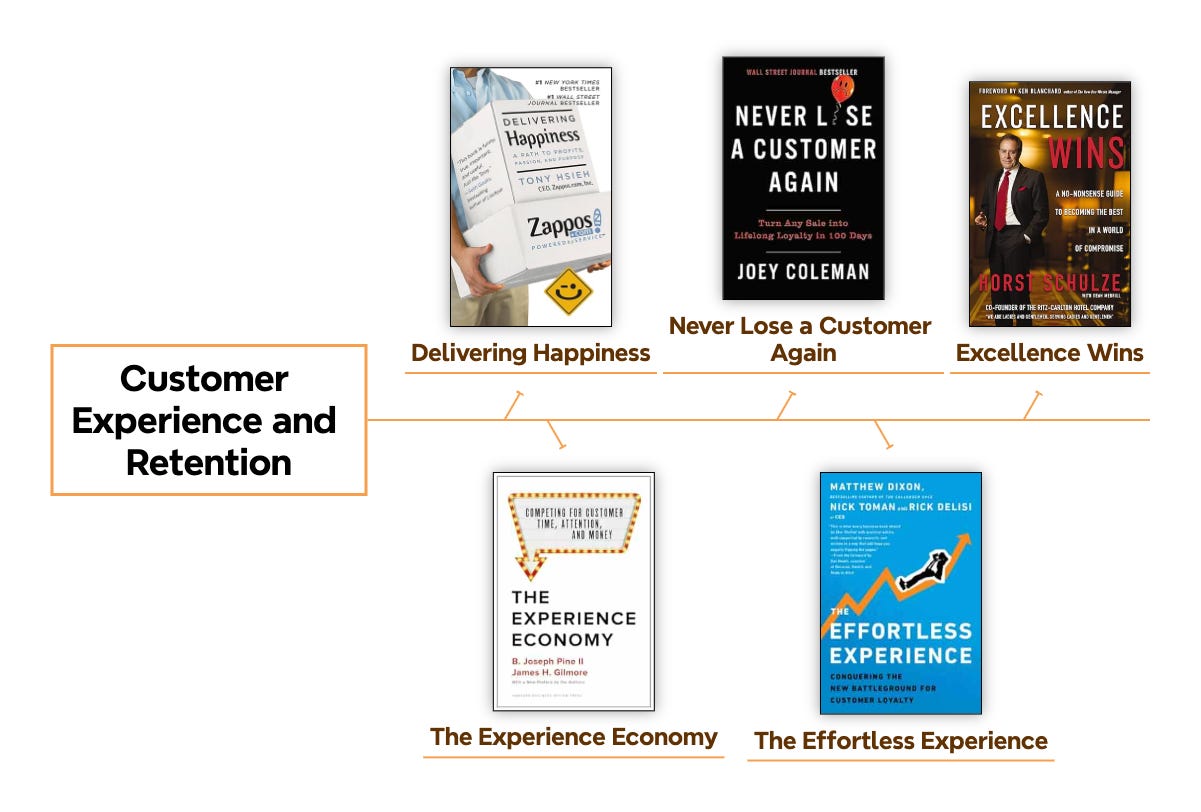
Key Insights on Customer Experience & Retention:
Win customers by exceeding expectations.
In “Delivering Happiness,” Tony Hsieh explains how Zappos built customer loyalty by offering exceptional service and adding personal touches.Act on customer feedback to boost satisfaction.
In “The Effortless Experience,” Matthew Dixon shows that reducing hassle in customer interactions increases loyalty and improves overall satisfaction.Empower employees to create great experiences.
In “Excellence Wins,” Horst Schulze shares how Ritz-Carlton gave staff the authority to solve problems on their own, creating a culture of outstanding service.
Books related to Customer Experience & Retention:
Delivering Happiness: A Path to Profits, Passion, and Purpose – Tony Hsieh
The Experience Economy – B. Joseph Pine II and James H. Gilmore
Never Lose a Customer Again: Turn Any Sale into Lifelong Loyalty in 100 Days – Joey Coleman
The Effortless Experience: Conquering the New Battleground for Customer Loyalty – Matthew Dixon, Nick Toman, and Rick DeLisi
Excellence Wins: A No-Nonsense Guide to Becoming the Best in a World of Compromise – Horst Schulze with Dean Merrill
Discipline 13: Productivity & Operational Efficiency
Operational efficiency and productivity come from clear focus, smart prioritization, and reducing waste.
Leaders boost performance by aligning teams with key goals, building small habits that grow over time, and creating systems that simplify workflows.
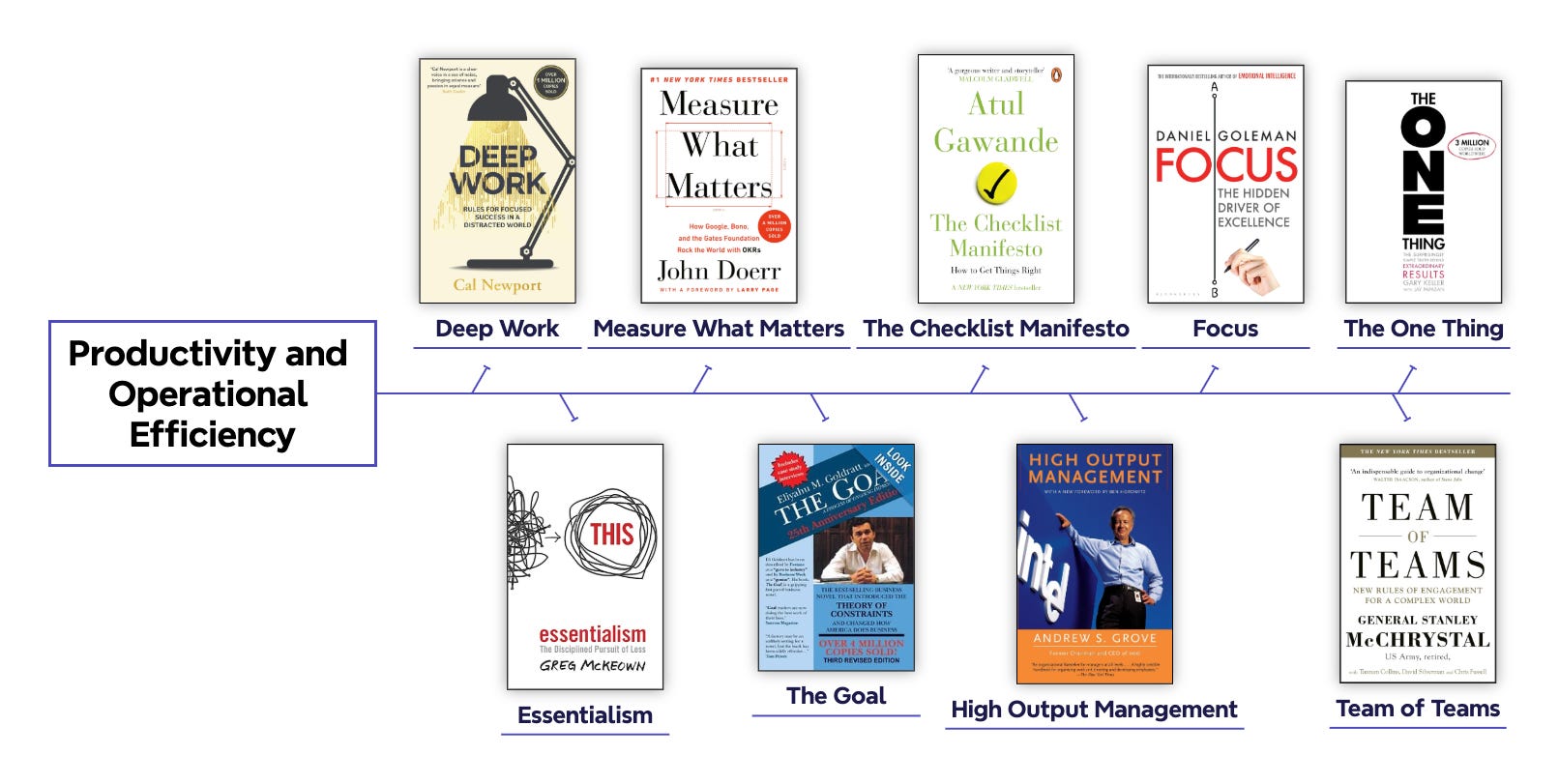
Key Insights on Productivity & Operational Efficiency:
Prioritize what matters most.
In “Essentialism,” Greg McKeown explains that focusing on fewer tasks and doing them well leads to greater productivity and impact.
Track what drives success.
In “Measure What Matters,” John Doerr introduces OKRs – a system that helps teams stay focused on goals that lead to measurable results.
Small habits create big results.
In “Atomic Habits,” James Clear shows that small, consistent actions add up over time, leading to lasting improvements.
Fix the biggest bottleneck first.
In “The Goal,” Eliyahu Goldratt explains that improving the most limiting part of a process helps increase overall efficiency.
Books related to Productivity & Operational Efficiency:
Frameworks related to Productivity & Operational Efficiency:


Discipline 14: Technology & Engineering
Technology leaders spark innovation by encouraging teamwork, empowering teams, and aligning tech projects with business goals.
Great tech leaders combine technical skills with vision and strong people management.
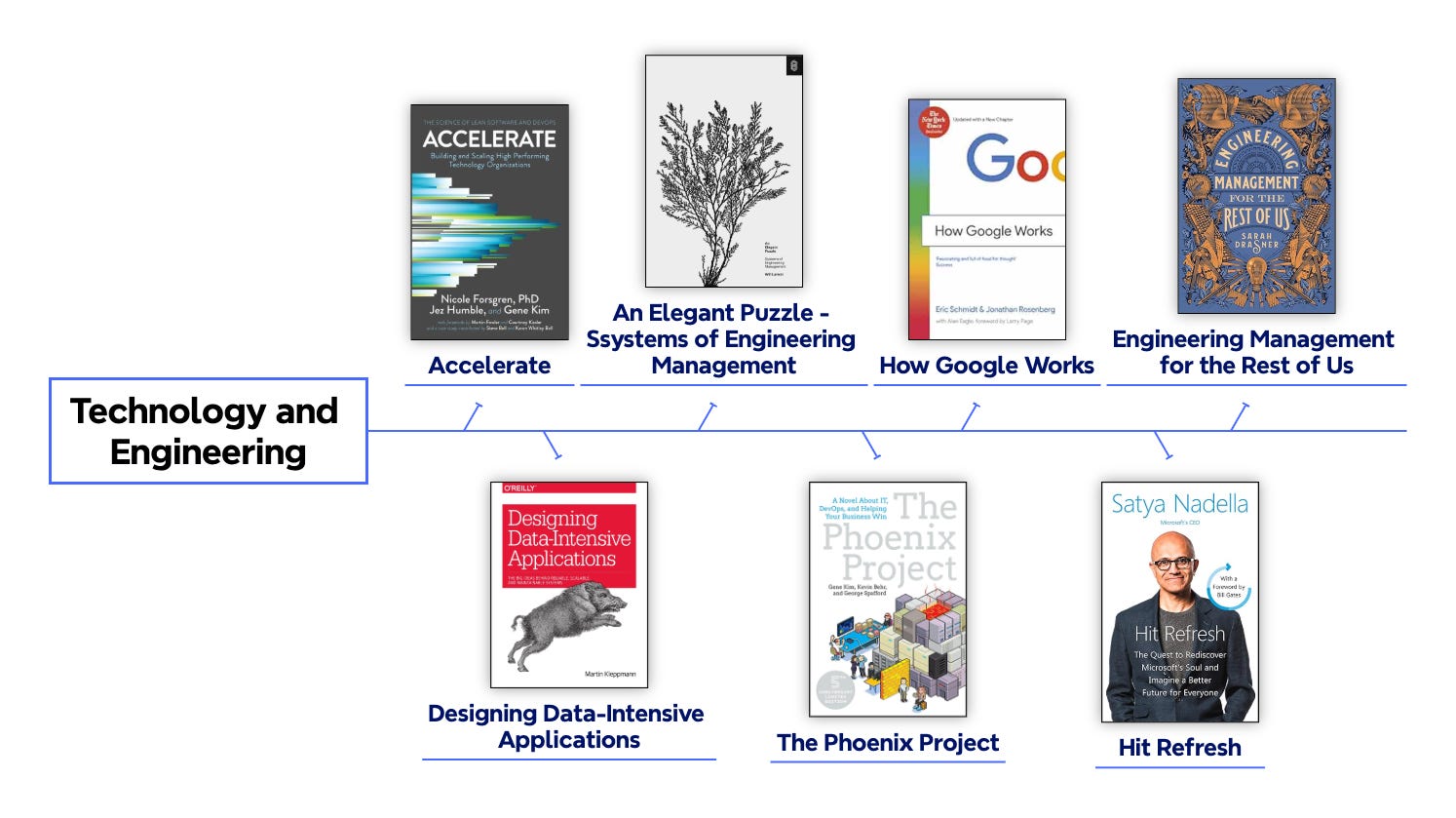
Key Insights on Technology & Engineering:
Empathy and learning drive technological growth.
In “Hit Refresh,” Satya Nadella explains how focusing on empathy, inclusivity, and continuous learning transformed Microsoft and sparked innovation.Empower engineers and encourage experimentation.
In “How Google Works,” Eric Schmidt and Jonathan Rosenberg show how Google’s success comes from giving engineers freedom to experiment and minimizing red tape.Collaboration between teams boosts efficiency.
In “The Phoenix Project,” Gene Kim explains how DevOps practices improve teamwork across development and operations, leading to faster, more reliable software releases.Speed and stability are key to high performance.
In “Accelerate,” Nicole Forsgren reveals that top technology teams balance fast deployments with system reliability, reducing failures and recovery times.
Books related to Technology & Engineering:
Accelerate: The Science of Lean Software and DevOps – Nicole Forsgren, Jez Humble, and Gene Kim
Designing Data-Intensive Applications: The Big Ideas Behind Reliable, Scalable, and Maintainable Systems – Martin Kleppmann
An Elegant Puzzle: Systems of Engineering Management – Will Larson
Competing in the Age of AI: Strategy and Leadership When Algorithms and Networks Run the World – Marco Iansiti and Karim R. Lakhani
The Phoenix Project: A Novel About IT, DevOps, and Helping Your Business Win – Gene Kim, Kevin Behr, and George Spafford
Hit Refresh: The Quest to Rediscover Microsoft’s Soul and Imagine a Better Future for Everyone – Satya Nadella
P.S. If you’re constantly juggling fires, decisions, and people issues, and ready to bring more clarity, calm, and intention to your leadership, that’s why I built The Ultimate Leadership Toolkit, powered by The Leadership Mastery System™.
This is your Swiss-Army Knife of leadership tools.

This layer cuts across everything else. It shapes how leaders think, make decisions, and navigate uncertainty.
Many leadership challenges aren’t about effort or capability, they’re about judgment, trade-offs, and timing.
Disciplines in this layer:
Business Strategy & Decision-Making
Innovation and Creative Thinking
Change and Crisis Management
Leading with AI
Discipline 15: Business Strategy & Decision-Making
Effective business strategy is about making deliberate choices, focusing on long-term goals, and aligning resources with the company’s core strengths.
Leaders who succeed strategically avoid distractions, trust their decisions, and think long-term.
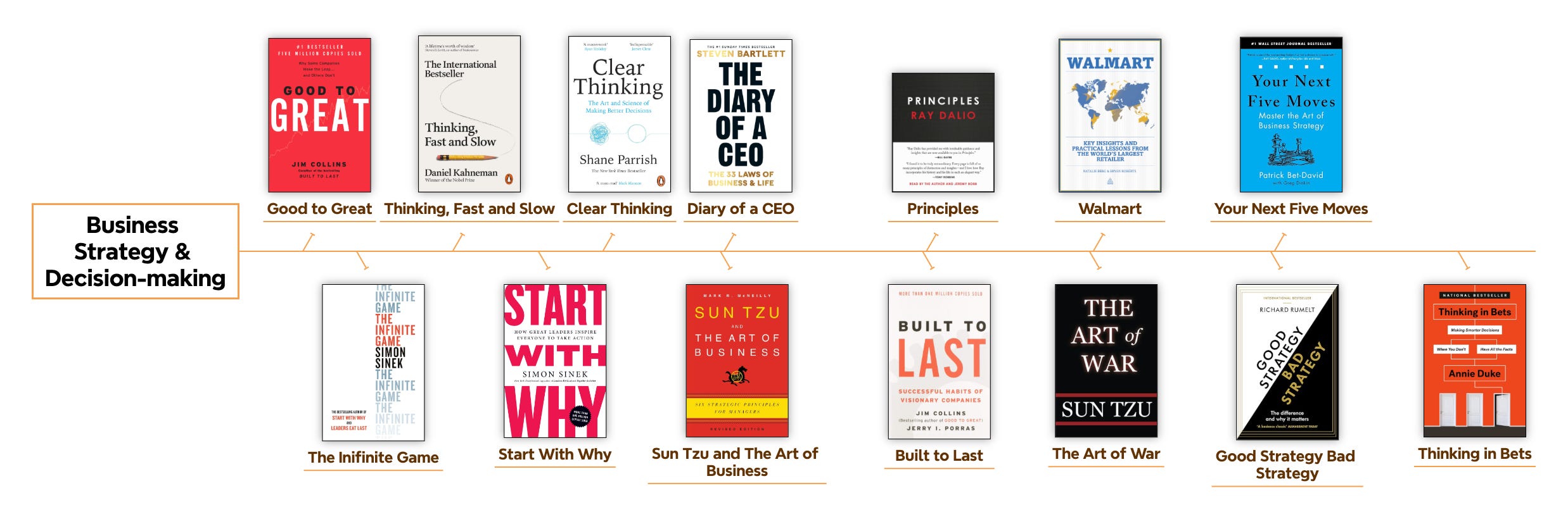
Key Insights on Business Strategy & Decision-making:
Focus on what you do best.
In “Good to Great,” Jim Collins introduces the idea of finding what your company does better than anyone else and concentrating on that.Think long-term, not just for quick wins.
In “The Infinite Game,” Simon Sinek explains that the best companies succeed by focusing on long-term growth and constant improvement.Use both instinct and careful thinking to make decisions.
In “Thinking, Fast and Slow,” Daniel Kahneman explains that leaders need to know when to trust their gut and when to slow down and think things through.Lead with purpose, not just profit.
In “Start With Why,” Simon Sinek shows that companies with a clear sense of purpose perform better than those focused only on money.Follow guiding principles to handle uncertainty.
In “Principles,” Ray Dalio explains that having clear rules for decision-making helps leaders navigate challenges.
Books related to Business Strategy & Decision-Making:
Frameworks related to Business Strategy & Decision-Making:


Discipline 16: Innovation & Creative Thinking
Innovation isn’t just about being creative – it’s about building systems and cultures that encourage experimentation, risk-taking, and new ideas.
Leaders who see failure as part of the process often spark breakthrough ideas and drive big changes.
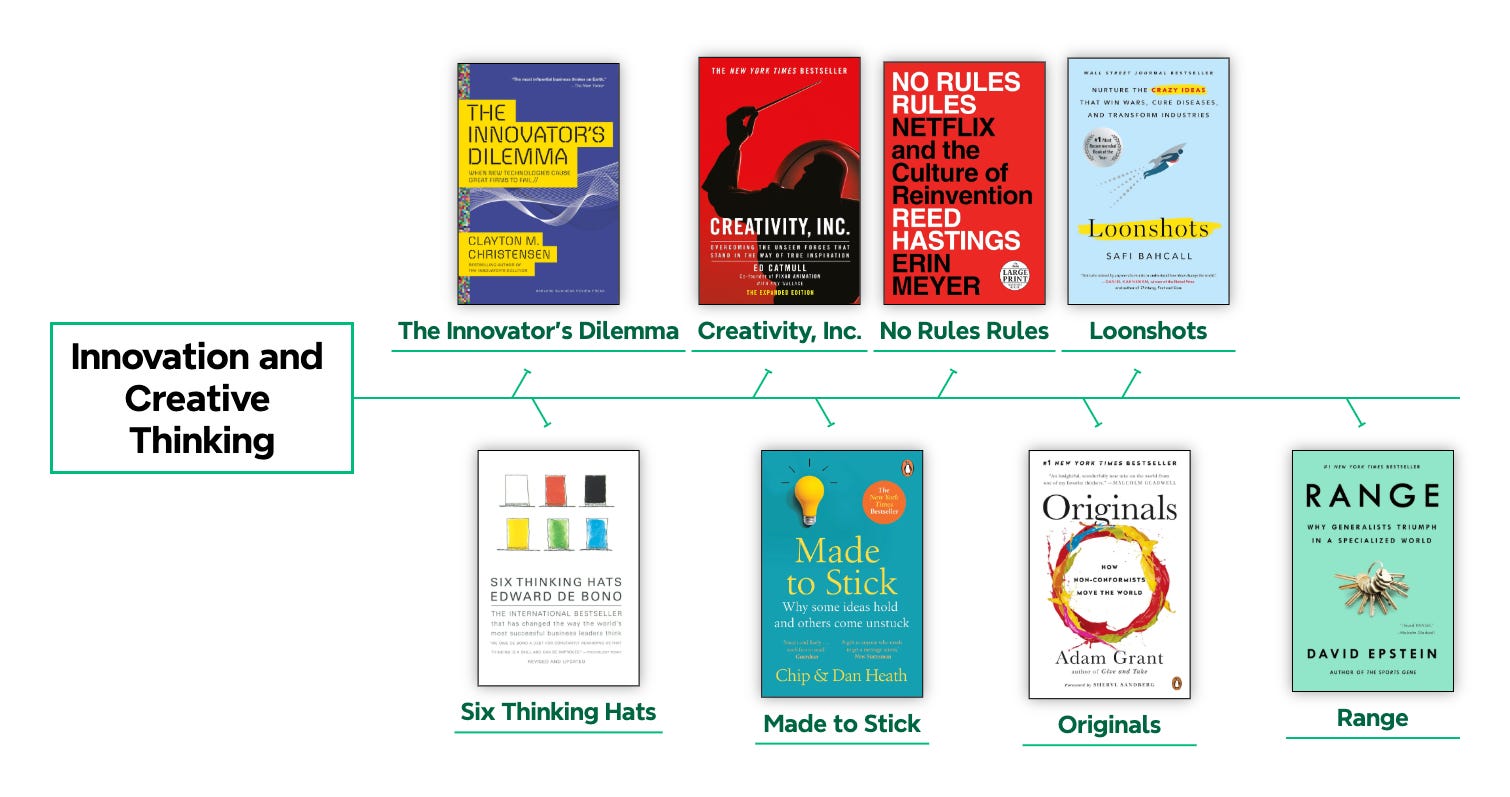
Key Insights on Innovation & Creative Thinking:
Disruptive innovation drives success.
In “The Innovator’s Dilemma,” Clayton Christensen explains that companies often fail by focusing too much on existing customers and ignoring new, disruptive technologies.
Use frameworks to boost creativity.
In “Six Thinking Hats,” Edward de Bono introduces a system that helps teams solve problems by looking at them from different angles – logical, emotional, and creative.
Foster safe spaces for innovation.
In “Creativity, Inc.,” Ed Catmull explains that Pixar thrived by allowing failure, creating a culture where people felt safe to take risks.
Keep ideas simple to make them stick.
In “Made to Stick,” Chip Heath shows that simple ideas are the most powerful, while complex ones often lose people’s interest.
Books related to Innovation & Creative Thinking:
Frameworks related to Innovation & Creative Thinking:


Discipline 17: Change & Crisis Management
Leading through change and crisis takes vision, flexibility, and quick decisions.
Great leaders plan for disruption, support their teams, and clearly communicate the way forward. By staying ready and open to uncertainty, they turn challenges into opportunities for growth.
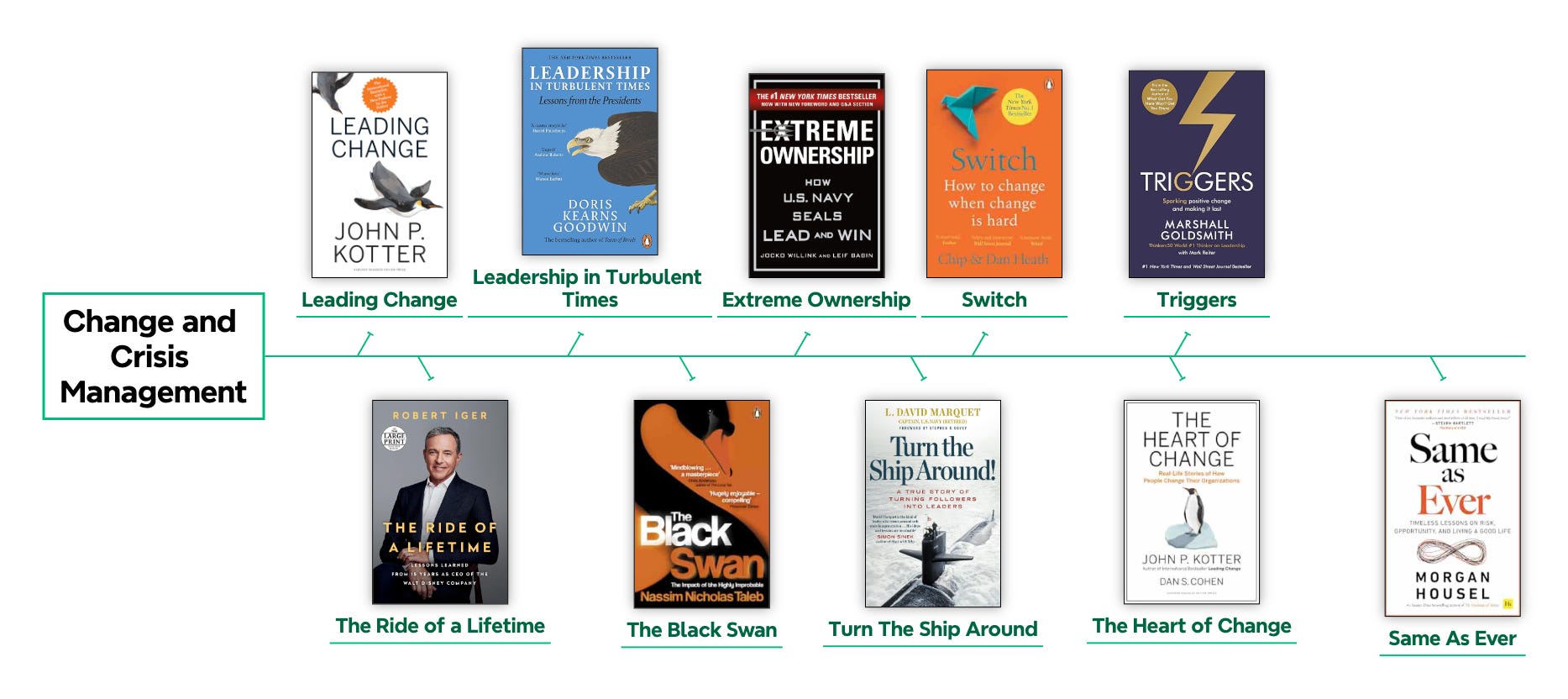
Key Insights on Change & Crisis Management:
Successful change starts with a clear vision and urgency.
In "Leading Change," John Kotter explains that creating urgency and a strong vision is the first step in driving lasting transformation.Empathy and transparency are key in a crisis.
In "The Ride of a Lifetime," Bob Iger shares how leading with empathy and openness helped Disney navigate challenges and major acquisitions.Prepare for unexpected, high-impact events.
In "The Black Swan," Nassim Nicholas Taleb shows how rare, unpredictable events shape businesses and why leaders must build resilience.Empower teams to adapt during crises.
In "Turn the Ship Around," David Marquet explains that allowing team members to make decisions increases flexibility and improves performance in uncertain times.Make change simple and appealing.
In "Switch," Chip and Dan Heath show that successful change happens when leaders appeal to both logic and emotion, making transitions easier to follow.
Books related to Change & Crisis Management:
The Ride of a Lifetime: Lessons Learned from 15 Years as CEO of the Walt Disney Company – Robert Iger
The Black Swan: The Impact of the Highly Improbable – Nassim Nicholas Taleb
Extreme Ownership: How U.S. Navy SEALs Lead and Win – Jocko Willink and Leif Babin
Turn the Ship Around!: A True Story of Turning Followers into Leaders – L. David Marquet
Switch: How to Change Things When Change Is Hard – Chip Heath and Dan Heath
Triggers: Creating Behavior That Lasts—Becoming the Person You Want to Be – Marshall Goldsmith with Mark Reiter
Frameworks related to Change & Crisis Management:


Discipline 18: Leading with AI
AI is no longer just a technical topic. It’s a leadership one.
Leaders today are expected to make faster decisions, work with incomplete information, and scale their impact beyond what was possible before. AI, when used well, becomes a powerful thinking partner. When misunderstood, it becomes a source of confusion and fear.
Leading with AI is about knowing how to ask better questions, where to apply leverage, and how to combine human judgment with machine intelligence.
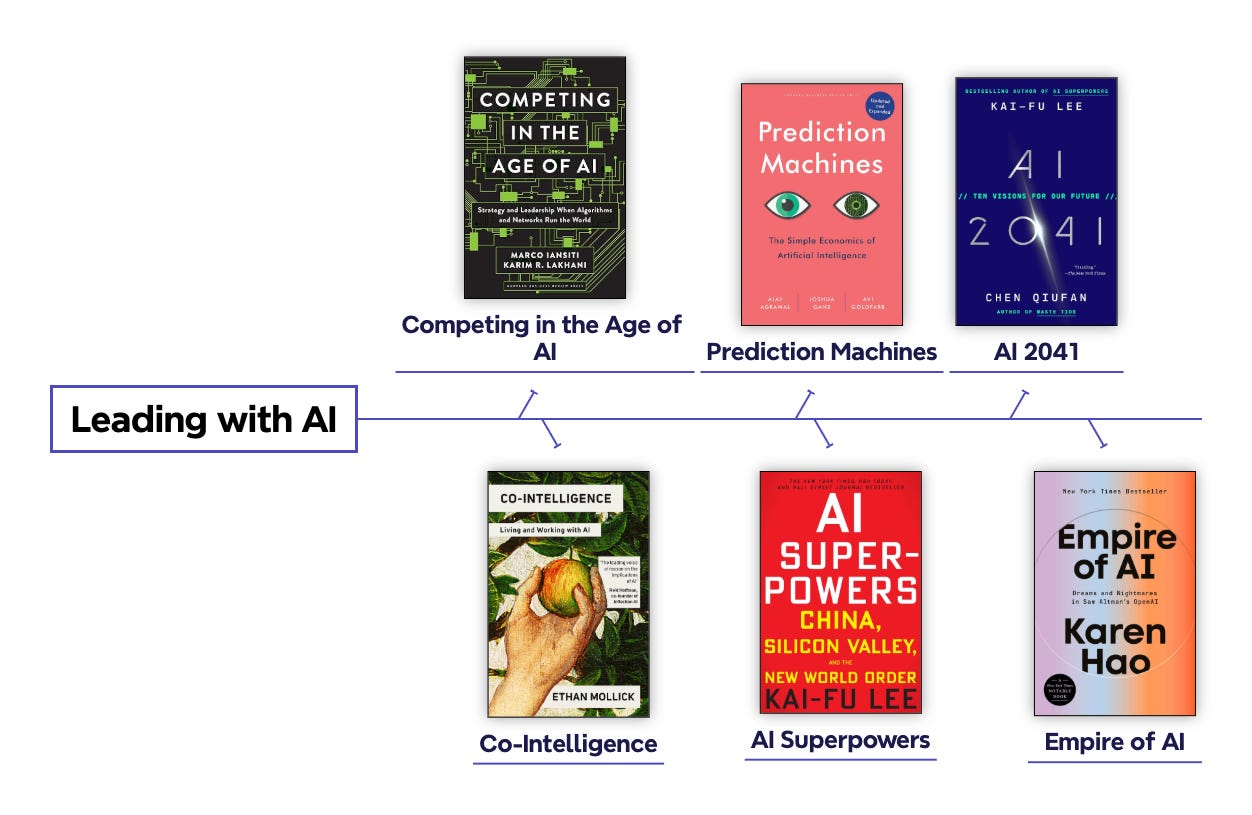
Key Insights on Leading with AI:
AI augments human judgment, it doesn’t replace it.
In “Co-Intelligence,” Ethan Mollick explains how leaders can work with AI to think better, explore ideas faster, and make more informed decisions.
Competitive advantage comes from redesigning how work gets done.
In “Competing in the Age of AI,” Iansiti and Lakhani show that AI changes not just tools, but entire operating models, and leaders must rethink how value is created.
AI shifts decision-making from intuition to prediction.
In “Prediction Machines,” Ajay Agrawal and his co-authors explain how cheaper prediction changes what leaders should automate, delegate, or rethink entirely.
AI will reshape power, institutions, and leadership itself.
In “Empire of AI,” Karen Hao offers a behind-the-scenes look at OpenAI and raises important questions about who controls AI, and who benefits from it.
Books related to Leading with AI:
Competing in the Age of AI: Strategy and Leadership When Algorithms and Networks Run the World – Marco Iansiti and Karim R. Lakhani
Prediction Machines: The Simple Economics of Artificial Intelligence - Ajay Agrawal, Joshua Gans, and Avi Goldfarb
AI Superpowers: China, Silicon Valley, and the New World Order - Kai-Fu Lee
AI 2041: Ten Visions for Our Future - Kai-Fu Lee and Chen Qiufan
Empire of AI: Dreams and Nightmares in Sam Altman’s OpenAI - Karen Hao
Enjoying the read? Hit the ❤️ button and share/restack 🔁 it with others who might find it helpful. You can also subscribe to The Good Boss for more posts like this every week. Thank you! 🙏
Final Thoughts
I know that was a lot, but here’s the good news: you don’t have to learn it all at once.
Leadership isn’t built in a day. It’s a continuous journey of learning, growth, and small steps forward.
The best leaders I know are the ones who never stop learning. They read, reflect, and continuously apply what they learn.
Whether you pick up one book from this collection or make your way through all 147 (congratulations if you do!), remember that each book is a stepping stone. Some will challenge your thinking, others will validate what you already know, and a few might just change the way you lead forever.
I hope you found this collection helpful. Let me know in the comments if there are any other books that I should include in the list - I’ll be happy to add them.
What’s on your reading list for 2026? Let me know in the comments 👇
Mind-map 🧠 of The Best Leadership Books
If you found this collection useful, I’ve created something to make it even easier to use.
I turned these 147 leadership books into a visual mind-map and a clean, printable PDF poster. It shows all 18 disciplines in one place, so you can quickly spot the areas you want to grow in and pick your next book without overthinking it.
It’s free, and you can download it instantly.
You can save it, print it, or keep it on your desk as a quick reference.
❤️ Found this helpful?
If you found this post helpful, please like and share it with other managers who can benefit from it, including your boss :) If you have any feedback, please drop your comment below - it helps me keep improving the content. Thank you!

Amazing very well done ill save this for reference.
This is an incredible amount of effort, thanks for pulling together such a thoughtful list. A really helpful reference!