As a leader, you’re expected to have answers…
about strategy.
people.
metrics.
markets.
The list is endless.
But what I have realized over 20+ years in corporate leadership is this: you don’t have to be good at everything. You just need to get honest about where you actually are.
In this issue, we will discuss the Circle of Competence, a mental model that was made famous by Warren Buffett and Charlie Munger. You will learn how to use this simple mental model to transform how you lead.
Here’s what we will discuss:
Part 1: Understanding the Circle of Competence
What Is the Circle of Competence?
How the Circle of Competence Works
Why It Matters for Leadership
Part 2: Applying the Circle of Competence in Leadership
Mapping Your Circle of Competence
Real-Life Leadership Scenario
The Circle of Competence Worksheet
Part 3: Going from Here
Common Pitfalls
Recommended Resources
Final Thoughts
Let’s begin by understanding the model.
Part 1: Understanding the Circle of Competence
In this section, we’ll unpack what the Circle of Competence is, how it works, and why it’s one of the most underrated leadership tools out there.
What Is the Circle of Competence?
Your Circle of Competence is the set of things you truly understand, where your knowledge and experience are deep enough to make good decisions.
It’s not about how many years you’ve worked or how confidently you speak. It’s about what you’ve actually mastered, and where your instincts are reliable.
Charlie Munger and Warren Buffett made this concept famous, and here’s a short video where Charlie talks about it:
How the Circle of Competence Works
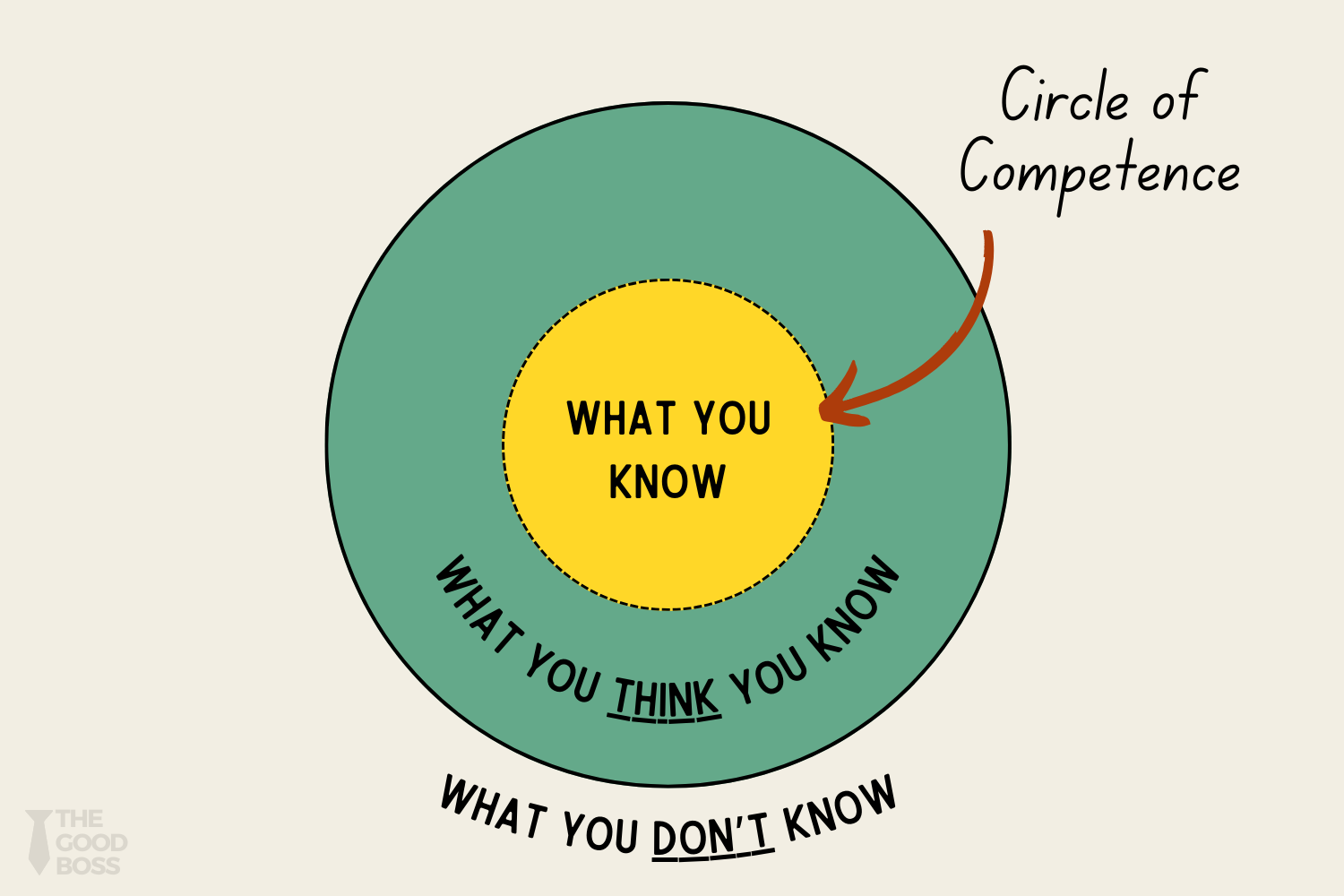
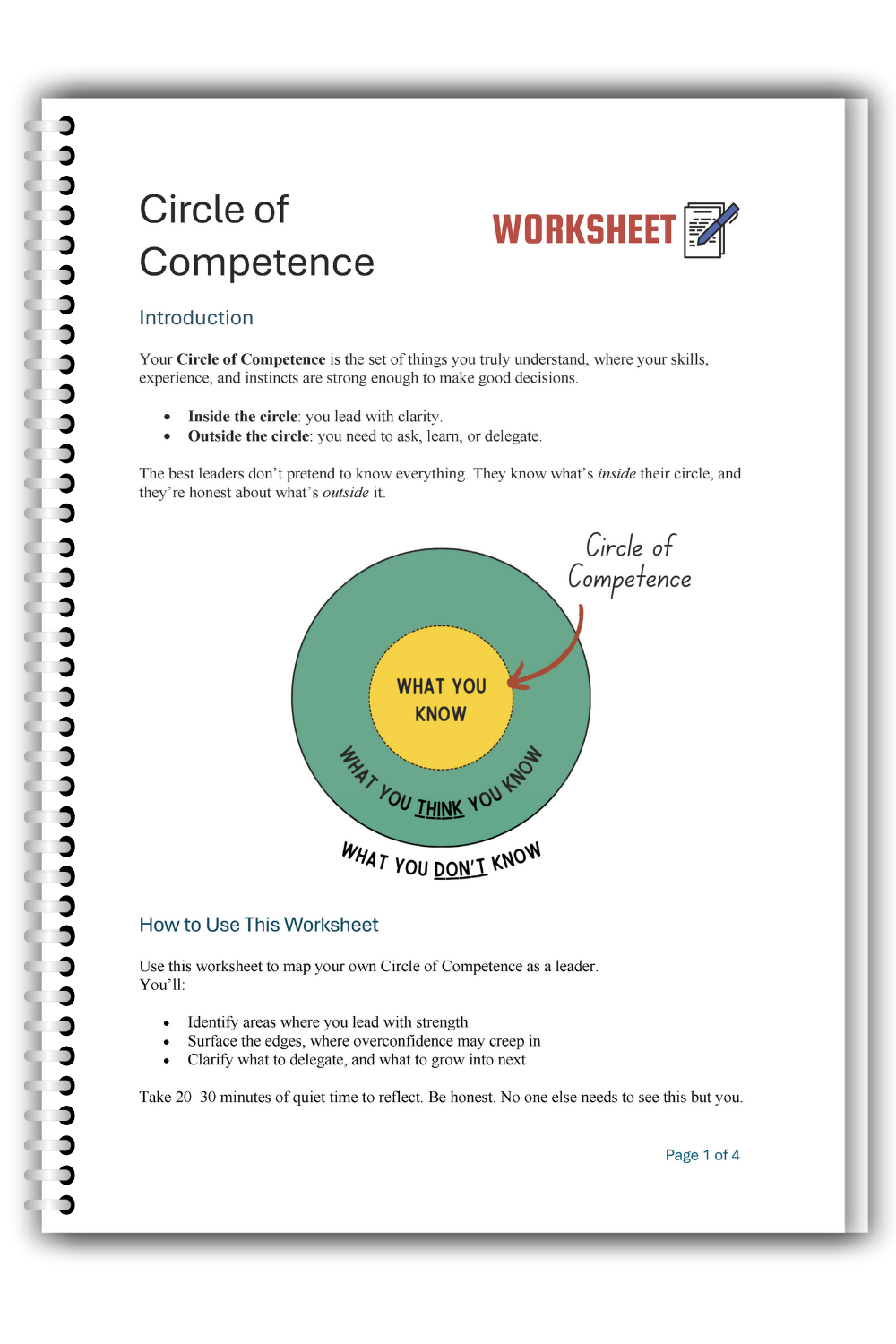
Think of your Circle of Competence like a target:
At the center is your zone of deep expertise: areas where you’ve made real decisions, seen outcomes, and spent years refining.
Around that is the edge: topics you’re exposed to, maybe interested in, but where you lack depth or confidence.
Beyond that is unknown territory: areas that, if you were to start exploring, you would be mostly shooting in the dark and guessing your way through.
You lead differently depending on where you are.
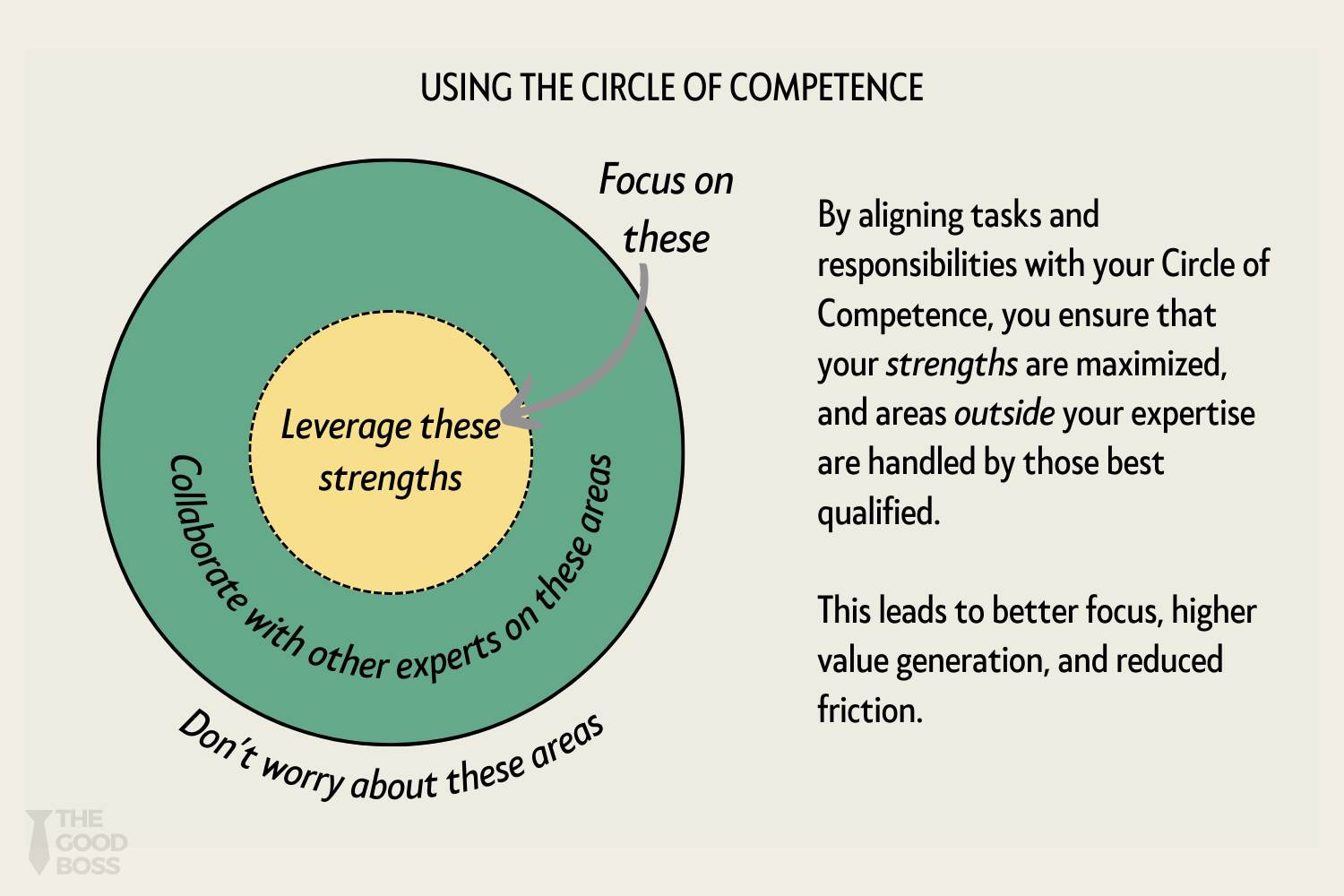
Inside the circle: You can trust your gut, and move with clarity and confidence.
At the edge: You slow down, explore, and bring others in for guidance.
Outside the circle: You admit the unknown, and either defer, delegate or choose to learn your way through.
This model isn’t static.
You can expand your circle, but only through deliberate effort: real learning, applied experience, feedback, and iteration.
You can’t fake it.
Most leaders overestimate the size of their circle, but the smart ones don’t. They stay aware of their boundaries, continue to expand the circle over time, and lead successfully.
Why It Matters for Leadership
When you lead, the cost of bluffing is high. When you make bad decisions, they get magnified and negatively impact your teams or the business or both.
But when you’re honest about your strengths and your limits, you earn real trust from your team and stakeholders. You start making better, more informed decisions. You create space for others to lead too.
That’s what self-aware leadership looks like.
Part 2: Applying the Circle of Competence in Leadership
Ready to put this framework into practice? Download the Circle of Competence Worksheet and use it to:
Get clear on where your leadership strengths truly lie
Identify the blind spots that may be tripping you up
Decide what to delegate, and what to deliberately grow
Build self-awareness into your day-to-day leadership
Lead with more confidence, humility, and intention
How to download the worksheet
This worksheet is part of the Worksheets Collection, available to all paid subscribers to The Good Boss.
👉🏻 Upgrade to paid now and get instant access to the entire collection, including this worksheet.
If you prefer the standalone worksheet, you can purchase it from here.
Mapping Your Circle of Competence
Before you can lead smarter, you need to get honest about where you’re strong, and where you’re not.
Here’s a simple 3-step system to help you map your Circle of Competence: