

I was recently at a design thinking workshop, where I heard a story that stuck with me.
NASA (the US National Aeronautics and Space Agency) was once exploring ways to keep astronauts fit during long space missions. Someone on the NASA team floated an idea that became an instant hit:
Send a Peloton bike into space. 🛰️
It sounded wild at first, but not totally unreasonable. After all, if Elon Musk can send his Tesla Roadster into space, surely NASA can send a Peloton, right?
Astronauts need exercise, just like everyone else. Peloton is high-tech, and imagine the view from your space workout. 🪐
But then, just as this idea was gaining traction, someone on the team asked a different question:
What’s the problem we’re trying to solve?
Or, put another way, “Are we trying to send a bike into orbit? Or are we trying to keep astronauts healthy in zero gravity?”
That simple shift in perspective changed how NASA approached this. Eventually, instead of a heavy, expensive, over-engineered bike (sorry Peloton fans), the solution turned out to be, wait for it….. a resistance band.
Cheap, light and effective.
Fundamentally, what the astronauts really needed wasn’t a bike. They needed fitness, and that needed tension, which could be delivered through a simple resistance band.
As leaders, that’s the trap that most of us fall into at work. We chase “clever” fixes, and sometimes fail to identify the “real” problem. We jump at solutions before we identify the problem we’re trying to solve.
That’s exactly what the Double Diamond helps us avoid, and we will discuss that in detail in this article.
Here’s what we will cover:
Part 1: Understanding the Double Diamond
What is the Double Diamond?
The Four Stages of the Double Diamond
Part 2: Applying the Double Diamond
The Diamond Walk: A 4-Step Leadership Method
Real-Life Leadership Scenarios
The Double Diamond Worksheet
Part 3: Going from Here
Common Pitfalls and How to Avoid Them
Recommended Resources
Final Thoughts
👉🏼 So, are you ready to stop chasing solutions, and identifying problems that matter? Let’s dive in!
Part 1: Understanding the Double Diamond
Sometimes, the hardest part of leadership isn’t solving the problem, it’s knowing what the problem actually is.
The Double Diamond gives you a way to zoom out before you zoom in. It helps you to look at the full picture, not just the part that’s loudest or most visible.
What is the Double Diamond?
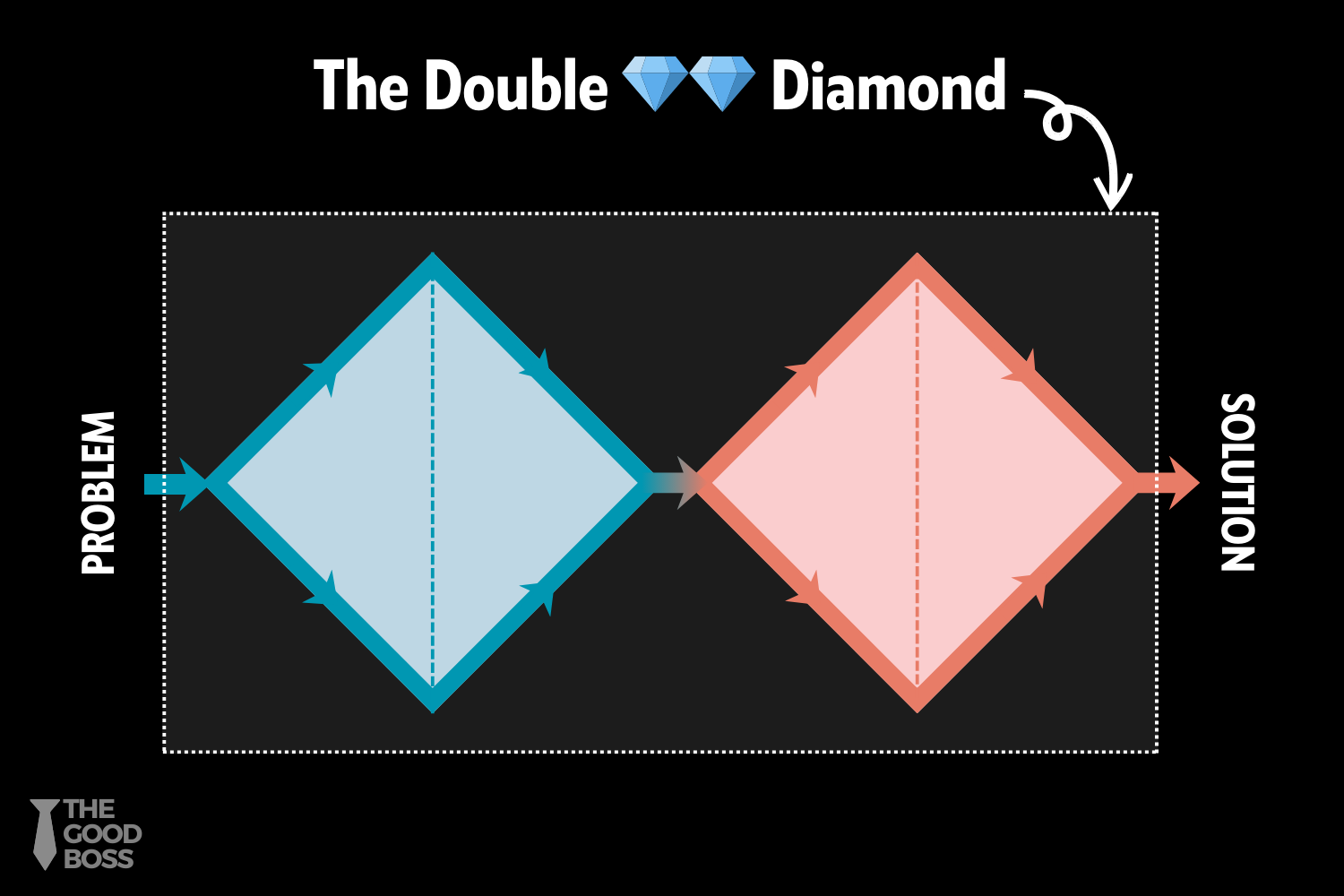
The Double Diamond is a visual thinking framework developed by the British Design Council. At its core, it helps you separate two things most teams blur together:
The problem space: where you slow down, explore, and figure out what’s really going wrong
The solution space: where you start thinking about how to fix it
It’s called a “double diamond” because both parts have the same rhythm: you first diverge (open up), then converge (narrow down).
The Four Stages of the Double Diamond
The Double Diamond works in four stages:
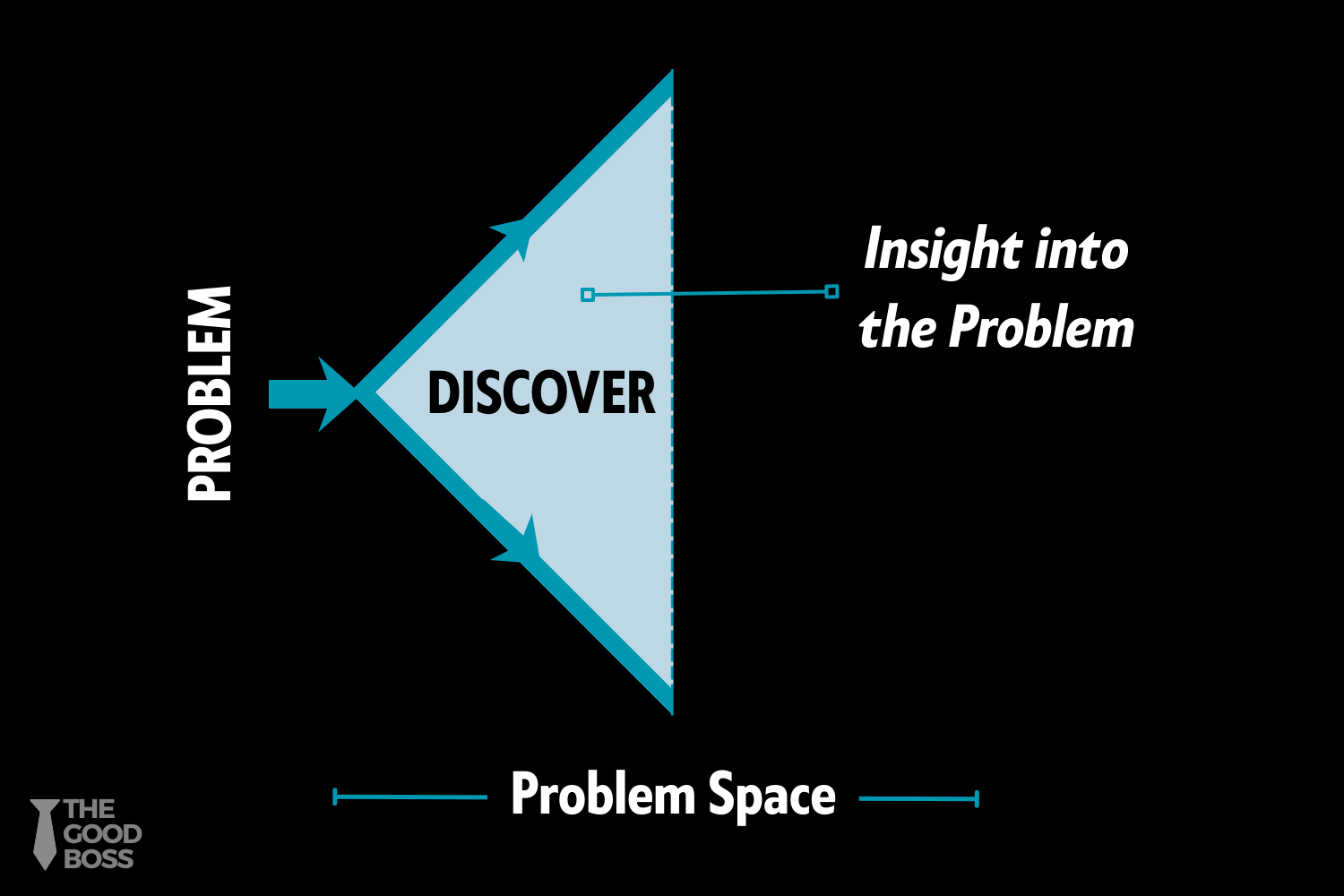
Discover: explore the problem from all angles
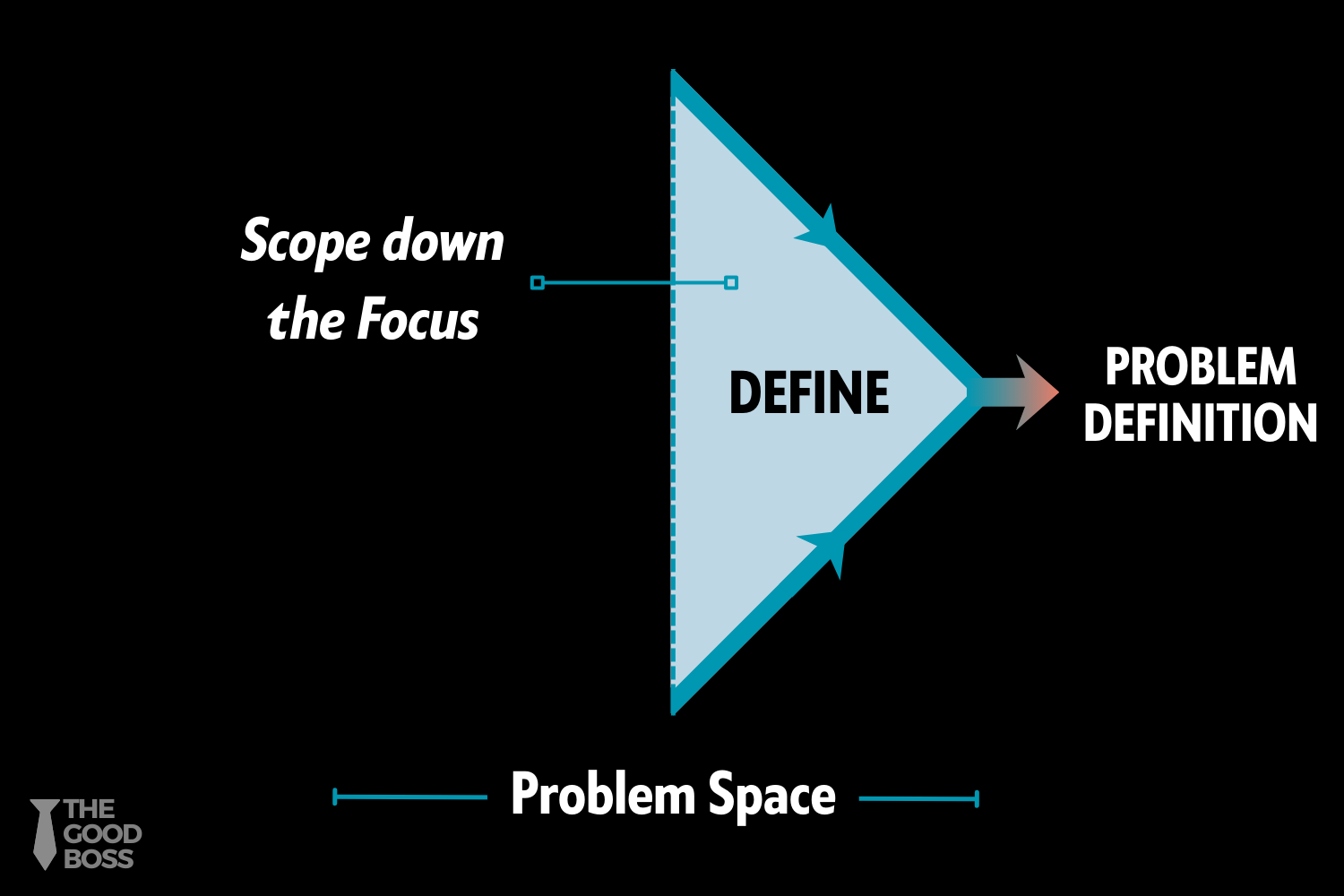
Define: identify the real problem worth solving
Develop: explore possible solutions
Deliver: test and launch the best one

Let’s walk through each step.
Stage 1. Discover: Explore Before You Explain
The goal of Discovery is to go wide.
In this phase, you ask, observe, explore, and gather information, without assuming you already know what the problem is.
This might mean:
Listening to customers without pitching ideas.
Interviewing stakeholders with open-ended (non-leading) questions.
Looking at qualitative feedback and behavioral data.
Asking: “What else could be going on here?”
Stage 2. Define: Find the Real Problem
In the Define stage, your job is to make sense of what you’ve heard.
This is where scattered insights start turning into a sharp, useful problem statement.
In this phase, you would ask:
What’s the core issue here?
What are we actually trying to solve?
If we could only fix one thing, what should it be?
Good problem definitions are simple and clear.
“Our onboarding is too long.” becomes “New hires are unclear on what success looks like in week one.”
That’s a problem you can do something about.
Stage 3. Develop: Explore the Options
In the Develop stage, your job is to go wide again, but this time with solutions.
Here, you would explore, sketch, and co-create possible solutions, while maintaining an open mindset.
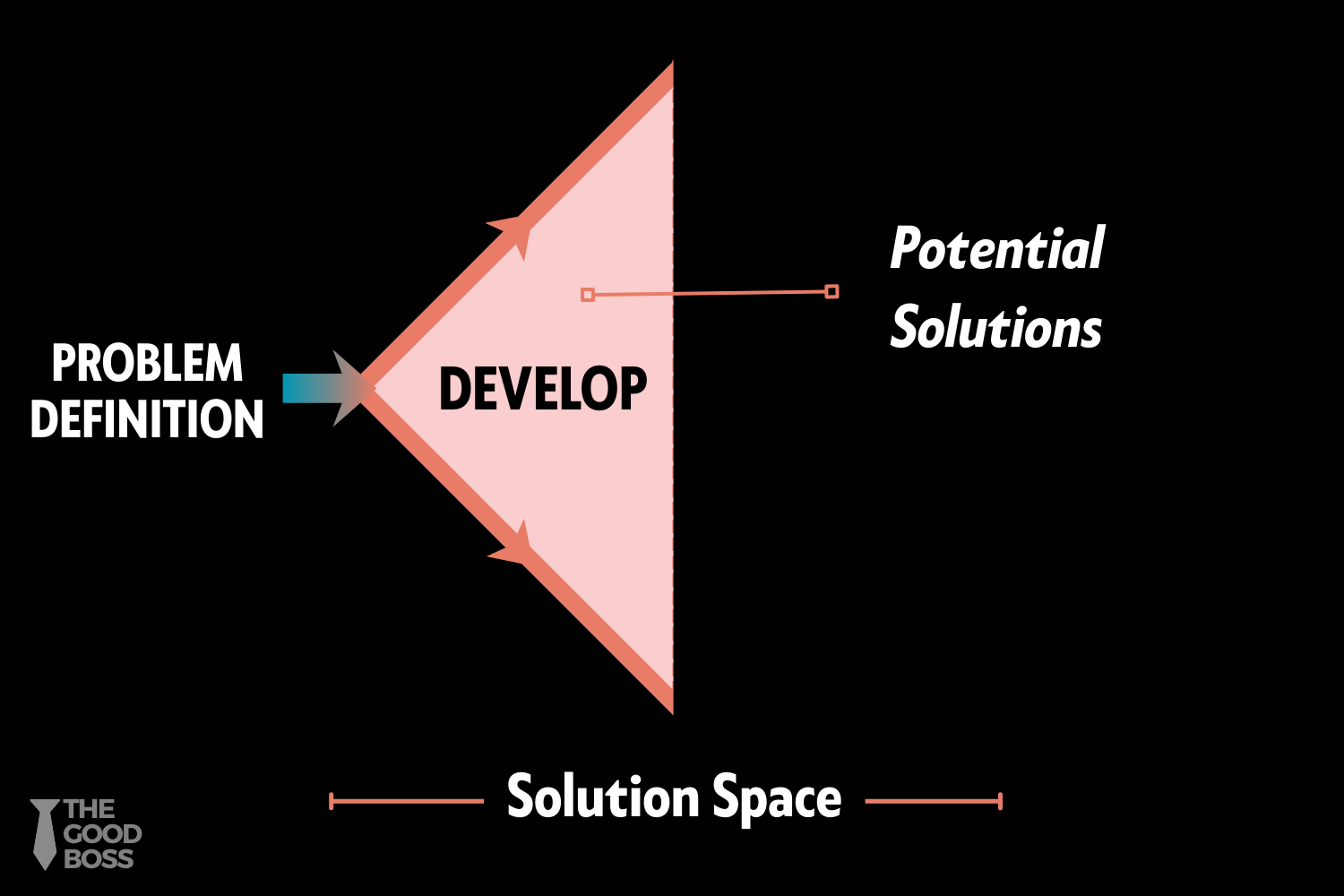
This stage works best when you:
Involve people who were part of Discovery
Bring in cross-functional perspectives
Make space for “wild” or unexpected ideas
Suspend judgment long enough to be surprised
Stage 4. Deliver: Test, Learn, and Ship
You’ve explored options, and now it’s time to pick one and move.
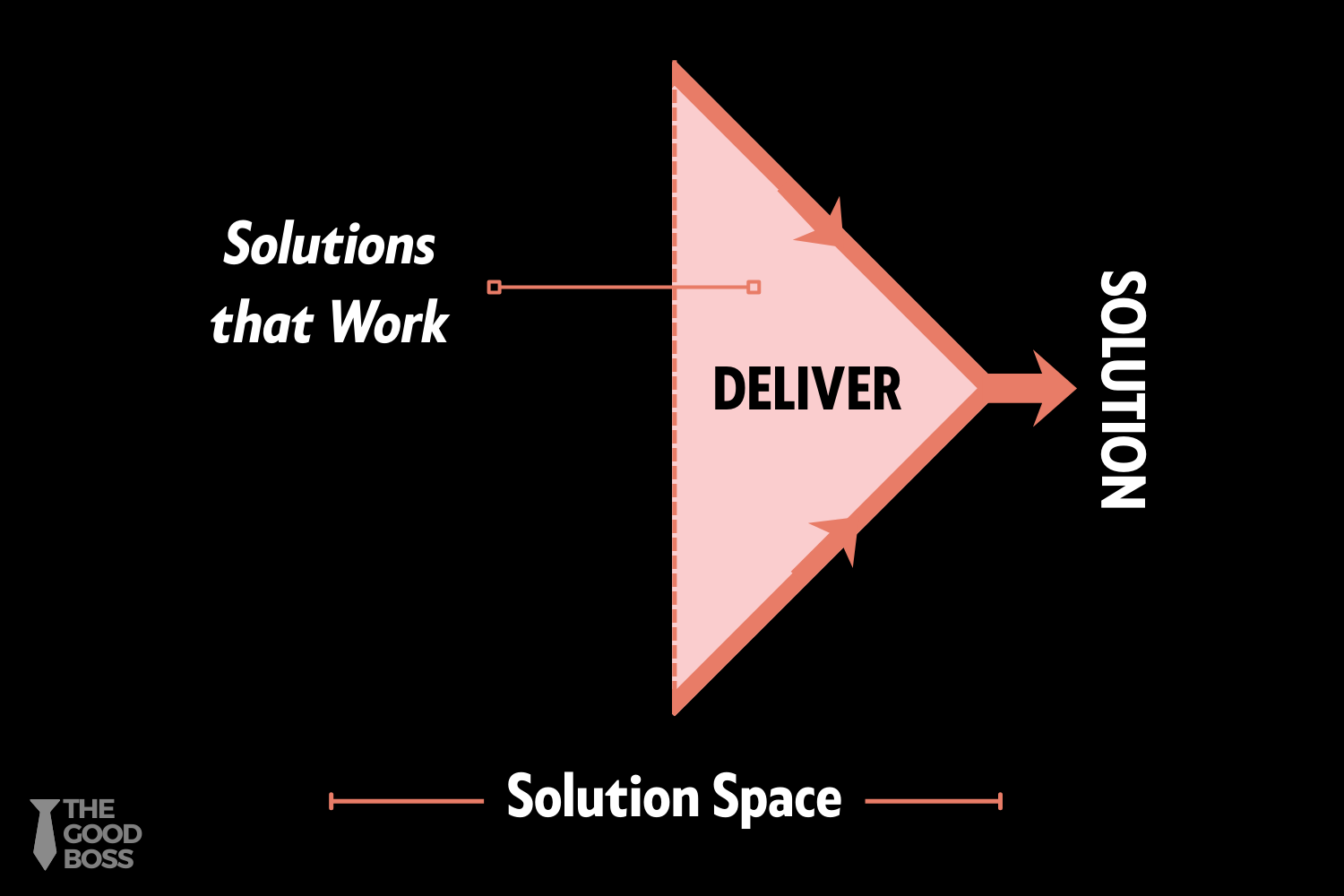
The Deliver stage is about:
Prototyping or piloting
Testing with real users
Getting feedback
Shipping something small, learning fast, and iterating
Enjoying the read? Hit the ❤️ button and share/restack 🔁 it with others who might find it helpful. You can also subscribe to The Good Boss for more posts like this every week. Thank you! 🙏
Part 2: Applying the Double Diamond
In this section, you will learn how to apply the Double Diamond in your role as a leader.
We will make it real with the Double Diamond Worksheet, which will help you build your muscle in applying and using this framework in your leadership role.
We will start by learning The Diamond Walk, a simple way to navigate through the four phases, step by step.
We will then discuss some common real-life leadership scenarios, and how you would apply this framework in each of those.
The Double Diamond Worksheet
Ready to put this framework into practice? Download the Double Diamond Worksheet and use it to:
Get clear on what’s actually going wrong
Build solutions that actually solve something
Lead better conversations in meetings, 1:1s, and project reviews
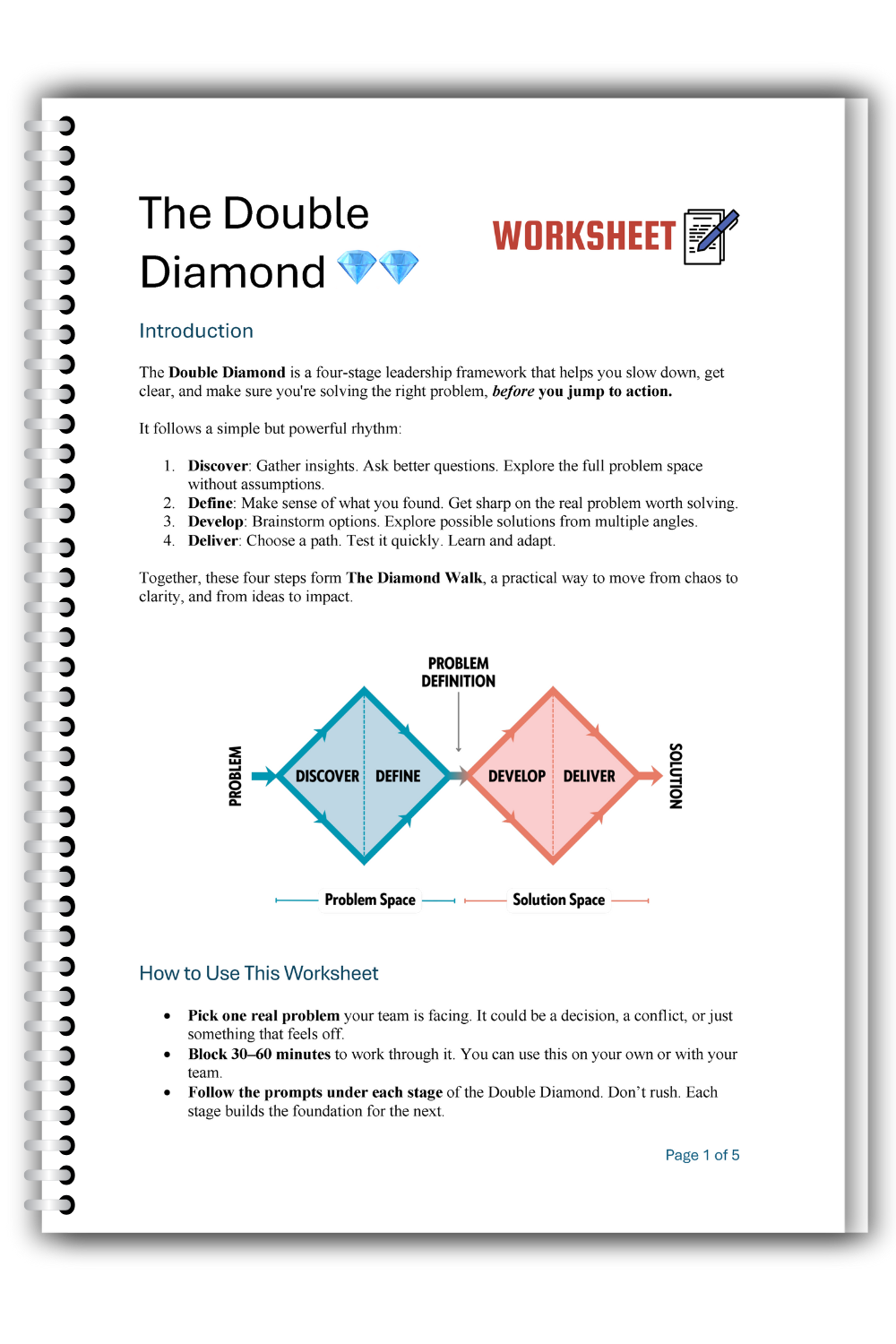
How to download the worksheet
This worksheet is part of the Worksheets Collection, available to all paid subscribers to The Good Boss.
👉🏻 Upgrade to paid now and get instant access to the entire collection, including this worksheet.
If you prefer the standalone worksheet, you can purchase it from here.