

A few years ago, I was part of a technical design review meeting. A senior engineer from my team was walking us through a new approach for scaling the platform and making it more robust and highly available.
I wasn’t feeling quite convinced about that approach, and so I asked a couple of clarifying questions, and then just said “okay, let’s take it offline,” and moved on. I thought I was being reasonable in how I handled it.
A few days later, in a meeting with another engineer who was part of that meeting, he told me that the team had read that meeting as me “killing” the idea.
Frankly, I was shocked to hear that.
Apparently, the team hadn’t really heard my words. What they had picked up on was the pause before I had asked my first question, a drop in energy in my body language, and the fact that I had stopped taking notes.
That’s the part of emotional intelligence we don’t talk about.
In 20+ years leading teams, I’ve seen so many leaders equate emotional intelligence with being nicer to people. I used to think the same, until I realized that being emotionally intelligent is not about being nice, but about being accurate.
Accurate about what you’re feeling.
And, accurate about what the other person is feeling.
Then, and only then, would you truly be “emotionally intelligent”.
In this issue, I’m going to deep-dive into the EQ Framework, the model behind emotional intelligence, and how you can use it as a leader. Here’s what we will cover:
The Origins of Emotional Intelligence
How the EQ Framework works
Why This Matters for Leaders
Applying the EQ Framework
The Four-Corner Check Technique
What This Looks Like in Practice
Common Pitfalls (and How to Avoid Them)
Final Thoughts
The Origins of Emotional Intelligence
The term “emotional intelligence” was introduced by two psychologists, Peter Salovey and John Mayer, in their 1990 paper.
Then, in 1995, Daniel Goleman wrote a book called Emotional Intelligence, which arguably made it popular among the leadership community in general. You’ve probably read or heard about this book, too.
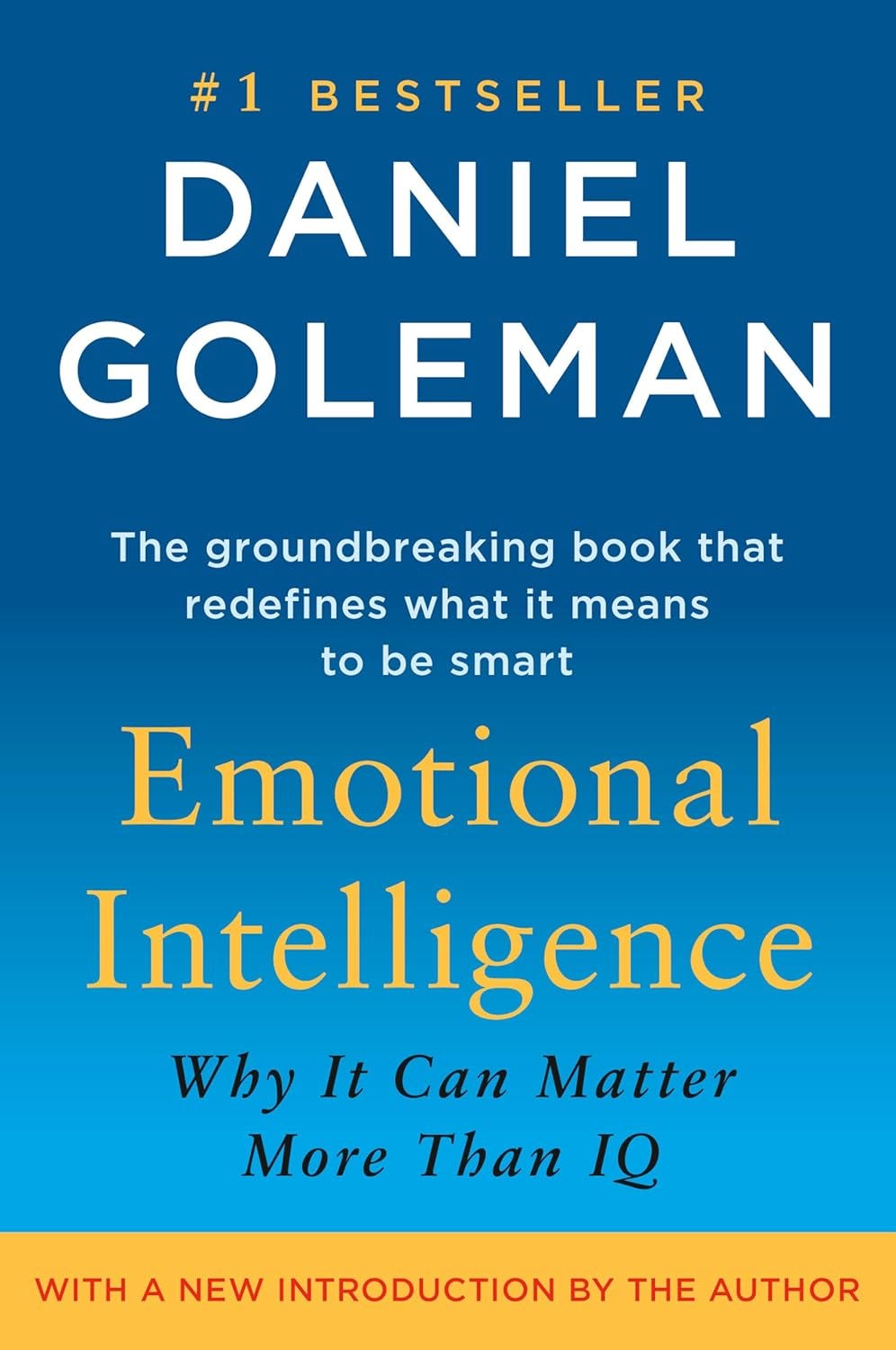
The framework has evolved since it was last published, and the part that I find most interesting for leaders is the 2x2 matrix - the EQ Framework - that we will talk about in this issue.
Goleman claimed that at senior levels, EQ predicts leadership effectiveness better than IQ or technical depth. So what is the difference between EQ and IQ? I think the following toon sums it up nicely:
![Do you think emotional intelligence is related to IQ? [OC] : r/comics](https://substackcdn.com/image/fetch/$s_!yDpG!,f_auto,q_auto:good,fl_progressive:steep/https%3A%2F%2Fsubstack-post-media.s3.amazonaws.com%2Fpublic%2Fimages%2Ff6c50391-91b4-46b6-927d-d51202124b53_1020x1020.png "Do you think emotional intelligence is related to IQ? [OC] : r/comics")
How the EQ Framework works
The EQ framework is built around two axes:
Who: Are you working on yourself, or on other people? Self or Social.
What. Are you noticing something, or acting on it? Recognition or Regulation.
It involves leaders being aware of the four quadrants:
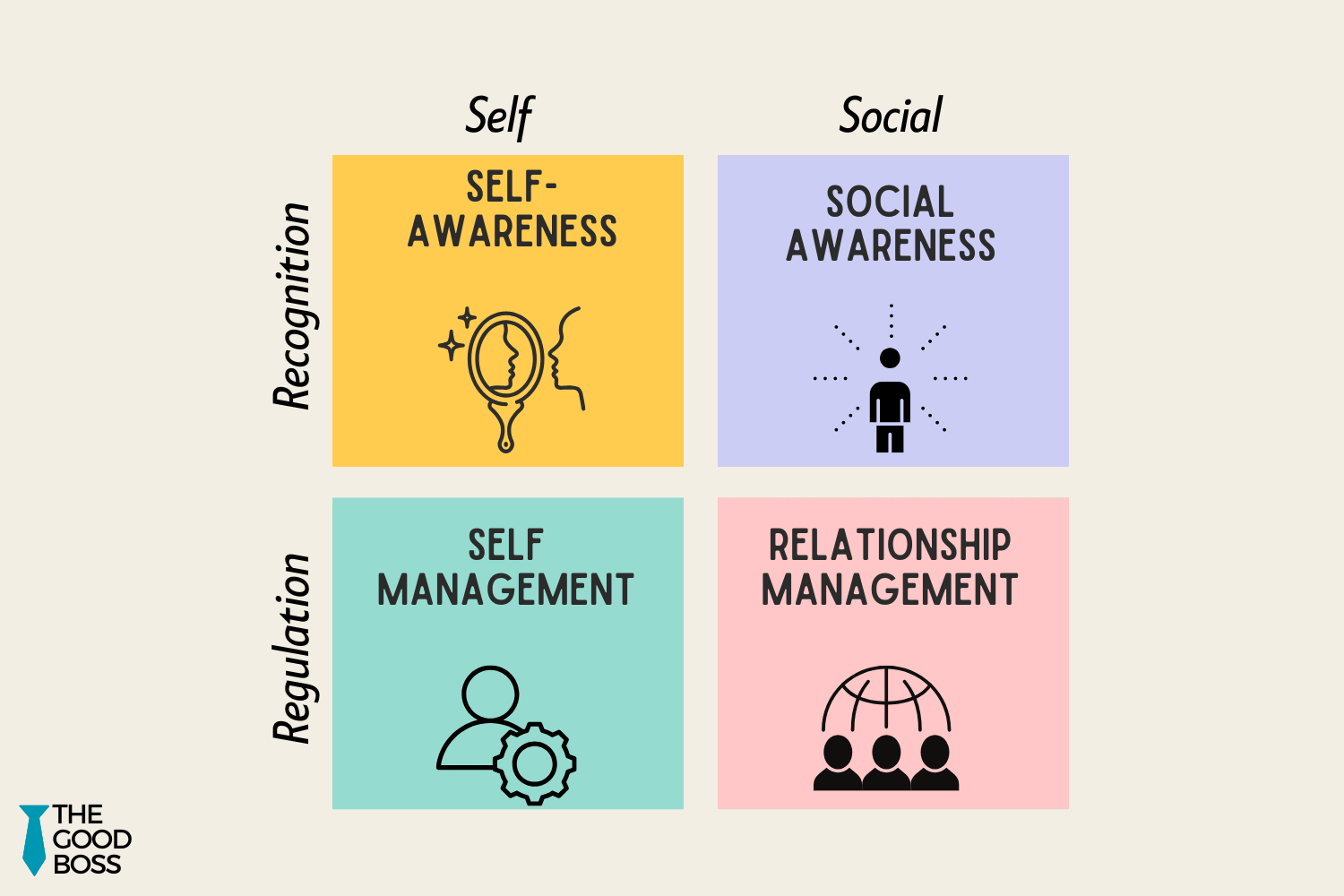
Self-awareness (Self × Recognition): catching your own emotions as they happen, not in the car on the way home after the fact. Think emotional self-awareness, honest self-assessment, and self-confidence.
Social awareness (Social × Recognition): reading the room and the person in front of you, not just hearing them. Think empathy and organisational awareness.
Self-management (Self × Regulation): doing something useful with what you noticed. Think self-control and adapting to situations.
Relationship management (Social × Regulation): acting on what you read in others. Think influencing others, developing your team and others around you.
Why This Matters for Leaders
Emotional intelligence applies to everyone, not just leaders, but I think the stakes are much higher for leaders. Here’s why.
Your mood gets louder when you’re the boss.
Let’s say on a particular day, you’re feeling mildly annoyed, maybe a 3 out of 10. If one of your team members is mildly annoyed with you, you would barely notice (unless you’re super sensitive, of course!)
But remember that you are the person who writes their performance review, who decides their promotion, and what project they work on. So your “3” feels more like an “8” to them.
The sigh you didn’t know you made after their comment in the meeting.
The one-word reply you dropped to their long Slack message.
The Zoom camera you kept off, while they had theirs on.
To you, none of it was a big deal, because you know it wasn’t about “them”.
But they don’t know that. All they have is what they saw, what they observed, and ultimately, what they felt.
Your team copies you.
As a manager, you’re not just managing your own reactions. You’re setting the tone for everyone in your team.
Whatever you do with pressure, how you handle conflict, how you set the standards… your team learns to do the same.
If you stay steady when a launch goes wrong, your team will stay steady.
If you get stressed and short-tempered, likely they will do the same with each other.
Your “read” on your team turns into decisions.
Again, rememer that as a manager, you decide who in your team is ready for more, who is struggling, and who to put on a hard project.
And how do you decide all that? A big part of it has to do with how you read your team members.
If you get that read wrong, you will make poor decisions that may impact someone’s career, financial situation, or worse, their self-confidence and sense of worth.
The real cost is silence.
The real cost of not being emotionally aware is much bigger, in my view.
Every small reaction you have, however minute you might think it was, teaches your team about what is safe to bring to you.
If your replies are sharp, or you ignore them completely, they will learn to stop telling you things early. They will probably wait until they’re sure it's worth bringing it up to you. Maybe they will wait until they have a ‘solution’, not just the ‘problem’.
So even without you noticing, you stop hearing the real issues when you should.
This is why I think EQ is not “soft”. It’s actually what powers your team’s operations - how they think, how they work, and how they communicate.
So in that sense, EQ directly impacts your bottom line - your results, your KPIs and your customer satisfaction.
Applying the EQ Framework
For the rest of this article, we will focus our attention on putting the EQ framework into practice in your own organization. As we do that, don’t forget to download the EQ Framework Worksheet.
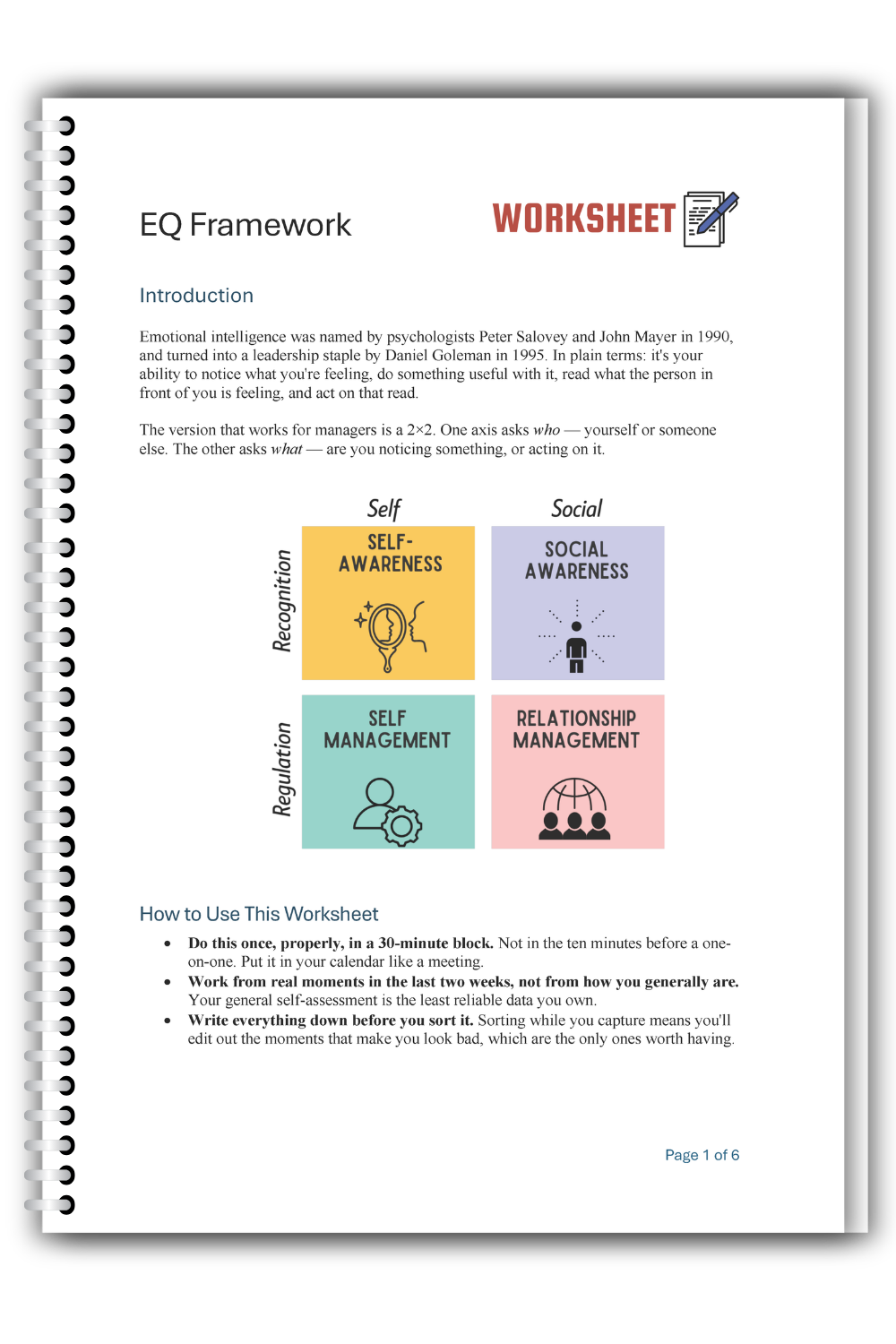
Use this worksheet to:
Name what you’re feeling in one specific word
Rate all four quadrants against real moments, not self-image
Find your weak link, and fix it upstream
Run the Four-Corner Check Technique on a live situation
How to download the worksheet
This worksheet is part of the Worksheets Collection, available to all paid subscribers to The Good Boss.
👉🏻 Upgrade to paid now and get instant access to the entire collection, including this worksheet.
If you prefer the standalone worksheet, you can purchase it from here.
The Four-Corner Check Technique
Here’s the technique I use, and it takes under a minute.