

Early on in my career as a new engineering manager, I remember sitting down with my manager for a feedback check-in conversation.
The meeting ran for more than an hour.
For most of the meeting, he told me how well I was doing. He appreciated the ownership I had taken on a project despite being a new manager. He even mentioned how I had grown compared to just six months ago.
Somewhere in the middle of the meeting, for about two minutes, he mentioned one thing I needed to work on - that he wanted me to pay more attention to the customer feedback.
Then, he went right back to the good stuff, and he wrapped up by telling me he was glad to have me on the team.
The entire meeting sounded like music to my ears, and I remember walking out of the room feeling happy, thinking that I had nailed it.
A few months later, at my formal review, my manager handed me the compensation letter. I remember reading it and feeling my stomach drop.
I had received a “meets expectations” rating, and an average increment. Nothing close to what I had expected based on the check-in feedback just a few months ago.
It took me weeks to shake off the sleepless nights because I never saw this coming.
When I asked my manager about this, he thought I was “overreacting” because he had shared the feedback with me about the need to pay more attention to our customer’s feedback, and that was a critical part of my role.
As I reflected on this, I realized that this was two minutes of feedback buried in fifty-eight minutes of praise, which is why I had failed to register it at all. To me, it was like the optional footnotes in the margins of a book - the kind nobody pays attention to.
That’s the real problem with the Feedback Sandwich, the framework we will deep-dive into in this post. We will discuss how you can effectively use this framework to deliver feedback without losing the essence of the message.
Here’s what we will cover:
Why Everyone Loves to Hate This One
How the Feedback Sandwich Works
Applying the Feedback Sandwich in Practice
The Weighted Sandwich
How This Shows Up In Real Situations
Common Pitfalls (and How to Avoid Them)
Final Thoughts
Why Everyone Loves to Hate This One
Chances are, you’ve heard about this framework, even if you don’t recognize the name.
If you ask a group of managers about the feedback sandwich, there’s a good chance some of them will roll their eyes.
The common complaint I hear when I speak with managers about it, is that it’s too “soft”, and it encourages the managers to avoid saying the hard thing directly. Or, it trains the person receiving the feedback to tune out the praise because they know the “but” is coming…
Here’s my take: I think the structure of the framework itself isn’t really the problem. Going back to what my manager did, he used the sandwich, yes, but his sandwich was almost entirely bread.
And who likes a sandwich that is mostly bread? :)
How the Feedback Sandwich Works
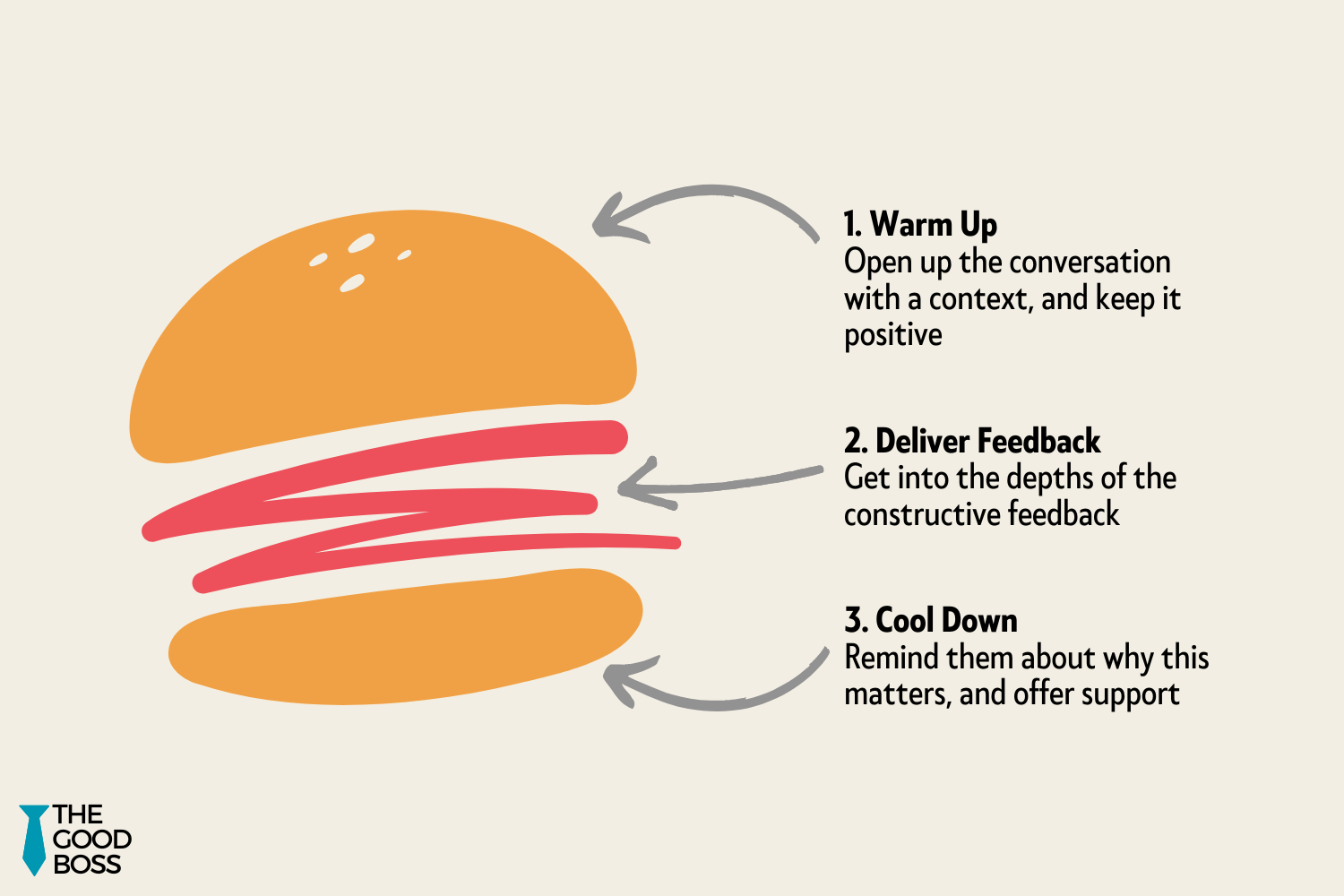
At its core, the feedback sandwich has three “moves” or “steps”:
Warm up: Open your conversation with something specific and true about what the person is doing well.
Deliver feedback: Name the issue that you’re concerned about, clearly, with an example.
Cool down: Close by reinforcing that you believe they can act on it.
If you read those steps carefully, you’ll notice that the framework doesn’t mention that you should say the good stuff more than the constructive stuff.
Also, the third step isn’t about randomly praising the individual - it’s about reinforcing your support and belief, as you want to make sure they can succeed in the feedback that you have just delivered.
I think that makes this the most critical step of the framework, because if this is not done correctly, you can end up diluting the feedback completely (like my manager did).
Applying the Feedback Sandwich in Practice
Now that we know how the model works, let’s focus our attention on putting the feedback sandwich into practice in your own organization. As we do that, don’t forget to download the Feedback Sandwich Worksheet.
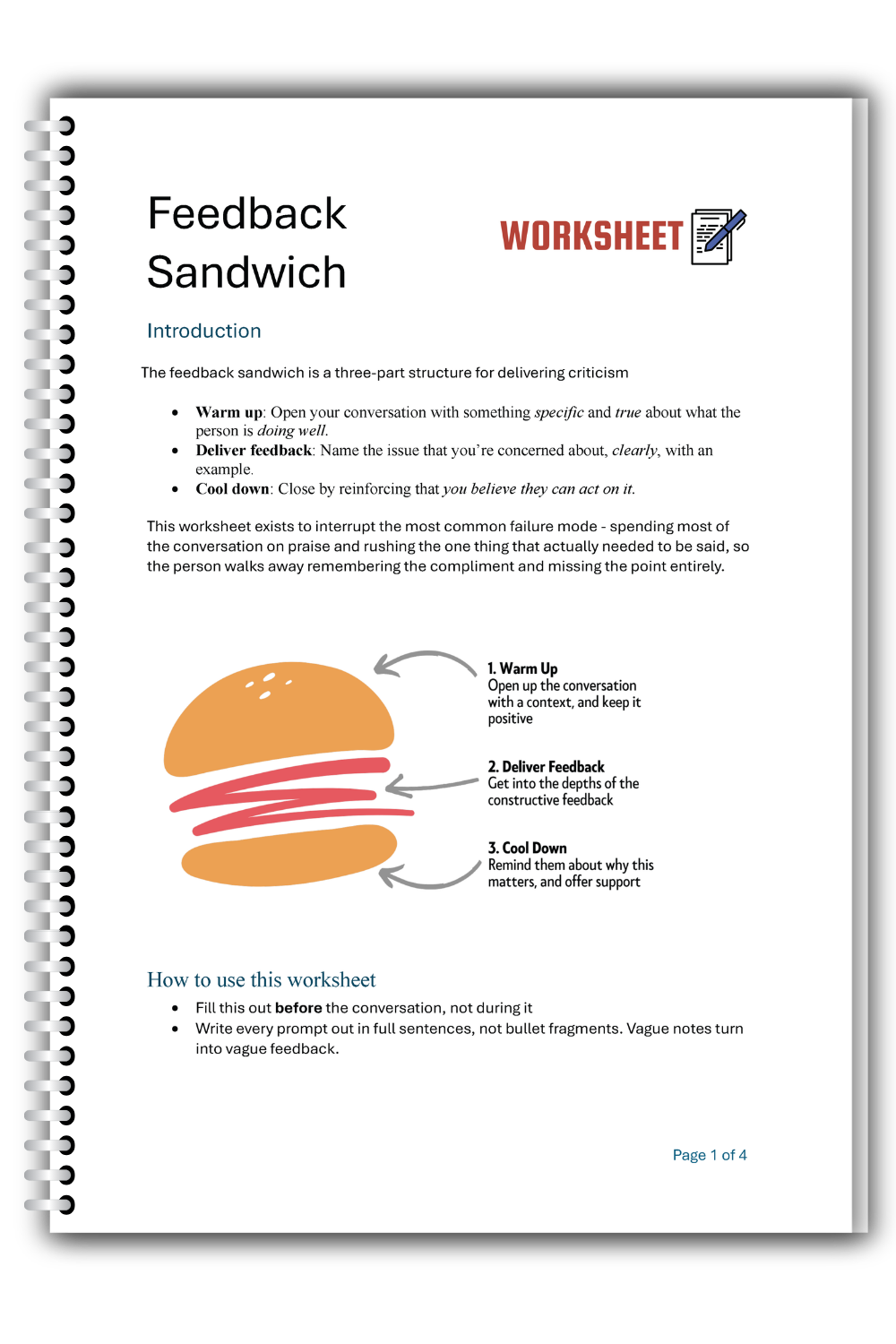
Use this worksheet to:
Plan the conversation ahead of time
Confirm the message actually landed
Commit to a concrete follow-up
How to download the worksheet
This worksheet is part of the Worksheets Collection, available to all paid subscribers to The Good Boss.
👉🏻 Upgrade to paid now and get instant access to the entire collection, including this worksheet.
If you prefer the standalone worksheet, you can purchase it from here.
Next, let’s discuss a simple technique I use, called The Weighted Sandwich, to apply this framework when you’re giving feedback to someone on your team.