

In this issue:
Part 1: Understanding The Four Temperaments
Decoding Personalities: Sanguine, Choleric, Melancholic, Phlegmatic
In Summary: The Four Temperaments
Test Your Understanding
Practice this Framework
Part 2: Applying The Four Temperaments in Leadership
Download the worksheet
Apply to a situation
The 3 Dimensions
Part 3: Going from here
Recommended Resources
Final Takeaway
✨
A few years ago, I was leading a team with a mix of strong personalities.
There was the extroverted, high-energy Product Manager who loved brainstorming out loud (let’s call her Sarah), and the quiet but detail-oriented developer who preferred working alone (we’ll call him Alex). In meetings, Sarah would dominate the discussion, while Alex barely spoke. Over time, I noticed Alex growing disengaged, feeling overwhelmed, while Sarah was frustrated, feeling overworked and unappreciated.
I faced a classic leadership challenge: how do you get different personalities to work together effectively?
In this post I will discuss a classic leadership framework—The Four Temperaments—a framework that helped me understand not just my own leadership style, but also my team and my boss.
Once I adjusted my approach, our team dynamic improved dramatically. The Four Temperaments can help you become:
More self-aware – knowing how your own temperament shapes your leadership style.
More people aware – understanding your team, stakeholders, and even your boss to build better relationships.
Let’s dive into each temperament and see how they show up in real life.
Part 1: Understanding The Four Temperaments
The Four Temperaments theory dates back to ancient Greece, originally proposed by Hippocrates around 400 BCE.
He believed that human behavior was influenced by four bodily fluids: blood, phlegm, yellow bile, and black bile, and that an imbalance among them led to different personality types: sanguine (optimistic), phlegmatic (calm), choleric (ambitious), and melancholic (thoughtful).
Decoding Personalities: Sanguine, Choleric, Melancholic, Phlegmatic
In this section, we will dive deeper into each of the four personality types, their traits, and how you can show up if you associate with each type.
The Sanguine Leader: The Social Butterfly

Sanguine leaders are high-energy and expressive, thriving in social settings.
They love engaging with people—whether rallying a team, networking with stakeholders, or leading an exciting brainstorming session. Their natural charisma and optimism make them great at inspiring others.
However, their enthusiasm can sometimes lead to a lack of focus. They may jump from one idea to another and struggle with follow-through, which can be challenging when structure is needed.
Imagine a startup CEO who has a Sanguine temperament. She would likely be a magnet for investors and employees alike, energizing the company with lively town halls and creative brainstorming sessions. Who doesn’t want to be with such a personality? Yet, her enthusiasm could potentially overshadow her ability to provide a structure and process for actual deliverables, resulting in half-finished projects or constantly changing priorities.
Takeaway:
If you’re a Sanguine leader, consider pairing up with someone who is more detail-oriented. Balance your natural energy with a clear plan for execution.
The Choleric Leader: The Determined Achiever
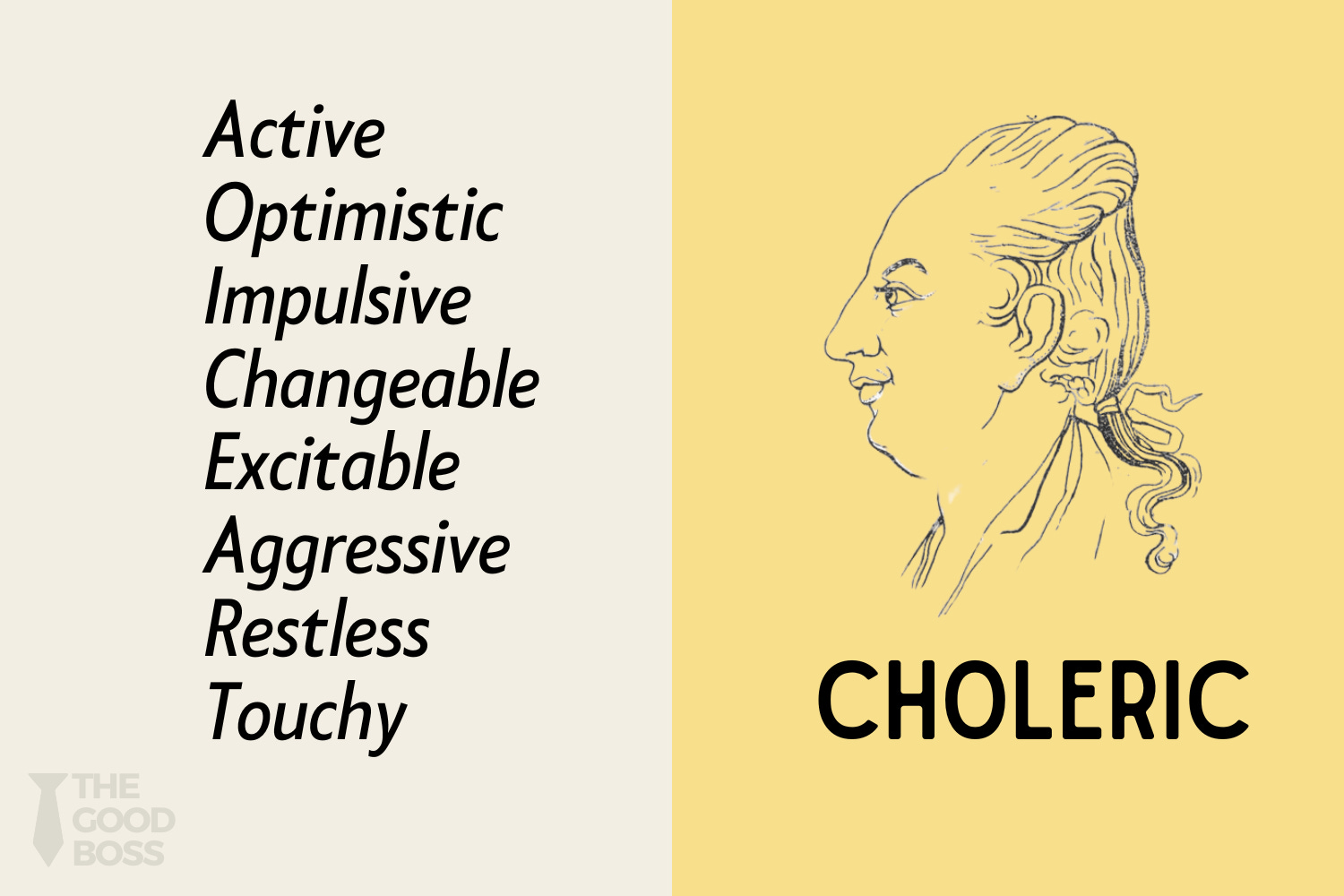
Choleric leaders are natural-born achievers.
They are results-driven, decisive, and thrive on challenges. Their strong will and competitive spirit drive rapid progress and clear goals.
However, this intensity can make them come across as blunt or impatient. When expectations are high, team members who need more support might feel overwhelmed or undervalued.
Consider a sales director with a Choleric temperament. He pushes his team relentlessly to meet ambitious sales targets, and his direct approach often produces impressive results. Yet, this high-pressure environment results in stress and burnout for some team members. The relentless focus on results overlooked the need to support and recognize the team members.
Takeaway:
If you’re a Choleric leader, take time to listen actively and acknowledge your team’s efforts. A bit of empathy and positive reinforcement can go a long way.
The Melancholic Leader: The Thoughtful Strategist

Melancholic leaders are analytical and deeply thoughtful.
They excel in strategic planning and attention to detail, and their pursuit of excellence often results in high-quality outcomes. However, their tendency to overanalyze and seek perfection can slow down decision-making. Their need to be perfect may result in overlooking passing opportunities.
Imagine a software engineering manager with a Melancholic temperament. He holds a high bar on quality, and insists on refining every product feature before launch to ensure quality. While his high standards elevate the overall quality of the product, it also slows down releases and frustrates teams and customers who favor speed and agility.
Takeaway:
If you’re a Melancholic leader, set realistic deadlines and trust your team to deliver good work. Remember, sometimes “done” is better than “perfect.”
The Phlegmatic Leader: The Steady Diplomat

Phlegmatic leaders are the calm, stabilizing force in any team.
They excel at maintaining harmony and mediating conflicts, providing a reliable and supportive presence. Their preference for peace and harmony can create a stress-free environment, though it may unintentionally promote a suppressive culture where team members don’t feel psychologically safe to raise their concerns or call out the elephants in the room.
Imagine a project manager with a Phlegmatic temperament. She is known for keeping the team environment calm and supportive. However, when a team member underperforms, she might hesitate to address the issue directly (to avoid rocking the boat.) As you can imagine, if this continues over time, it could breed team resentment and impact deliverables.
Takeaway:
If you’re a Phlegmatic leader, work on your assertiveness. Address issues early on with kindness but firmness to prevent small problems from growing into larger conflicts.
In Summary: The Four Temperaments
The Four Temperaments framework categorizes personalities into four main types:
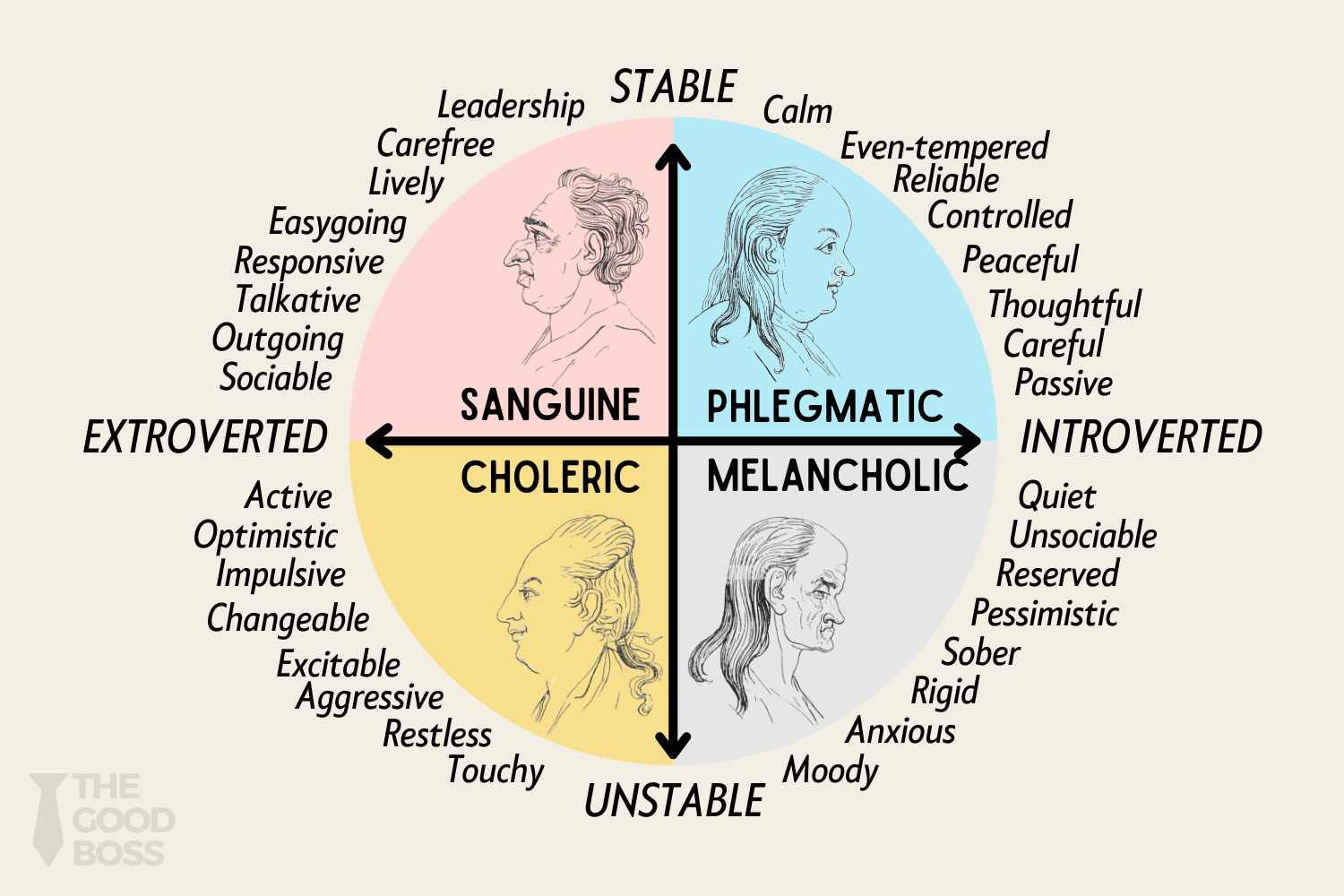
Sanguine (The Social Butterfly): Energetic and engaging, but sometimes lacking in focus.
Choleric (The Determined Achiever): Results-driven and decisive, yet potentially too intense for some.
Melancholic (The Thoughtful Strategist): Detail-oriented and analytical, with a risk of overthinking.
Phlegmatic (The Steady Diplomat): Calm and reliable, but may avoid necessary confrontations.
Understanding these temperaments can improve your self-awareness and sharpen your ability to manage diverse teams and stakeholders. What’s more, it can help you to know your boss at a deeper level and manage up more effectively.
Test Your Understanding
Before you move on, take a couple of minutes to check your understanding with a quick quiz.
Are you up for it? Let’s do this!

(If you’re new to Kyoshi: It’s the systems-first leadership coach, built on the same Leadership OS I’ve been writing about in this newsletter for years. Go ahead and sign up for free and try out the quiz now.)
Practice This Framework
Just like you build your physical muscles in the gym, you build your leadership muscle by practice.
🎯 Practice a drill
Got five minutes? Drills are short, focused reps. Kyoshi gives you a situation, and you rework it so it informs, inspires, and influences.
Go ahead and start the drill now!

Part 2: Applying The Four Temperaments in Leadership
Now, practice makes you better, but you only really grow when you use a framework on your own problems.
Role plays and drills are useful, but they’re not your situation.
Your situation has its own people, its own history, and, frankly, its own politics.
So here are two ways in which you can actually apply this framework in your own leadership role today.
📝 Download the worksheet
If you like step-by-step prompts, download and use the Four Temperaments worksheet and apply it in your own team or work situation.
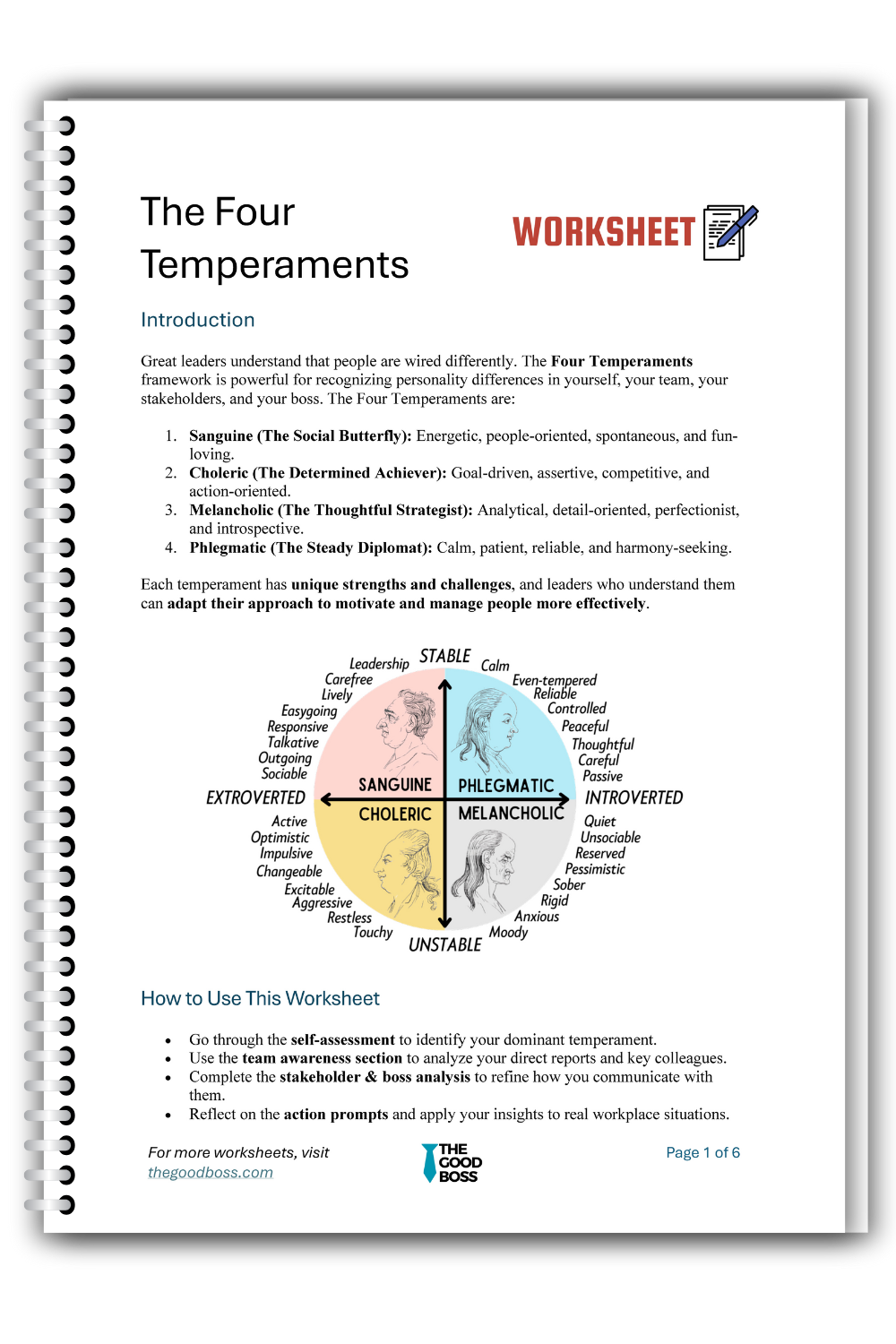
This worksheet is part of the Worksheets Collection, available to all paid subscribers to The Good Boss.
👉🏻 Upgrade to paid now and get instant access to the entire collection, including this worksheet.
If you prefer the standalone worksheet, you can purchase it from here.
🧭 Apply to a Situation
If you’re looking for a trusted partner to help you create and manage a situation, and actively coach you as you solve it for real, then Kyoshi can help you with all that.
Pick one real situation coming up in the next week or two. Then work with Kyoshi to apply this framework in that situation.
