Most leaders talk too much.
We think impact comes from saying more:
More context
More background
More explanation.
But the reality is that the more you say, the less people remember.
And the more you explain or justify, the more your message gets lost.
Think about the most powerful think a leader you admire said to you. Chances are, it was short, clear, and maybe even a little uncomfortable.
But how do you say less with higher impact? That’s exactly what we will learn in this article with The Hemingway Iceberg Technique.
Here’s what we will cover:
Part 1: Understanding the Hemingway Iceberg Technique
What is the Iceberg Technique?
How the Iceberg Technique Works
Part 2: Applying the Iceberg Technique to Leadership
Uncovering the 4 Hidden Layers
Real-Life Leadership Scenarios
The Iceberg Technique Worksheet 📝
Part 3: Going from Here
Common Pitfalls to Avoid
Recommended Resources
Final Thoughts
Are you ready to supercharge your leadership communication? Let’s dive in!
Part 1: Understanding the Hemingway Iceberg Technique
Most people know Ernest Hemingway as a Nobel Prize-winning author. He was one of the most influential writers of the 20th century.
His novels - The Old Man and the Sea, A Farewell to Arms, For Whom the Bell Tolls - are now considered classics. But what made him truly stand out was his writing style: short, spare, and deeply human. He stripped away all the noise, and somehow made you feel more. He called it the Iceberg Technique.
What is the Iceberg Technique?
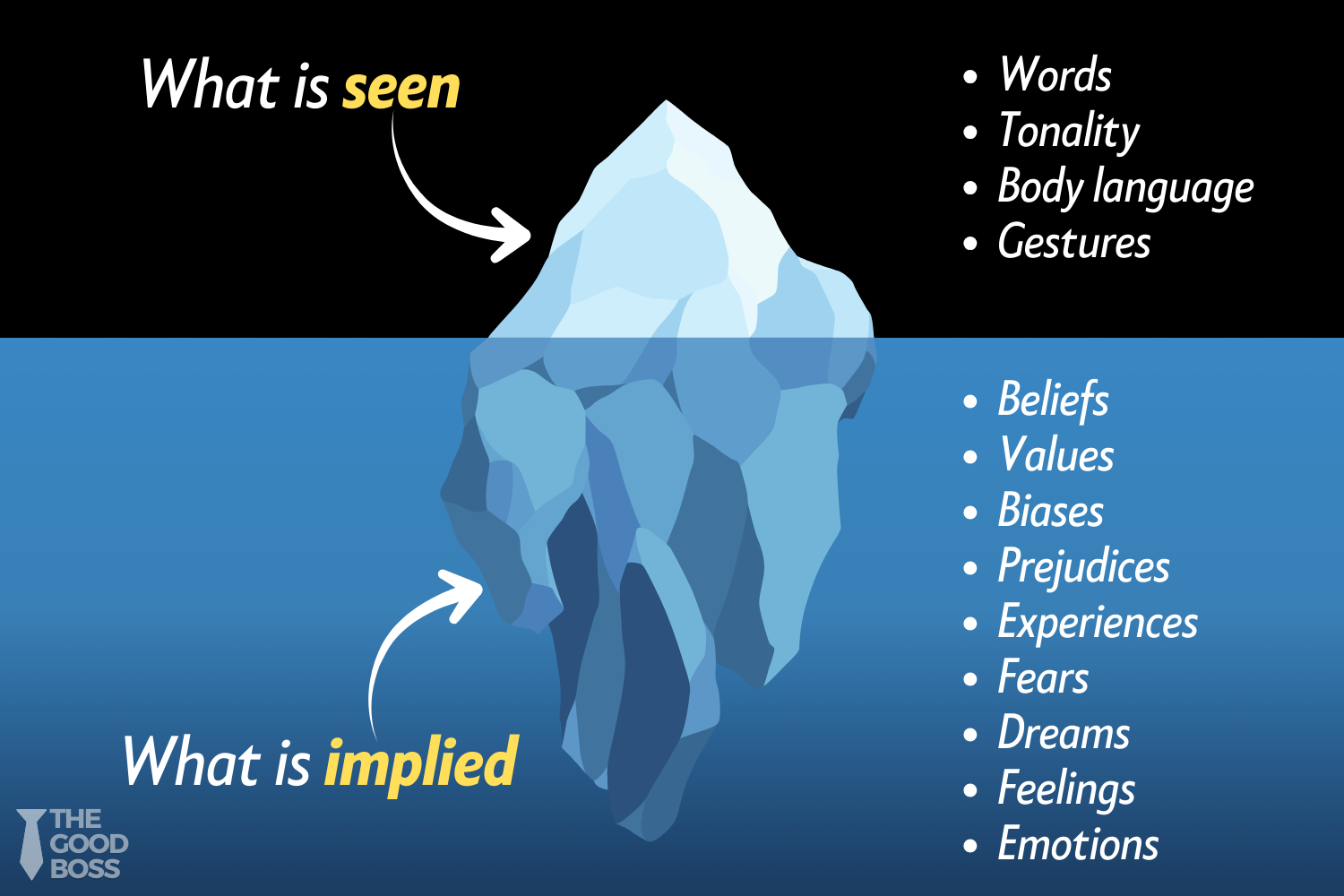
Hemingway believed that a story becomes more powerful when most of it is left unsaid.
Only a small part should be visible on the surface, just like the tip of an iceberg. The real meaning lies beneath.
“If a writer of prose knows enough of what he is writing about,
he may omit things that he knows… The dignity of movement of an iceberg is due to only one-eighth of it being above water.”
— Ernest Hemingway
In practice, this meant he cut everything that wasn’t essential:
No long explanations
No forced emotion
No hand-holding
Just clean, deliberate sentences, where the real meaning came from what was not said.
He trusted the reader to feel the tension, to connect the dots, to carry some of the meaning themselves.
That’s exactly what made it hit harder.
How the Iceberg Technique Works
There are three simple but powerful ideas behind this technique:
1. Say Less
Most people try to sound smart by saying more. But what your team members really crave from you is clarity, not smartness.
The Iceberg Technique forces you to strip away the fluff. You stop padding your message with corporate buzzwords, “I thinks,” “sort ofs,” or long-winded disclaimers.
What’s left is sharper, stronger, and easier to remember.
2. Make It Felt, Not Explained
You don’t need to spell out every emotion.
Instead of saying, “This was a tough decision and I feel bad about it,” you say, “I’ve had three sleepless nights over this.”
The second version hits harder because it lets the listener feel the emotion, rather than being told what to feel.
3. Trust Your Audience
This might be the hardest part.
You have to trust that your team, your peers, your readers - they get it.
They don’t need every detail.
They don’t need a 10-minute backstory.
Stop treating them like kids.
The more you trust them to read between the lines, the more respect and attention you earn.
Enjoying the read? Hit the ❤️ button and share/restack 🔁 it with others who might find it helpful. You can also subscribe to The Good Boss for more posts like this every week. Thank you! 🙏
Part 2: Applying the Iceberg Technique to Leadership
As a leader, you’re already telling stories. In your 1:1s, in team updates, in town halls, in Slack messages, you’re shaping how people think and feel.
The only question is how well those stories are landing.
The Iceberg Technique helps you tighten your words, sharpen your message, and leave a deeper impression, without sounding robotic or rehearsed.
In this section, you’ll learn how to use it in your own role.
Here’s what we’ll cover:
The 4 Hidden Layers of the Iceberg: a simple, practical way to apply the Iceberg Technique to your writing and speaking in your own leadership role.
Real-world leadership scenarios, where we will see how the Iceberg Technique can be applied in various situations that you will encounter as part of your leadership role.
The Hemingway Iceberg Technique Worksheet: Download this worksheet to start applying the Iceberg Technique in your own situation and team.
Uncovering the 4 Hidden Layers