Many in the corporate workforce believe that “good work speaks for itself.”
Early on in my career, I used to believe in that too. I thought that if I would just focused on delivery, results, and being a good team player, recognition would automatically follow.
And for a while, it did.
Until it didn’t.
I remember the time when a peer manager who was less competent and less experienced than me got the opportunity I’d been quietly working toward. It was a soul-crushing experience for me, and I was devastated.
After an initial period of frustration and resentment, I entered a phase of introspection, reflection, and observation. And then, I could finally see what was going on.
The other manager had made some moves that I was ignoring. He was playing by the unspoken rules that most leaders follow but don’t share.
I call this the hidden rulebook.
In this post, I will unravel the 24 unspoken rules from that rulebook that influence and shape careers, projects, promotions, and power inside organizations, whether we like it or not.
Most of us learn them the hard way. But you don’t have to, as I’m sharing the full rulebook here (and you can thank me later!)
I have organized the rule book into six chapters, as follows:
Chapter 1: The Game is Real
Chapter 2: Power Isn’t What You Think
Chapter 3: Relationships Are the Real Leverage
Chapter 4: The Information Game
Chapter 5: The Psychology of Influence
Chapter 6: Playing Without Losing Yourself
Ready to dig in? Let’s go!
Chapter 1: The Game Is Real
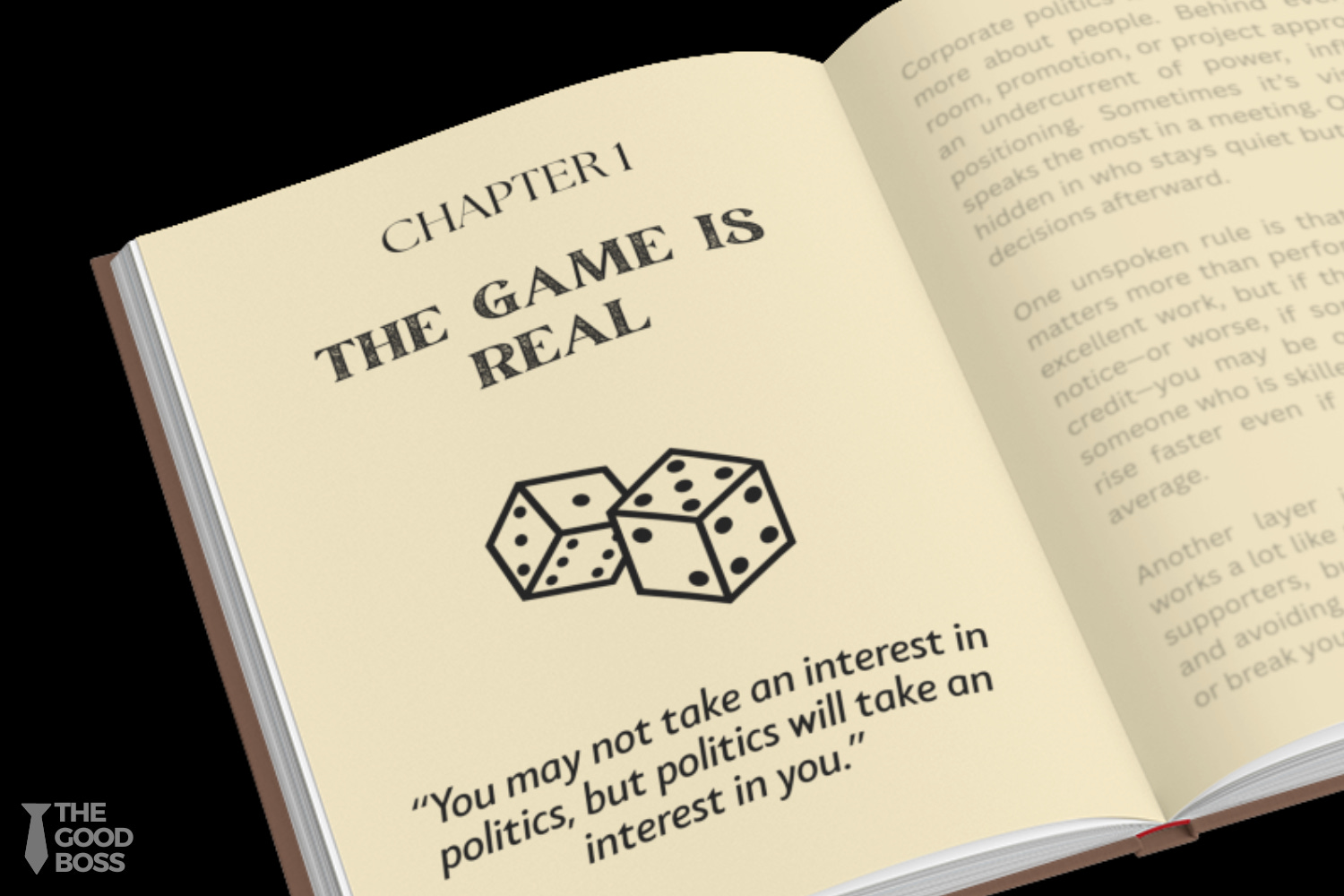
“You may not take an interest in politics, but politics will take an interest in you.” – Pericles
Most professionals, including managers, resist the idea of "office politics." It feels beneath them, or dirty.
But ignoring politics doesn’t make it go away, it just makes you easier to outmaneuver. This chapter lays out the foundational truths: You’re in the game, whether you know it or not.
Rule 1: Everyone is playing the game, even the ones who say they hate politics.
We’ve all seen colleagues who loudly claim “I’m not political”. But the reality is that those same people are often playing the game in more subtle ways.
My thumb rule is simple: Don’t watch what people say. Watch what they do.
You’ll see this when someone “just happens” to have a friendly conversation with a senior leader over lunch, or volunteers to organize a team event that brings them close to the key decision-makers. They might frame it as “just being helpful,” but they’re building visibility and goodwill. In corporate talk, we sometimes call these ‘brownie points.’
Watch closely, and you’ll notice how certain people always seem to know what’s coming before it’s announced. That’s not luck. It’s political awareness in action.
👉🏼 Takeaway: The people who claim they hate politics are often playing it best, just more quietly.
Rule 2: Ignoring politics is how you lose by default.
As much as you may not like politics, the harsh truth is this: Opting out doesn’t protect you. It disarms you.
Let me be clear, though: I’m not saying that you need to manipulate. But you do need to “understand the terrain.”
A talented engineer on my team once refused to engage in any cross-functional meetings. He was a brilliant engineer, but considered any non-technical or leadership meeting a waste of his time. “Let my work speak for itself,” I remember him say.
And here’s what happened: when the annual performance calibration discussions came around, none of the senior leaders outside my team had any idea who he was or what impact he had created. I tried my best to vouch for his case, but after a while I started sounding like a broken record. In the end, he didn’t make the promotion list because he wasn’t known, not because he wasn’t good.
Opting out is a political move, and not a smart one.
👉🏼 Takeaway: If you’re not in the political game, you’re letting others play it for you.
Rule 3: Politics is just power in motion.
Politics is not dirty by default. I think of politics as how influence, trust, and decisions move. The better you understand it, the better you can shape outcomes and drive results.
I like to think of politics as organizational dynamics.
Consider this: A product decision doesn’t just get made based on data alone. It gets made based on alignment, risk appetite, egos, and (importantly) perceived credibility of the person involved. When a well-liked junior PM convinces multiple stakeholders to back her roadmap, she’s not being “political” in the negative sense. She’s just navigating power structures effectively.
That’s politics, done well.
👉🏼 Takeaway: Politics isn’t dirty. It’s just how trust, influence, and decisions move inside companies.
Rule 4: Good work is necessary, but not sufficient.
Performance gets you considered. Politics decides whether you get chosen.
A couple of years ago, two team leads were under consideration for a newly created senior role. On paper, the choice looked obvious. Ravi had led three major projects, all delivered on time and under budget.
But there was a problem: Ravi had stayed in his lane. He rarely engaged outside his team, didn’t attend cross-functional syncs unless required, and wasn’t known by many leaders beyond his immediate circle.
On the other side was Anika. Her delivery record was good, but not perfect. She had one delayed project and a few customer escalations. But she had built deep trust with other departments, mentored people beyond her team, and often stepped in to help unblock peers across functions. In rooms where she wasn’t present, people still vouched for her.
When it came time to decide, leadership picked Anika. She was seen as the more “complete” leader.
👉🏼 Takeaway: Results get you into the conversation. Politics decides how it ends.
P.S. If you’re enjoying reading this article, I’ll appreciate it if you would take 2 seconds and hit the ❤️ button and share/restack 🔁 it with others who might find it helpful. You can also subscribe to The Good Boss for more posts like this every week. Thank you! 🙏
Chapter 2: Power Isn’t What You Think
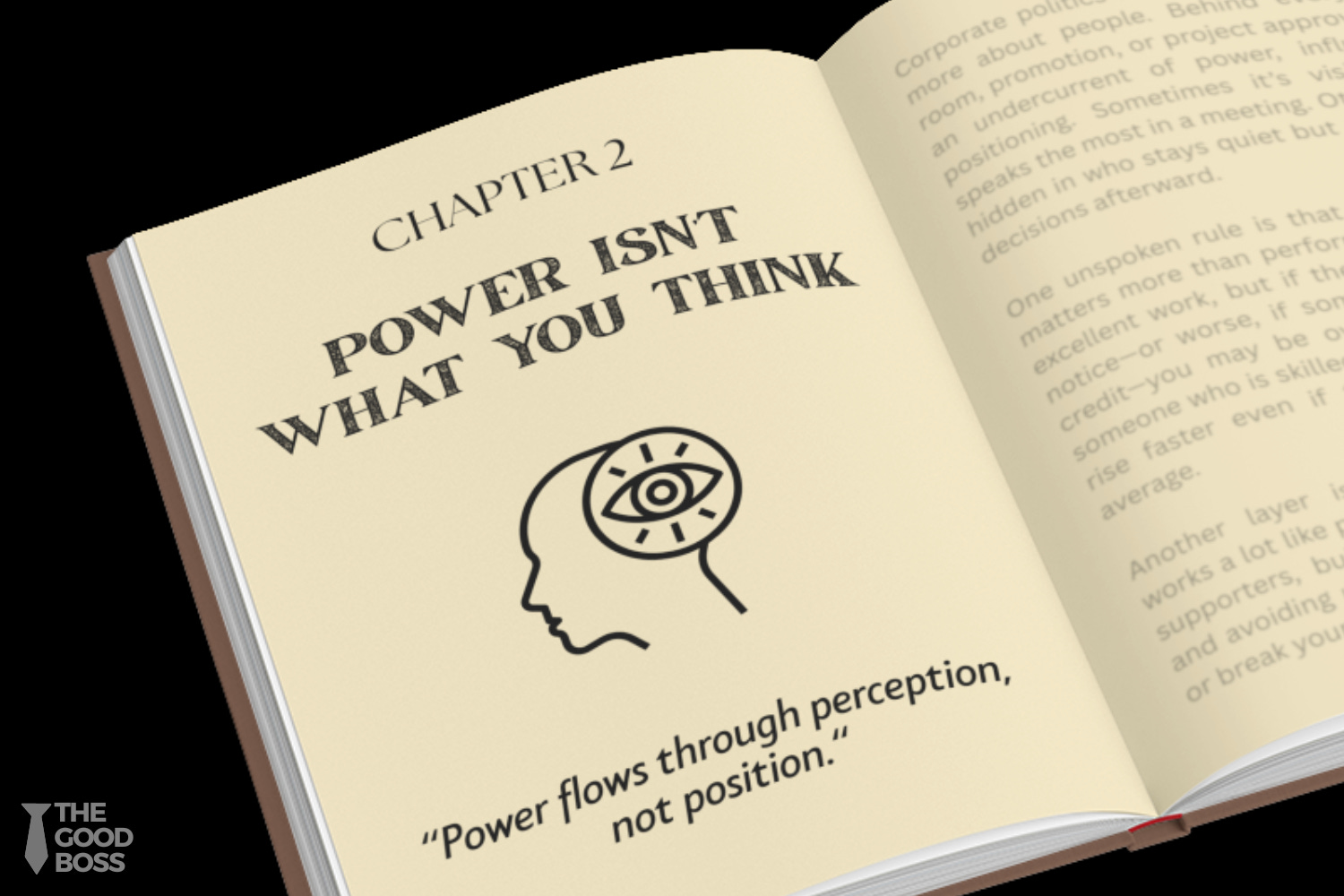
Power flows through perception, not position.
In the corporate circles, we’re generally told that we should respect titles and hierarchies. But the reality is that inside companies, power doesn’t flow by job title. It flows through trust, perception, and most importantly, influence.
In this chapter, we will unpack how real power works, and how to spot it even when it’s not obvious.