What if the reason your team isn’t motivated…has nothing to do with them?
As managers, when we’re dealing with low motivation, it’s easy for us to blame a number of factors, such as:
The team is just burned out.
They just don’t “get” it
or even “this new generation…”
While some of the factors above may be true, in my experience, the real reason your team stops caring at work is more basic than that.
They’re clearly missing something, but I’m not talking about free lunches or ping-pong tables. (which aren’t bad, by the way).
But I’m talking about something deeper, something more human.
You can tell when your team is motivated: their faces light up, and they’re full of energy and raring to go.
So what is this thing that changes everything?
That’s exactly what we will talk about in this post. We will discuss the three most fundamental ingredients to intrinsic motivation, and the framework - The Inner Drive - that you can use to unlock these with your own teams.
Here’s what we will cover:
Part 1: Understanding The Inner Drive 🔥
What is The Inner Drive?
How The Inner Drive Works - Autonomy, Mastery, Purpose
Part 2: Sparking ⚡️ the Inner Drive
Fire-Starters 🔥: Practical Moves to Spark Motivation
Leadership Scenarios: Where Motivation Breaks (and How to Fix It)
The Inner Drive Worksheet 📝
Part 3: Keeping the Fire 🔥 Burning
Common Pitfalls (And How to Avoid Them)
Recommended Resources
Final Thoughts
Ready to dive in? Let’s go! 🚀
Part 1: Understanding The Inner Drive 🔥
In this section, we will discuss the background behind this framework and how it works.
What is The Inner Drive?
I first read Daniel Pink’s Drive early in my career, and later re-read it a couple of times. Every time I read it, it left me asking this question:
Am I motivating my team, or just managing them?
In Drive, Pink argues that people do their best work when three deep human needs are met:
Autonomy – the need to feel in control
Mastery – the need to improve and grow
Purpose – the need to contribute to something meaningful
In the book, and in his TED talk (which I highly recommend you watch), he talked broadly about motivation, but I couldn’t stop thinking about it in the context of leadership.
You can think of The Inner Drive as the leadership lens for turning these three needs into daily habits, so you can unlock real motivation in your team.
Next, let’s dive deeper into this model.
How The Inner Drive Works
The Inner Drive is built on three pillars - autonomy, mastery, and purpose.
Autonomy: The Need for Control
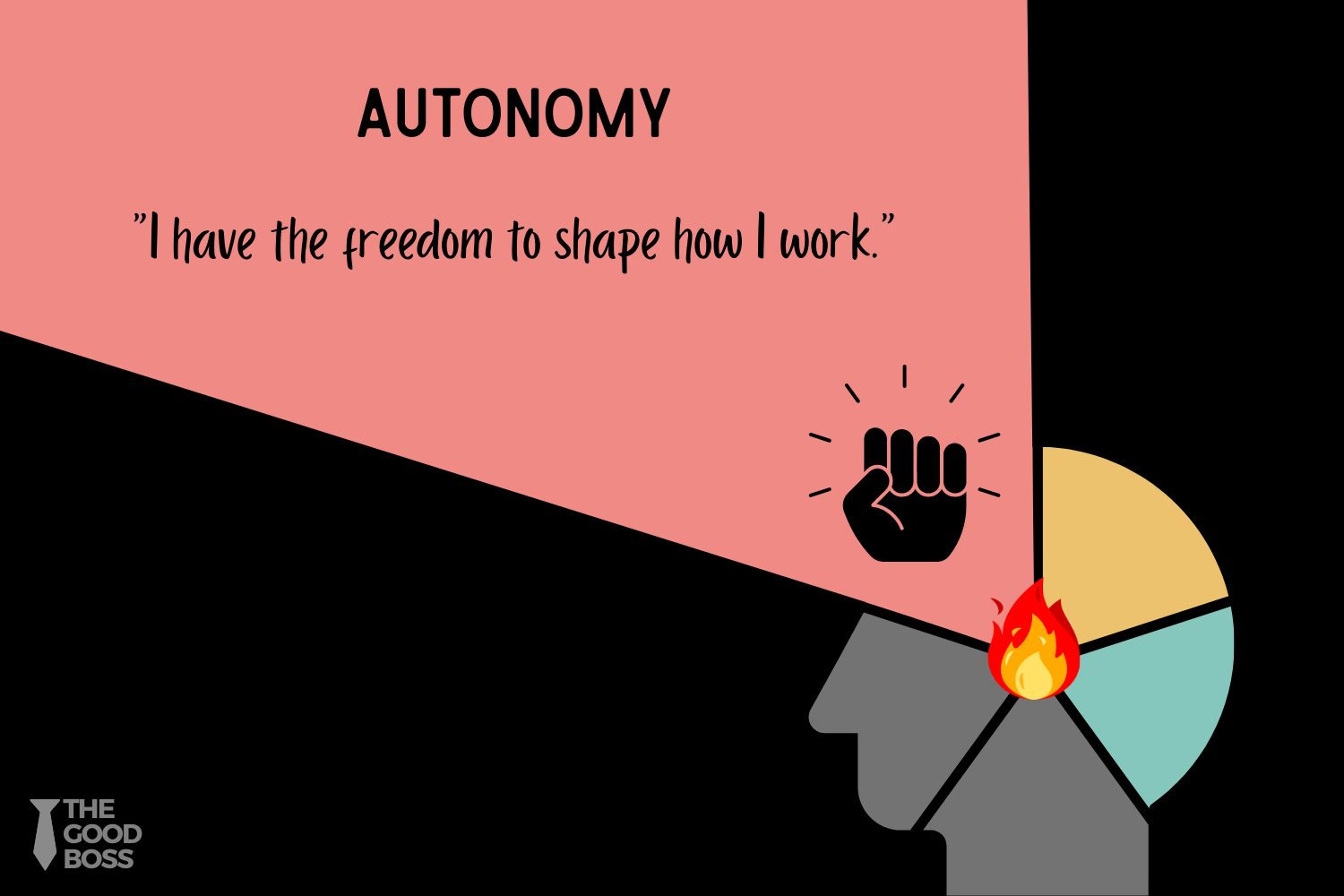
People want to do great work, but they want to do it their way.
Autonomy is about giving your team space to make decisions, experiment, and own the “how” of their work. As a leader, you still set direction, but they get to choose how to reach there.
What it looks like:
Letting them choose tools or approaches
Flexibility in work schedules or environments
Input into the team’s roadmap or priorities
If your team doesn’t have autonomy, they will feel controlled and suffocated. They will do what’s asked, but nothing more.
👉🏼 Autonomy gives them the breathing room to take initiative and to think ahead.
Mastery: The Need to Get Better
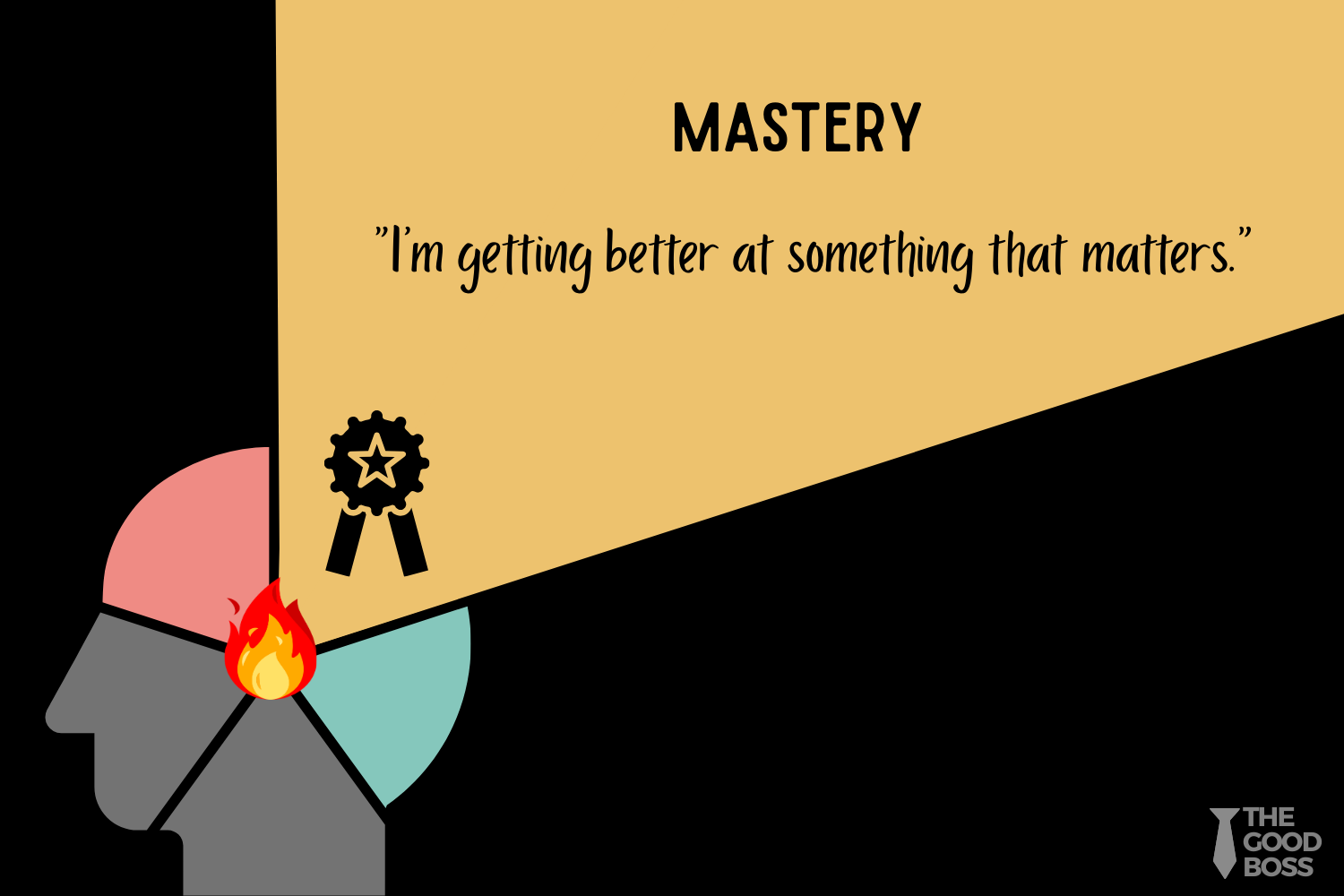
Most people crave to grow, and they don’t like to feel stuck or stagnated.
Mastery is about giving your team the opportunities and encouragement to grow and reach their full potential.
What mastery looks like in practice:
Giving team members projects that stretch their current skillset by 10–15%
Replacing vague feedback with specific input on what improved and what still needs work
Encouraging reflection after each project: “What did you learn? What was hard? What would you try next time?”
Providing time for skill-building, even during busy periods (e.g. weekly learning hours, rotations, internal talks)
Framing “mistakes” as learning data, not performance failures
👉🏼 As a leader, you can create an environment that encourages growth through stretch goals, and giving feedback that fuels improvement, not just evaluation.
Purpose: The Need for Meaning
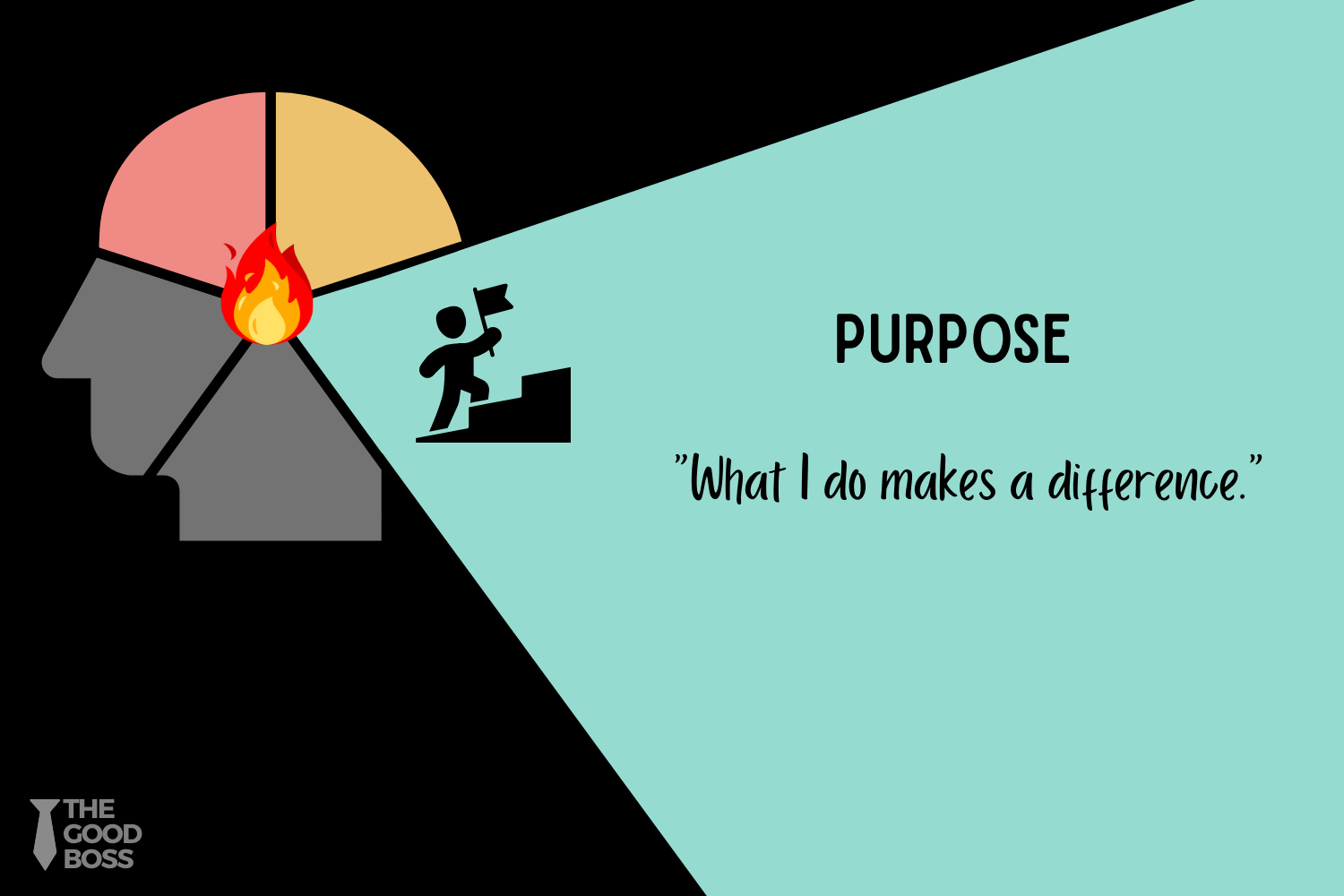
No one likes to be a cog in a machine.
Purpose is about giving your team a reason to keep doing their best, and to see the bigger impact they are making.
What purpose looks like in practice:
Sharing customer stories that highlight how the team’s work made a difference
Starting sprint reviews or demos by revisiting: “Why did this matter?”
Pointing out how behind-the-scenes work (infra, ops, cleanup) enables visible impact
Repeating the link between daily tasks and long-term goals, even when it feels obvious to you
Celebrating small wins that reflect meaningful progress
👉🏼 When people see the purpose, they bring more energy and meaning into their work.
The Inner Drive 🔥: Autonomy, Mastery and Purpose
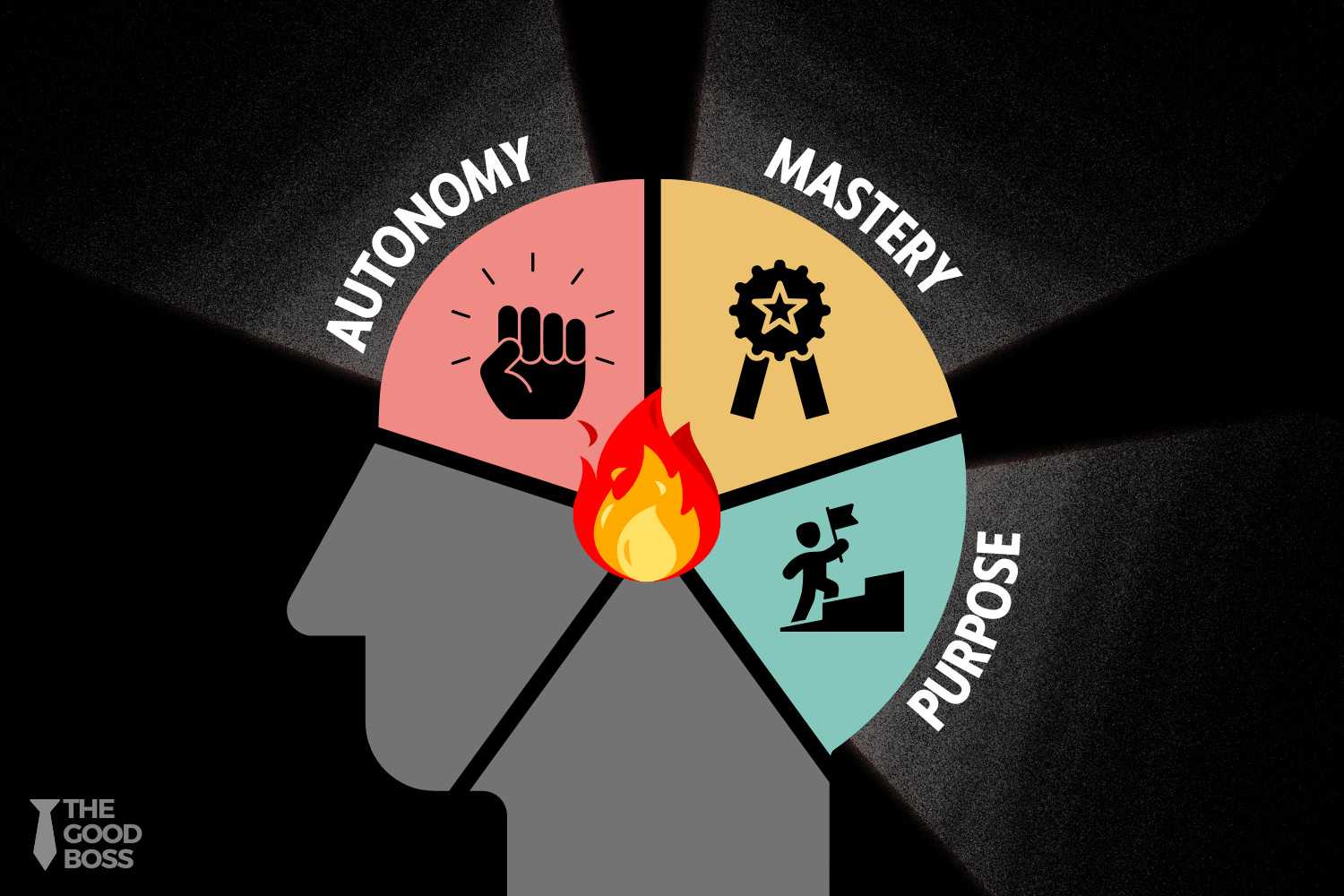
You can’t fake motivation.
You can’t buy it with perks. You can’t spark it by applying pressure. The only way to build lasting, real, motivation is by meeting the three core needs.
If you give autonomy but no mastery, your team will fail at their job.
If you focus on mastery but no purpose, your team will burn out.
If you offer purpose but no autonomy, your team will feel trapped.
But when all three are present, your team will light up - you will ‘feel’ the energy, and the drive. They will go beyond what is expected. That’s the power of the Inner Drive 🔥.
Enjoying the read? Hit the ❤️ button and share/restack 🔁 it with others who might find it helpful. You can also subscribe to The Good Boss for more posts like this every week. Thank you! 🙏
Part 2: Sparking ⚡️ the Inner Drive
We can read about motivation all we want, but the real value is in the action.
In this part, we’ll bring The Inner Drive to life, not as a concept, but as a practical toolkit you can apply in your own leadership role.
Here is what we will go through:
Fire-Starters: Practical Moves to Spark Motivation. Here you will learn small, intentional moves that will help you to unlock autonomy, mastery and purpose inside your team.
Leadership Scenarios: Where Motivation Breaks (and How to Fix It). Here, you will go through some real-life leadership scenarios familiar to you, and how the Inner Drive can be applied in them to spark motivation.
The Inner Drive Worksheet: You will have access to a practical worksheet that you can download and use directly in your leadership situation or team to apply this framework.
Fire-Starters 🔥: Practical Moves to Spark Motivation