If you’re leading a team, you want one thing.
You want them to perform, to take ownership, to raise the bar without being pushed every week.
But when performance dips, where do you look first? Let’s be honest.
Most leaders look at the people.
Who’s not stepping up?
Who needs feedback?
Who needs more pressure?
I know, it feels logical, and it feels responsible.
But here’s the reality: it’s often wrong.
Because in most cases, your people are not the problem. The system is.
The wasteful meetings.
The unclear priorities.
The messy communication channels.
The list of bottlenecks no one talks about.
As a leader, you have two options: You can push people harder, or you can improve the system they work in. One creates stress, while the other creates momentum.
In this issue, we will discuss the Kaizen mindset, which will change the way you lead not just your team, but your underlying systems.
Part 1: Understanding Kaizen
In this section, we’ll explore what Kaizen really means, where it comes from, and why it changes the way you think about leadership.
What Is Kaizen?
Kaizen is a Japanese word (改善) that means “change for better.” It became widely known through the Toyota Production System, where it shaped how one of the most respected manufacturing companies in the world approached improvement.
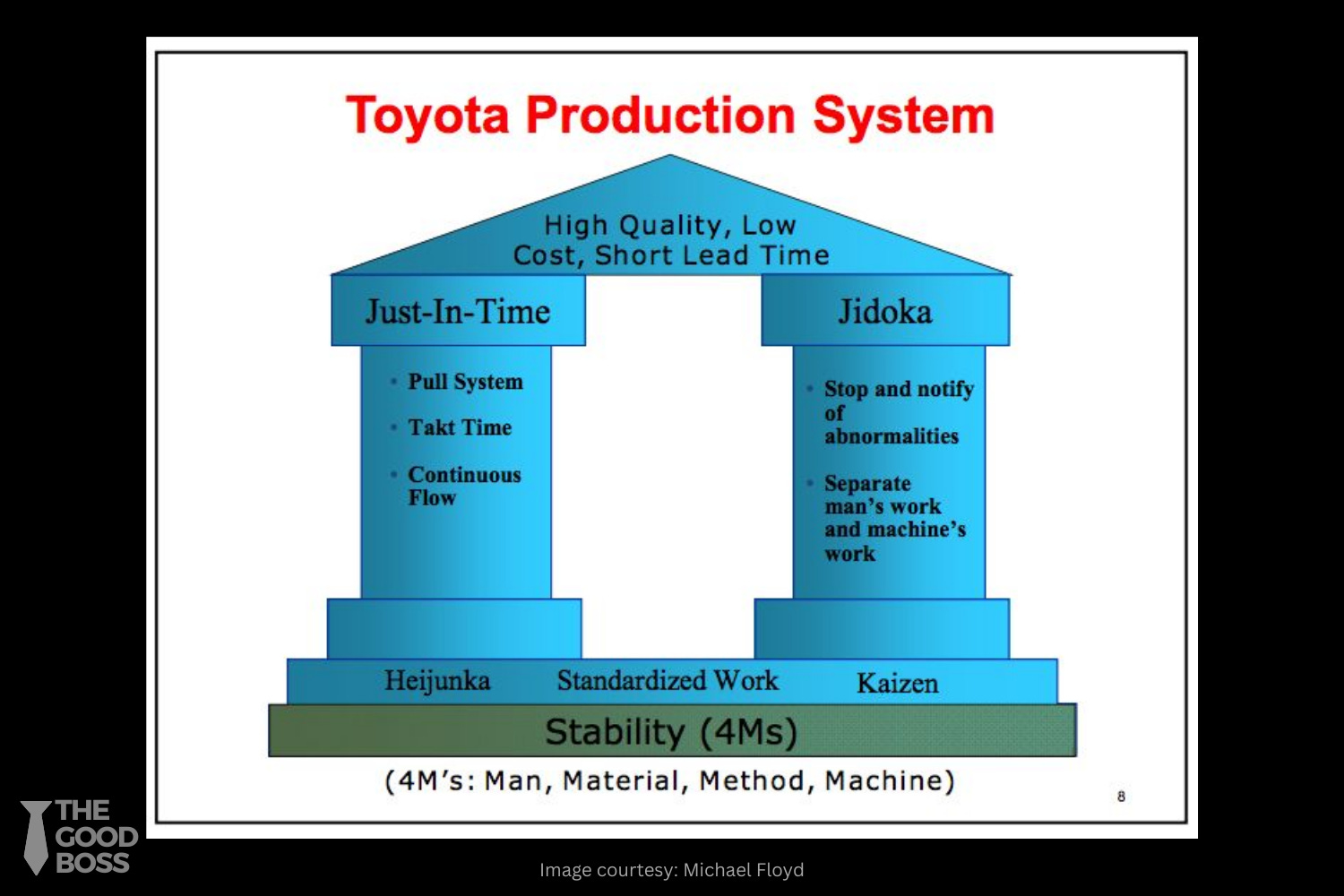
After World War II, Toyota could not compete with larger automakers on scale or resources. So, instead of chasing dramatic innovations, they focused on something far more disciplined.
They worked to improve their processes every single day, across the organization.
The core idea behind Kaizen is simple. Small, steady improvements compound over time and often outperform bold, disruptive change.
In my experience, this is where many leaders get it wrong. As leaders, we are conditioned to believe that meaningful improvement requires a “new strategy”, a “major restructuring”, or a “high-visibility initiative”.
But Kaizen challenges that belief. It asks you to look closely at how work actually flows through your team, improve one small part of it, and then repeat the process. The power lies not in the size of the change, but in the discipline of making change continuous.
Some of you may be thinking: this sounds familiar! And it should, indeed.
I’ve previously written about “Systems > Goals,” inspired by Atomic Habits by James Clear, and about The Theory of Constraints, inspired by The Goal by Eliyahu M. Goldratt. These are different frameworks, but the core principle is the same: focus on continuous improvement instead of obsessing over big, distant goals.


How Kaizen Works
At its heart, Kaizen is a shift in attention. When something goes wrong, instead of asking who failed, you ask where the system failed.
Most performance problems are system problems, not talent problems.
Unclear goals create hesitation.
Poorly designed meetings waste time.
Complicated approval flows slow decisions.
Over time, these small frictions drain energy and lower standards.
Kaizen gives you a simple operating rhythm to deal with this. It is often described as the Plan–Do–Check–Act loop.
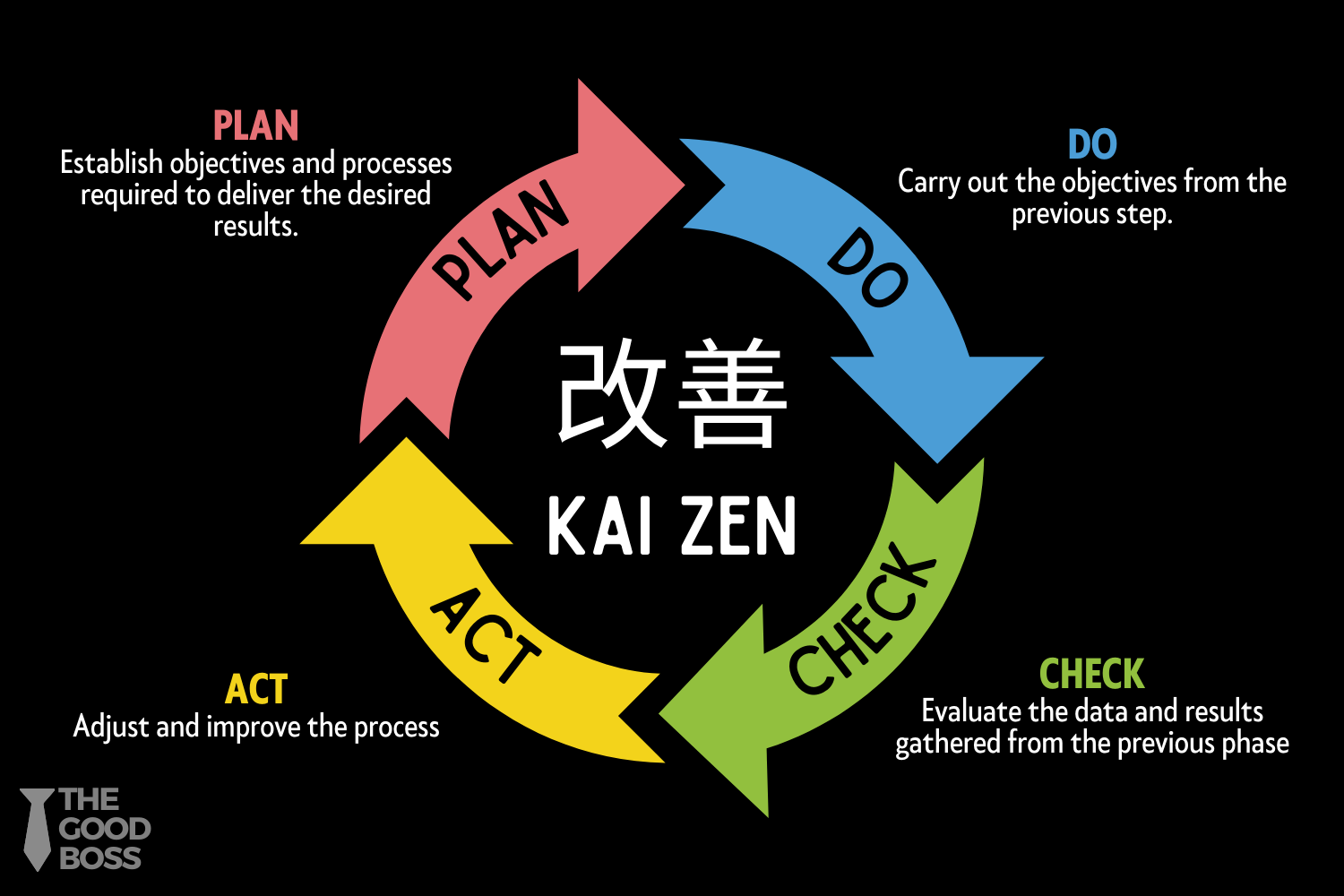
Plan: You establish a clear objective and define the process required to reach it. The key here is focus. You do not attempt to fix everything. You choose one meaningful improvement and decide what “better” looks like.
Do: You implement the change. This step is about action. The team carries out the new process or adjustment and observes what happens in real work.
Check: You evaluate the results. You look at the data, the outcomes, and the lived experience of the team. Did the change remove friction? Did it create new problems? What actually happened, not what you hoped would happen?
Act: You adjust based on what you learned. If the improvement worked, you standardize it. If it did not, you refine it and run the loop again.
This cycle is simple, but it is powerful because it builds learning into the system. Improvement is no longer an occasional event. It becomes a habit.
And here is the leadership shift.
Instead of reacting emotionally to problems, you run the loop. Instead of debating endlessly, you test the execution. Instead of defending past decisions, you adjust your processes.
Over time, this creates a culture where improvement feels normal. Your team stops fearing mistakes because mistakes are inputs into the next cycle. It’s just part of the process.
Part 2: Applying the Kaizen Mindset
For the rest of this article, we will focus our attention on putting the Kaizen Mindset into practice in your own organization. As we do that, don’t forget to download the Kaizen Mindset Worksheet.
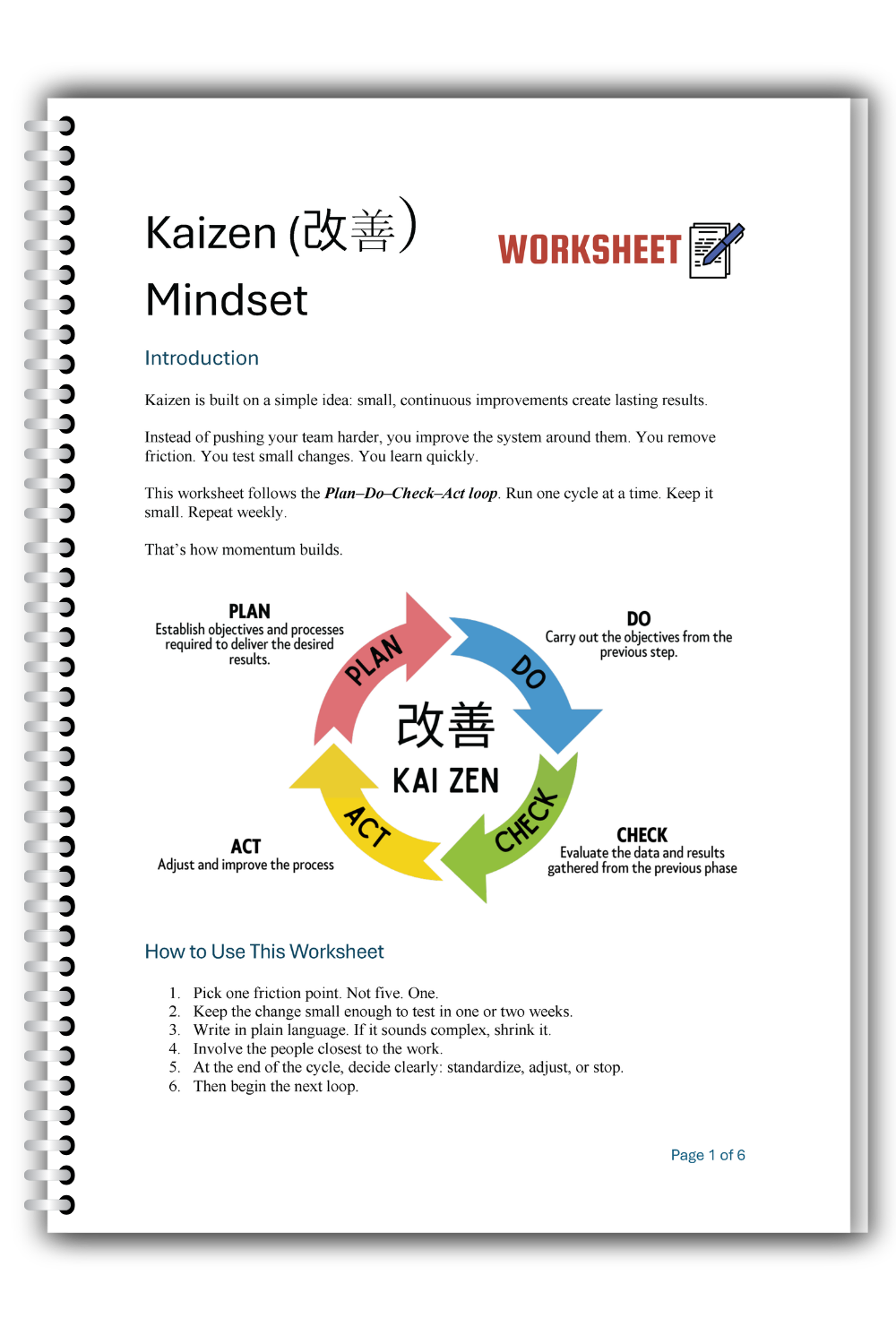
Use this worksheet to:
Turn one piece of friction into a small, testable change
Run a real PDCA loop instead of a one-off fix
Decide clearly what to standardize, adjust, or stop
How to download the worksheet
This worksheet is part of the Worksheets Collection, available to all paid subscribers to The Good Boss.
👉🏻 Upgrade to paid now and get instant access to the entire collection, including this worksheet.
If you prefer the standalone worksheet, you can purchase it from here.
The Step-by-Step Approach to Apply Kaizen
Here’s a simple way to run your first Kaizen loop.