Decision-making is hard.
But the hardest part isn’t the decision itself, but the time pressure that comes with it.
You’re trying to make a call while inputs are still flying in. While your Slack is buzzing. While you’re still processing what just happened in that last meeting.
In the middle of all that, it can be tempting to overthink, or to just default to what you did the last time.
But there’s a better way to lead through uncertainty. In this issue, we will discuss the OODA Loop, a decision-making framework that does exactly that. And guess what: it came from a place that knows chaos better than most: aerial dogfights.
Part 1: Understanding the OODA Loop
In this section, we’ll explore what the OODA Loop is, how it works, and why it matters for leaders.
A Brief History: From Cockpits to Boardrooms
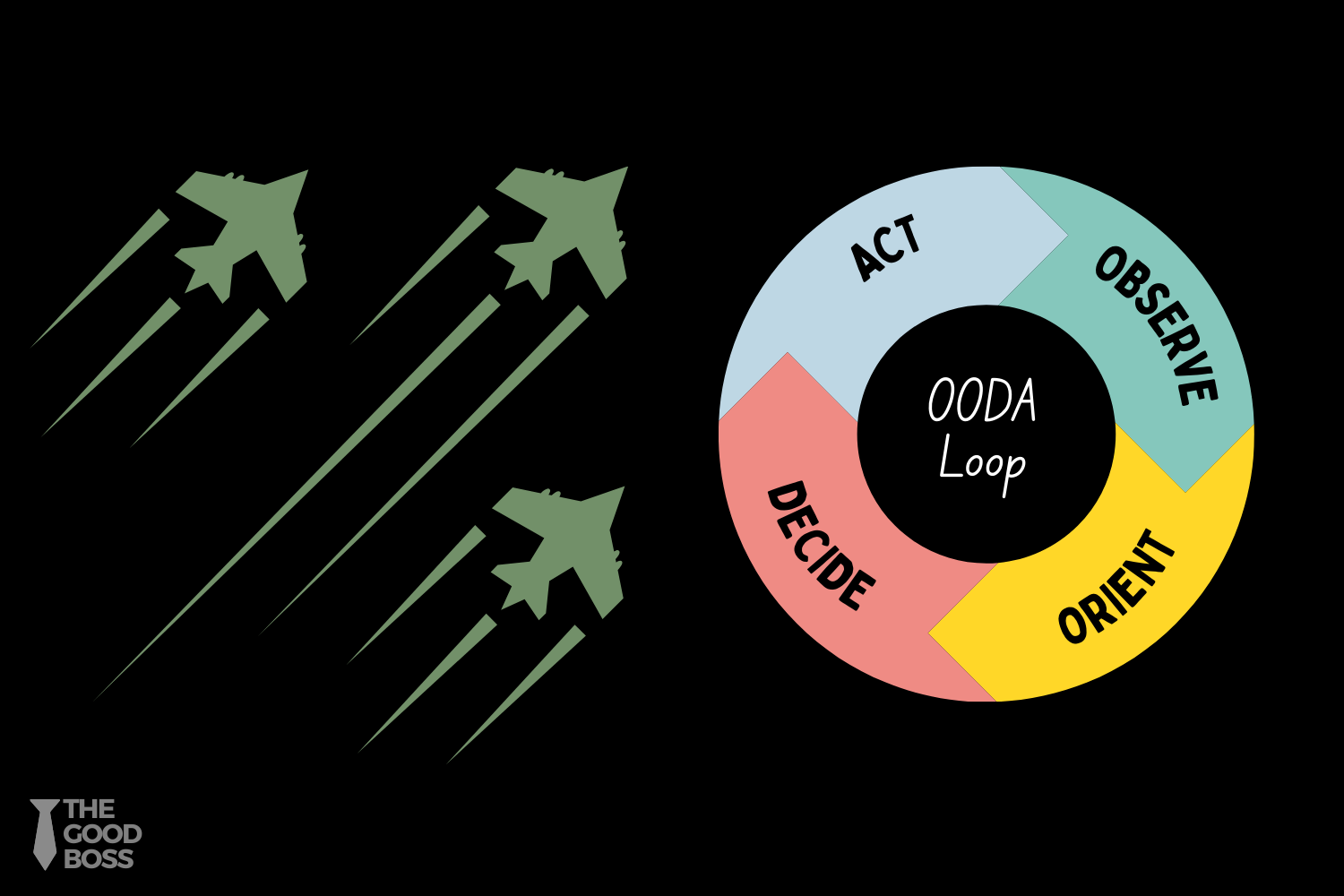
The OODA Loop was developed by U.S. Air Force Colonel John Boyd, a fighter pilot turned military strategist.
Boyd wasn’t just known for his flying skills. He was obsessed with understanding why some pilots survived aerial dogfights while others didn’t. And he realized it came down to this: the pilots who could process new information faster, and act on it, had the edge.
They weren’t necessarily the strongest or most experienced. They were simply better at staying ahead of the situation.
So Boyd built the OODA Loop to describe what these top performers were doing even if they didn’t know it themselves.
Over time, this model spread far beyond the military. Today, it’s used in business strategy, emergency response, cybersecurity, and, yes, leadership.
Because leadership, like flying a jet in combat, often demands fast decisions in uncertain conditions.
How the OODA Loop Works
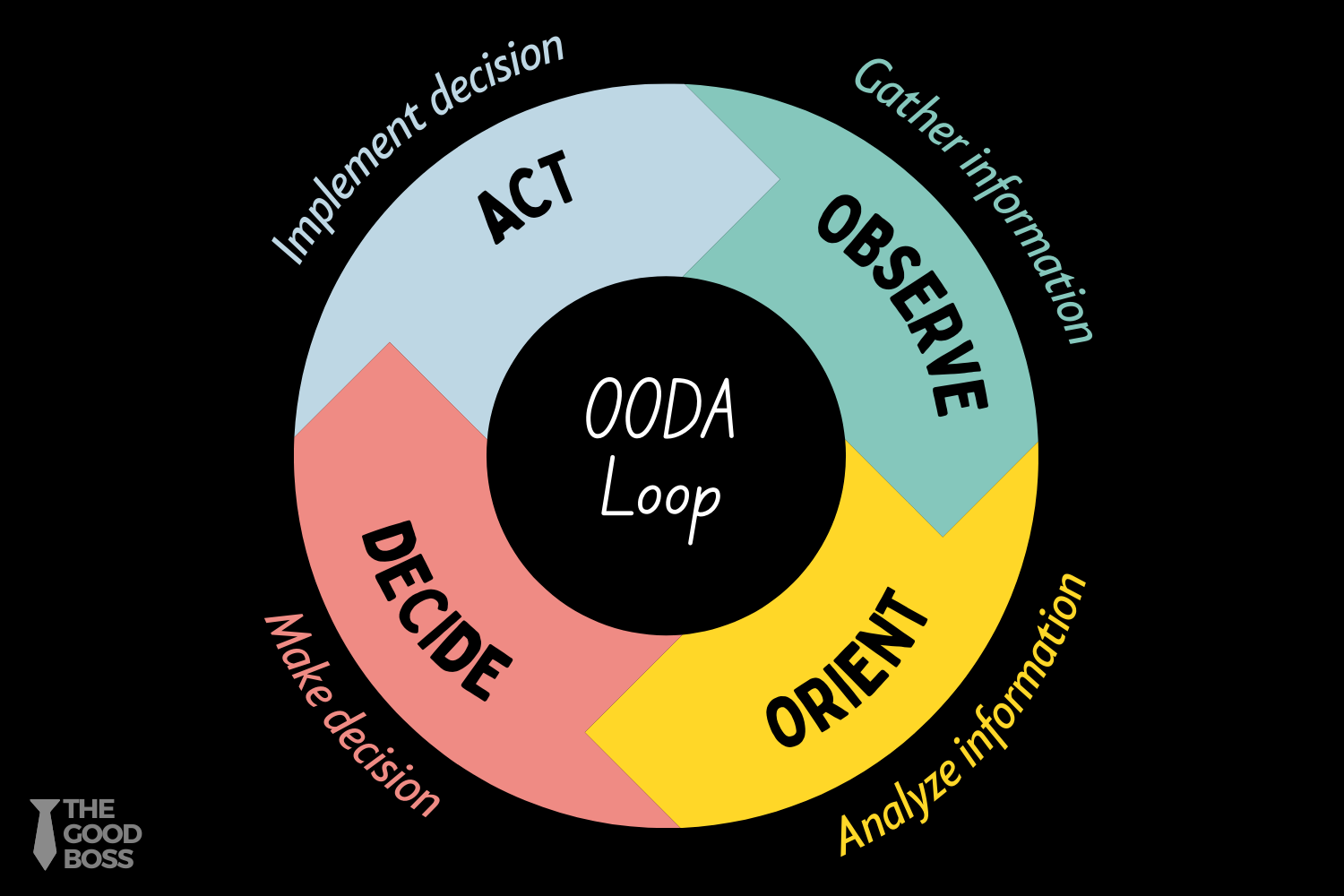
OODA stands for:
Observe: What’s happening? What are the facts?
Orient: What does this mean in context? What assumptions or mental models are you using?
Decide: What’s your best move based on what you’ve seen and interpreted?
Act: Take the action. Then immediately loop back to observe what happened next.
What makes it different from other models is speed.
The goal is to cycle through the loop faster and better than the chaos around you.
And here’s what I like most about this model: The faster you go through the loop with intention, the more you can adapt, respond, and stay ahead.
Part 2: Applying the OODA Loop
For the rest of this article, we will focus our attention on putting the OODA Loop into practice in your own organization. As we do that, don’t forget to download the OODA Loop Worksheet.
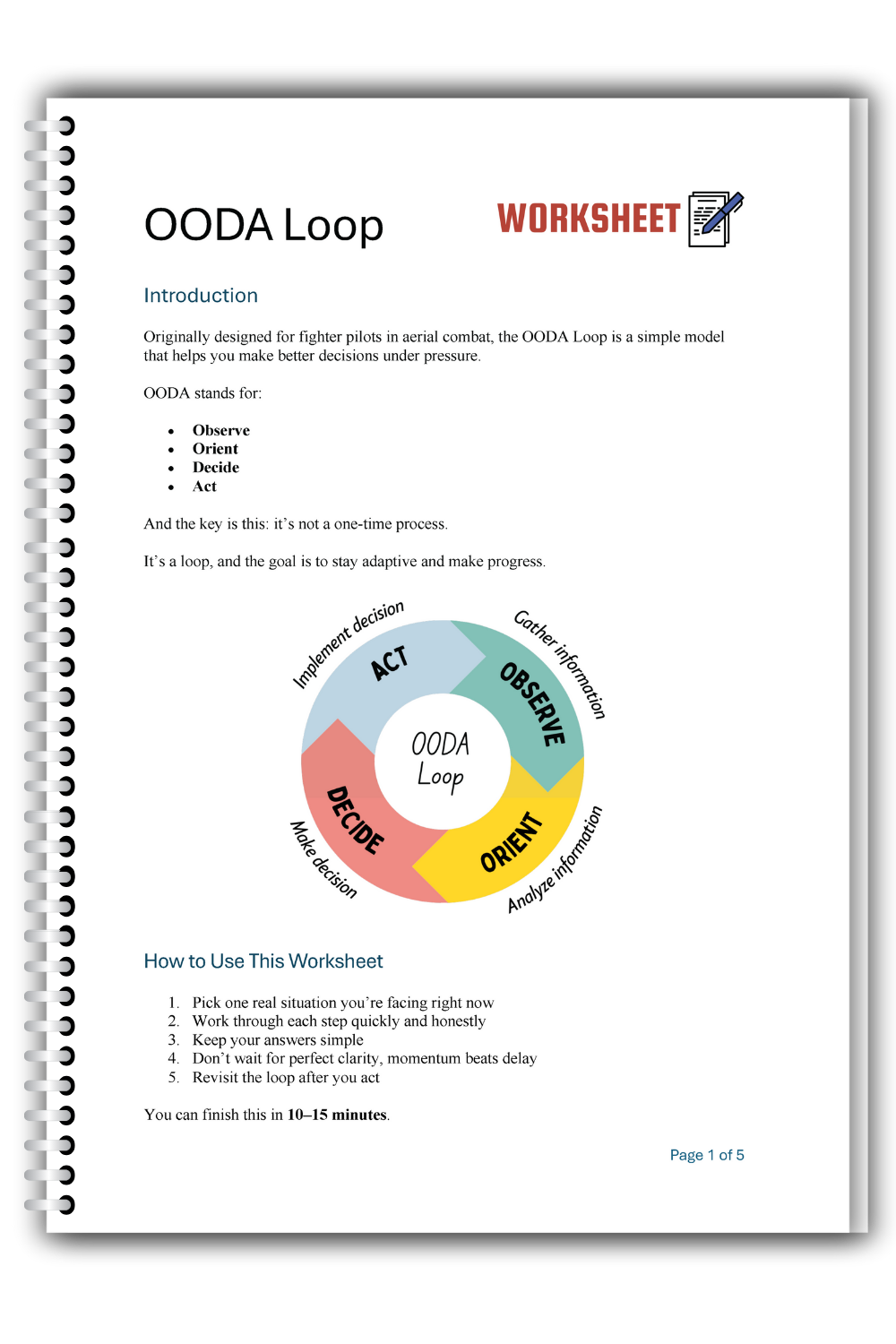
Use this worksheet to:
Make a faster, clearer decision on something you’re facing right now
Catch your own assumptions before they drive the wrong call
Build the habit of looping back to check what your action actually produced
How to download the worksheet
This worksheet is part of the Worksheets Collection, available to all paid subscribers to The Good Boss.
👉🏻 Upgrade to paid now and get instant access to the entire collection, including this worksheet.
If you prefer the standalone worksheet, you can purchase it from here.
Step-by-Step: Using the OODA Loop in Leadership
The OODA Loop isn’t just about being fast. It’s about being fast and deliberate. Here’s how to run the loop well, especially in high-pressure leadership situations: