

In this issue:
The Company That Raised $1.75 Billion and Still Couldn’t Ask One Question
Understanding the Premortem Technique
Why This Works (The Psychology of Hindsight, in Advance)
Why This Matters for Leaders
Putting the Premortem into Practice
The Failure Memo
How This Plays Out in Real Teams
Common Pitfalls (and How to Avoid Them)
Final Thoughts
The Company That Raised $1.75 Billion and Still Couldn’t Ask One Question
Just a few years ago, in April 2020, a streaming app called “Quibi” was launched with much fanfare. I remember reading about it in the news at the time - that they had spent close to $1 billion of its $1.75 billion raised by the third quarter of that year.
This startup had a top team, seasoned executives, and a clear, simple idea: short, premium videos meant to be watched on your phone, when you’re in line, on the train, or between meetings. (source: NBC News)
Six months later, I remember seeing the news: it shut down.
Apparently, they had raised nearly $2 billion in funding, but failed to gain subscribers, and the founders shut the business down.
Here’s the part that bothered me when I first read this: the two biggest reasons it failed weren’t “hidden”.
The whole idea depended on watching videos in short bursts while on the move. And as we all know, in 2020, the world faced the COVID-19 pandemic, and during that time, nobody was commuting anywhere. At least, I wasn’t.
It also had a design flaw: I’m sure you’ll agree that most people usually watch something while doing something else, and Quibi’s mobile-only format didn’t let anyone do that.
While we can argue that the pandemic may have been hard to ‘predict’, it wasn’t the first pandemic the world faced, and certainly may have been sitting on someone’s mind as a possibility to call out. Also, it’s hard to believe the design assumption didn’t raise any concerns among their top-class design team.
Both of those were the kind of thing someone in the room almost certainly thought, and probably didn’t say. (source: MediumIndieWire)
A billion-dollar team with a bad plan usually isn’t “missing intelligence”. It’s missing a moment where someone was allowed to say the hard part out loud.
That moment has a name. It’s called a “premortem”, and that’s what we will talk about in this issue.
Understanding the Premortem Technique
The premortem was introduced by cognitive psychologist Gary Klein, who published the idea in a 2007 Harvard Business Review piece.
Klein had spent years studying how professionals such as firefighters, ICU nurses, and military commanders made high-stakes decisions under pressure, and he noticed something peculiar:
The moment a plan gets “approved”, it becomes harder to do honest risk assessment. At this point, people stop evaluating the plan and start defending it.
Standard risk assessment usually happens before a decision, when nothing is settled, and everyone is still speculating. Klein’s insight was to move the exercise to a different dimension.
Here’s what he suggested:
Assume the decision has already been made, the project has already launched, and it has already failed, a specific number of months from now.
Then ask the team to explain why.
That one shift changes everything about the quality of the answers.
Traditional risk assessment produces a list of hedged possibilities: “there’s some risk the timeline might slip” or “we should probably keep an eye on adoption.”
A premortem produces something closer to a confident explanation: “The timeline slipped because we never accounted for the compliance review, and by the time we caught it, we were already three weeks behind and cutting testing to compensate.”
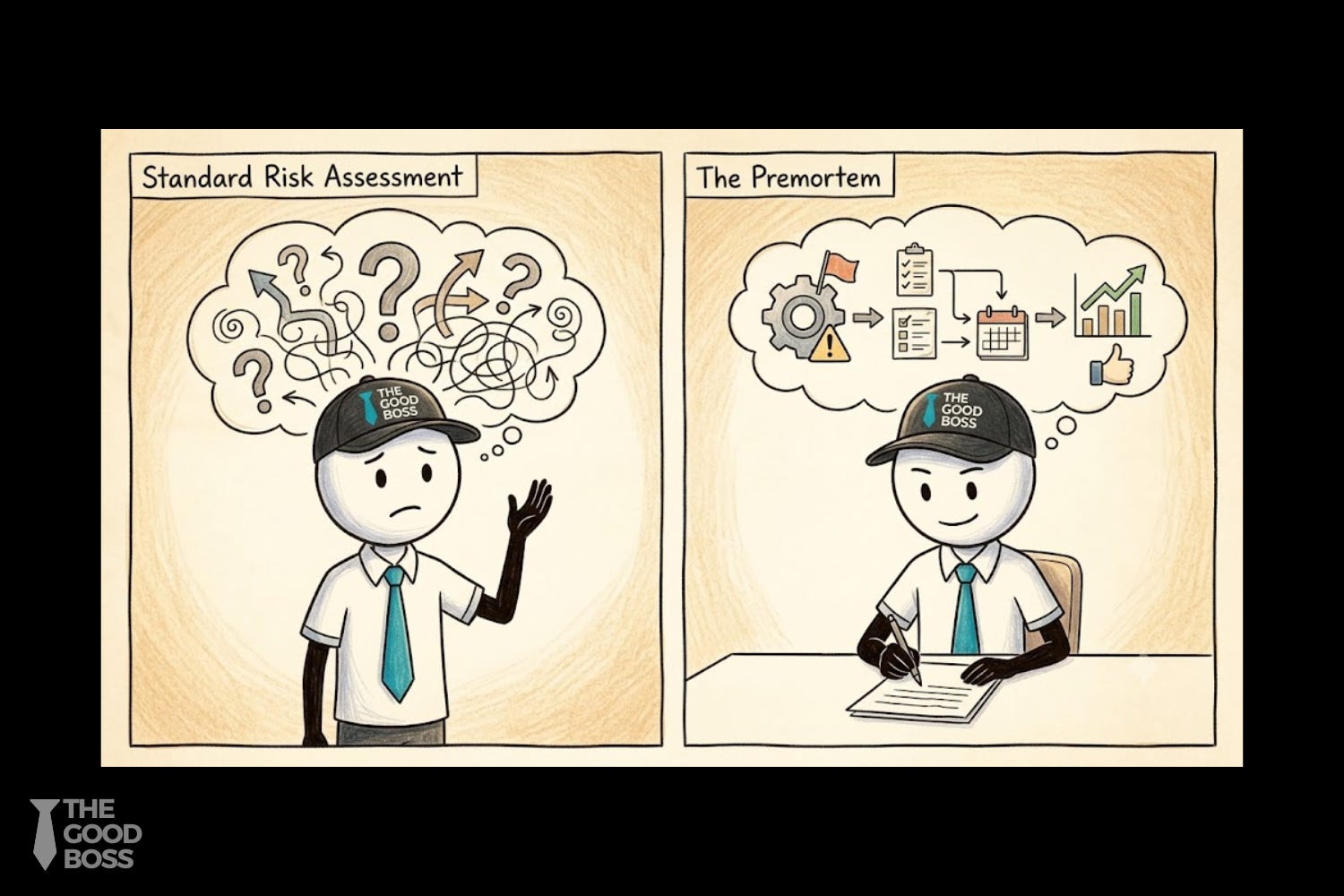
In plain terms, here’s what premortem does: you’re not predicting failure any more. You’re explaining why it failed, in retrospect.
Klein also observed that once a plan is already underway, raising doubts starts to feel like disloyalty, like you’re the one person who “didn’t get on board”. It feels riskier to raise doubts or concerns once things are “in flight”. I certainly have felt that way when wanting to raise concerns about a project that’s 80% done.
The beauty of the premortem technique is that it removes that cost. The discomfort of opposition disappears because what’s being asked for is a story, not real opposition.
Why This Works: The Psychology of Hindsight, in Advance
If you think about it, premortem isn’t just a nicer way of asking the same question. It fundamentally changes what people are psychologically willing to say.
The traditional “What could go wrong” calls for hedging, because you’re speculating about a future nobody wants to be blamed for jinxing.
“It already failed, tell me why” invites something closer to confident hindsight.
As humans, we love to be blunt in hindsight after something bad happens, and love to explain why something obviously wasn’t going to work.
It also gives the skeptical person in the room permission to say what they were already thinking. They don’t need to be cautious of being called out as the “pessimistic” one. After all, they’re not objecting to the plan, they’re just answering the prompt they were given.
On a lighter note: this whole exercise reminds me a little of Final Destination (one of my favorite movie series). In the movie, someone sees the disaster coming in vivid detail before it happens. The only difference is, in this version, you’re actually allowed to change the outcome! :)
Why This Matters for Leaders
As leaders, we make decisions that impact the business, the teams, and the culture. And many times those decisions can be misguided or simply wrong.
The confidence tax
The more senior, well-funded, or publicly committed a plan is, the more expensive or risky it becomes for any one person to raise a doubt about it.
By the time the plan reaches higher up the chain, it’s often been pre-sold internally, which means the leadership isn’t evaluating it anymore… they’re just validating it.
A premortem is one of the few structures that actually reopens evaluation after commitment has already started.
Silence gets mistaken for agreement
When a leader asks the team “any concerns?” after presenting a plan, silence usually means buy-in.
But the reality could obviously be very different. Your team could be doing the math on whether raising a concern is worth the cost. After all, who wants to miss their chance at a big raise or that much-awaited promotion?
The Abilene Paradox plays out here: a team can walk out of a meeting having “agreed” to something nobody in the room actually believed in.
Hindsight is honest; foresight is polite
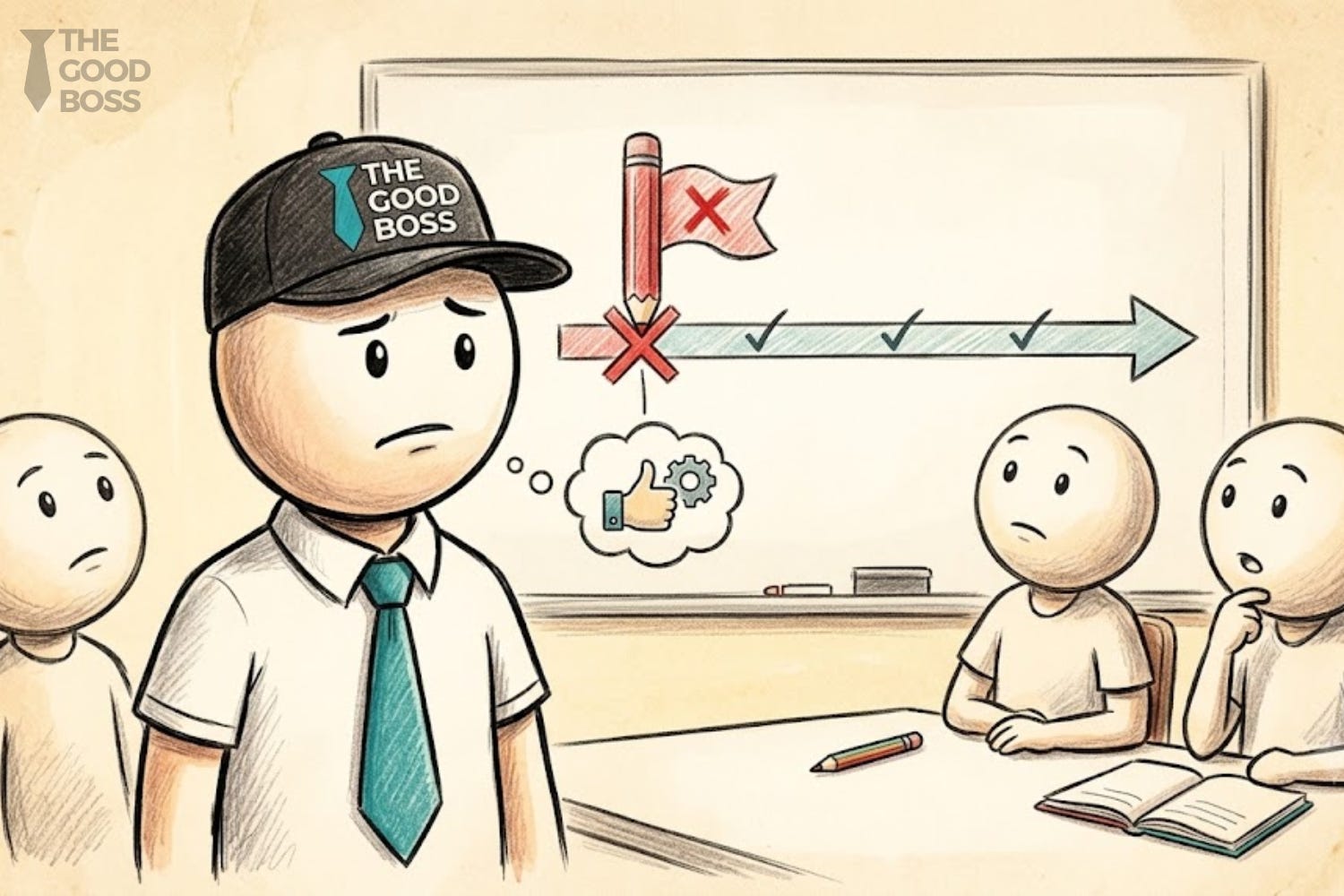
If you ask your team what went wrong with last year’s failed initiative, I guarantee that you will get sharp, specific, occasionally brutal answers.
But if you ask them what might go wrong with this year’s new one, you’ll most likely get hedged, generic ones.
Smart teams fail for ordinary reasons
It’s tempting to treat high-profile failures, such as the Quibi case we discussed earlier, as “complicated”.
In reality, usually, they’re not.
Quibi didn’t fail because of some crazy market dynamic. It failed because a core assumption they made (“people will make dedicated time for short videos on their phones”) turned out to be wrong, and nobody stress-tested that assumption before it was too late.
Putting the Premortem into Practice
For the rest of this article, we will focus our attention on putting the Premortem Technique into practice in your own organization. As we do that, don’t forget to download the Premortem Technique Worksheet.
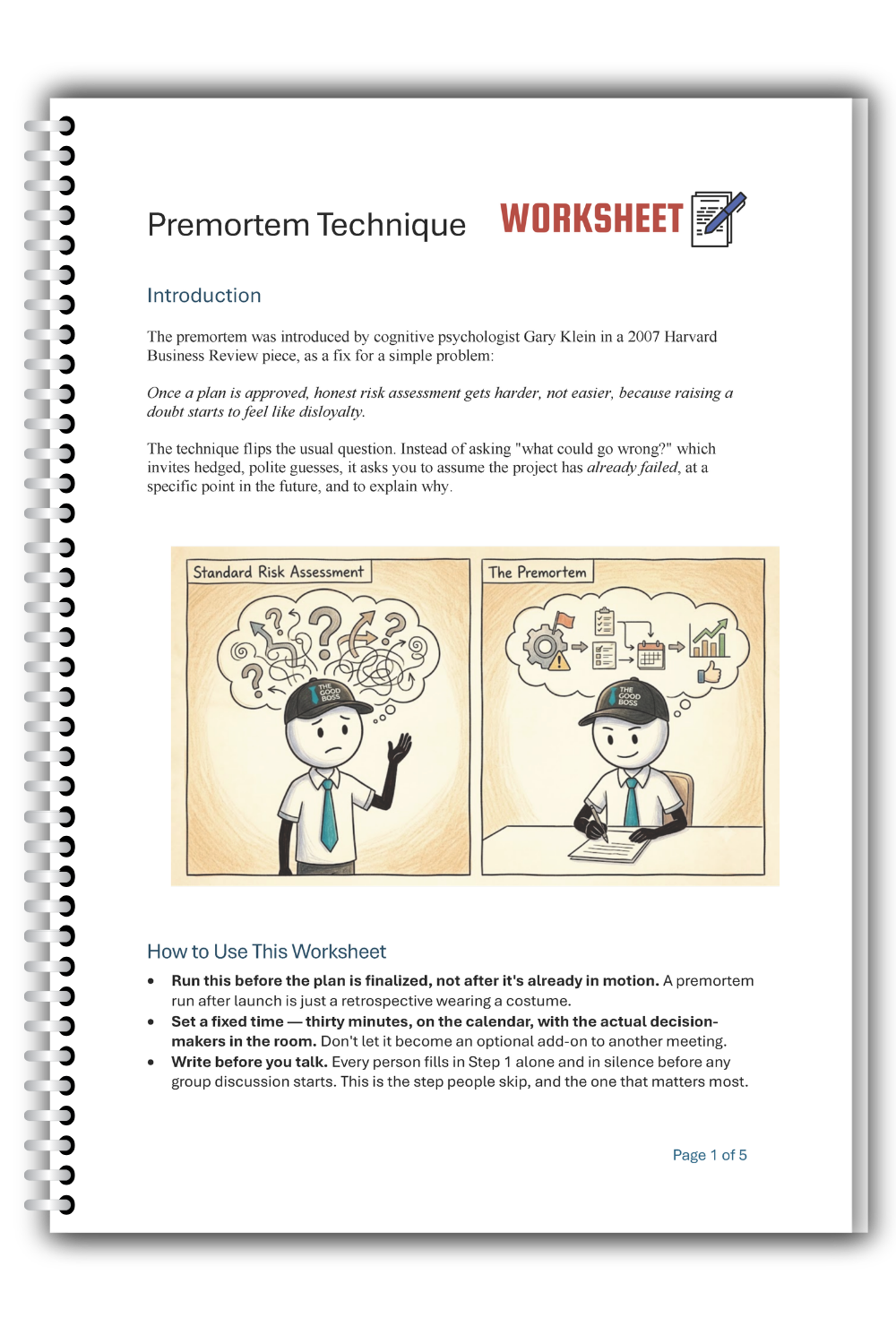
Use this worksheet to:
Turn vague concerns about a plan into specific, actionable risks
Call out doubts your team is too polite to say out loud
Catch untested assumptions before they become expensive mistakes
Assign real ownership to risks instead of just naming them
How to download the worksheet
This worksheet is part of the Worksheets Collection, available to all paid subscribers to The Good Boss.
👉🏻 Upgrade now and get instant access to the entire collection, including this worksheet.
If you prefer the standalone worksheet, you can purchase it from here.
The Failure Memo
Here’s the working version of the technique, built for a real team meeting, and you can run it in about thirty minutes.