In this issue:
The Meeting That Went Quiet
What the IKEA Effect Really Is
Why This Happens (The Psychology Behind It)
Why This Matters for Leaders
The One Shift: From Presenting to Co-Creating
How This Plays Out in Real Teams
Common Pitfalls (and How to Avoid Them)
Final Thoughts

The Meeting That Went Quiet
A few years ago, I spent three weeks putting together what I thought was a genuinely strong team strategy.
I was exploring how my team could become an AI-native team, something that’s on the minds of most leaders today. After extensive research and analysis, including looking at what the best-in-class companies were doing, I put together a nice deck with the strategy so I could share it with my team.
On the day of the presentation, I walked into the room confident (and excited). As I went through the strategy, I looked for the energy in the room to lift to match mine.
To my dismay, I didn’t see any of that.
Some of my team members nodded, others asked a few clarifying questions. After the session, over the following weeks, not much changed on the ground, and I kept wondering what was missing.
I thought the logic was sound, but the team just… didn’t seem to care about it the way I did.
It took me longer than I’d like to admit to figure out why. And the answer had nothing to do with the quality of the strategy.
It had everything to do with who built it.
What the IKEA Effect Really Is
The IKEA Effect is a cognitive bias identified by behavioral scientists Michael Norton, Daniel Mochon, and Dan Ariely in 2011.
Their research found something simple but profound:
People place significantly higher value on things they have helped create, even when the end result is objectively the same as something they had no hand in.
The name comes from a very familiar experience. When you assemble an IKEA bookshelf yourself by following the instructions, tightening the screws, figuring out which piece goes where, you end up genuinely proud of that bookshelf. Maybe more proud than it deserves. You’d never feel that way about a shelf that arrived pre-assembled.
That’s the IKEA Effect in action.
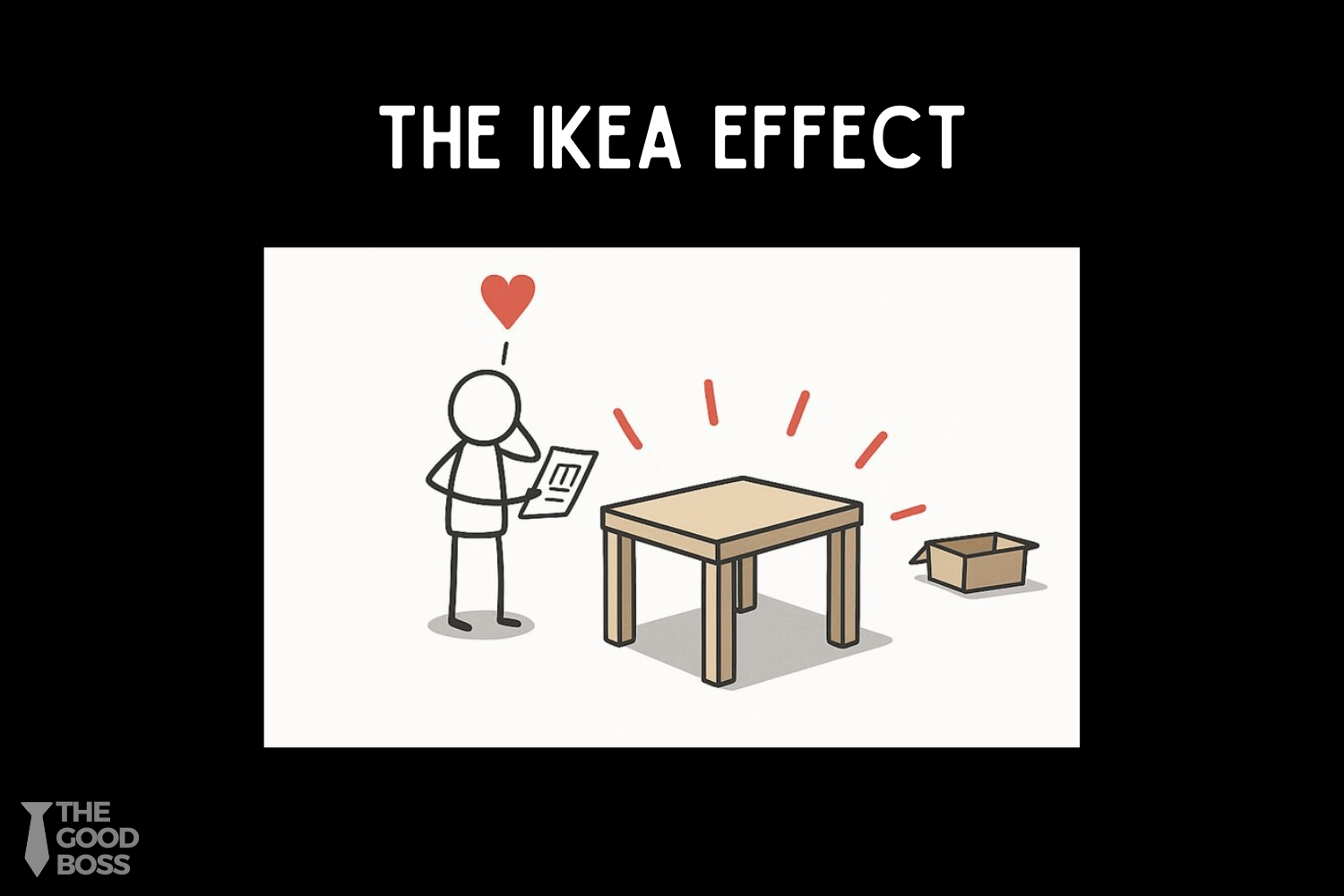
And before you think this is just about furniture: Norton and his colleagues ran experiments with origami, LEGO sets, and other tasks. In every case, the people who built something valued it far more than people who simply received the finished product, even when independent observers rated both versions equally.
Why This Happens (The Psychology Behind It)
The IKEA Effect isn’t irrational. It makes complete sense once you understand what’s underneath it.