

I used to believe that being a good manager meant being “busy”. My calendar was filled with back-to-back meetings, my Slack was on fire, and my email inbox was overflowing. I thought “hustle” was leadership.
Then something strange happened.
I had to step away from work for a few weeks due to a personal situation. Before I went, I canceled meetings and delegated more stuff to my team. I pretty much left it to them.
And guess what, when I came back after a few weeks of downtime, I noticed that my team’s performance had gone up. They didn’t just “survive”, they thrived. Not just that, they also seemed more motivated! The only thing that went down was my own stress ;-)
That was the moment I realized: great leadership isn’t about doing more. It’s about doing strategically less.
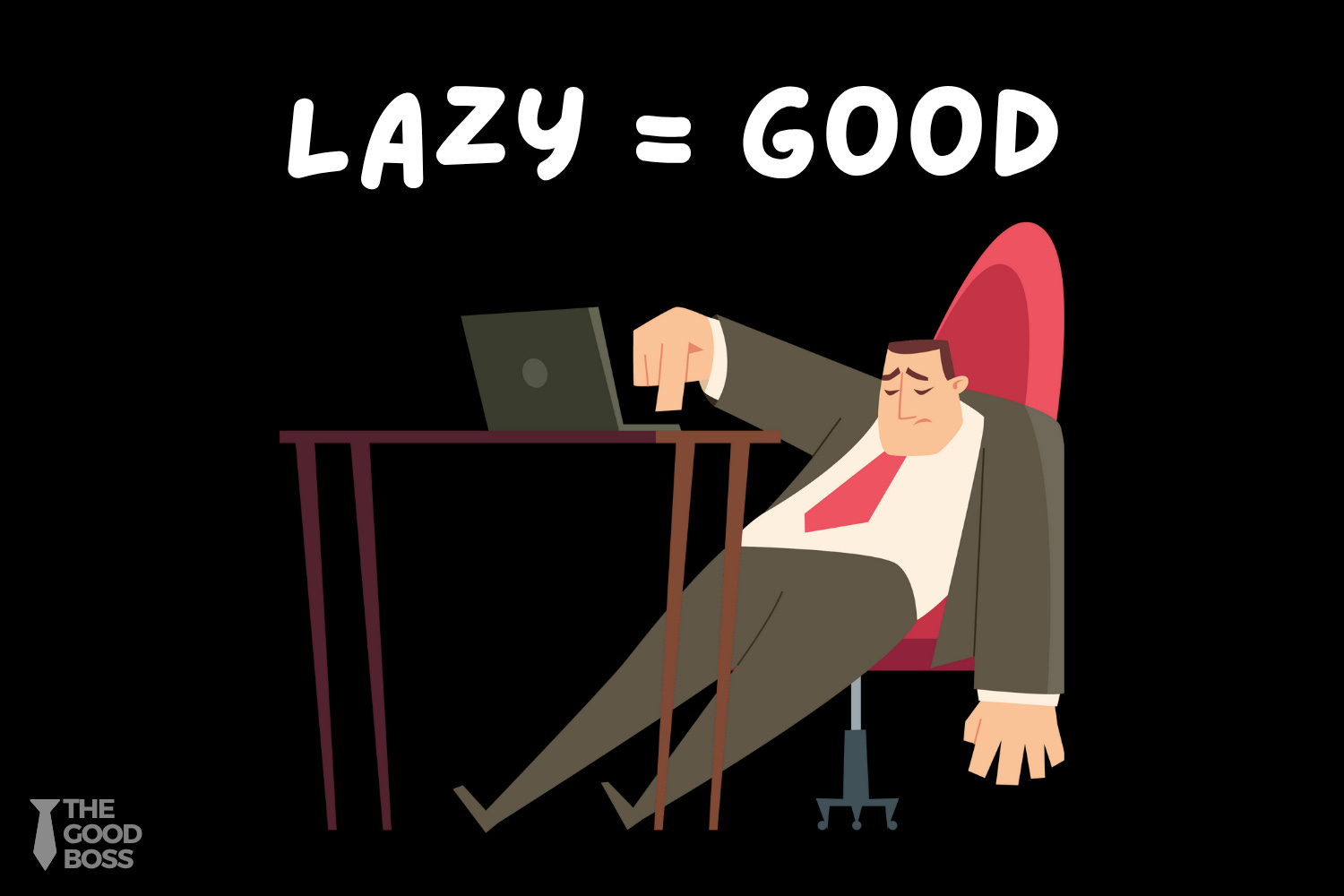
Over the course of my career, some of the best managers I’ve worked with are, should I say, a little bit… lazy. To be clear, they’re not careless or slow.
What they do is:
They design systems.
They simplify decisions.
They let go.
Probably a better way to put it is that they are intentionally lazy.
In this guide, I’m going to share with you 7 “lazy” leadership tactics that actually work. Think of it as a field guide for working smarter, not harder, and building a high-performing team without burning yourself out.
Ready? Let’s dive in.

1. Default to Asynchronous Everything
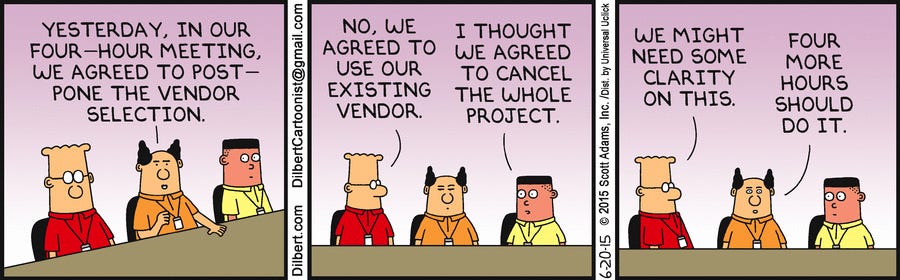
Meetings are where productivity goes to die. According to an HBR report from 2022, the average manager spends up to 23 hours a week in meetings. Yes, you read that right! That’s more than half your workweek, gone.
A lazy manager avoids that trap. He uses tools like Slack to communicate updates, share decisions, and clarify direction, all asynchronously.
Why? Because async:
Respects focus time
Avoids time zone constraints
Forces clarity (you have to write or record with precision)
Instead of calling a team sync, I now share most team updates and decisions over slack, easy to scan and come back to if needed. People read it when they’re ready, and we only meet when something truly needs discussion.
It feels lazy, but it’s actually efficient leadership.
2. Make 1-on-1s 90% Listening

We’ve all heard the leadership gurus preaching the “10-point agenda for the perfect 1-on-1”. Ignore them.
You don’t need to script your 1-on-1s. You just need to show up and ask one good question: “What’s getting in your way?”
Then shut up and listen.
A lazy manager treats 1-on-1s like coaching sessions, not status updates. She listens, looks for patterns, and responds when she has something tangible to offer. When you make space, your team fills it with useful insight or candid frustration - which is pure gold.
3. Give Ownership, Not Instructions
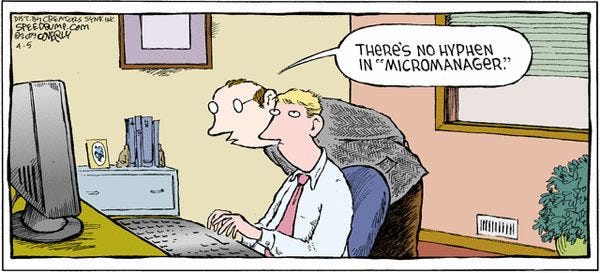
Micromanagement is exhausting, both for you and your team.
Lazy managers don’t prescribe, they empower.
Instead of saying, “Build this deck by Thursday and cover A, B, and C,” they say: “You own our Q4 strategy update. You’re presenting to leadership. What’s your plan?”
When you do this, your team owns the outcome. You give them autonomy and visibility, all without hovering.
And the best part of all: giving ownership often leads to better, unexpected outcomes.
Enjoying the read? Hit the ❤️ button and share/restack 🔁 it with others who might find it helpful. You can also subscribe to The Good Boss for more posts like this every week. Thank you! 🙏
4. Standardize the Boring Stuff

Every time you reinvent a meeting agenda, you waste energy.
Lazy managers love templates.
They have a shared template for:
Weekly team updates
Project kickoff decks
Retrospective notes
And, lazy managers love AI and automation! These tools give them freedom to focus on real leadership challenges, not on formatting another word document.
5. Say “No” More Than You Say “Yes”

Every ‘yes’ you give is a commitment your team has to absorb.
A lazy manager treats their team’s, and their own, attention like a scarce resource, because it is.
Before you greenlight a new initiative, ask:
Does this align with our top 3 goals?
What will we drop to make space?
Who’s actually asking for this?
Great managers are ruthless gatekeepers. They subtract, not add, until only the essentials remain.
Saying no is the laziest way to protect your team’s energy, yet one of the most powerful.
6. Obsess Over Clarity, Then Disappear
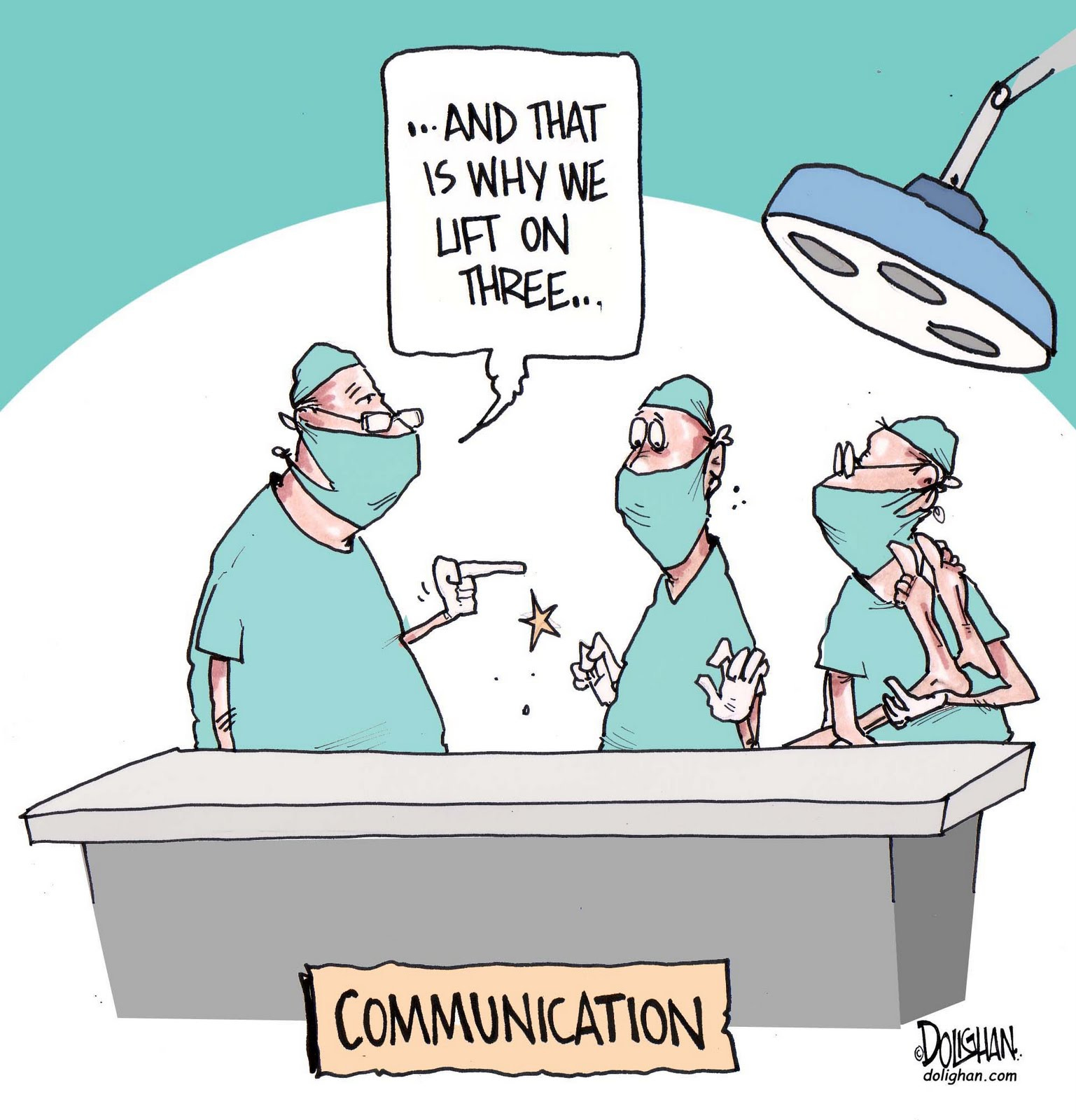
Being lazy doesn’t mean being “vague”. It means being crystal clear and then stepping back.
When a lazy manager assigns a project to their team, they clearly state:
What the project is about
Why it matters
Who’s responsible
Deadline
Success looks like...
Then they walk away. Okay, not quite that, but they step back and make space. The clarity at the beginning makes is easier for their team to pick up and go from there.
Feedback is a gift! 💬 If you’re finding this post helpful, would you do me a favor and leave a quick testimonial here, and as a thank-you, I’ll send you a free copy of my book! It only takes a couple of minutes - thank you! 🙏
7. Celebrate Wins Without Planning Town Halls
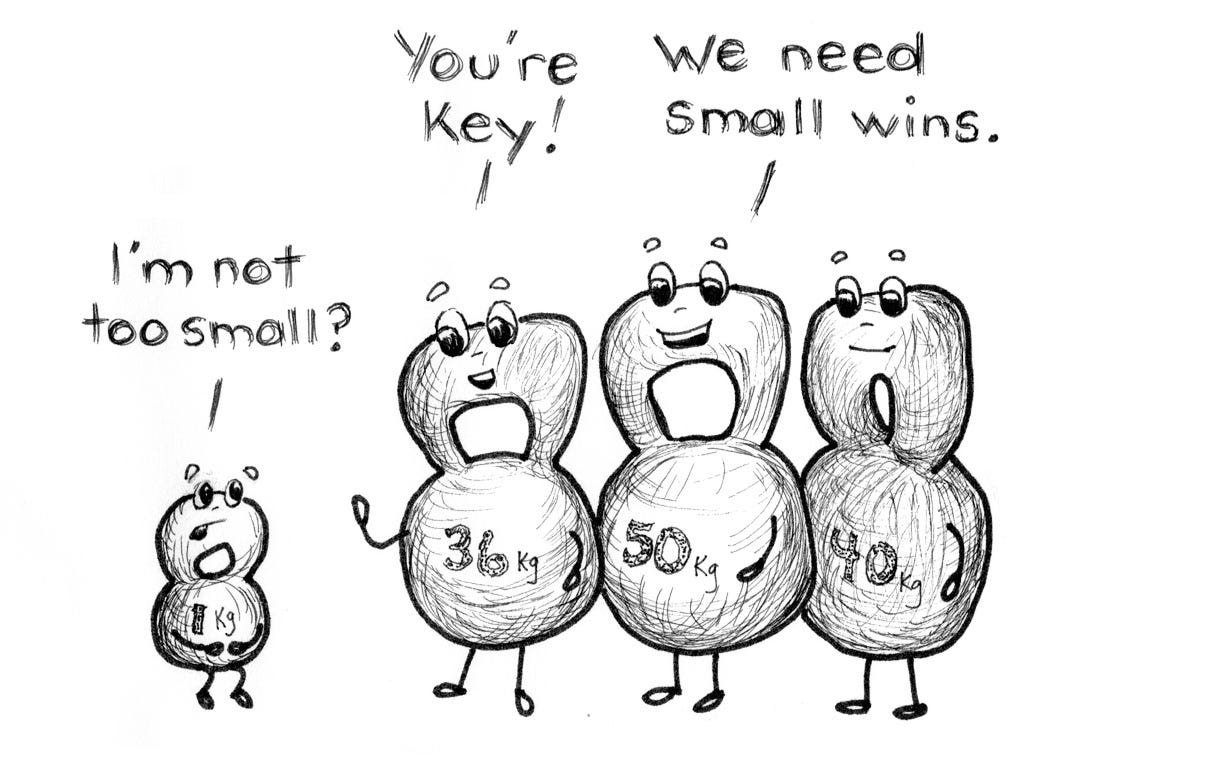
You don’t need a 30-minute meeting to say “well done” to your team.
Lazy managers make recognition part of the workflow.
They don’t wait for the quarterly town hall meeting. They just drop a quick Slack or email message in the moment, and in the context of the work that was done. They give a quick shoutout in existing team meetings.
When someone nails it, they just write: “🔥🔥🔥 You crushed that.”
Recognition is a habit, not a calendar invite. Keep it fast, frequent, and real.
Final Thoughts
Let’s kill the myth: Hustle and busyness are not leadership.
Some of the most effective leaders I’ve seen operate with calm, clarity, and a dash of strategic laziness.
They delegate well, standardize what they can and protect their focus. And most of all, they trust their people.
So here’s my challenge to you: What can you stop doing this week that might actually make your team perform better?
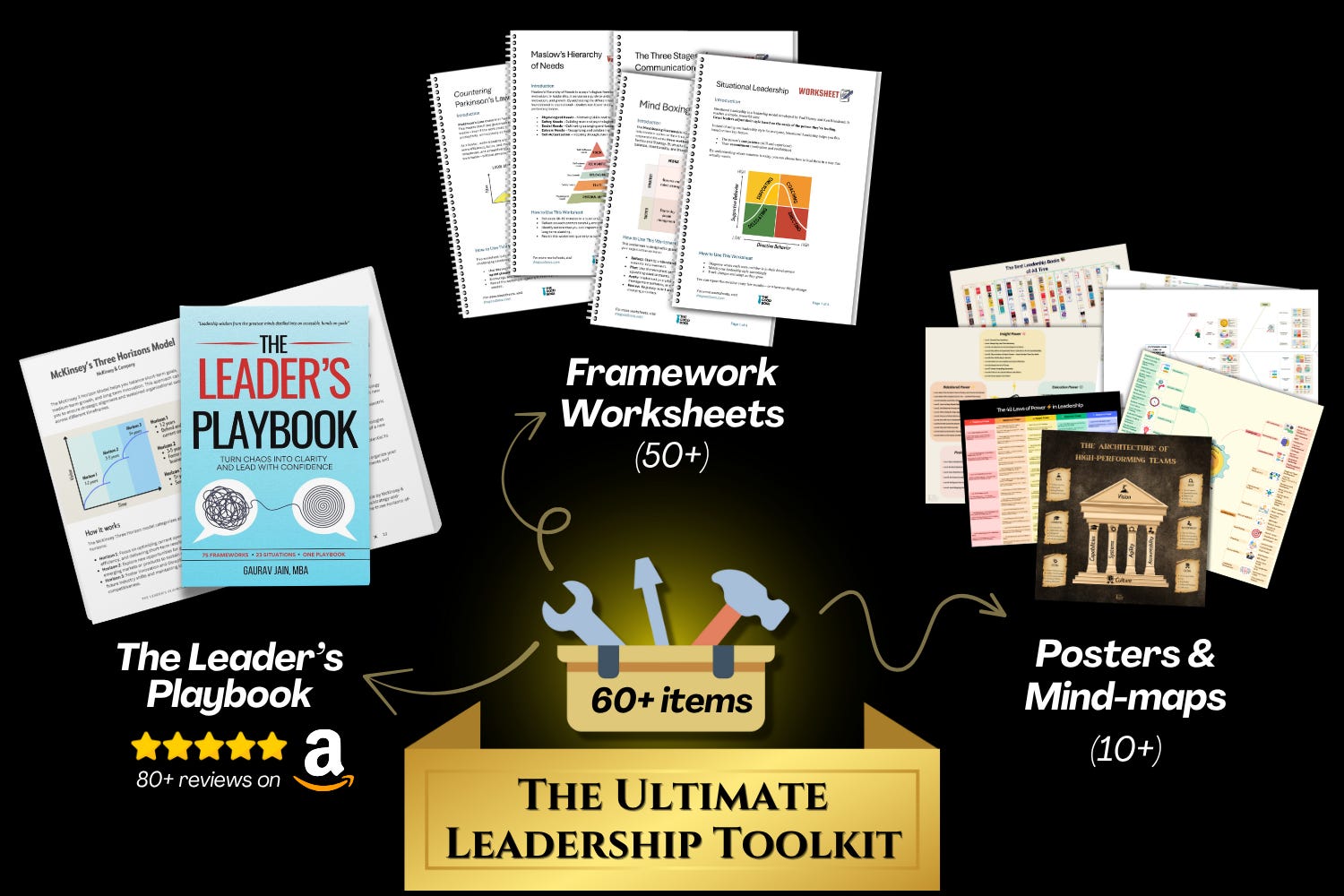
The Ultimate Leadership Toolkit
🚀 If you found this post helpful, you’ll love The Ultimate Leadership Toolkit, your complete system to lead with clarity, calm, and confidence.
Built on The Leadership Mastery System™, it helps you master leadership in three proven steps: Learn → Apply → Connect. You’ll get 60+ ready-to-use tools, worksheets, mind maps, and guides to help you turn insight into action. 👇
What to read next…
10 Powerful Leadership Lessons from Principles by Ray Dalio

I recently read Principles by Ray Dalio, and I’ll be honest - I was blown away. It’s one of those books that looks intimidating at first - big, thick, serious. But once I got into it, I couldn’t stop.

The Good Boss is funded by paid subscriptions from readers like yourself. If you aren’t already, consider becoming a paid subscriber to receive the full experience! Thank you! 🙏

PS: If you’re enjoying The Good Boss, I will appreciate it if you would hit the ❤️ button and share/restack 🔁 it with others who might find it helpful. Thank you!
Also, I’d love your feedback! 💬 Leave a quick testimonial here, and as a thank-you, I’ll send you a free copy of my book! It only takes a couple of minutes. Thank you! 🙏
Great read. I love the reminder that real leadership is not about being busy, it is about giving people clarity, trust and space. When managers stop trying to do everything, teams finally get room to grow and everyone ends up performing better.