

Most managers approach leadership backward.
They try to drive results without really knowing how to lead people.
They try to lead people without first understanding themselves.
They get stuck in the daily grind and lose sight of what matters most.
No wonder leadership can feel so frustrating.
And it’s especially hard when you’re new to the role. One day, you’re great at your job, then suddenly, you’re managing people, resolving conflicts, setting goals, and making decisions that affect more than just your own work.
The problem is that most companies don’t teach you how to lead. They assume that if you can manage tasks, you can manage people. That if you’re good at getting work done, you’ll figure out leadership on your own.
Introducing: The Leadership Stack 🧰
Leadership is complicated. It’s full of uncertainty, risks, and the constant pressure to deliver results.
But the good news is that leadership is a skill. Or I should say, a collection of skills. And like any skill, it can be learned, practiced, and mastered.
That said, leadership isn’t just a random mix of skills. It’s a system, a set of interconnected, learnable skills that build on each other. And just like any great system, it only works well when all the parts work together.
Here’s a quick preview of how the system works:
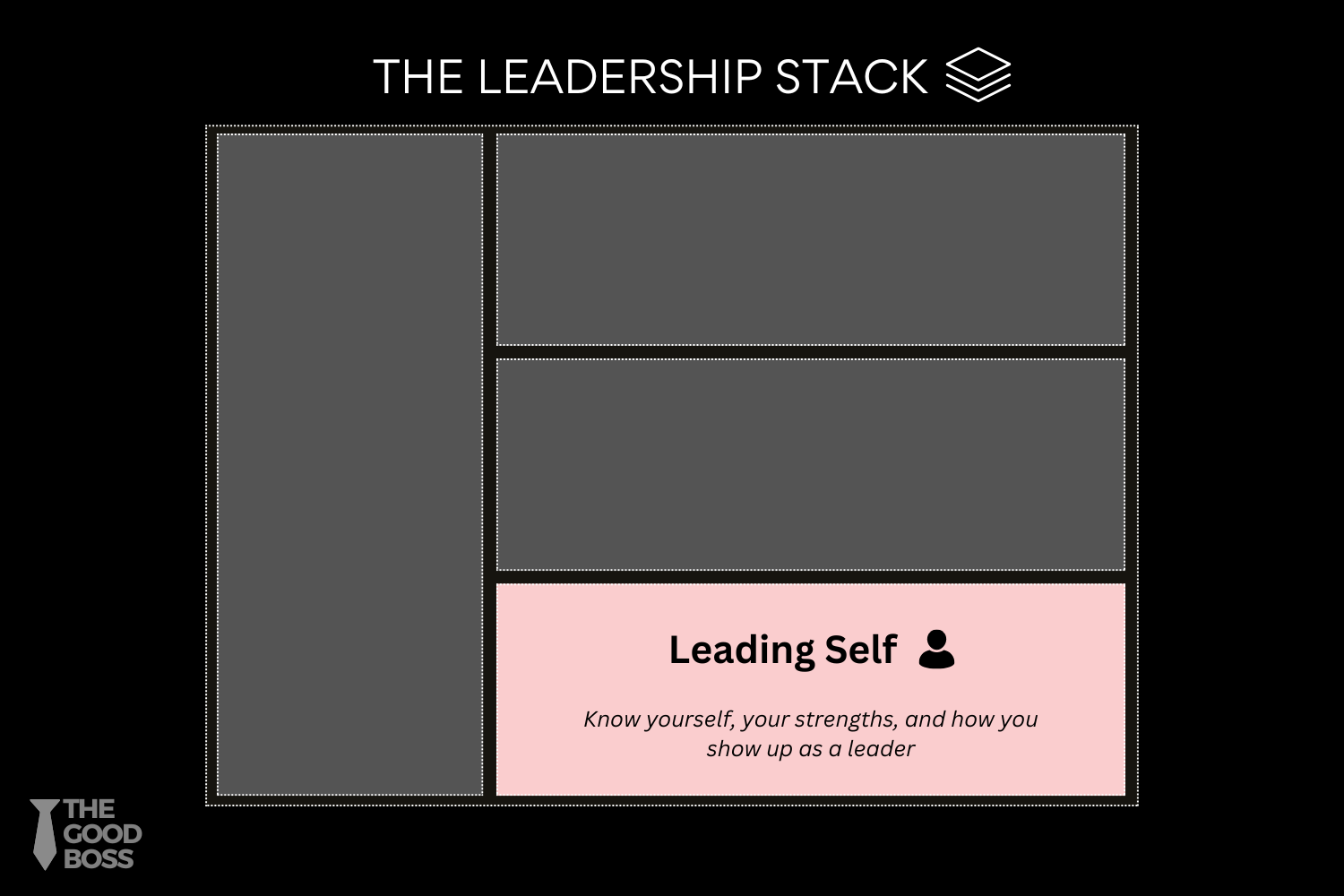
Layer 1: Leading Self – Know yourself, your strengths, and how you show up as a leader. This is the foundation (or the core) of the system.
Layer 2: Leading Others – Once you understand yourself, you can lead others, build trust, give feedback, coach, and hold people accountable.
Layer 3: Leading Results – With the right team in place, it’s time to focus on vision, execution, and driving real business impact.
Strategic Leadership – These are the skills that cut across all layers: thinking long-term, solving problems, and making smart decisions.
In this post, I will take you through a whirlwind tour of the Leadership Stack, how it works, and how you can leverage it.
Consider it your field guide (or a crash course, if you like.)
So grab your favorite drink ☕️, your notebook 📒, and enjoy the learning experience 🎓 (and don’t forget to thank me later!)
Let’s dive in. 🚀
Layer 1: Leading Self – The Foundation of Leadership
Have you ever worked for a leader who was completely out of touch with themselves?
Well, I certainly have, many times over. I have worked with leaders who overreacted to small problems, shut down when faced with conflict, or lacked the confidence to make tough decisions.
They were leaders by title, but didn’t have the skills or the aptitude to lead effectively.
That’s what happens when leaders skip this first layer, Leading Self, the most fundamental part of the leadership engine.
Leading yourself means knowing yourself, your strengths, and how you show up as a leader.
It’s about understanding how you think, how you react, and how your leadership affects those around you.
Without this foundation, you might find yourself making impulsive decisions, struggling to gain respect, or burning out because you don’t know your own limits.
A study by Korn Ferry found that leaders with high self-awareness lead teams with 30% higher engagement and performance. When you understand yourself, you make better decisions, communicate more effectively, and handle stress with clarity.
If you’ve ever wondered why leadership sometimes feels exhausting, it’s often because you’re spending too much energy reacting to problems. Developing the skills in this layer will help you lead with intention and put your best foot forward in each situation.
Key Skills in Layer 1 - Leading Self
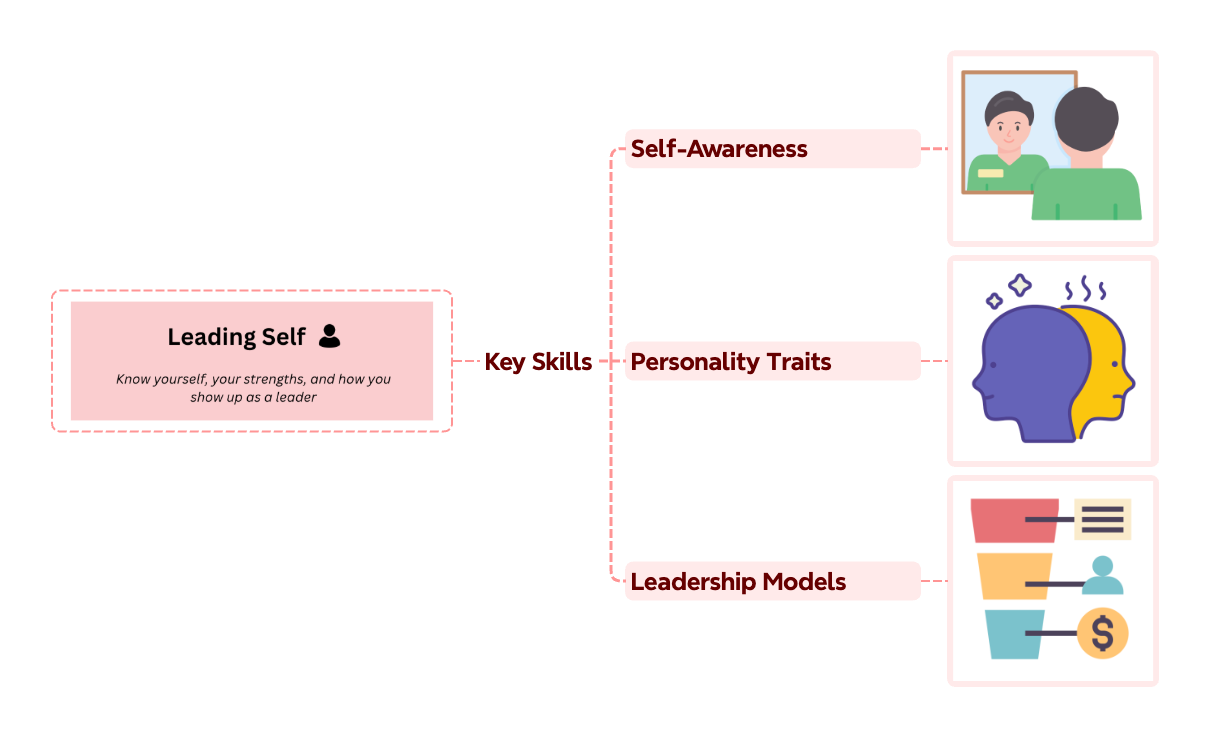
The key skills to develop in this layer include:
Self-Awareness: Knowing how you think, act, and come across to others
Leadership Models: Understanding different leadership styles and which one fits you
Personality Traits: Recognizing how your personality shapes your leadership
Next, let’s discuss each of these skills in a little more detail.
Self-Awareness: The #1 Leadership Superpower
"If you don’t know yourself, how can you expect to lead others?"
Self-awareness might be the most fundamental leadership skill, and yet, most leaders don’t have it.
A Harvard Business Review research found that 95% of people think they are self-aware, but only 10-15% actually are. That means most leaders have blind spots about how they come across.
Have you ever worked for a boss who thought they were inspiring, but their team found them demanding and stressful? Or someone who believed they were decisive, but their team saw them as impulsive and reckless?
That’s what happens when leaders lack self-awareness.
How to Build Self-Awareness as a Leader
You build self-awareness by taking time to reflect, asking for honest feedback, and paying attention to how your actions affect others. It starts with being curious about yourself and open to learning.
These are some popular frameworks that you can use to build self-awareness:


👉 Takeaway: Great leaders understand themselves. They know their strengths, admit their blind spots, and are always open to learning how they show up to others.
Leadership Models: Finding Your Leadership Style
"There is no single best way to lead. The best leaders adapt their leadership style based on the situation and the people they are leading."
When you first become a leader, it’s tempting to believe that there’s one right way to lead.
Maybe you had a great boss who led with charisma and energy, so you assume that’s what leadership should look like. Or maybe you worked under a strict, results-driven manager, and now you feel like you need to be the same way.
But here’s the truth: effective leadership isn’t about copying someone else’s style. It’s about understanding your natural strengths and adapting your approach based on the situation.
Different situations call for different types of leadership.
A startup founder leading an innovation-driven company might thrive with a transformational leadership style, inspiring people to think big and challenge the status quo. A frontline manager leading a team of technicians might need a servant leadership approach, focusing on removing obstacles and supporting their team. If you apply the wrong leadership style in the wrong context, you can hurt both your team and yourself.
A study by McKinsey found that leaders who adapt their leadership style to different situations are 2.3x more successful in driving business performance. That’s because different people and challenges require different approaches. A new hire might need hands-on coaching, while a seasoned expert might need more autonomy and trust. If you treat both the same way, you risk frustrating one and micromanaging the other.
How to Find and Adapt Your Leadership Style
You can build this skill by learning a few common leadership styles and trying them out in different situations. Over time, you’ll figure out what works best for you and for the people you lead.
These are some popular frameworks that you can use to explore different leadership models:

👉 Takeaway: There is no right way to lead. Great leaders know when to guide, when to support, and when to inspire their team.
Personality Traits: How Your Natural Tendencies Shape Your Leadership
"Great leaders don’t just know their strengths—they understand how their personality affects the way they lead."
Your personality influences how you lead, even if you don’t realize it.
Are you an introvert or an extrovert? Do you make decisions based on logic or emotions? Are you naturally structured and organized, or do you prefer to go with the flow? These traits shape your leadership style, and they can either help you or hold you back.
A study from Harvard Business Review found that leaders who understand their own personality traits communicate 47% more effectively with their teams.
When you know your natural tendencies, you can adjust them based on what your team needs. If you’re naturally logical and analytical, you might need to be more aware of emotional cues when giving feedback. If you’re naturally empathetic, you might need to be firmer when making tough decisions.
How to Discover Your Leadership Personality
Discovering your leadership personality is about learning more about your natural preferences: how you think, how you relate to others, and how you respond to stress or conflict.
These are some popular frameworks that you can use to discover your personality traits:


👉 Takeaway: Your personality isn’t something to fix—it’s something to understand. When you know your natural style, you can lead more effectively and grow where it matters most.
Enjoying the read? Hit the ❤️ button and share/restack 🔁 it with others who might find it helpful. You can also subscribe to The Good Boss for more posts like this every week. Thank you! 🙏
Layer 2: Leading Others – Mastering Team Leadership
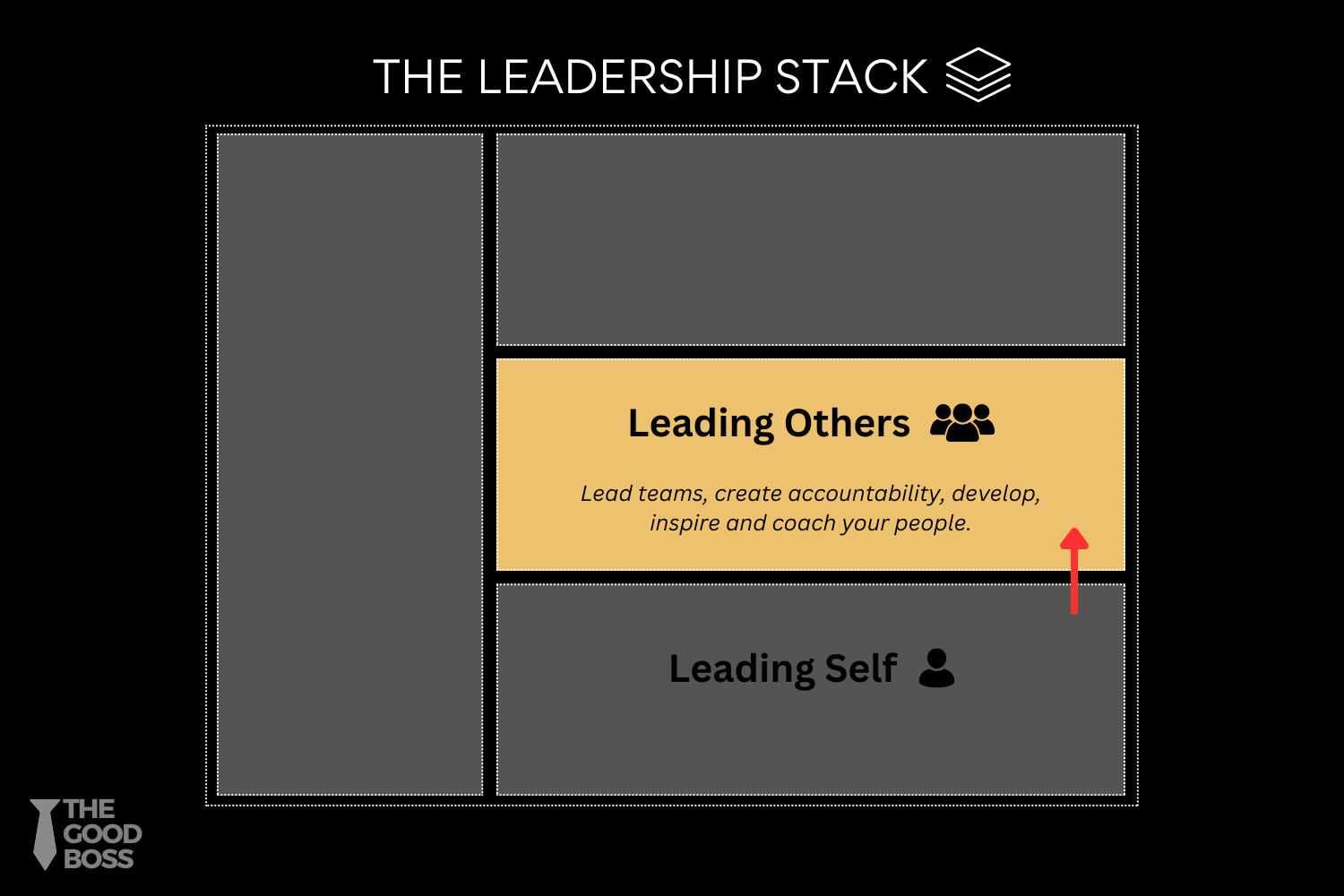
Once you’ve built self-awareness, the next step is learning how to lead others effectively.
Great leadership isn’t just about having a title, it’s about building strong relationships with your team. Without trust, communication, and clear expectations, even the most talented teams will struggle.
Think about the best boss you’ve ever had. What made them great? Chances are, they gave you helpful feedback, supported your growth, coached and mentored you, and create a culture of accountability and psychological safety. On the flip side, think about the worst boss you’ve had. Maybe they micromanaged, avoided difficult conversations, or took credit for your work. Ugh!
The way a leader treats their team says a lot about the depth of their leadership.
A Gallup survey found that teams with strong leadership are 21% more productive and have 59% lower turnover.
If you want to build a team that actually enjoys working with you (and stays motivated), you need to focus on leading people well.
Key Skills in Layer 2 - Leading Others
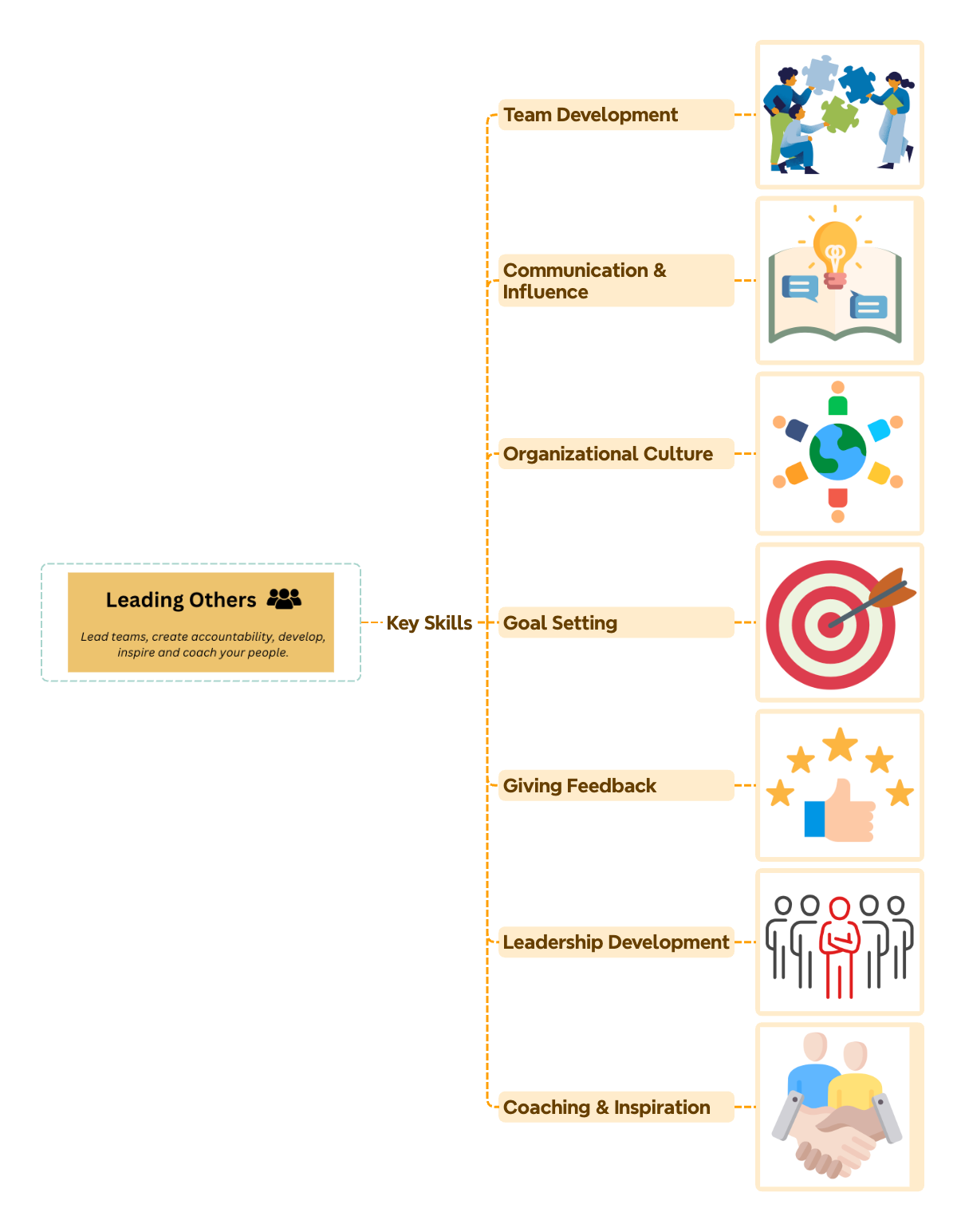
The key skills to develop in this layer include:
Team Development – Building high-performing teams.
Communication & Influence – Using narratives to inspire and communicate.
Organizational Culture – Fostering trust, safety, and values.
Goal Setting – Setting clear, meaningful goals for teams.
Giving Feedback – Providing constructive, actionable feedback.
Leadership Development – Growing future leaders.
Coaching & Inspiration – Helping individuals reach their full potential.
Next, let’s discuss each of these skills in a little more detail.
Team Development: Building a High-Performing Team
"If you want to go fast, go alone. If you want to go far, go together."
A great team doesn’t happen by accident.
It takes effort, patience, and leadership. If you don’t actively develop your team, you’ll end up with a group of individuals working in silos, with little collaboration or trust.
When teams lack clear leadership, you’ll start to see miscommunication, missed deadlines, and even conflicts between team members. You’ll have some people pulling all the weight while others disengage. Your team may not feel comfortable speaking up for fear of conflict or retaliation.
Research has shown that great leaders actively guide their teams through different phases of development, help them build trust with each other, and empower them to take ownership.
How to Develop a High-Performing Team
You build strong teams by paying attention to how people work together, not just what they do. This means guiding your team through tough situations, creating trust, and helping each person grow in their role.
These are some popular frameworks that you can use to develop a high-performing team:


👉 Takeaway: High-performing teams don’t happen by chance. As a leader, it’s your job to actively shape the culture and guide your team through challenges.
Communication & Influence: The Secret to Motivating and Inspiring Your Team
"People don’t remember facts. They remember stories."
Most leaders over-explain things. They rely on spreadsheets, data, and logic to make their case, assuming that if they just lay out the facts, people will follow.
But that’s not how people work.
If you want to truly inspire action, you need to tell compelling stories. Research from Stanford University found that people remember stories 22 times more than facts alone. When leaders use storytelling, they make their message more engaging, memorable, and meaningful.
Think about some of the greatest leaders in history—Steve Jobs, Martin Luther King Jr., Barack Obama. What do they have in common?
They were all masters at communication and influence. They didn’t just talk about what they were doing—they painted a picture of why it mattered.
How to Use Communication & Influence in Leadership
You build this skill by learning how to share real experiences in a way that people remember and connect with. A good story makes your message stick—and helps your team feel something, not just hear something.
These are some popular frameworks that you can use for storytelling:


👉 Takeaway: If you want your team to connect with your message, facts alone won’t do it. Use stories to inspire, relate, and make your vision real.
Organizational Culture: The Glue That Holds Teams Together
Have you ever worked on a team where people were afraid to speak up? Where mistakes were hidden instead of addressed? Where leadership felt distant and disconnected?
Where elephants would lurk around rooms in plain sight?
That’s what happens when the culture is broken.
Culture isn’t about perks like free coffee or casual Fridays. Culture is not what your leadership is showing you in their presentations, nor what’s on the posters on the walls.
Culture is how people “feel” on the ground.
It’s how people interact, how decisions are made, and whether people feel safe to share their ideas. Research from Google’s Project Aristotle found that psychological safety is the #1 predictor of high-performing teams. When people feel safe to speak up, they collaborate better, innovate more, and avoid costly mistakes.
One of the biggest mistakes leaders make is assuming culture will take care of itself. But culture is shaped by what you tolerate, what you reward, and how you handle tough situations. If you ignore toxic behavior, it spreads. If you fail to recognize great work, motivation drops.
How to Shape a Strong Culture
You shape culture by how you show up every day—what you say, what you reward, and what you let slide. To build a strong culture, you need to be intentional about the environment you're creating and how your team experiences it.
These are a few models you can use to shape your team culture:


👉 Takeaway: Your team’s culture is shaped by what you allow, what you encourage, and how you lead. If you’re not shaping it on purpose, you’re still shaping it—just not in the way you might want.
Goal Setting: Creating Clarity and Focus
“One of the biggest reasons teams struggle isn’t because they’re lazy or unmotivated—it’s because they don’t have clear goals.”
If people aren’t sure what success looks like, they’ll spend their time on the wrong things, second-guessing their work, or feeling frustrated.
A Harvard Business Review study showed that teams with clear goals are 42% more productive. The problem is, most leaders don’t communicate goals well. Some leaders set goals that are too vague—like “Let’s improve customer experience.” Others set goals that are too rigid—so when priorities shift, the team is left confused.
Good goals give teams direction, motivation, and a clear sense of progress. But great goals also allow for flexibility and adaptation.
The best leaders set goals that are specific, measurable, and meaningful—so their teams stay focused on what truly matters.
How to Set Better Goals
You build this skill by learning how to set goals that are clear, realistic, and meaningful. Good goals help your team stay focused, measure progress, and feel motivated.
You can use some of these popular frameworks to set better goals for your teams:


👉 Takeaway: If your team feels stuck or unmotivated, the issue may not be them—it may be that they don’t have clear goals to work toward. Good goals give direction and purpose.
Giving Feedback: The Key to Growth and Improvement
"The best leaders don’t just give feedback—they create a culture where feedback is welcomed."
Giving feedback can feel awkward—especially if it’s constructive.
You don’t want to hurt anyone’s feelings, and sometimes it’s easier to just avoid the conversation altogether.
But here’s the problem: without feedback, people don’t improve.
A study from Gallup found that employees who receive regular feedback are 3.6x more likely to be engaged at work. But, on the flipside, only 26% of employees say they get the feedback they need.
If you don’t give feedback regularly, small problems can turn into big issues.
In the absence of regular feedback, a minor performance issue can grow into resentment and disengagement. A small misunderstanding can create tension and frustration.
But when feedback is honest, frequent, and constructive, it helps people feel valued and taken care of.
How to Give Great Feedback
You build this skill by giving feedback more often—and doing it in a way that’s helpful, not hurtful. Good feedback is clear, specific, and focused on helping someone improve, not tearing them down.
Some powerful models you can use to uplevel the quality of your feedback include:


👉 Takeaway: If you’re not giving regular feedback, your team won’t grow. Make feedback a habit—and make it clear, honest, and actionable.
Leadership Development: Growing Future Leaders
"A leader’s success isn’t measured by how much they accomplish—it’s measured by how many leaders they develop."
At some point in your leadership journey, you’ll realize that your biggest impact isn’t just in what you do, but in who you develop.
Great leaders don’t just focus on hitting short-term goals—they invest in building the next generation of leaders who will carry the team forward.
Many managers feel uncomfortable delegating authority or investing time in developing others because they worry it will slow things down. But the reality is, if your team is completely dependent on you, you’re not leading—you’re just managing work.
A study by the Center for Creative Leadership found that companies with strong leadership development programs are 1.5x more likely to outperform their competitors.
The best leaders understand that their legacy isn’t built by doing everything themselves. It’s built by empowering others to lead.
How to Develop Future Leaders on Your Team
You build this skill by helping others grow—not just giving them tasks, but giving them opportunities to lead. The more you support people in learning and stepping up, the more leaders you create.
You can use some of these frameworks to develop future leaders on your team:


👉 Takeaway: Your job as a leader isn’t just to deliver results—it’s to build other leaders. Start growing future leaders today, not later.
Coaching & Inspiration: Helping People Reach Their Full Potential
"Your job as a leader isn’t to have all the answers. It’s to ask the right questions and help your people grow."
One of the most powerful things you can do as a leader is become a great coach.
When you constantly solve problems for your team, they never learn how to solve problems themselves. This creates a cycle where you become the bottleneck, and your team becomes overly dependent on you for decisions.
Coaching isn’t about telling people what to do. It’s about helping them think, solve problems, and grow on their own.
A study from Gallup found that employees who receive regular coaching are 27% more likely to feel engaged at work.
How to Be a Better Coach as a Leader
You build the skill of coaching by learning to ask better questions, listen more, and guide people to find their own answers. Coaching isn’t about giving advice—it’s about helping others grow by thinking for themselves.
You can leverage some of these models to refine your coaching skills:


👉 Takeaway: Great leaders don’t just give answers—they ask better questions. If you want to build a stronger, more independent team, start coaching instead of directing.
Feedback is a gift! 💬 If you’re finding this post helpful, would you do me a favor and leave a quick testimonial here, and as a thank-you, I’ll send you a free copy of my book! It only takes a couple of minutes - thank you! 🙏
Layer 3: Leading Results – Driving Business Impact
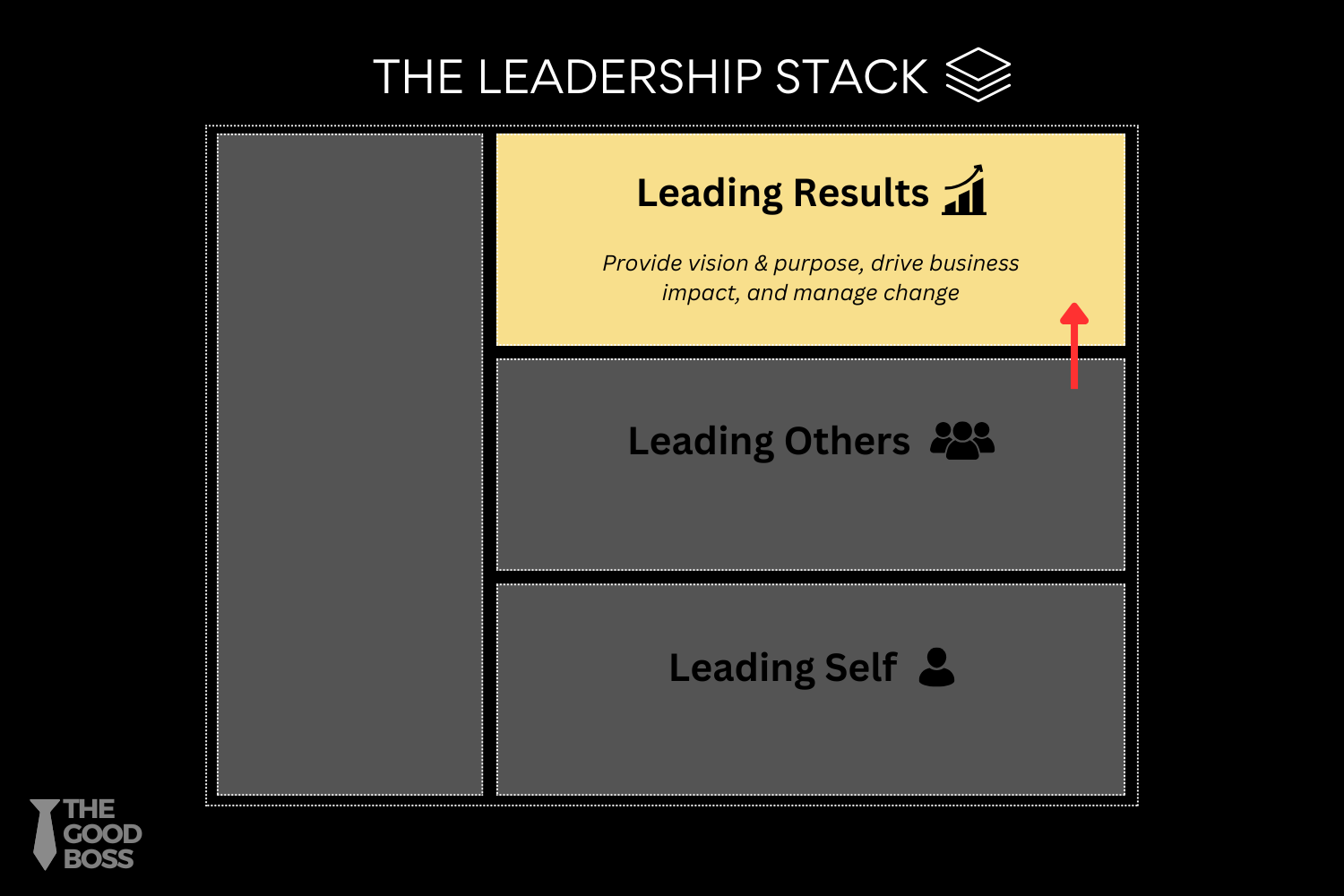
By now, you’ve built a strong foundation. You’ve learned how to lead yourself and lead others.
But leadership isn’t just about keeping your team happy. It’s about delivering business results.
At this layer, leadership is about turning vision into action. It’s about making smart decisions, managing change, and ensuring your team’s work leads to meaningful outcomes. A great leader doesn’t just set goals, they ensure those goals get achieved.
This is where many leaders struggle. They assume that if they just hire great people, results will follow automatically. But that’s not how it works. Without a clear strategy, teams can waste months on low-impact work or get stuck reacting to problems instead of making real progress.
Leading results is about setting a vision, driving execution, and managing change and risk effectively. It’s not just about inspiring, but actually delivering results.
Key Skills in Layer 3 - Leading Results
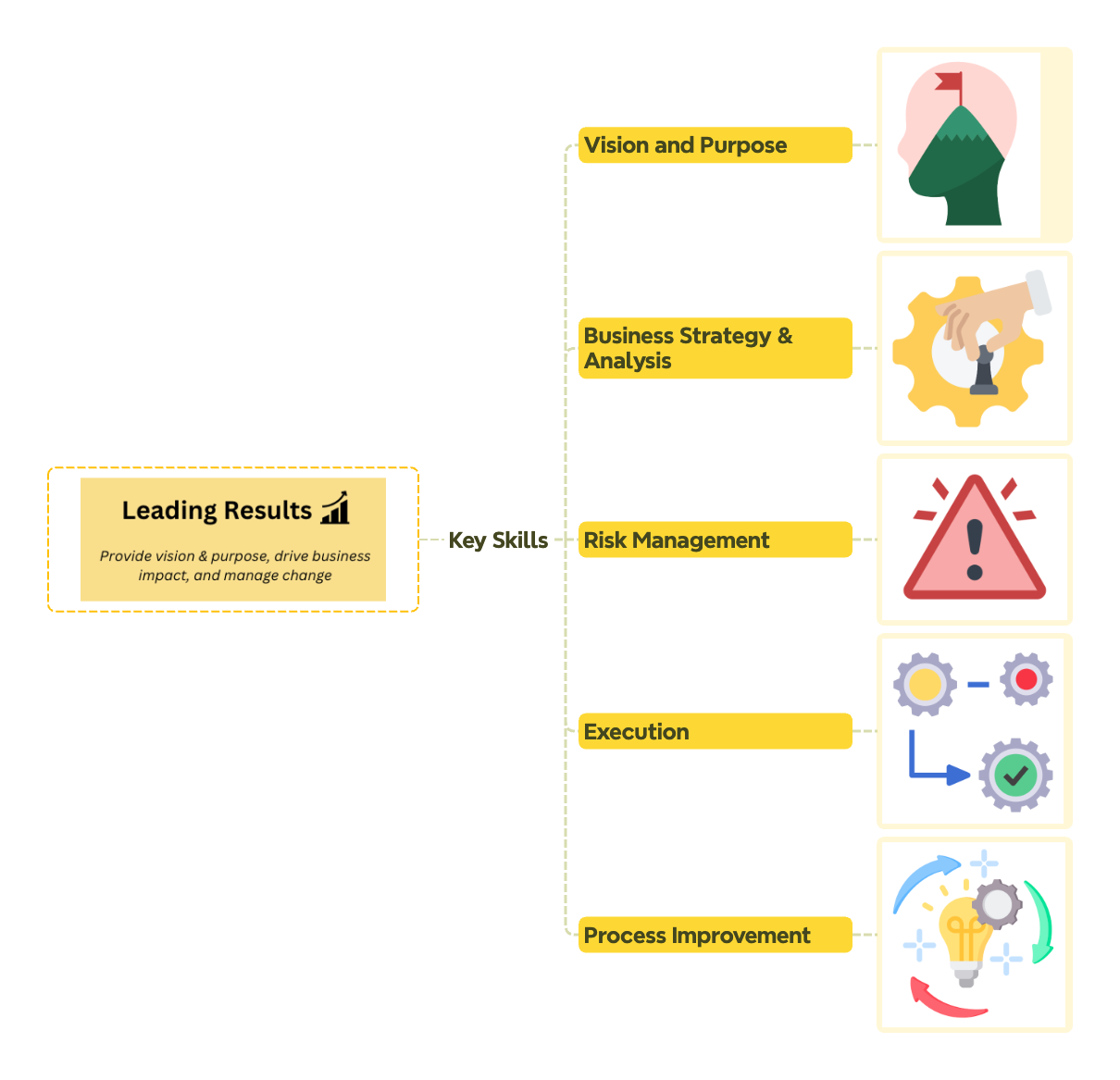
The key skills to develop in this layer include:
Vision & Purpose – Defining and communicating a clear direction.
Business Strategy & Analysis – Making informed strategic choices.
Process Improvement – Enhancing efficiency and effectiveness.
Risk Management – Identifying and mitigating threats.
Execution – Turning strategy into reality.
Next, let’s discuss each of these skills in a little more detail.
Vision & Purpose: The Power of Clear Leadership
"A leader without a vision is like a ship without a rudder."
Your team wants to know where they’re going and why their work matters.
Without a clear vision, they might work hard, but their efforts will feel pointless. They’ll complete tasks without understanding how their work contributes to something bigger.
A compelling “why” or the “vision” helps people see the bigger picture. Research by McKinsey showed that leaders who communicate a strong vision increase employee engagement by 68%.
I remember when I was leading a new team many years ago, I noticed my team members were getting stuck in endless debates about features. They had no clear sense of what was most important. Once we defined our vision—"Provide fast, easy, and seamless access to the product"—everything changed. Everyone on the team had a clear direction, and decision-making became easier.
How to Create a Strong Vision
You build this skill by helping your team see the bigger picture—why their work matters and where you're all headed. A strong vision inspires people, and a clear purpose gives their work meaning.
Here are a few popular frameworks you can use to create a strong vision for your team:


👉 Takeaway: If your team isn’t excited about their work, it might be because they don’t see the bigger picture. A strong, clear vision connects daily work to something that matters.
Business Strategy & Analysis: Making Smarter Decisions
"Strategy is about making choices, trade-offs; it’s about deliberately choosing to be different." – Michael Porter
A clear vision is useless without a strong strategy.
Your team needs to know not just where you’re going, but how you’re going to get there. That’s what strategy is all about: focusing on what matters most and ignoring distractions.
Also, having a strategy or a plan isn’t enough.
You must also keep adapting that plan to match shifts in market trends, customer needs, and how your business operates. The business world is always changing, and what worked yesterday might not work today. Being flexible and ready to respond is key to staying relevant and competitive. This is where Business Analysis comes in.
How to Build a Strong Strategy & Analysis Muscle
You build this skill by learning how to think clearly about what your team should focus on—and what it shouldn’t. A good strategy helps you make smarter choices, especially when resources are limited.
You can build a strong strategy by leveraging some of these frameworks:


👉 Takeaway: Great strategy is about focus. It’s not just about what you choose to do—but what you choose not to do.
Process Improvement: Making Things Run Smoother
If you’ve ever worked in an environment with too many meetings, slow approvals, and redundant tasks, you know how frustrating inefficiency can be.
Poor processes waste time, kill motivation, and make simple work feel exhausting.
A study from McKinsey found that companies that continuously improve processes increase efficiency by 25% and reduce costs by 20%. Yet, many leaders hesitate to change processes because “That’s how we’ve always done it”.
That mindset can sink a business.
Great leaders constantly look for ways to remove bottlenecks and improve workflows. They don’t add more bureaucracy—they simplify things.
They ask, “How can we make this easier, faster, and better?”.
How to Improve Processes
You build this skill by looking for ways to make work faster, easier, and better. Instead of accepting slow or clunky processes, focus on what can be fixed or simplified.
Some well-established frameworks that you can use to improve processes include:

👉 Takeaway: If your team is buried in slow or messy processes, don’t settle. Start finding small ways to make work smoother and more efficient.
Risk Management: Identifying and Mitigating Threats
“Risk comes from not knowing what you’re doing.” – Warren Buffett
Every leadership decision comes with some level of risk.
Hiring a new employee, launching a new product, entering a new market—all of these come with potential downsides.
Strong leaders don’t avoid risk; they anticipate, assess, and manage it.
If you ignore risk, you set yourself up for unexpected failures. If you overanalyze risks, you may become paralyzed by indecision. The key is to find a balance—being proactive about potential threats without letting fear hold you back.
One of the biggest mistakes leaders make is only considering financial risks while ignoring operational, reputational, and strategic risks. For example, expanding your company might seem like a great opportunity, but have you considered the hiring challenges, cultural differences, or long-term sustainability of that decision?
How to Assess and Manage Risk
You build this skill by learning to spot problems before they happen—and having a plan to deal with them. Risk management isn’t about avoiding risk altogether; it’s about being prepared.
You can use the following risk-management frameworks to assess and manage risk:


👉 Takeaway: Great leaders don’t wait for problems to show up—they plan for them. Look ahead, assess risks early, and be ready with a clear response.
Execution: From Strategy to Action
"A mediocre strategy well-executed is better than a brilliant strategy poorly executed."
You’ve seen it happen—great plans that never turn into real results. Teams get stuck in endless meetings, or they spend months perfecting details that don’t matter.
The reality is that execution is hard, and most teams struggle with it.
At one point in my career, I was working on a project that had a great vision and a great plan—but we kept missing deadlines. After investigating, I realized we were spending too much time in meetings and too little time actually building the product. We implemented a clear execution framework, and within three months, productivity skyrocketed!
How to Execute Effectively
You build this skill by creating systems that help your team stay focused, move fast, and deliver results. It's not just about having good ideas—it's about turning those ideas into action.
Some of the frameworks you can use to execute effectively are:


👉 Takeaway: Ideas are easy. Execution is what sets leaders apart. Build systems that help your team stay focused and follow through.
P.S. If you’re constantly juggling fires, decisions, and people issues, and ready to bring more clarity, calm, and intention to your leadership, that’s why I built The Ultimate Leadership Toolkit, powered by The Leadership Mastery System™.
This is your swiss-army knife of leadership tools.
Strategic Leadership – The Skillset that Cuts Across Layers
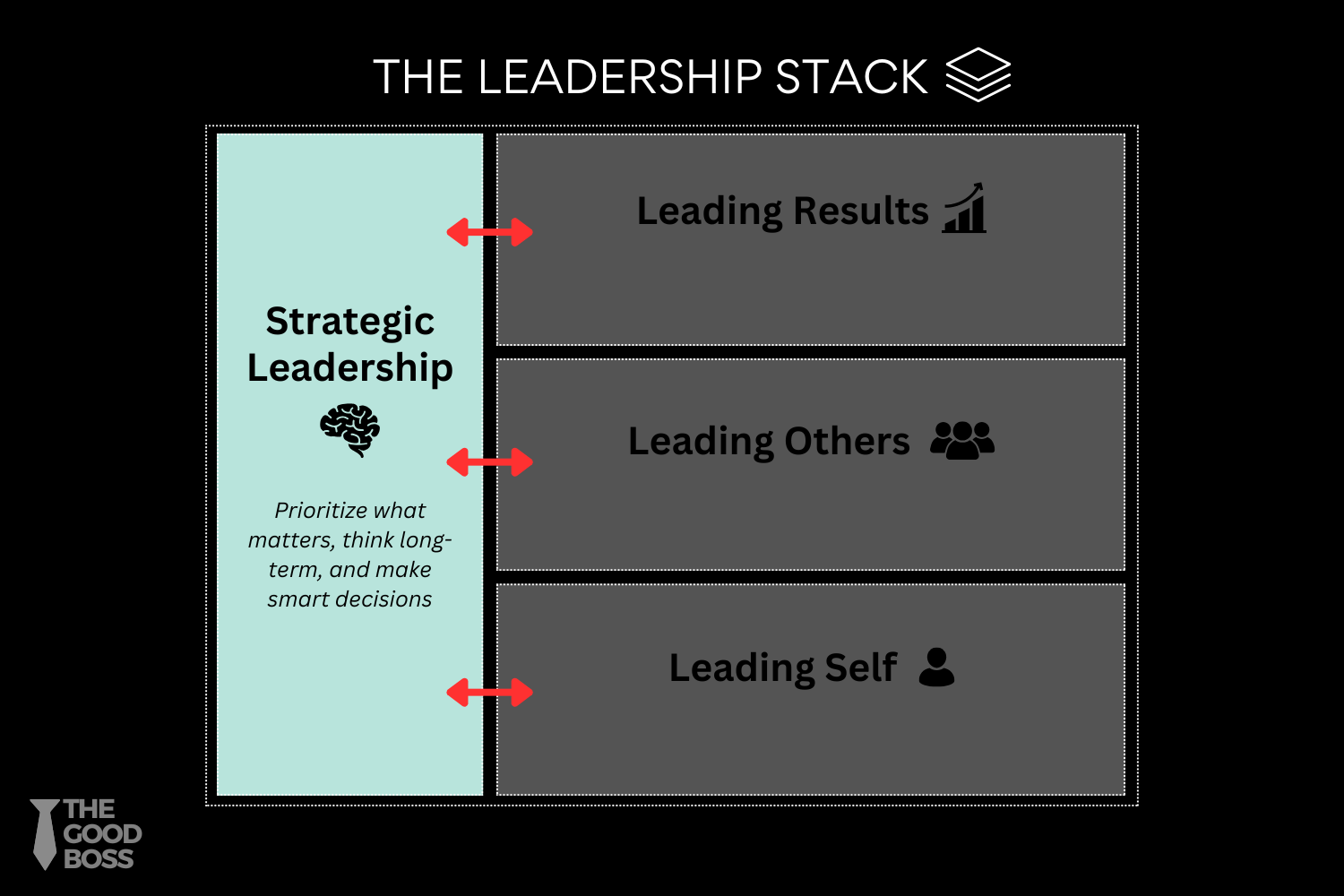
At every layer of leadership, whether you’re leading yourself, others, or results, you need strategic thinking, problem-solving, and decision-making skills.
These skills don’t belong to just one layer of leadership; they cut across all levels.
Strategic leaders don’t just react to problems, they anticipate them and prevent them from becoming crises.
They don’t just manage today’s tasks, they think about what’s coming next. Instead of being caught up in the day-to-day grind, they carve out time to think, plan, and make better decisions.
Strategic leadership is what separates good managers from great leaders.
In this section, we’ll explore how to make smarter decisions, solve problems effectively, and prioritize what truly matters.
Key Skills in Strategic Leadership
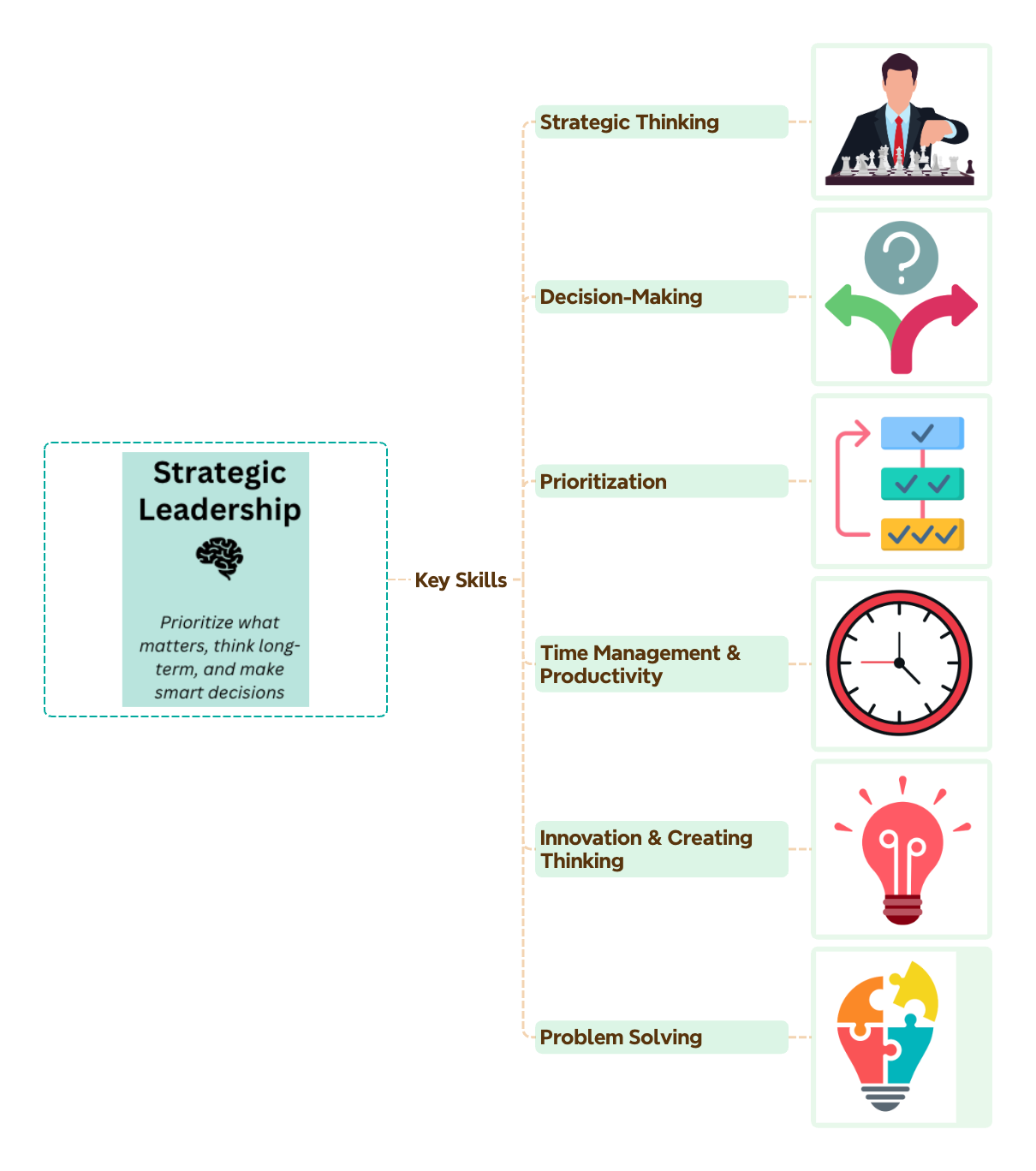
The key skills to develop in this cross-cutting layer include:
Strategic Thinking - Seeing beyond the immediate problem.
Decision-Making – Making fast, effective decisions.
Time Management & Productivity – Managing time and priorities efficiently.
Innovation & Creative Thinking – Encouraging innovation.
Problem-Solving – Breaking down complex challenges.
Prioritization – Focusing on what truly matters.
Next, let’s discuss each of these skills in a little more detail.
Strategic Thinking: Seeing Beyond the Immediate Problem
“The best leaders don’t just solve the problem in front of them. They see the bigger picture that others miss.”
Strategic thinking is one of the hardest skills to learn as a leader, because it asks you to do something that feels unnatural in the rush of daily work:
Step back. Slow down. Look beyond today.
Most leaders stay stuck in the weeds. Urgent tasks pull them in. Slack messages set the pace. Fires demand attention.
I spent many years like that, reacting to whatever came my way, hoping that busy meant effective. But when you live in reaction mode, you miss the early signs of bigger shifts.
Strategic thinking is the habit of asking, “What does this mean in the long run?” before you jump into action.
How to Think More Strategically
You build this skill by training your mind to pause, zoom out, and connect the dots between today’s actions and tomorrow’s outcomes. Here are a few simple tools that help:


👉 Takeaway: You don’t need a crystal ball to think strategically. You just need to pause, zoom out, and see how today’s choices shape tomorrow’s reality.
Decision-Making: Thinking Clearly Under Pressure
"The best leaders don’t always make perfect decisions. They make timely decisions with confidence."
As a leader, you make hundreds of decisions every day.
Some are small—like what to prioritize on your to-do list. Others are big—like deciding whether to hire or fire someone, pivot a strategy, or invest in a new opportunity.
However, the problem is that most leaders struggle with decision-making. Some hesitate too much, waiting for perfect information before acting. Others make rash decisions without considering the risks.
I used to have (and still sometimes have) perfectionist tendencies. When it came to making a big decision, I would overanalyze and continue to gather data until I felt 100% certain. But the reality is that no decision can be perfect, and in most such cases the delays caused the opportunity to pass. Ugh!
Over time, I realized that leadership isn’t about making perfect decisions—it’s about making good decisions quickly and adjusting as needed.
How to Make Better Decisions
You build this skill by learning how to stay calm under pressure, weigh your options, and choose a path forward—even when things aren’t clear. The goal isn’t to be perfect but to make smart choices with the information you have.
Here are a few powerful frameworks you can use to make better decisions:


👉 Takeaway: You don’t need to make perfect decisions. You just need to make smart ones—with clarity, speed, and enough information to move forward.
Time Management & Productivity: Managing Your Time and Priorities Efficiently
"You can do anything, but not everything." – David Allen
As a leader, your biggest challenge isn’t getting work done—it’s figuring out what work is worth doing in the first place.
Leadership comes with constant distractions, urgent requests, and endless meetings. If you don’t take control of your time, your day will be dictated by other people’s priorities instead of your own.
Many leaders mistake busyness for productivity. They fill their calendars with meetings, respond to every email instantly, and multitask all day. But all they end up doing is busy work, not impactful work.
The most effective leaders focus on high-impact work, delegate what they can, and eliminate unnecessary tasks. Instead of reacting to every email, they block time for deep work. Instead of saying “yes” to everything, they protect their schedule for the work that moves the business forward.
How to Improve Productivity as a Leader
You build this skill by learning how to manage your time, focus on what matters most, and avoid busywork. Productivity isn’t about doing everything—it’s about doing the things that move the needle.
You can improve your productivity by leveraging some of these frameworks:


👉 Takeaway: Productivity isn’t about doing more—it’s about doing the right things. Instead of prioritizing your schedule, focus on scheduling your priorities.
Innovation & Creative Thinking: Finding Innovative Solutions
"The best leaders don’t just solve problems. They come up with creative solutions."
When faced with a challenge, most people look for the obvious answer. But great leaders take a step back and think outside the box.
They challenge assumptions, explore alternatives, and find innovative ways to solve problems.
However, most companies encourage safe, conventional thinking, which kills creativity. Ever wondered what separates the best companies and brands from their competitors? It isn’t solving harder problems, but it is thinking outside the box and solving problems differently.
How to Develop Creative Thinking
You build this skill by learning to look at problems from new angles. Creative thinking isn’t just for artists—it’s for any leader who wants to solve problems in better ways and come up with fresh ideas.
A number of popular frameworks are available for you to develop creative thinking:


👉 Takeaway: The best solutions often come from thinking differently. Encourage creativity in yourself and your team.
Problem-Solving: Breaking Down Complex Challenges
"If I had an hour to solve a problem, I’d spend 55 minutes thinking about the problem and 5 minutes thinking about solutions." – Albert Einstein
As a leader, problem-solving is one of your most important skills.
Every day, you’ll face challenges—team conflicts, project roadblocks, budget constraints, unexpected crises.
How do you approach these problems?
Many leaders don’t follow a structured approach to problem-solving — they just “jump in” and hope for the best.
Research from McKinsey shows that leaders who approach problems systematically are 3 times more likely to implement effective solutions. Great leaders don’t just jump straight to solutions—they first define the problem clearly, explore different perspectives, and then take calculated action.
How to Become a Better Problem-Solver
You build this skill by slowing down, asking better questions, and digging deeper before jumping to solutions. The goal is to fix the real problem—not just the symptoms.
You can leverage some of the following frameworks to solve problems more systematically:


👉 Takeaway: Don’t rush into solving the surface issue. Take time to understand the real problem—then solve it systematically.
Prioritization: Doing What Matters Most
"When everything is a priority, nothing is."
One of the biggest struggles for leaders is figuring out where to focus their time and energy.
With endless meetings, emails, and urgent requests, it’s easy to feel busy but not productive.
The underlying problem is that many leaders spend their days reacting to whatever feels urgent instead of focusing on what will actually move the needle.
As a leader, you should identify the select few tasks or initiatives that are truly important and strategic for your team, and focus your energies on those.
Prioritization is about saying ‘No’ more than saying ‘Yes’, and keeping a razor-sharp focus on what truly matters.
How to Prioritize Like a Pro
You build this skill by learning to say no to the things that don’t matter—so you can say yes to the things that do. It’s not about doing everything; it’s about doing the right things first.
You can use some of the following frameworks to prioritize like a pro:


👉 Takeaway: If you feel like you never have enough time, the problem isn’t time—it’s prioritization. Focus on what actually matters.
Enjoying the read? Hit the ❤️ button and share/restack 🔁 it with others who might find it helpful. You can also subscribe to The Good Boss for more posts like this every week. Thank you! 🙏
Bringing It Together – The Leadership Stack 🧰
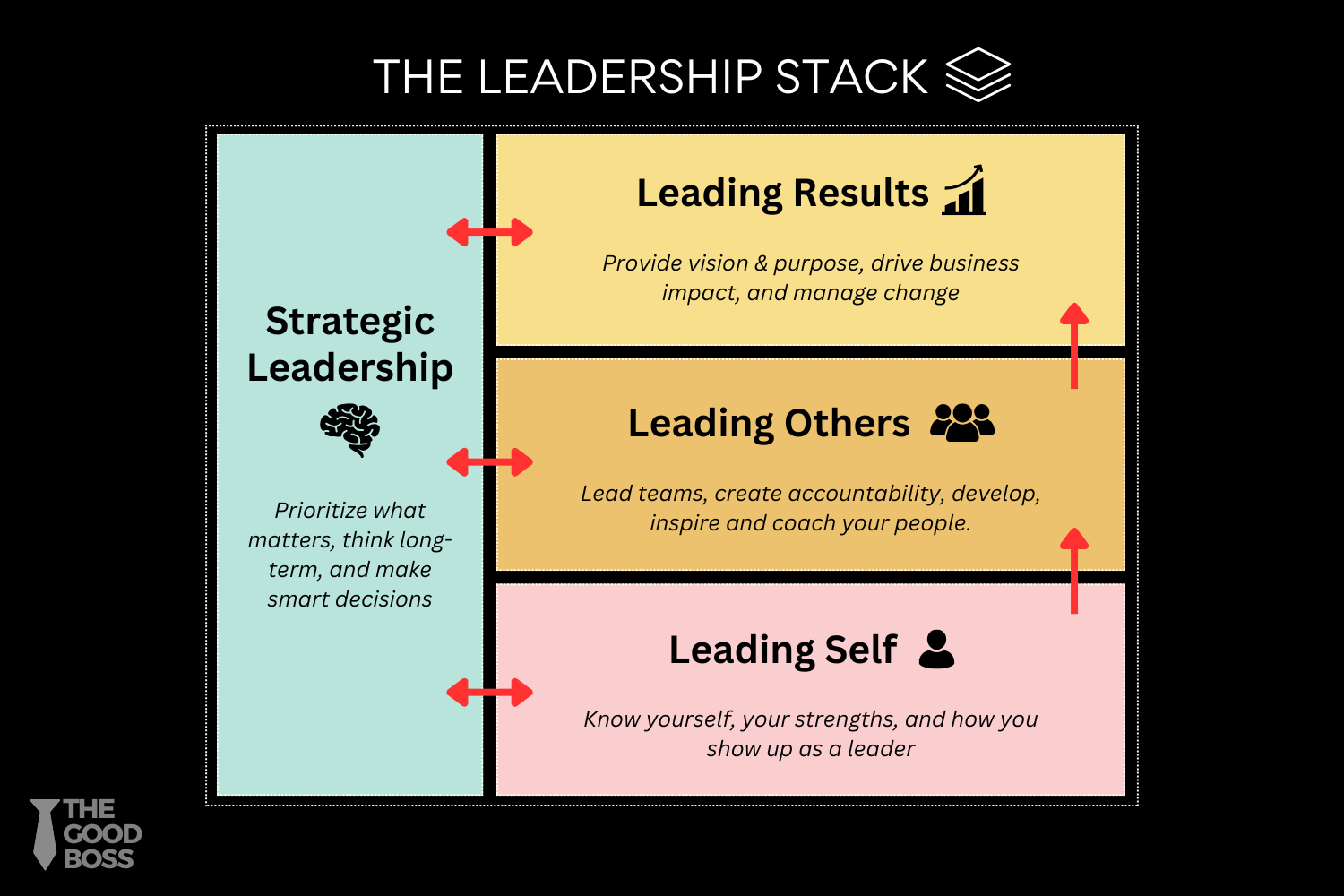
If you’ve ever felt stuck in your leadership journey, it’s probably because no one ever showed you the skills you actually need to lead and succeed.
Leadership is full of uncertainty. It’s not always clear what to do, especially when you’re facing a challenge you’ve never seen before. Most leaders never get formal training, and even when they do, it usually only covers parts of the role, not the whole picture.
The Leadership Stack is a structured roadmap to building the leadership skills that matter most. It gives you a complete framework for growing as a leader, layer by layer, from the inside out.
Layer 1: Leading Self – This is your foundation. You can’t lead others until you understand yourself - your strengths, blind spots, values, and the way you show up at work.
Layer 2: Leading Others – Once you’ve built self-awareness, you can start leading people - building trust, coaching your team, giving feedback, and creating a culture of accountability.
Layer 3: Leading Results – A great team needs great leadership, but it also needs direction. This layer is about setting goals, executing well, and turning strategy into real outcomes.
Strategic Leadership – This skill set cuts across all three layers. It helps you think long-term, solve problems, prioritize what matters, and lead with intention.
👉🏼 It’s important to remember that these layers aren’t meant to be navigated in sequential order. In fact, they’re all connected, and the skills build upon one another. The most effective leaders move between them constantly, applying the right skills at the right time.
Final Thoughts
Leadership is a lifelong journey. The best part is that there’s no finish line, just continuous growth!
I hope The Leadership Stack provides a framework that you can use to systematically build your skills and excel as a leader.
Here are some suggestions to make the most of this framework:
Internalize the system and how it works. Understand how the layers are structured and how they interact with each other. The Leadership Stack Poster and The Leadership Stack Mind-map.
Assess yourself: which layer or skillset do you see as your biggest gap? Do you struggle with self-awareness, team leadership, driving results, or strategic thinking? Understanding your skills gaps will help you focus on the skills that will make the biggest difference.
Pick one skill that you want to focus on. Don’t try to learn too many skills at the same time (remember: prioritization is key.) Study it, practice it, and get comfortable with it. If you’re looking for a hands-on guide to all the tools and frameworks discussed in this system, you can check out The Leader’s Playbook.
Apply what you learn: Leadership isn’t about theory. If you’re working on giving better feedback, start having feedback conversations with your team. If you’re focusing on decision-making, apply a framework like the MoSCoW Method in your next big decision. You can also check out the collection of Framework Worksheets to get your hands dirty and start applying these frameworks to real-world situations.
Most of all, enjoy the journey of learning and growth as you build leadership mastery!
Have suggestions or feedback? Please drop them in the comments!
What’s the one skill you’re going to focus on building next? Let me know in the comments! 👇
❤️ Found this helpful?
If you found this post helpful, please like and share it with other managers who can benefit from it, including your boss :) If you have any feedback, please drop your comment below - it helps me keep improving the content. Thank you!

This is such a valuable post, with a lot of thoughtful insight throughout.
I especially appreciate the emphasis on the idea that high-performing teams have to be built by a thoughtful leader who is willing to shape the company culture, break down functional silos, and guide their team through the ups and downs of their work.