

Let me guess how your day started.
You woke up with energy, maybe even a couple of big ideas floating in your head during your shower. You opened your laptop, checked your email, joined a few zoom meetings, answered some Slack messages, context switched five times in ten minutes… and by 3 p.m., you were doom-scrolling LinkedIn and reading about someone else’s “10x productivity hacks.”
And you know why this happened? Because your brain had quietly… started to rot.
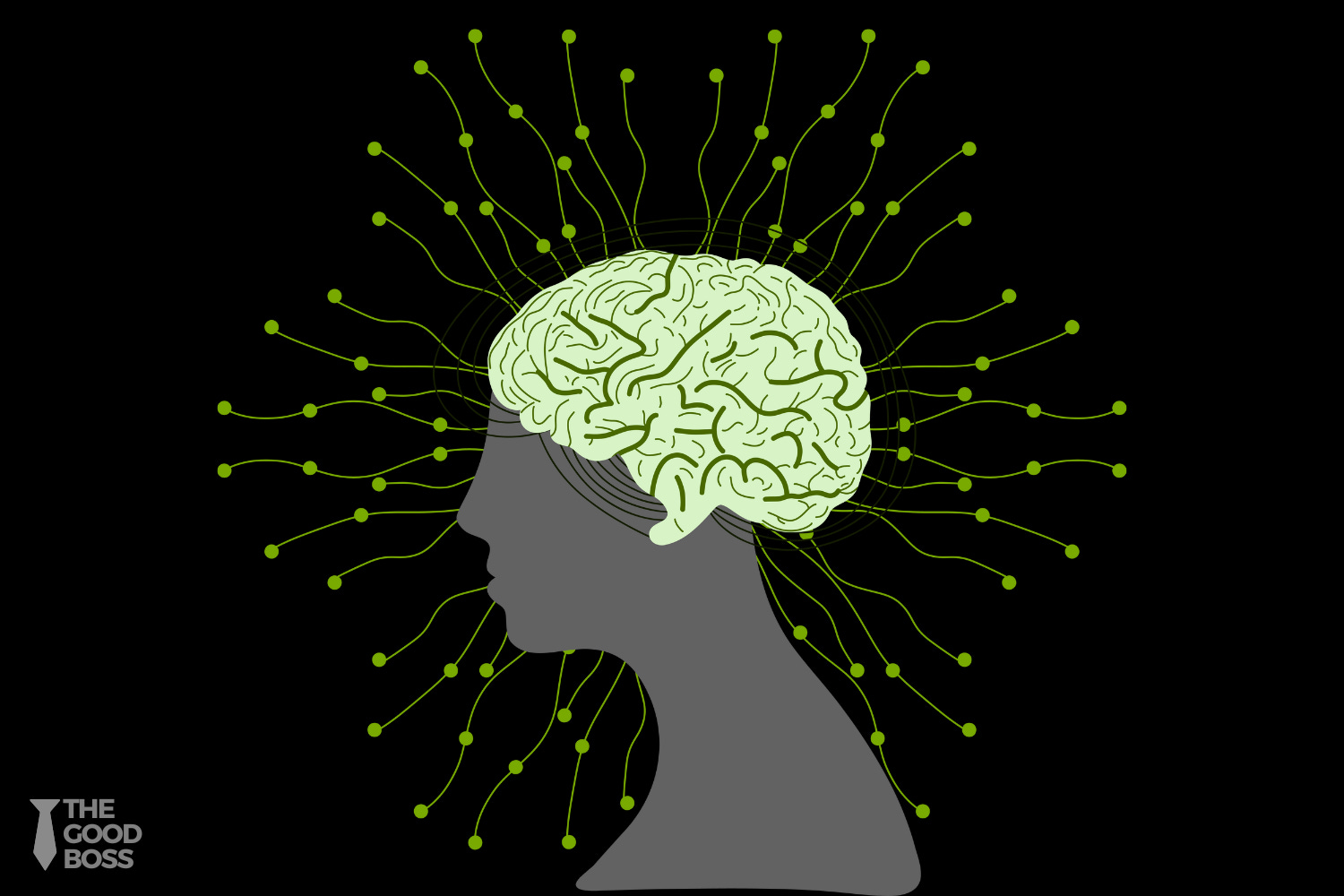
Trust me, I’m not being dramatic.
Modern leadership, especially in tech and high-performance environments, is inherently toxic.
And if you’re not actively protecting your brain, you’re passively destroying it.
Let me explain.
The Problem: Your brain wasn’t built for this
The human brain evolved for bursts of decision-making, not for 50+ decisions a day. It wasn’t designed to handle a dozen tabs open, three simultaneous chat threads, constant notifications, and back-to-back Zoom meetings.
A study by McKinsey found that the average knowledge worker spends 62% of their time on “work about work”: meetings, email, coordination. Only 27% goes to actual skilled work, and a mere 11% to strategy or innovation.
That’s right. As a leader, you spend less than 3 hours a week on deep, creative, strategic thinking, the kind of thinking that moves your team forward.
Meanwhile, you’re making decisions constantly: what to prioritize, who to hire, what to say in the next 1:1 or high-stakes meeting.
That’s decision fatigue.
When your brain is overloaded:
Your memory fades
Your mood dips
You get reactive, not proactive
You avoid hard problems
You fall back on habits and familiar routines
Which means your leadership becomes… hollow.
No vision, just execution. No clarity, just noise.
What You’re Really Losing
When your brain starts to rot, you don’t notice it immediately. That’s the scary part.
But slowly, and then all at once, you lose:
Creativity: You stop generating original ideas. Everything sounds like a “remix”.
Clarity: You struggle to connect dots, zoom out, or make sharp calls.
Empathy: You snap more easily, get frustrated quickly, and lose patience.
Energy: You feel tired, lethargic, and uninspired.
You start to feel like a slightly worse version of yourself every week. It’s not enough to crash, but just enough to coast.
Until one day you wake up and realize: I haven’t felt fully alive at work in months.
Have you felt like that lately? Let me know in the comments! 👇
What Makes It Worse
Most leaders don’t recognize the problem, so they reach for the wrong fixes.
They:
Jam their calendar with time blocks they’ll never respect
Use dozens of productivity tools that just add more noise
Say yes to every meeting because “it’s just 30 minutes”
Optimize every minute of the day, but in doing so, forget to rest
These are the equivalent of putting ice cubes in a burning room, hoping the room cools down. It won’t.
More tools won’t save your brain from rotting. Less noise will.
The Shift: Protect your brain like your most valuable asset
Here’s the harsh truth: Your brain is the most important tool in your leadership toolbox.
It’s not your calendar, or your fancy Miro templates.
Your brain is the engine behind you thinking clearly, seeing patterns, and making good decisions.
If your brain is foggy and tired, nothing else matters.
So how do you protect it?
Here’s what I’ve learned the hard way, and what I now do weekly to stay sharp.
The 3-Part Survival Guide for Leaders
1. Guard Your Inputs
Your brain is not a garbage bin.
Every ping, pop-up, and passive Slack check eats your cognitive bandwidth. You unintentionally dump more into your brain.
You need to treat your attention like a scarce resource. After all, it’s the most priced resource you have.
What I do:
Block 90-minute deep work sessions twice a week: no meetings, no notifications, just thinking with a piece of paper and pen (or a Notion page, if that’s what you prefer)
Close Slack for the first 30 minutes of my day
When I’m off or during off hours and weekends, I tell my team that I’ll not be available and will only respond to their messages when I return.
2. Reclaim Boredom
I’ve found that the best ideas don’t come when I’m sitting in front of my computer or browsing my phone.
They come when my mind wanders. When I go for a walk (without my phone), in the shower, or when I’m lying down in bed.
Studies from neuroscience (e.g., the DMN: Default Mode Network) show that the brain becomes more creative, reflective, and emotionally insightful when it’s not focused on a task.
What I do:
Take one phone-free walk every day, even if it’s just for 15 minutes
Schedule “nothing blocks”: yes, blank space on my calendar
Unwind at the end of day with no screens for at least 30 minutes.
Some of the best ideas for me have come during those periods when I stopped stuffing my mind.
3. Recover Like a Pro
If an athlete ran 12 hours a day with no rest, what would you call him? Most will call him reckless.
But when we, as leaders, run our brains to the extreme every week, we call it “drive.”
Here’s what recovery looks like for me:
Sleep: I don’t compromise. 7.5+ hours on most nights. No bragging rights for 4-hour zombies.
Short resets: A 15-minute jog or walk does more for my mental clarity than any meeting.
Screen-free meals: I don’t keep my phone near me when having meals. This helps me enjoy the taste, and to bring more energy.
Recovery is a leadership hygiene, not laziness.
What You Can Do This Week
If you want to start reversing the rot, try these small wins:
Audit your calendar. Remove or decline all unnecessary meetings.
Block one 90-minute “brain block” for solo thinking and creativity.
Set a Slack-free zone: first 30 mins of your morning or last hour of your workday.
Go for a 20-minute walk with no phone. Let your mind wander.
Sleep without a device at arm’s reach. Experience the silence.
You can’t outsource your thinking
Your edge as a leader isn’t how much you do.
It’s how clearly you think.
It’s how calmly you decide.
It’s how creatively you solve problems.
And none of that is possible if you allow your brain to rot under the noise and the pressure.
It’s your brain, so take care of it, because no one else will.
❤️ Found this helpful?
If you found this post helpful, please like and share it with other managers who can benefit from it, including your boss :) If you have any feedback, please drop your comment below - it helps me keep improving the content. Thank you!

Loved this. I often get distracted with coordination. Gotta practice delegation and trusting your team to get the work done.