

Let’s start with an uncomfortable truth: Every leader “manipulates” their team.
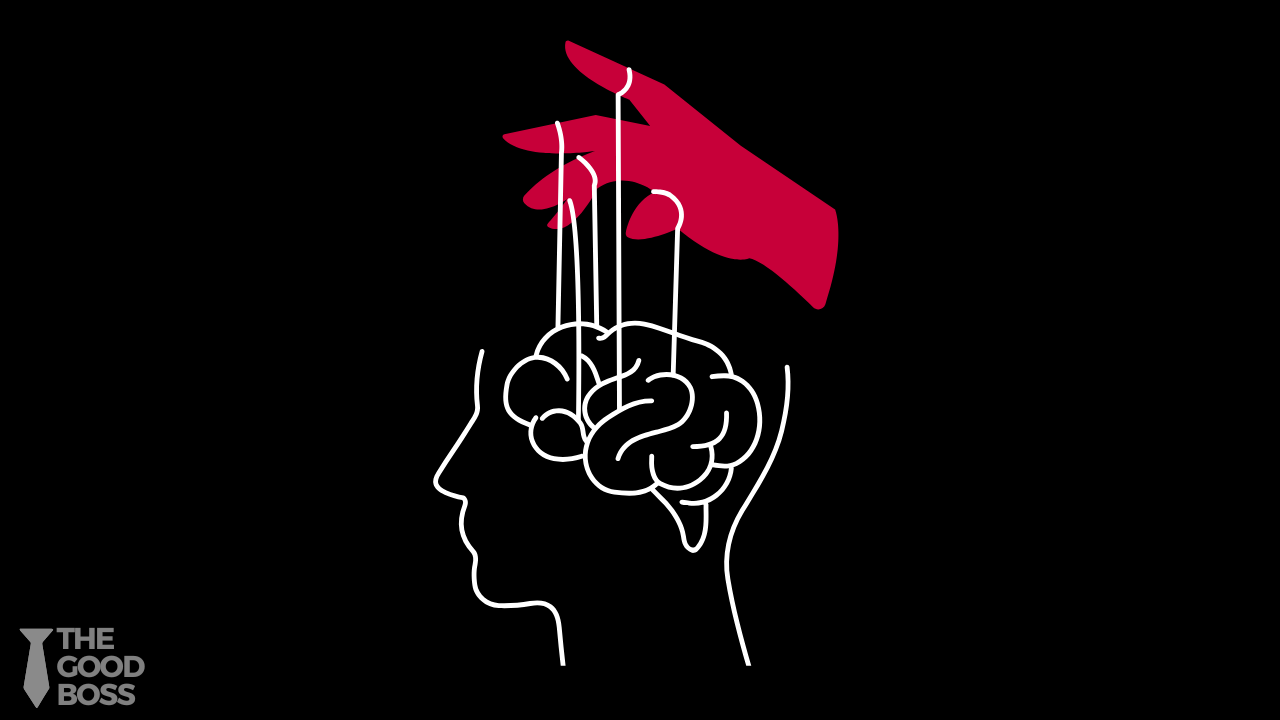
I know that word sounds negative. But at its core, manipulation simply means influencing behavior. And influencing behavior is what leadership is all about.
The real question isn’t whether you influence people. You already do. The real question is whether you do it on purpose and in the right way, or by accident.
Great leaders don’t rely on pressure, personality, or motivational talks. They focus on something deeper. They shape the environment people work in and design systems that guide behavior.
Once you see leadership this way, a better question to ask is: What exactly should you be shaping?
In this post, we’ll look at seven powerful levers.

1. Manipulate the Environment, Not the People
Most leaders try to change behavior through words.
They say things like, “Be more proactive,” or “Take more ownership.” But behavior rarely changes because of instructions alone. It changes when the environment shifts.
If you want focus, reduce noise.
If you want accountability, remove ambiguity.
If you want ownership, eliminate unnecessary dependencies.
A few years ago, when my team was modernizing a legacy cloud platform serving millions of users, we didn’t repeatedly tell teams to “move faster.”
Instead, we redesigned the system itself. We created smaller deployable units, clarified service ownership, and implemented automated testing.
Speed improved, not because people suddenly became more motivated, but because the system made good behavior easier.
👉🏼 People respond to structure far more reliably than they respond to speeches.

2. Manipulate What Gets Measured
What you measure becomes what people prioritize.
Research from McKinsey consistently shows that organizations that tightly align performance metrics with strategic priorities significantly outperform peers.
So, in that sense, measurement doesn’t just track progress - it actually directs attention.
If you measure hours worked, you’ll get visible busyness.
If you measure tickets closed, you’ll get quantity over depth.
If you measure short-term output, you’ll often sacrifice long-term quality.
But if you measure customer impact, defect escape rates, or product adoption, you get your team moving towards real outcomes.
At one of my previous companies, we had “bug bounty” programs, where engineers who logged the highest number of bugs won a prize. The intention was to improve quality, but the engineers were (unintentionally) incentivized to write sloppy, buggy code in the first place.
This is the classic example of Goodhart’s Law, which I talked about in one of my earlier posts.
👉🏼 Metrics are not neutral. They quietly shape behavior every day. Choose them carefully.

3. Manipulate the Default
Behavioral economics has shown that “defaults” are incredibly powerful.
For example, in countries where organ donation is the default option, participation rates are dramatically higher than in countries where people must actively opt in.
Here in Singapore, there are no “tips” or “gratuity”, but whenever I visit the US, I can see how the food outlets apply the same principle by setting a ‘default’ gratuity value in their POS terminals. Even though you can, how many customers would actively go and change that default value? Very few.
In organizations, your processes are defaults.
If your default for decision-making is a quick Slack message, you shouldn’t expect strategic depth or quality. But if your default requires a structured process outlining the problem, options, trade-offs, and recommendations, the quality of the decision will improve automatically.
Similarly, if documentation is optional, it will be neglected. If it is embedded into the workflow and required before code merges or launches, clarity becomes standard.
👉🏼 Instead of asking people to be more disciplined, design workflows that make disciplined behavior the easiest (default) path forward.

4. Manipulate Identity
People often perform according to the identity they believe they hold.
This is known as the Pygmalion Effect, a concept widely discussed in leadership research (and I also wrote about this here). When you raise expectations of your team members in a sincere way, their self-perception changes, and they end up performing better.
If you subtly signal that someone is “still junior,” they will become more cautious of their behavior. On the other hand, if you communicate that they are one of your strongest problem-solvers and that you trust their judgment, their behavior will begin to align with that expectation.
When you consistently describe your team as resilient, thoughtful, or customer-obsessed, you are shaping how they see themselves.
👉🏼 Your belief can shape the identity of your team, and that becomes a quiet form of gravity, pulling their behavior in the desired direction.

5. Manipulate the Narrative
Work is never just about tasks. It is about meaning.
Gallup’s research on employee engagement consistently shows that people who feel connected to the purpose are significantly more productive and engaged than those who don’t.
Back in Adobe, when I was building early mobile applications in what had been a desktop-centric organization, the project could easily have been framed as “porting features to a smaller screen.” Instead, we framed it as redefining how millions of users would interact with documents in a mobile-first world.
The code didn’t change, the narrative did.
👉🏼 People are far more committed to building something meaningful than they are to completing a backlog.

6. Manipulate Autonomy
Motivation research highlights three consistent drivers of intrinsic motivation: Autonomy, mastery, and purpose. This idea was popularized by Daniel Pink in his book Drive, and I also wrote about this in one of my previous posts.
Autonomy, however, is frequently misunderstood.
Too much control suffocates your team.
Too little structure creates confusion.
The balance lies in defining outcomes clearly while giving teams freedom over execution. In other words, clarify the WHY and the WHAT, and let your team decide the HOW.
In my experience leading cross-functional, geographically distributed teams, I’ve learned that specifying every detail leads to disengagement, while vague goals lead to misalignment.
👉🏼 The most effective approach is to clarify the problem, define success metrics and outline non-negotiables, and then allow your team to design the solution.

7. Manipulate Consequences
Culture is shaped less by speeches and more by consequences.
The behavior you reward grows.
The behavior you tolerate persists.
The behavior you ignore fades.
If a high performer who behaves unprofessionally continues to be promoted, the team receives a clear signal that that behavior is acceptable.
Every promotion, every bonus decision, every piece of public recognition communicates what truly matters.
Leaders often underestimate how closely people watch these signals.
👉🏼 If you want to shape behavior, pay close attention to what is tolerated and rewarded in your system.

Final Note
At this point, the word “manipulate” may still feel uncomfortable. Let’s face it - it should.
The distinction between manipulation and leadership lies in intent, and the real choice is whether you will apply it deliberately and ethically.
The best leaders I’ve worked with don’t push people toward performance. They build environments where performance becomes the natural outcome.
💬 Thought exercise for you: Step back and examine your own team today, and ask yourself: What behaviors is my current system encouraging? If you’re comfortable, share your thoughts in the comments below.
❤️ Found this helpful?
If you found this post helpful, please like and share it with other managers who can benefit from it, including your boss :) If you have any feedback, please drop your comment below - it helps me keep improving the content. Thank you!

“Behavior rarely changes because of instructions alone.” That line exposes so much.
We tend to coach effort when we should be examining structure. Environment reveals what we truly value — not what we say we value.
Really thoughtful framing.
Very interesting, thank you.
Despite the side effects, I think running an internal bug bounty program is a really smart move.