

A few years ago I was in an offisite meeting with my team, and we were reviewing the status across all the projects and services we owned.
As we looked at the slides, I remember seeing a lot of ‘reds’, and my team members were sharing the ‘path to green’. One of them suggesetd that we pause and redirect our resources somewhere else, while another was trying to push harder on the existing plan.
At that point, I remember thinking that my job wasn’t to pick a “winner” out of all the opinions, but to see what perhaps none of them were seeing yet.
That was the moment I understood what ‘strategic’ thinking actually means for a leader. Many managers think that strategic leadership is about “having a vision” and then driving towards that vision, but that’s a very narrow way of looking at it.
Here’s my take on strategic leadership:
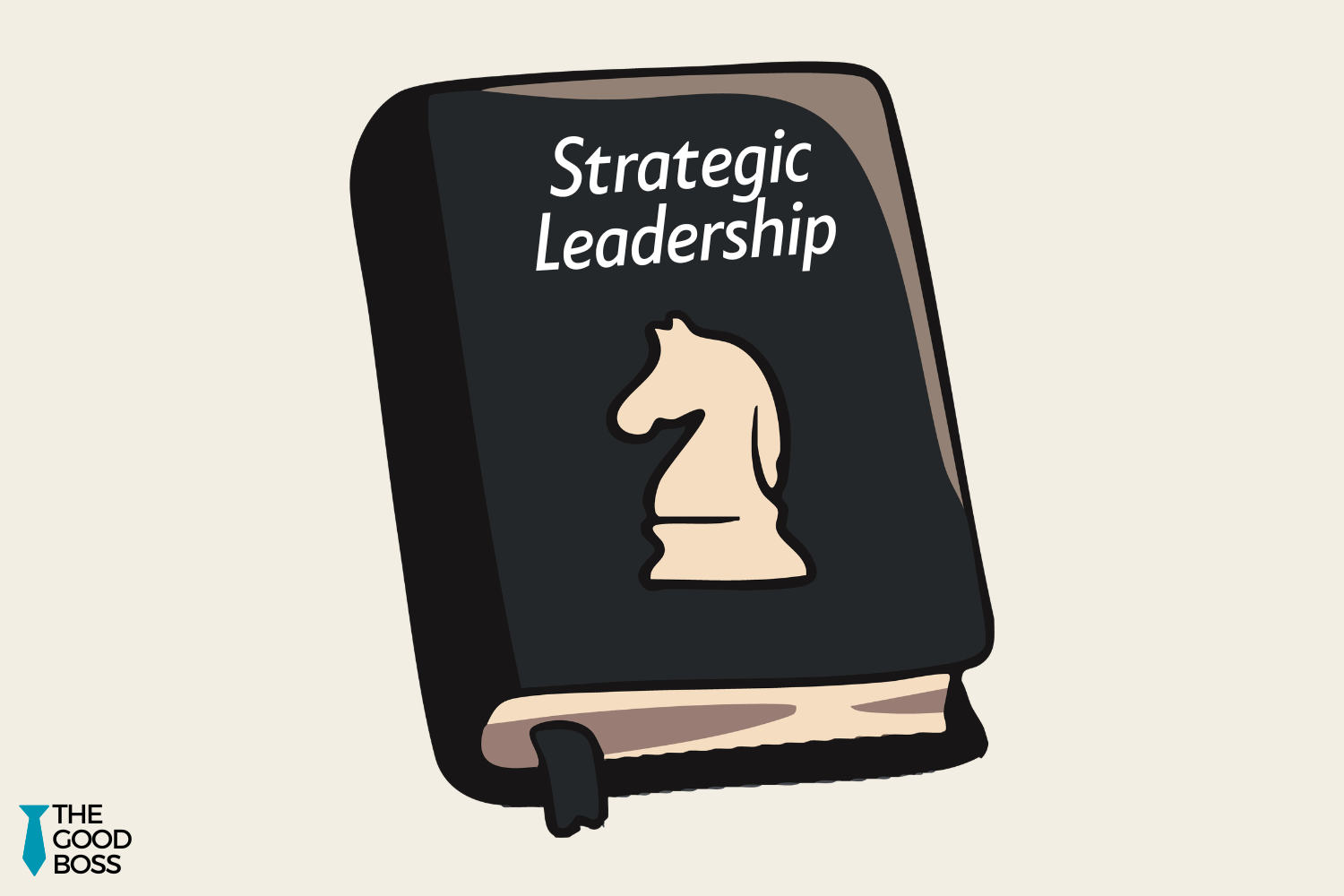
Strategic leadership is a set of skills that let you spot what’s coming before it arrives and guide your team through the mess when it does.
Here are the six skills that I think are critical for any strategic leader, and how you can start building them today.
1. Pattern Recognition
Millie, an engineering manager I coached, once told me that two of her best team members had suddenly started missing deadlines. She noticed that they were also calling in sick more than usual.
Her first instinct was to treat each case separately: a coaching conversation with one, a direct Slack message to the other.
During our conversation, I asked her what she thought the two team members had in common.
As she thought about it, she said that both of them had been buried in the same painful legacy migration for the past six months. And as she said that, she relalized that the missed deadlines or sick days were likely not two isolated issues, but linked o the same underlying problem.
That’s what I call pattern recognition. It’s the skill of noticing that seemingly separate, small events are actually interconnected or interrelated.
For example, a product manager at an established software company sees how youngsters are nowadays hooked to AI tools and ChatGPT (including his own teenage daughter), and uses that as a signal that is worth watching for rather than just noise that he can ignore. After all, these same people will soon become his company’s future customers.
Strategic leaders connect dots early, while everyone else is still looking at each incident individually.
💬 Have you noticed this trait in leaders you’ve worked with? Share it in the comments!
How to develop pattern recognition:
Ask “why” before jumping at a solution. You can use the 5 Whys framework (deep-dive link below) for a structured approach to arriving at the root cause or issue.
Set aside time each month or quarter to look at your team’s or industry’s data, trends, etc. I like to do this every quarter with my leadership team.
The Ladder of Inference is the clearest framework I’ve found for catching yourself jumping from a single observation straight to a conclusion. Deep-dive link below.


2. Systems Analysis
Early on as an engineering manager, I used to think of “my team” as its own little island. We designed and wrote code, we shipped features, and what happened in sales or marketing or finance was someone else’s business.
💬 Have you found yourself in the same situation? :) Let us know in the comments!
Many years later, I realized how narrow I was thinking. My team once worked on a new mobile app feature and published it to the App Store. We were really proud of it because it was really nicely designed and a lot of effort went into it.
But within a few days of the release, we were faced with the brutal truth: our customers didn’t really want this. The analytics told us that very few of our customers ever used that feature. It wasn’t their fault, it was ours: nobody on my team had talked to the people closest to the customer or what they were really looking for.
Systems Analysis is about thinking of your organization as a spider’s web instead of a stack of departments working in silos.
When you pull on one strand in that hypothetical web, you will notice how they’re interconnected. A seemingly innocent engineering capability you build can turn out to be connected to something sitting in a completely different division on the other side of your company.
How to develop systems analysis:
Before you make a decision, take a step back and think of the spider’s web I referred to above. Ask what else it might be touching outside your own team’s boundary.
Conway’s Law captures this really well: the systems you build end up mirroring the way your organization communicates. So, if your teams don’t talk to each other, your products won’t either. (deep-dive link to Conway’s Law below).


3. Mental Agility
Kat, an engineering manager leading an ecommerce portal, once led the launch of a new onboarding flow for their customers. She, along with her team, were confident about the success of this new flow, but when they looked at the analytics from the first few days, they were telling a different story.
As passionate as she was, Kat resisted the temptation to defend her team or to ignore what she was seeing. Instead, she pulled the analytics, lookaed at the drop-off data, and worked with her team to change course ASAP.
That’s mental agility: the ability to take a hit to the plan and adjust it, instead of digging in.
I’ve been leading teams for 20+ years, and I can say this with confidence: Nothing goes exactly as planned… projects fail, customers get angry, your most loyal team members leave… and the market shifts under you without any notice.
The leaders who stay strategic are the ones who treat an unexpected result as new information, not a verdict on their own or their team’s competence.
💬 If you agree with this, give this post a like ❤️ and drop your comment below!
How to develop mental agility:
Use the Premortem framework: imagine the project has already failed, then work backward to find out why. Deep-dive link below, if you want to try it out.
Use the Inversion Principle, another framework I really like because it forces us to think differently about a situation, from a different angle. Deep-dive link below.


4. Structured Problem-Solving
I once observed a director, Matthew, who had acquired a completely new org that came with a “low morale” label attached ot it.
A typical manager could have guessed at a “fix” and perhaps rolled out a pizza party. Matthew didn’t do that. He took some time to get to know the new team, collect feedback, even reviewed attrition data by team, and mapped where the drop in morale actually started.
He soon discovered that the morale issue was tied to one team, under one specific manager. It wasn’t an org-wide issue, and while nobody would say no to free food 😅, a pizza party would have missed the issue completely.
Structured problem-solving means breaking a big, fuzzy problem into small, digestible pieces instead of jumping straight to a solution that “feels right.”
How to develop structured problem-solving:
Use First-principles Thinking, a structured framework to dig deeper and identify the underlying components of a problem (deep-dive link below).
Try the Double-Diamond technique, another powerful framework to identify the exact problem you need to be solving (deep-dive link below).


5. Visioning
Many years ago, there was a major reorg across our company, which involved flattening of the hierarchy across the org.
I remember seeing two different managers handle the same reorg in very different ways:
One manager was transactional, and explained it to his team as a “cost-cutting exercise.”
The other manager explained the reorg as the first step toward a team that could finally ship without three layers of approval.
As you can imagine, they got completely different levels of energy from the respective team.
Visioning is about painting a clear, specific picture of the direction you’re taking your organization, and the ability to make them see it too.
How to develop visioning:
Use the Golden Circle, an excellent frameworked first coined by Simon Sinek, and focus on defining the Why before you get to the What and the How. Deep-dive link below.
Set BHAGs, another powerful way to set bold, ambitious gols for your team that inspire and motivate them. Deep-dive link below.


6. Political Savvy
For most of my career, I used to hate politics. I thought good work should speak for itself and anyone who was trying to build relationships instead of output was just wasting his or her time.
💬 What’s your take on corporate politics? I would love to know - drop it in the comments below!
Then, soon enough, I saw seemingly less capable people get promoted right in front of my eyes, and strong proposals get rejected by executives without any obvious reasoning. That’s when I realized the importance of relationships in building influence in the workplace.
I don’t want to deny that there is indeed a “dark side” to politics, but I’m not talking about that here. I’m talking about the side of politics that is a necessary skill for any strategic leader.
Political savvy isn’t about manipulation. It’s about understanding that your organization runs on people, and people have histories, incentives, and unwritten rules, whether you choose to learn them or not.
How to develop political savvy:
Build relationships before you need them, not in the moment. If you want the full map of how office politics actually works, I wrote a detailed post on that in The Hidden Rulebook of Corporate Politics (link below).
Recognize the realities of being a middle manager, including the secrets, regrets and guilty pleasures that come with it (deep-dive link below).


My Take
You’ve probably noticed this by now: none of the six skills I talked about in this post show up on your resume, or your LinkedIn profile.
You don’t put “pattern recognition” or “political savvy” on a job posting for a manager.
Yet, I would argue that these skills are more important than any technical or soft skill you may have been trained on.
If you agree with that, do give this post a like and subscribe to The Good Boss for more such content.
💬 I would love to know your take: Which of the 6 skills do you think is most valuable? Let me know in the comments.
💬 Join the conversations
Join The Good Boss community if you’re tired of leadership content that sounds good but doesn’t work when you’re actually in the room.
No performative LinkedIn BS. Just real stuff.

Yes , most of the time