

A leader is like a handyman.
Every day, you face a wide range of challenges: strategic planning, decision-making, prioritization, giving feedback, communicating clearly, setting goals, and much more.
Like a skilled handyman, your job is to choose the right approach for each situation.
You need the right tool for the job.
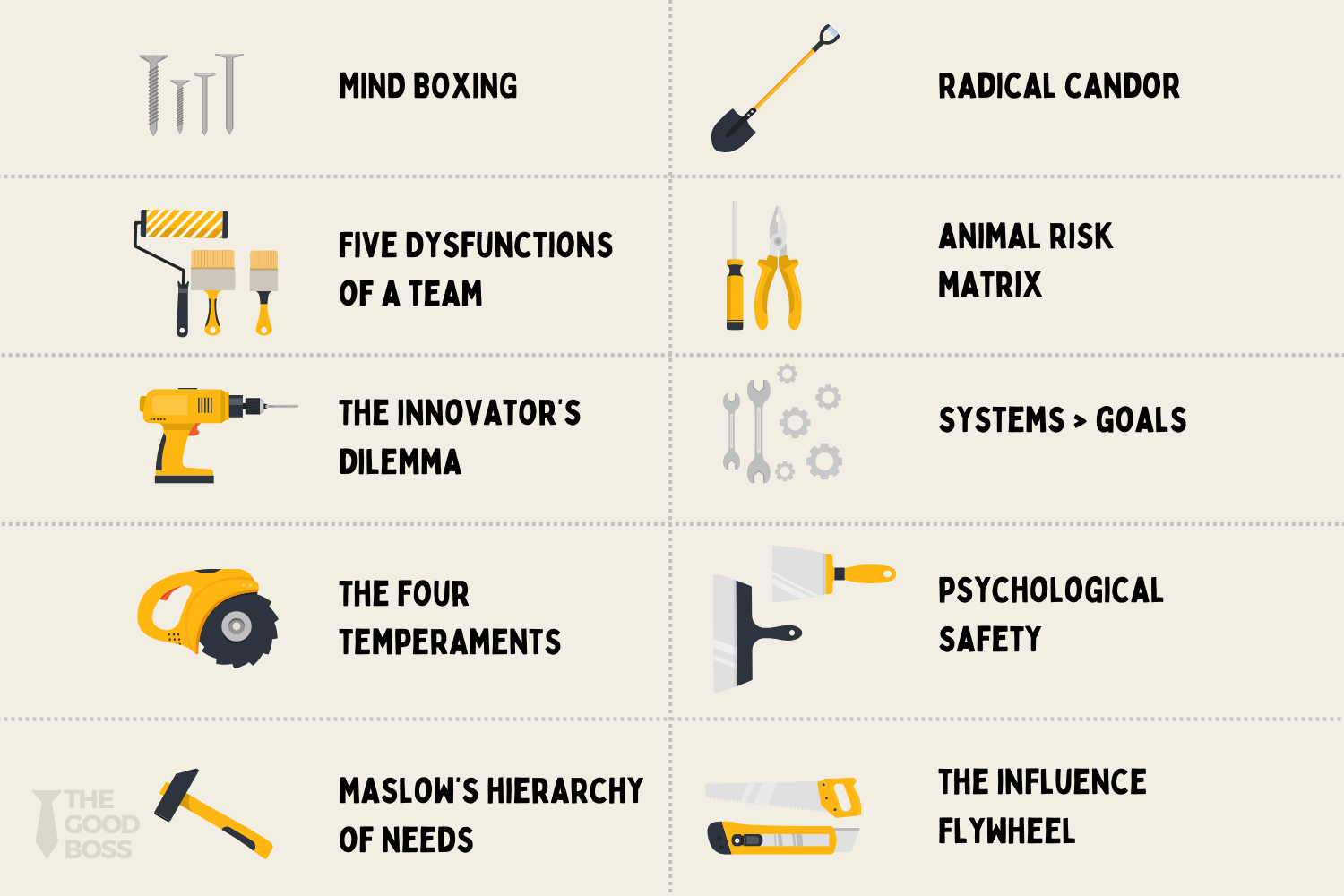
In this post, I’ll walk you through the 10 must-have leadership tools that belong in every leader’s toolbox.
Whether you’re an entrepreneur, a frontline manager, or a seasoned executive, these tools will help you multiply your effectiveness and amplify your impact.
Ready to open the toolbox? Let’s begin.
Tool #1 - Mind Boxing (Scheduling)
“The key is not to prioritize what’s on your schedule, but to schedule your priorities.” — Stephen Covey
Time is the scarcest resource, and mind-boxing is a simple framework that leaders — regardless of level or role — can use to be more intentional about how they spend their time.
The idea is to maximize the impact by scheduling your priorities.
How Mind-Boxing Works
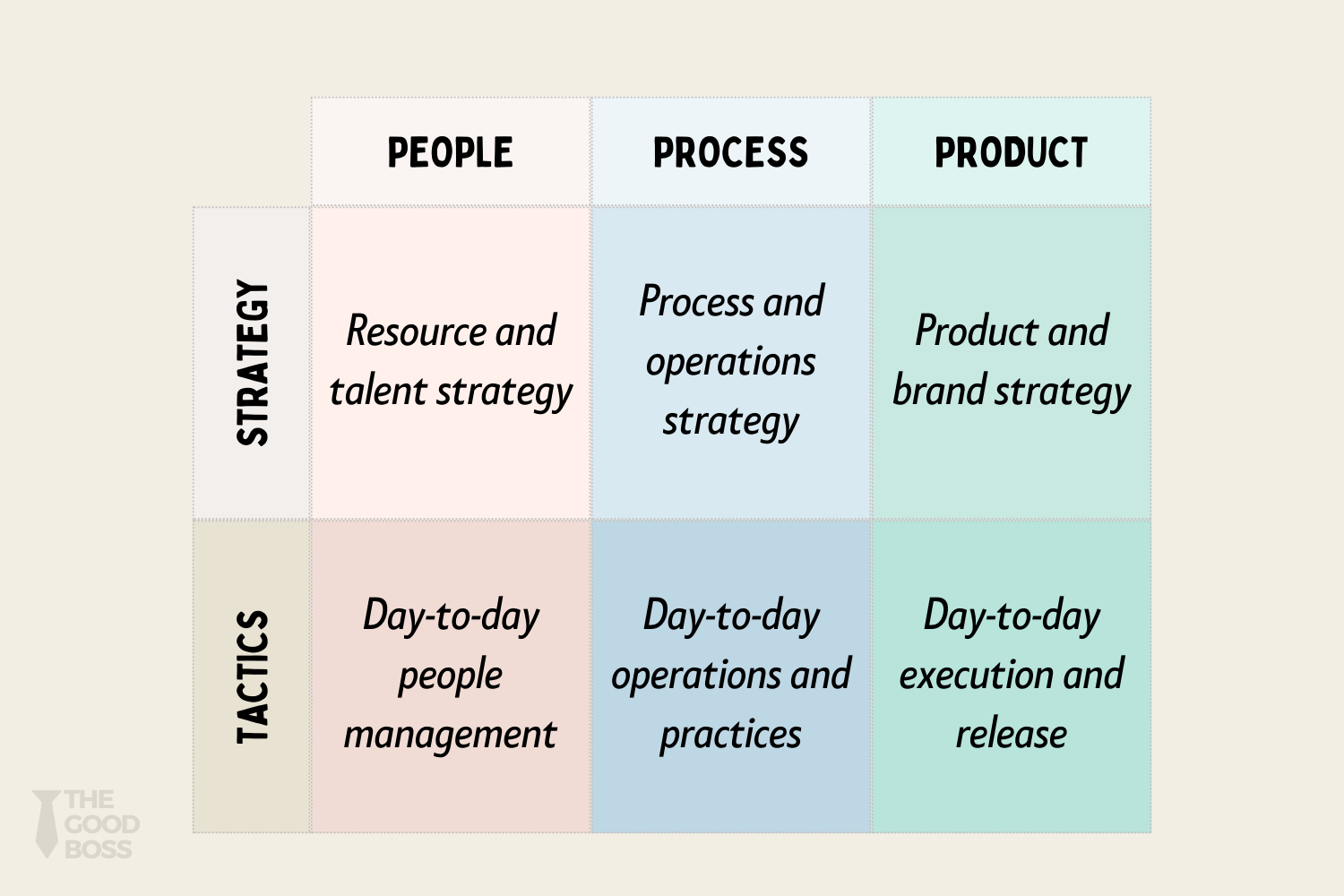
A mind-box is the intersection of 3 verticals (columns) and 2 layers (rows).
The three verticals (aka 3Ps) of leadership are:
People: ensuring the well-being of the people you lead, the stakeholders you manage
Process: ensuring your organization is both efficient and effective in “how” they get work done
Product: ensuring you are building the best product/platform or service that will delight your customers
The two layers of leadership are:
Tactics: ensuring that you are delivering results, and getting the job done.
Strategy: ensuring that you are thinking long-term, and are intentional in how you steer your organization forward
Applying Mind-boxing
There are three simple steps to applying the framework:
First, decide how you want to allocate your time between the six boxes. The allocation should be driven by your goals and priorities.
Second, review your calendar, your TODO lists, and any other planning tool you use, and align those with your 6-box time allocation.
Finally, on a regular basis, review your time allocation and adjust it based on changing priorities, roles or business needs.
References
Tool #2 - The Five Dysfunctions of a Team (Team Health)
“Not finance. Not strategy. Not technology. It is teamwork that remains the ultimate competitive advantage.” — Patrick Lencioni
Some teams look healthy on the surface.
Everyone agrees and nods in meetings, and there’s no visible friction.
And yet, decisions don’t move as fast as you would expect, and the team is slow in delivering results.
Patrick Lencioni’s The Five Dysfunctions of a Team explains why. It uncovers the hidden behavioral breakdowns that quietly derail even the smartest teams.
How The Five Dysfunctions Work
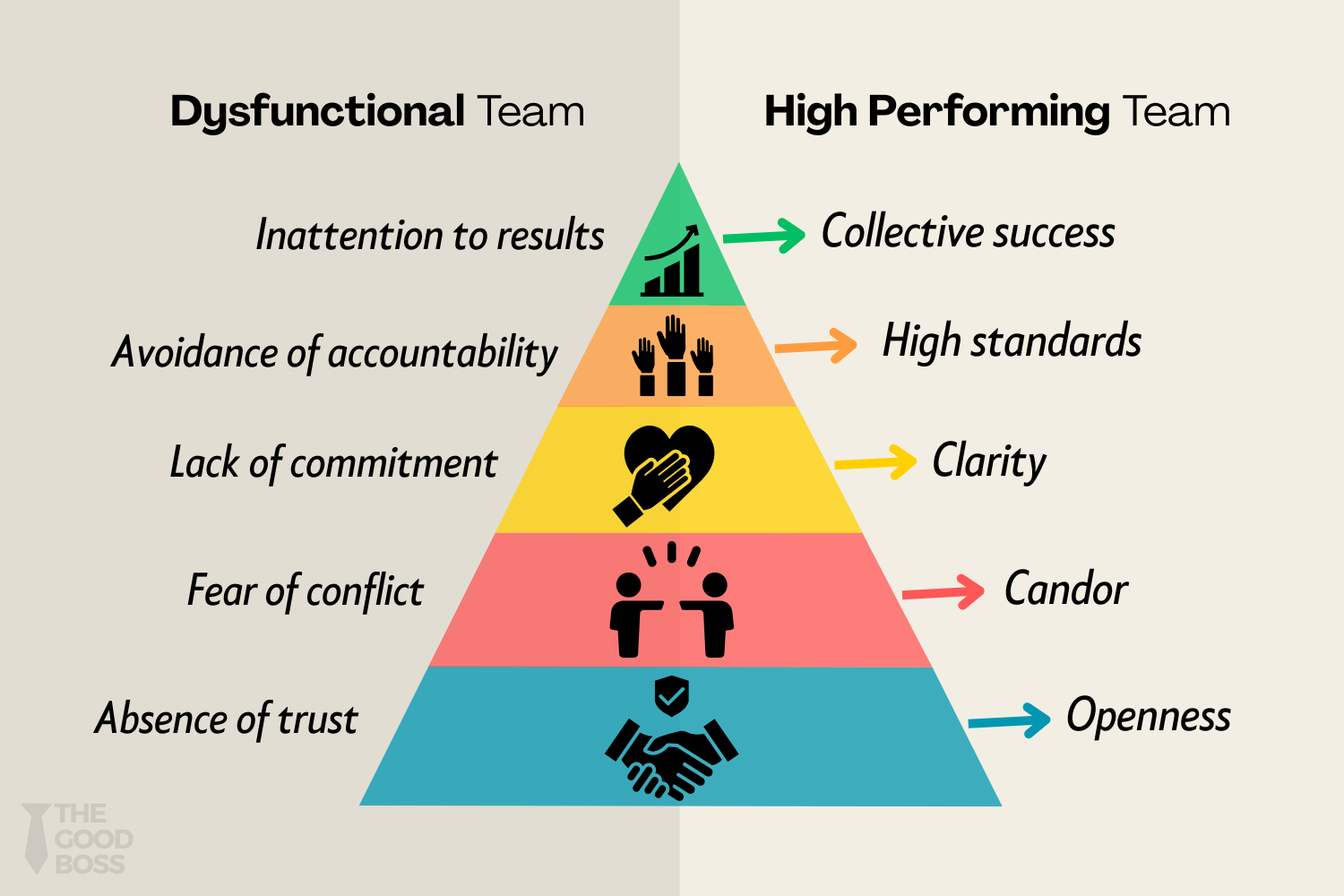
Lencioni presents the dysfunctions as a pyramid. Each layer builds on the one below it.
Trust — absence of vulnerability-based trust
Conflict — fear of healthy debate
Commitment — lack of clarity and buy-in
Accountability — avoidance of peer standards
Results — inattention to collective outcomes
The key takeaway is this: you can’t fix the top of the pyramid without strengthening the base.
Applying The Five Dysfunctions Framework
There are three simple steps to applying this model:
First, diagnose where your team is stuck. Look for the signals - the artificial harmony, fuzzy decisions, missed standards, or siloed behavior.
Second, climb the pyramid from the bottom up. Start with building vulnerability-based trust. Then normalize healthy conflict. Only then push for commitment and accountability.
Finally, make collective results visible. Shift attention from individual wins to shared outcomes.
If you try to force accountability or results without fixing trust, you’ll only create pressure, not performance.
References
Tool #3 — The Innovator’s Dilemma (Disruption)
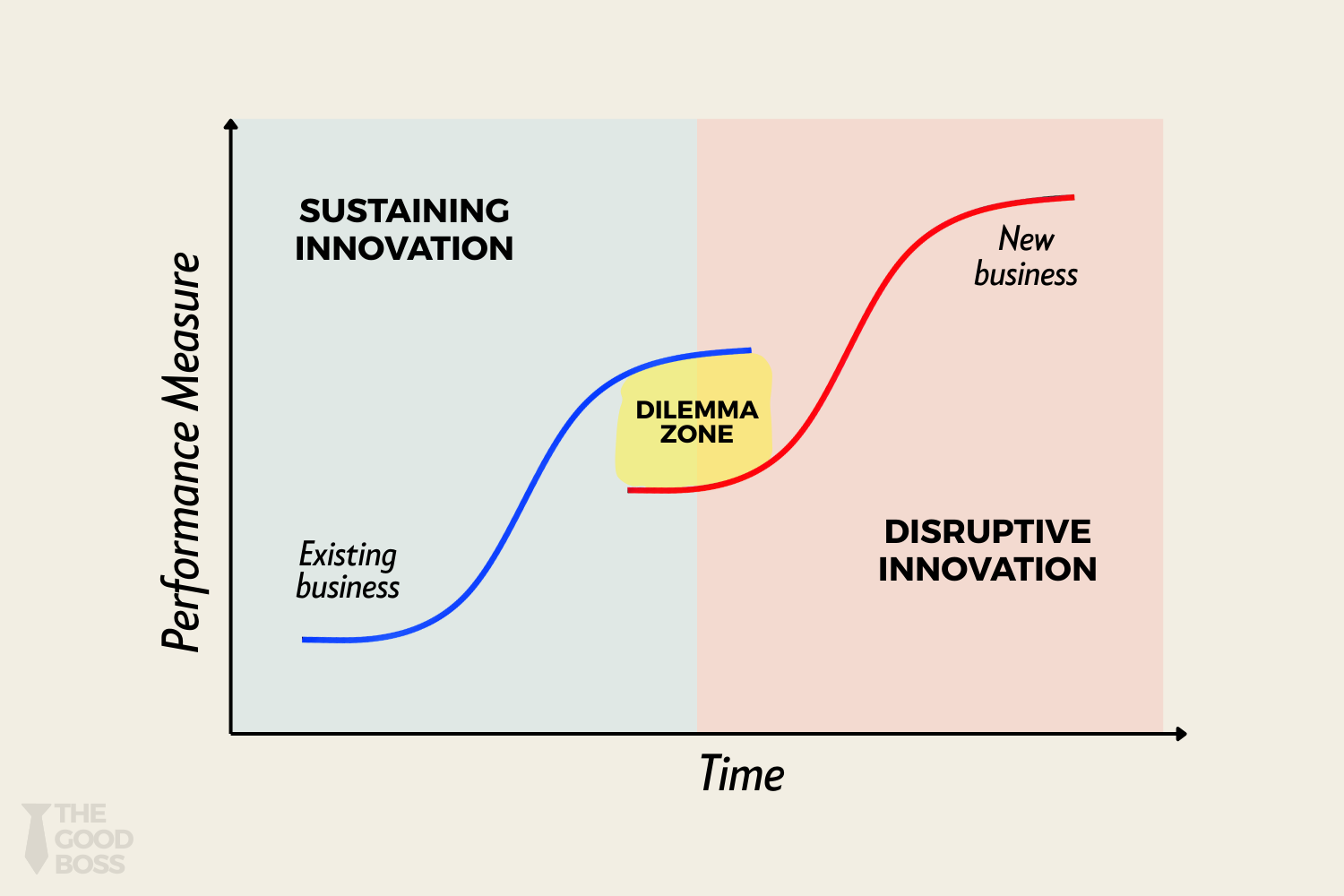
“Great companies can fail precisely because they do everything right.” — Clayton Christensen
A few years ago, my team was delivering consistently. Revenue was growing, our customers were renewing their subscriptions, and everything looked “healthy.”
Then a small startup entered our space with a product that looked… bad. I remember making fun of it. They had fewer features and a clunky interface.
But six months later, our customers started leaving for that company. That’s The Innovator’s Dilemma.
Clayton Christensen’s model explains why strong companies lose to weaker competitors, not because they’re incompetent, but because they focus too much on serving their current customers and protecting current revenue.
How The Innovator’s Dilemma Works
Christensen identified two types of innovation:
Sustaining Innovation: Improves existing products for your best customers.
This offers higher performance, higher margins, and a predictable ROI.Disruptive Innovation: This one usually starts worse - with lower quality, a smaller market, and lower margins. But it solves a problem differently, often for customers you’re ignoring.
Over time, disruptive innovation improves steadily, and by the time the incumbents react, it’s often too late.
The trap is what I call the “Dilemma Zone”:
Not good enough for your core customers
Too small to matter financially
Too risky to approve internally
So leaders typically double down on what’s working, and miss what’s coming.
Applying The Innovator’s Dilemma
There are three simple steps to applying this framework:
First, zoom out from your current customers. Ask: What problem are we really solving? And is there a radically different way to solve it?
Second, carve out space for small bets. Disruptive ideas rarely look attractive on a spreadsheet. I’ve found the best way to move forward is to carve out a small team and let them experiment (while protecting them from the existing release pressures).
Finally, examine your systems. Are your metrics, approval processes, and resource allocation models unintentionally killing new ideas before they mature?
Disruption rarely looks impressive at the start. It looks like a “toy”, until it doesn’t.
References
Tool #4 — The Four Temperaments (People Awareness)
“Knowing yourself is the beginning of all wisdom.” — Aristotle
Every team has a variety of personalities:
One person wants fast decisions.
Another wants detailed analysis.
One thrives in open debate.
Another shuts down in conflict.
As leaders, we often mistake these differences for “performance issues”. But more often than not, they are temperament differences.
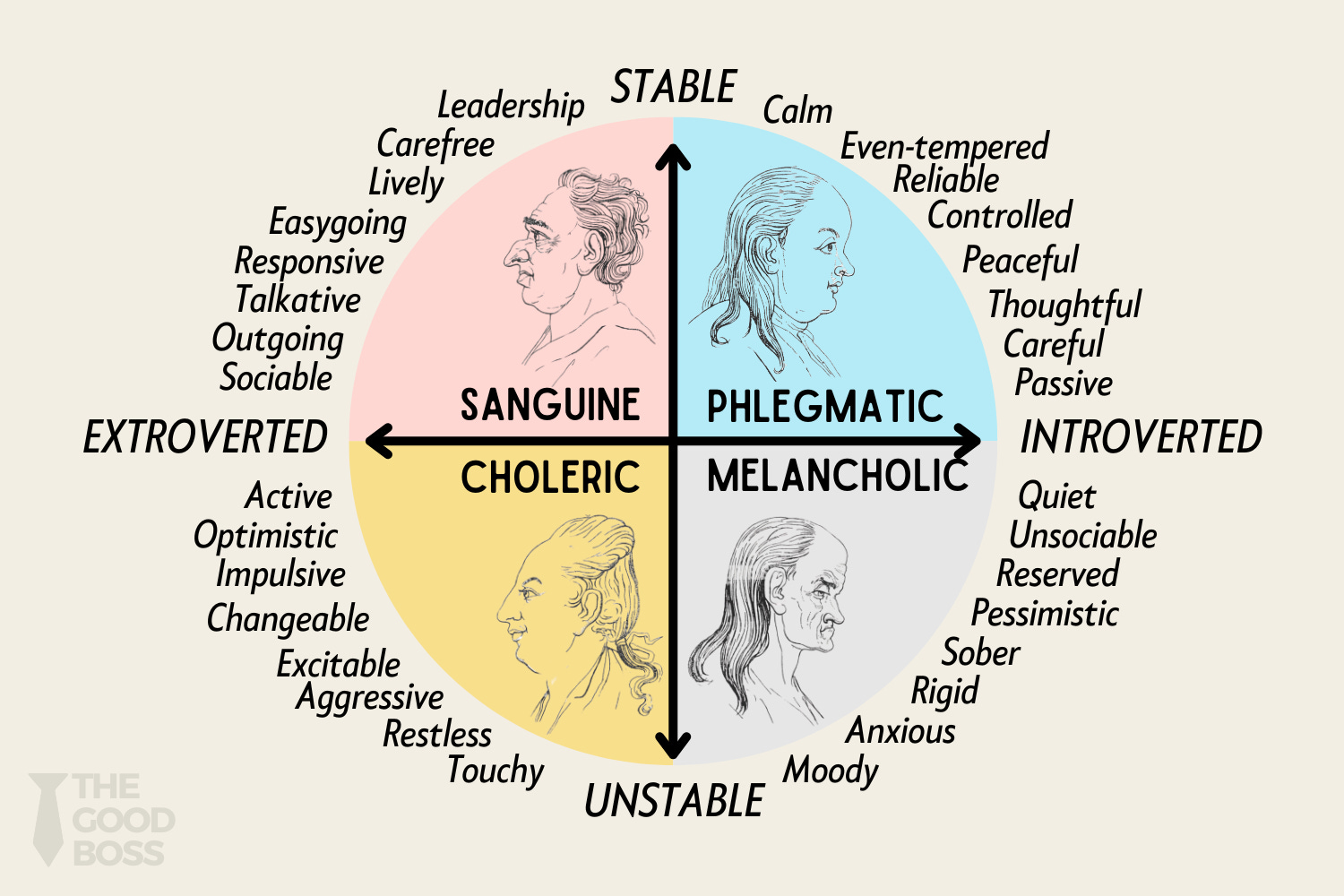
The Four Temperaments is a classic framework that helps leaders understand themselves and the people around them, so they can lead with greater awareness - both of themselves, and their teams.
How The Four Temperaments Work
Dating back to ancient Greece, this framework categorizes personalities into four types:
Sanguine: The Social Butterfly. Energetic, expressive, optimistic. Inspires people easily, but may lack focus or follow-through.
Choleric: The Determined Achiever. Results-driven, decisive, competitive. Moves fast, but can appear blunt or impatient.
Melancholic: The Thoughtful Strategist. Analytical, detail-oriented, quality-focused. High standards, but may overthink or delay decisions.
Phlegmatic: The Steady Diplomat. Calm, supportive, harmony-seeking. Stabilizes teams, but may avoid difficult conversations.
Most people are a “blend”, but usually lean toward one dominant style.
Applying The Four Temperaments
There are three simple ways to apply this framework:
First, understand yourself. Identify your dominant temperament and recognize your blind spots. In my experience, every strength has a “shadow.”
Second, tailor how you lead your team. Different temperaments respond to different communication styles, motivation triggers, and feedback approaches.
Finally, manage up and across. Understanding your boss’s or stakeholders’ temperament allows you to adjust your messaging, whether that means being more data-driven, more direct, more energetic, or more patient.
When you see “personality friction” show up in your team, it’s often not about competence, but usually about temperament.
References
Tool #5 — Maslow’s Hierarchy of Needs in Leadership (Motivation)
“People don’t care how much you know until they know how much you care.” — Theodore Roosevelt
Why do some teams simply execute… while others are energized, engaged, and inspired?
The difference often lies in unmet needs.
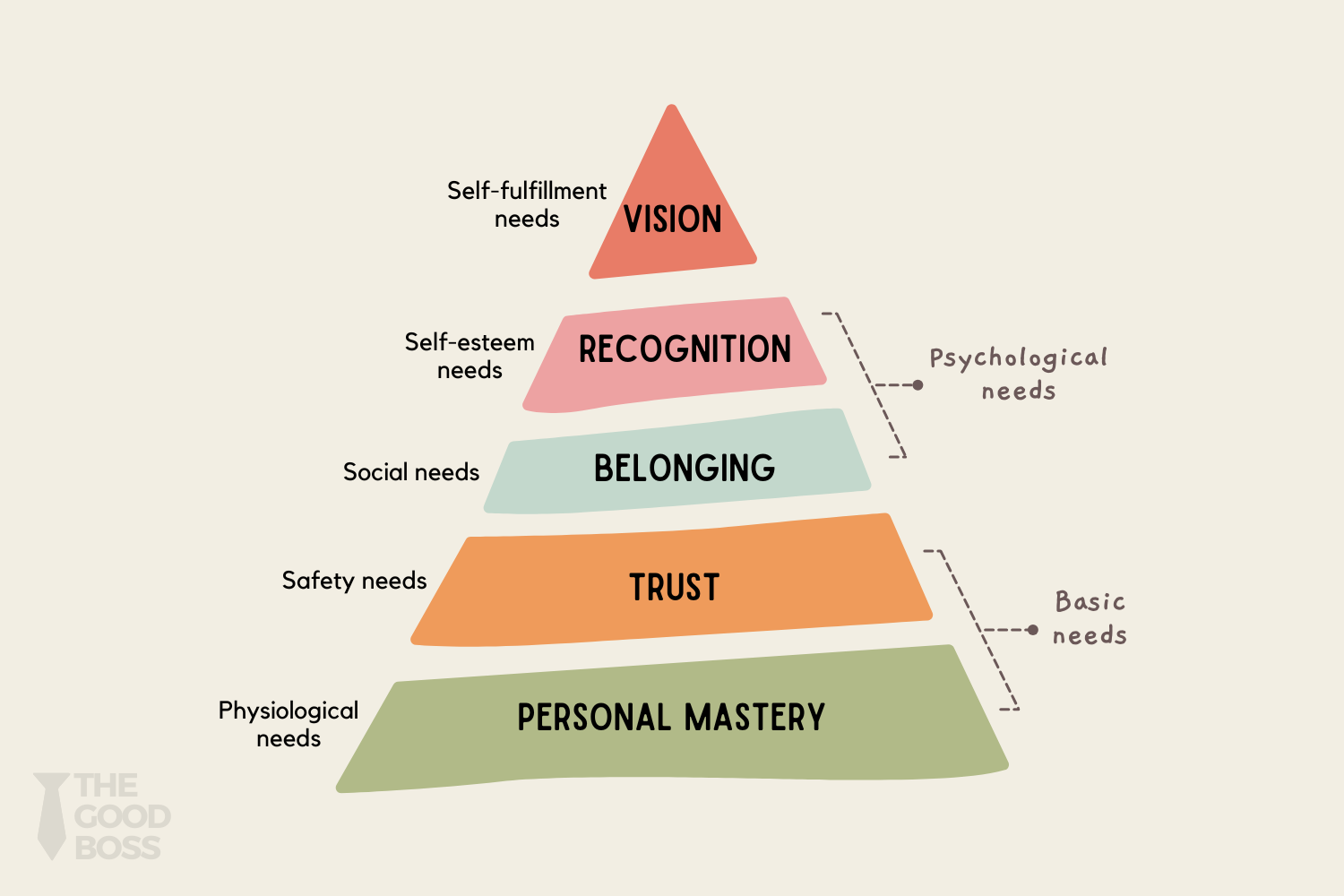
In 1943, Abraham Maslow introduced the Hierarchy of Human Needs, a model explaining how human motivation progresses from basic survival to self-actualization.
Leadership follows a similar ladder. If you skip the lower levels and jump straight to vision and inspiration, you build your team and culture on weak foundations.
How Maslow’s Hierarchy Works in Leadership
Maslow’s model progresses upward through five levels. In leadership, they translate as:
Personal Mastery (Physiological Needs): Leaders must first build competence: skills, expertise, and self-awareness. Without mastery, you can’t build lasting credibility.
Trust (Safety Needs): Teams need psychological safety. Without trust, people protect themselves instead of contributing fully to the needs of the team.
Belonging (Social Needs): Humans crave connection. Strong leaders cultivate collaboration, inclusivity, and a “one-team” mindset.
Recognition (Esteem Needs): People go the extra mile when their efforts are valued. Recognition fuels motivation and confidence.
Vision (Self-Actualization Needs): At the highest level, leaders inspire purpose. They connect daily work to a larger mission. This unlocks their team’s potential.
At the core of it: you cannot motivate your team from the top without understanding their core needs first.
Applying Maslow’s Hierarchy in Leadership
There are three simple steps to applying this model:
First, diagnose the level your team is currently operating at. Are they struggling with clarity and skills? Or with trust? Or are they ready for a bigger purpose?
Second, strengthen the foundation before elevating expectations. This might bean bulding the skills and competence, or fostering a sense of belonging.
Finally, elevate toward purpose. Once the lower needs are met, align the team around a compelling vision that stretches their potential.
True motivation can only be achieved when you meet the basic needs of your team first.
References
Enjoying the read? Hit the ❤️ button and share/restack 🔁 it with others who might find it helpful. You can also subscribe to The Good Boss for more posts like this every week. Thank you! 🙏
Tool #6 — Radical Candor (Feedback)
“Clear is kind. Unclear is unkind.” — Brené Brown
Most managers struggle with feedback.
Some are too blunt and break trust, while others are too nice and avoid hard conversations.
Both approaches hurt performance.
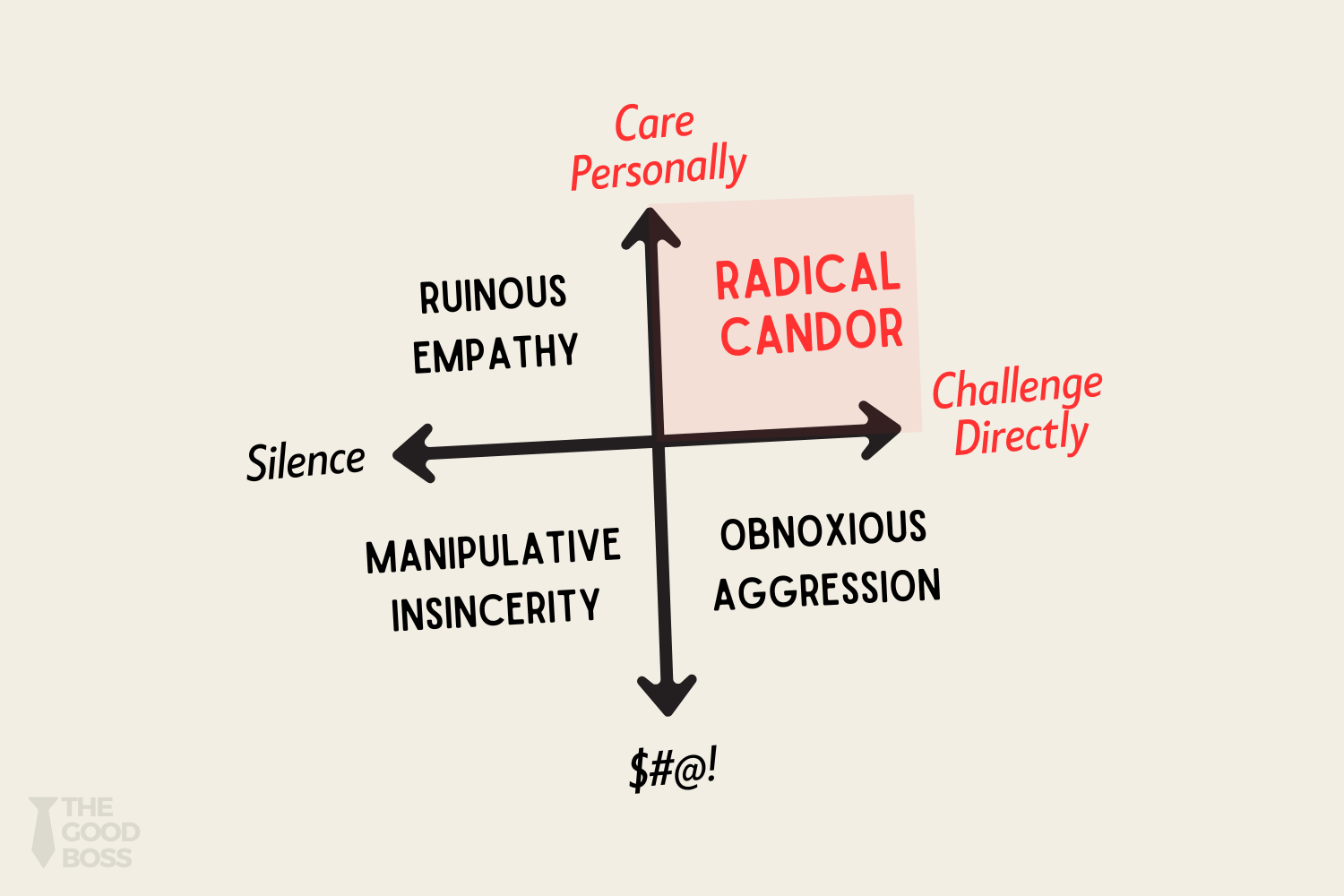
Radical Candor, developed by Kim Scott, offers a simple but powerful alternative: care personally while challenging directly.
At its core, Radical Candor is about being honest, while being human.
How Radical Candor Works
The framework is built on a simple 2×2 grid:
Care Personally (vertical axis)
Challenge Directly (horizontal axis)
This creates four quadrants:
Obnoxious Aggression: Challenge without care.
Ruinous Empathy: Care without challenge.
Manipulative Insincerity: No care, no challenge.
Radical Candor: High care + high challenge.
Most managers fall into Ruinous Empathy. They want to protect feelings, so they dilute feedback, and the performance suffers.
Radical Candor sits in the sweet spot: direct, clear, and rooted in genuine care.
Applying Radical Candor
There are three simple steps to applying this framework:
First, build trust through genuine care. Understand what matters to your team members. See them as people, not just performers.
Second, challenge directly. Be clear, specific, and timely. Say what needs to be said, without attacking the person.
Finally, invite dialogue. Feedback should be a conversation, not a monologue. Create space for response and reflection.
When you deliver the hard truth with care, you accelerate growth for the individual. This is the greatest gift you can give to anyone.
References
Tool #7 — The Animal Risk Matrix (Risk Management)
“Risk comes from not knowing what you’re doing.” — Warren Buffett
Every leader manages risk, whether they realize it or not.
Launching a product.
Hiring a senior leader.
Entering a new market.
Ignoring cultural issues.
Some risks are obvious, while others are rare. Some are predictable, while others are not.
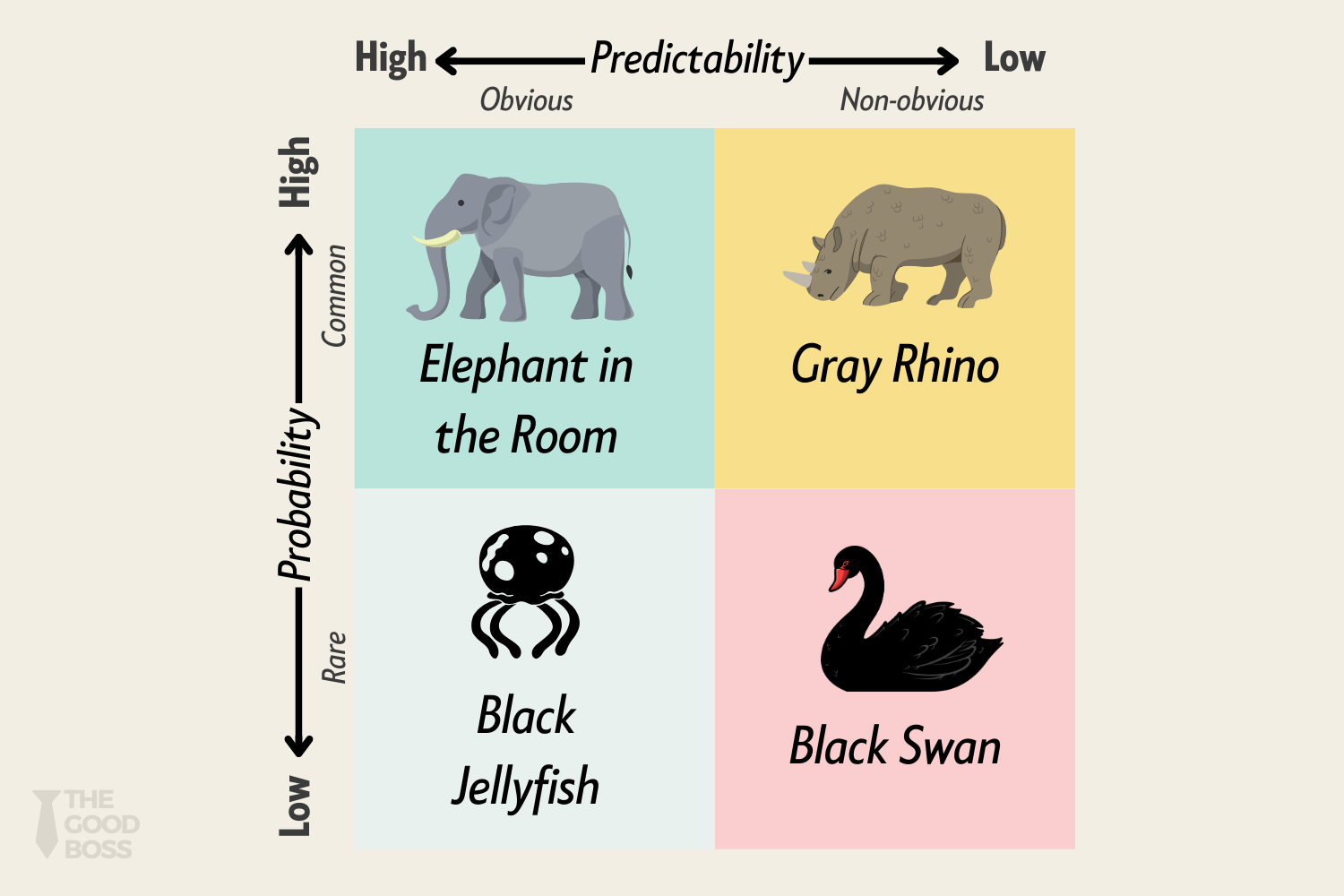
The Animal Risk Matrix is a simple framework that helps leaders categorize risks based on predictability and probability, so they know what to act on first.
How The Animal Risk Matrix Works
The framework plots risks on two dimensions:
Predictability: Can you see it coming?
Probability: How likely is it to happen?
This creates four types of risks:
Elephant in the Room: Obvious and visible, but ignored. Cultural issues, morale problems, misaligned strategy.
Gray Rhino: Highly probable and high impact, yet leaders delay action. Burnout, tech debt, declining engagement.
Black Swan: Rare, unpredictable, high-impact events. Market crashes, pandemics, sudden disruption.
Black Jellyfish: Rare but predictable risks. Regulatory shifts, vendor failures, leadership exits.
Each type requires a different response.
Applying The Animal Risk Matrix
There are three simple steps to applying this framework:
First, identify and list your key risks across culture, strategy, technology, and external forces.
Second, categorize each risk into one of the four animal types. This clarifies urgency and response.
Finally, act accordingly: Address Elephants openly, mitigate Gray Rhinos early, build resilience for Black Swans, and prepare contingency plans for Black Jellyfish.
Risks are always there, and the question is whether you are naming it, and then acting on it.
References
Tool #8 — Systems > Goals (Execution)
“You do not rise to the level of your goals. You fall to the level of your systems.” — James Clear
Leaders love goals.
Revenue targets.
Product launches.
Engagement scores.
OKRs.
But setting a goal by itself rarely changes behavior.
There is high energy at the kickoff meeting, but after a few weeks, the energy and enthusiasm wane. Priorities shift, and your team finds itself buried, barely scrambling to make progress.
How Systems > Goals Works
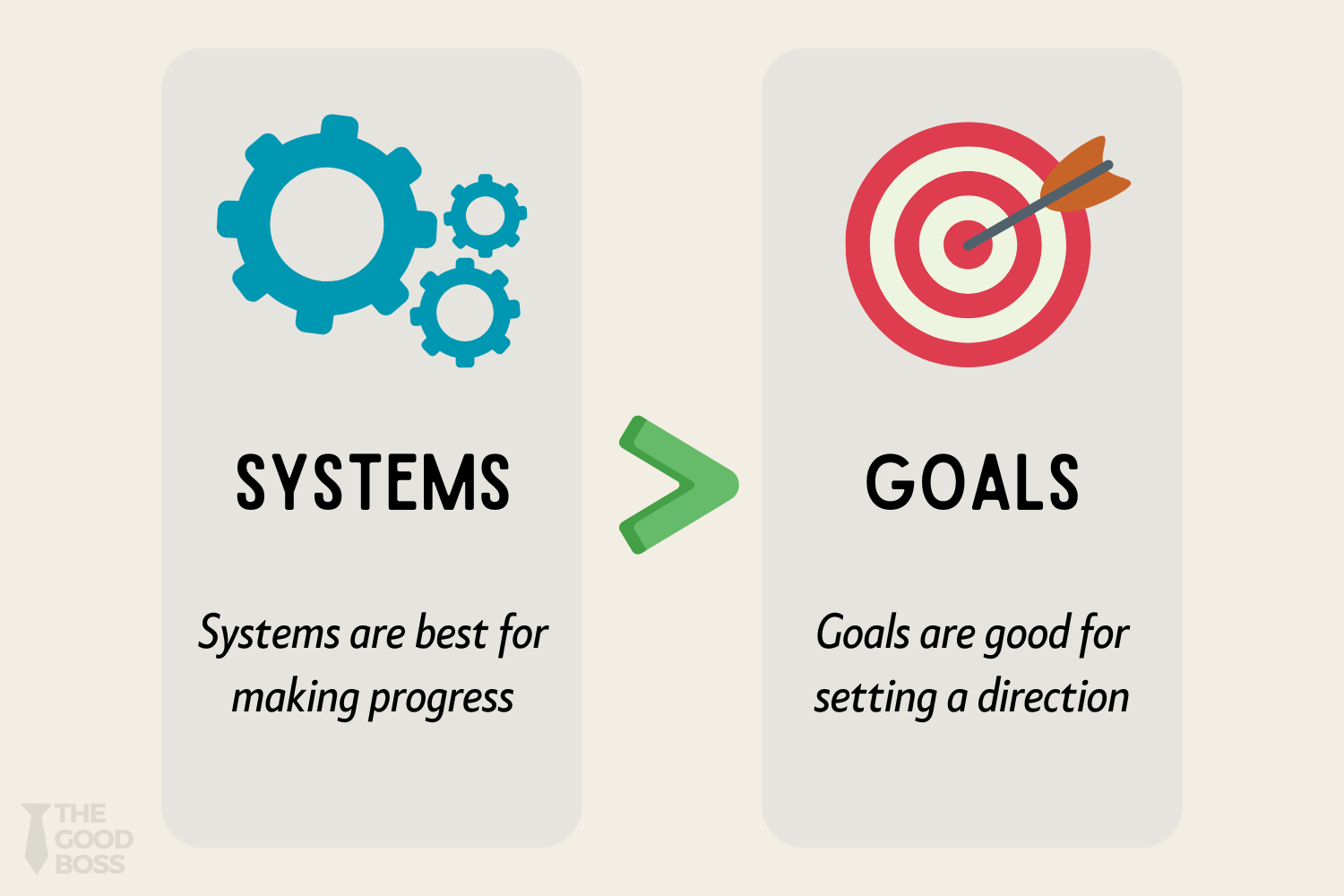
Goals are important, but they typically remain on a slide deck; however, progress needs to happen on the ground.
A goal is the result you want, and defines the outcomes
A system is the repeatable process that gets you there - the behavior.
And ultimately, it is the day-to-day behavior that delivers results.
For example:
Goal: Improve customer satisfaction. System: Close every support ticket within 48 hours and review feedback weekly.
Goal: Increase team performance. System: Run structured retrospectives after every sprint.
Systems create a consistent rhythm, a habit, and they reduce reliance on willpower. They make progress automatic.
Applying Systems > Goals
There are three simple steps to applying this framework:
First, clarify the outcome. Define what success looks like in clear, measurable terms.
Second, identify the leading behaviors. Ask: What repeatable actions would make this outcome almost inevitable?
Finally, design and track the system. Build those behaviors into calendars, meetings, workflows, and dashboards, and monitor the habits, not just the results.
Results are lagging indicators, while systems are leading indicators.
References
Tool #9 — Psychological Safety (Culture)
“Psychological safety is not about being nice. It’s about giving candid feedback and openly admitting mistakes.” — Amy Edmondson
You can have a team full of smart, experienced people.
Clear strategy.
Strong goals.
Tight processes.
But if people are afraid to speak up, to admit mistakes, or to challenge ideas, their output is bound to drop.
Psychological safety, a concept popularized by Harvard professor Amy Edmondson, is the shared belief that the team is safe for interpersonal risk-taking.
It’s the foundation of high-performing teams.
How Psychological Safety Works
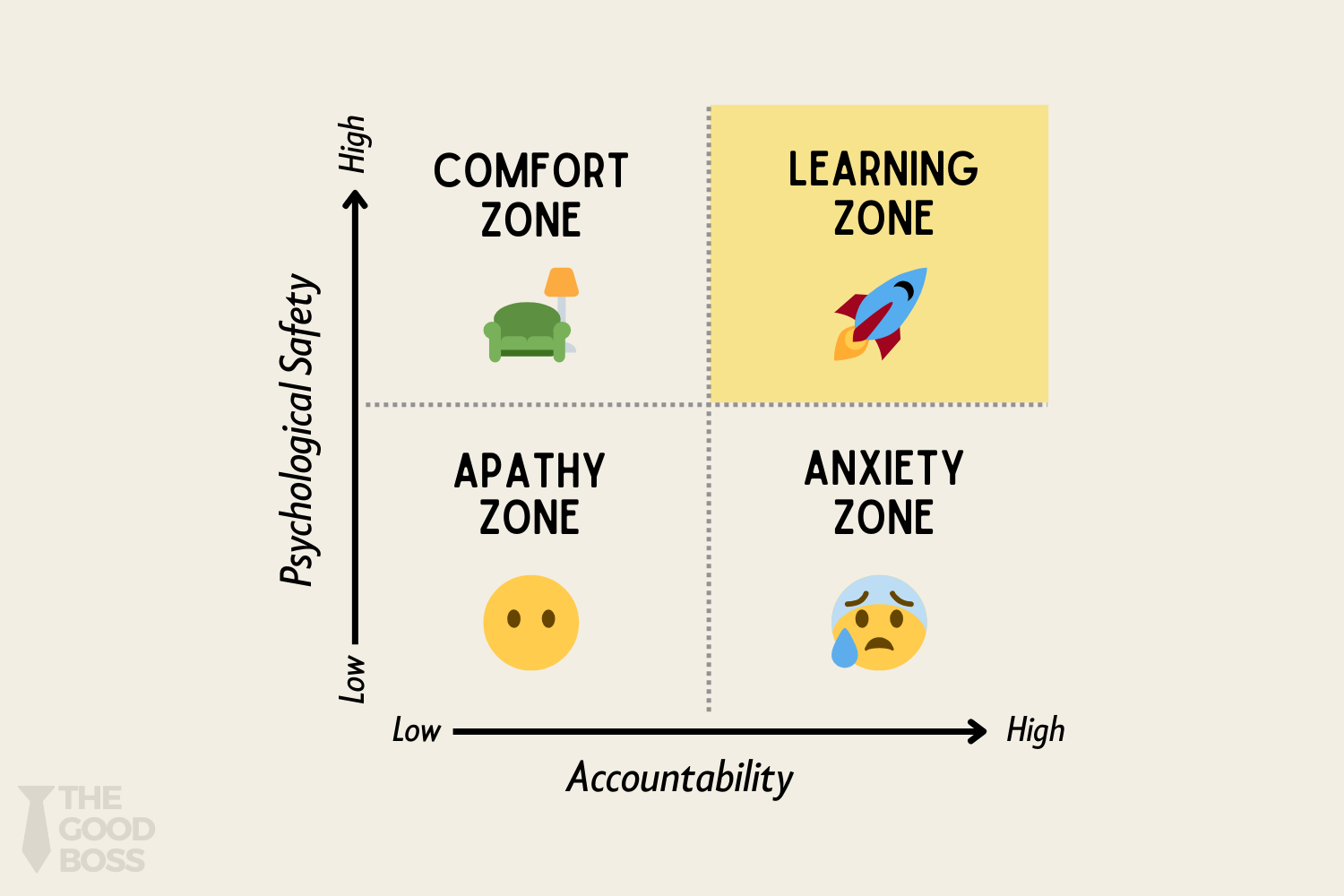
The framework rests on two dimensions:
Psychological Safety: Can people speak up without fear?
Accountability: Are people held to high standards?
When you map these on a 2×2 grid, you get four zones:
Comfort Zone: High safety, low accountability. Nice, but complacent.
Anxiety Zone: Low safety, high accountability. Fear-driven performance.
Apathy Zone: Low safety, low accountability. Disengagement.
Learning Zone: High safety, high accountability. Trust + high standards.
Only the Learning Zone drives sustained performance.
Applying Psychological Safety
There are three simple steps to applying this framework:
First, model vulnerability. Admit mistakes, ask open-ended questions, show that it’s safe not to have all the answers.
Second, invite participation. Invite those who are quieter to share their thoughts, and normalize respectful disagreement.
Finally, raise the bar. Make expectations clear and hold people accountable, while supporting them in meeting those standards.
When people feel safe and challenged, they are at their best in performance.
References
Tool #10 — The Influence Flywheel (Influence Without Authority)
“Power isn’t control at all — power is strength, and giving that strength to others.” — Beth Revis
Have you ever left a meeting thinking you made a strong case… only to watch nothing change?
You had the logic.
You had the data.
You even had the title.
But you didn’t have traction, because real leadership power doesn’t come from authority. It comes from influence.
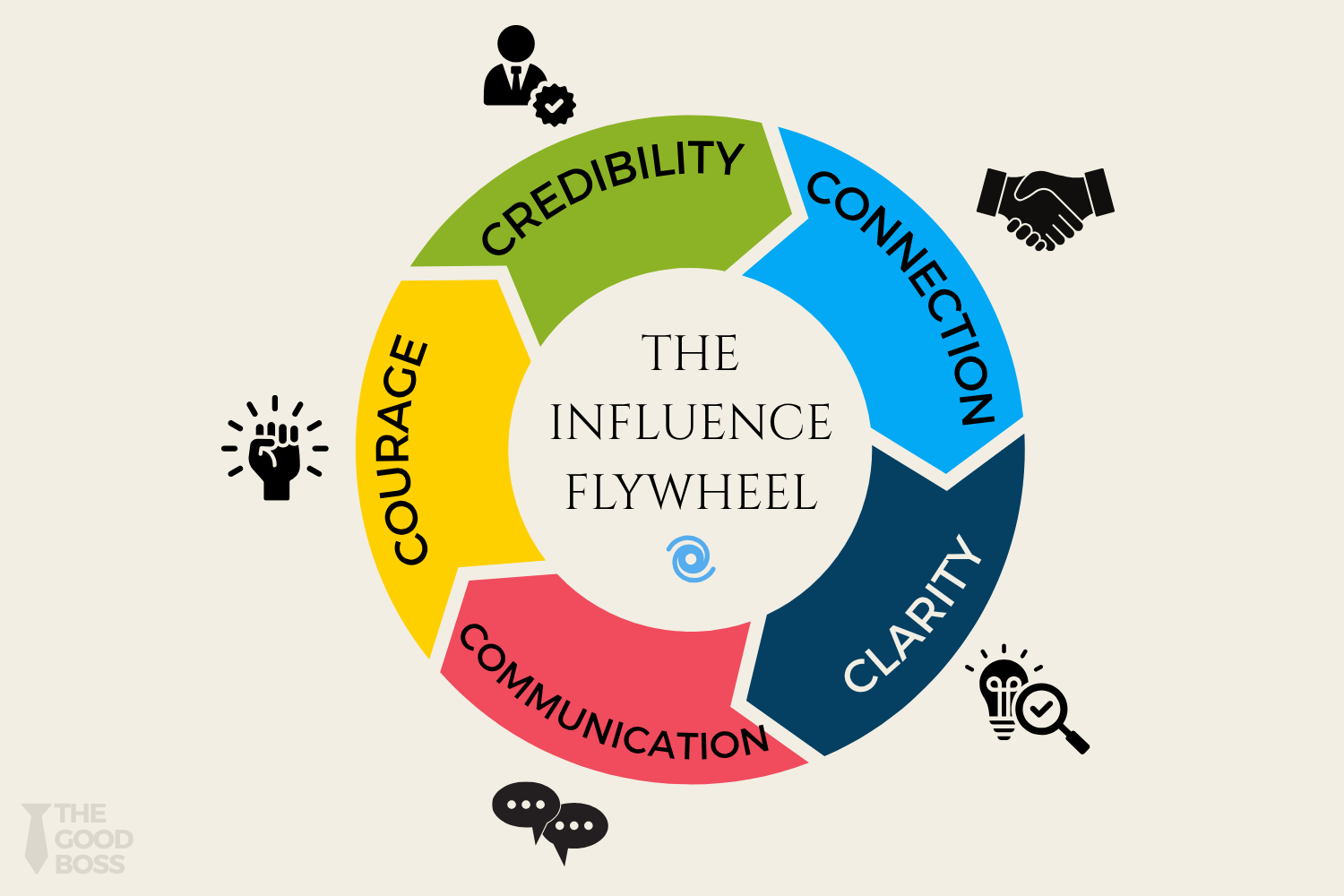
The Influence Flywheel is a practical framework for building influence, especially when you don’t control the org chart.
How The Influence Flywheel Works
Influence is not a personality trait. It’s built through five reinforcing elements (or spokes):
Credibility: Do people trust you?
Connection: Do they feel understood and valued?
Clarity: Is your message sharp and purposeful?
Communication: Does it resonate and stick?
Courage: Are you willing to say what others avoid?
Each spoke strengthens the others.
Credibility builds trust.
Connection builds openness.
Clarity reduces confusion.
Communication builds momentum.
Courage builds respect.
Over time, these elements compound like a flywheel, gaining speed.
Applying The Influence Flywheel
There are three simple steps to applying this framework:
First, pick one stakeholder or situation where influence matters.
Second, assess which spoke is weak. Is it trust? Clarity? Courage?
Finally, make one deliberate move to strengthen that spoke. Maybe you need to deliver on a promise, sharpen your message, or have the hard conversation,
Influence doesn’t come from pushing harder. It comes from leveraging the spokes that build on each other, even when you don’t have authority.
References
In Summary: The Leadership Toolbox
Just like a handyman, a leader needs to determine the right tool for the job at hand.
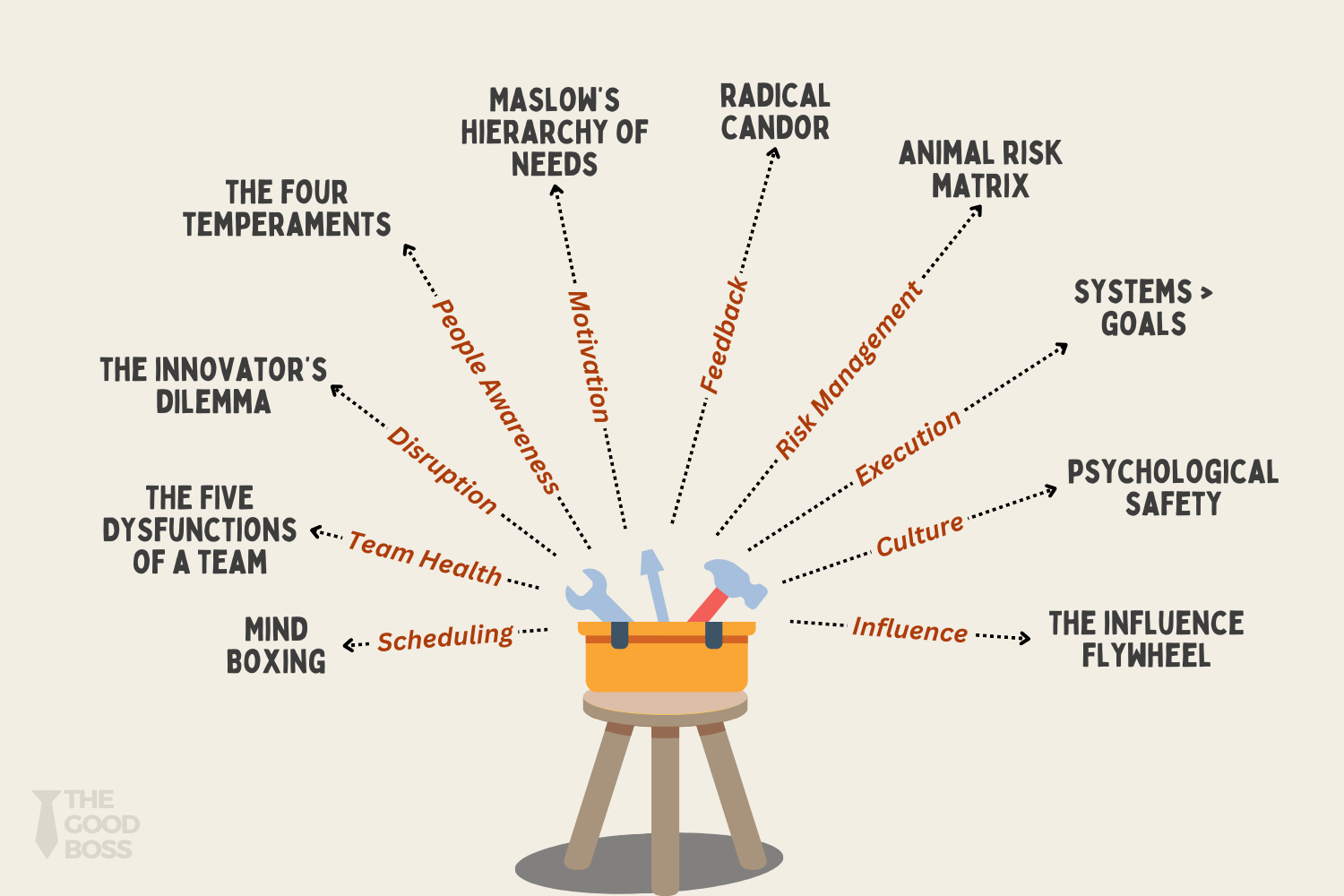
In this post, we discussed the 10 must-have tools in your leadership toolbox:
Mind-Boxing (Scheduling) — Schedule your priorities across People, Process, and Product to maximize your leadership impact
The Five Dysfunctions of a Team (Team Health) — Diagnose and fix hidden team breakdowns by building trust, healthy conflict, commitment, accountability, and results
The Innovator’s Dilemma (Disruption) — Spot disruption early and protect small bets before they disrupt you
The Four Temperaments (People Awareness) — Understand personality differences to lead, communicate, and collaborate more effectively
Maslow’s Hierarchy of Needs (Motivation) — Motivate and elevate your team by meeting foundational needs before pushing for vision
Radical Candor (Feedback) — Care personally while challenging directly to deliver honest, high-impact feedback
The Animal Risk Matrix (Risk Management) — Categorize risks by predictability and probability so you know what to address, mitigate, or prepare for
Systems > Goals (Execution) — Build repeatable systems and habits that drive results instead of relying on motivation
The Four Zones of Psychological Safety (Culture) — Balance safety and accountability to move your team into the high-performance learning zone
The Influence Flywheel (Influence without Authority) — Build credibility, connection, clarity, communication, and courage to grow influence without authority
Which one is your favorite? Drop your thoughts in the comments below! 👇
❤️ Found this helpful?
If you found this post helpful, please like and share it with other managers who can benefit from it, including your boss :) If you have any feedback, please drop your comment below - it helps me keep improving the content. Thank you!

This really is the ultimate toolkit for leaders! Excellent post.
Great post, Gaurav. In reviewing the various tools, I think that the characteristic that comes up the most is trust. So many things can't get done without that. Seems like something we all know, but amazing how many of the tools you discuss are built on it. Everyone should always keeps a copy of Lencioni's Five Dysfunctions on the desk.