

No matter how experienced you are as a manager, your brain is wired to save energy by taking shortcuts. That’s just how brains work, biologically.
Most of the time those shortcuts are useful, but sometimes they’re not, and they can cost you a good hire or a high-impact decision.
The biggest challenge I find is that these shortcuts “feel like” judgment, so we rarely catch them in the moment. We just call them “instinct” or a “gut call”, and move on.
Here are fifteen of these cognitive biases that I’ve seen in 20+ years leading teams, and how you can avoid them.
Cognitive Trap #1: The Ostrich Effect
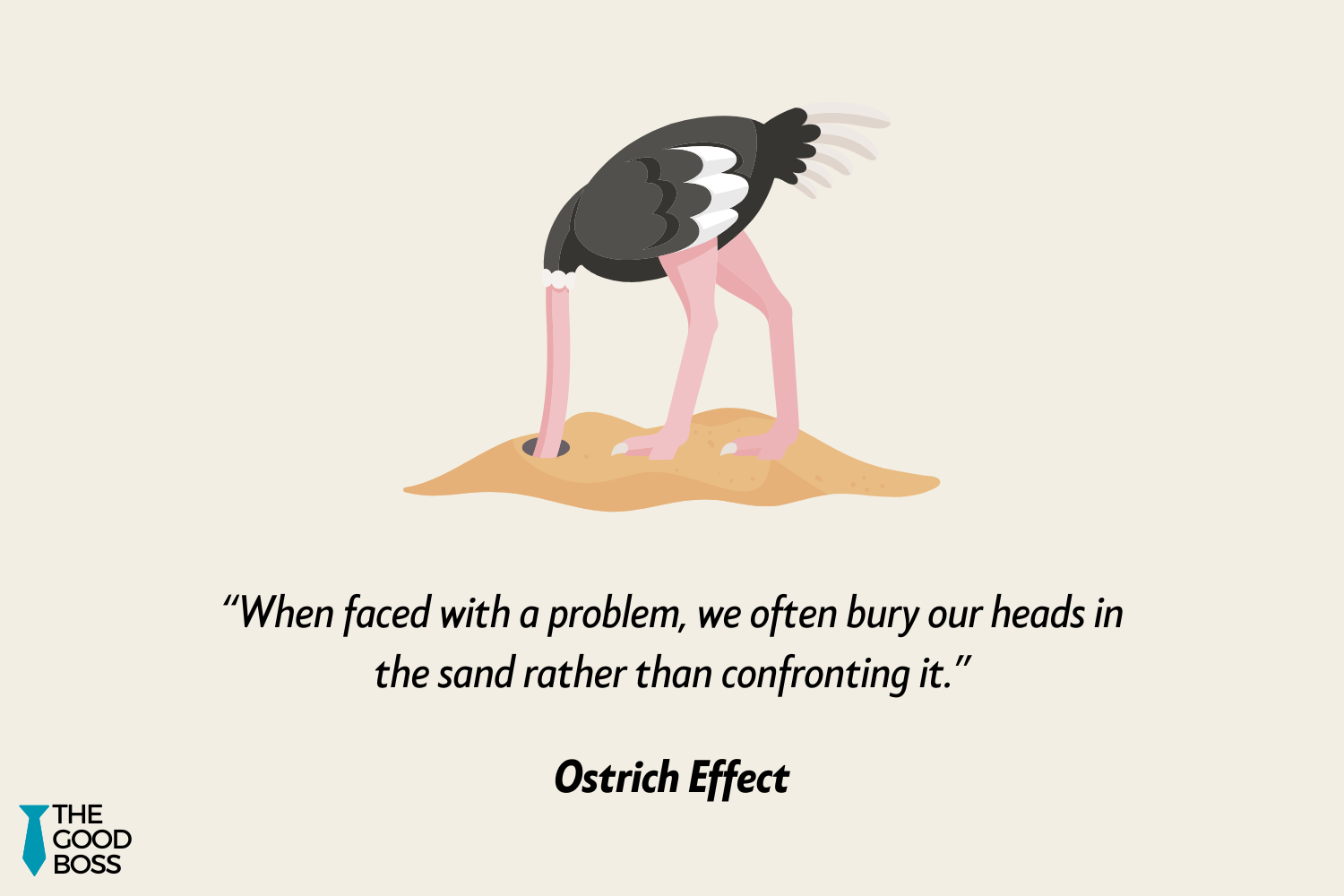
When things start going wrong, some leaders bury their head in the sand and hope the problem sorts itself out. That is the ostrich effect.
How this might be sabotaging your leadership
Let’s face it: avoiding a problem does not make it disappear. In fact, I would argue that it makes it more expensive.
Ironically, the ostrich effect keeps you from dealing with the things that actually need you even more:
A conflict brewing between two engineers on your team
A project that has slipped three times, yet you’re not paying attention
A budget conversation with your boss that you keep pushing to next quarter
By the time you finally face the situation, the damage is already done, and is much bigger than it needed to be.
I have fallen for this as well. Early on in my career as an engineering manager, one of my team members was clearly not delivering against what was expected out of his role. And what did I do? I told myself that “he was probably going through a rough patch” and that “he would pull out of it”.
Obviously, he didn’t, and his performance got worse to the point that it impacted the rest of the team as they had to pick up his work. Two other team members started to feel the pressure, and what was supposed to be one conversation turned into three conversations.
Avoiding the trap
Face issues head-on: The moment you notice a problem, deal with it there and then. My thumb rule is: early problems are small problems.
Create a feedback culture in your team: Check in regularly with your team, your projects, and your metrics so you’re aware of the issues early on rather than discovering them later when they’ve grown into bigger ones.
Get comfortable with hard conversations: Hard conversations are your job, not an add-on. If you avoid them, or delay them, you will lose trust and credibilty of your team. Period.
Frameworks to apply:


Cognitive Trap #2: Bandwagon Effect
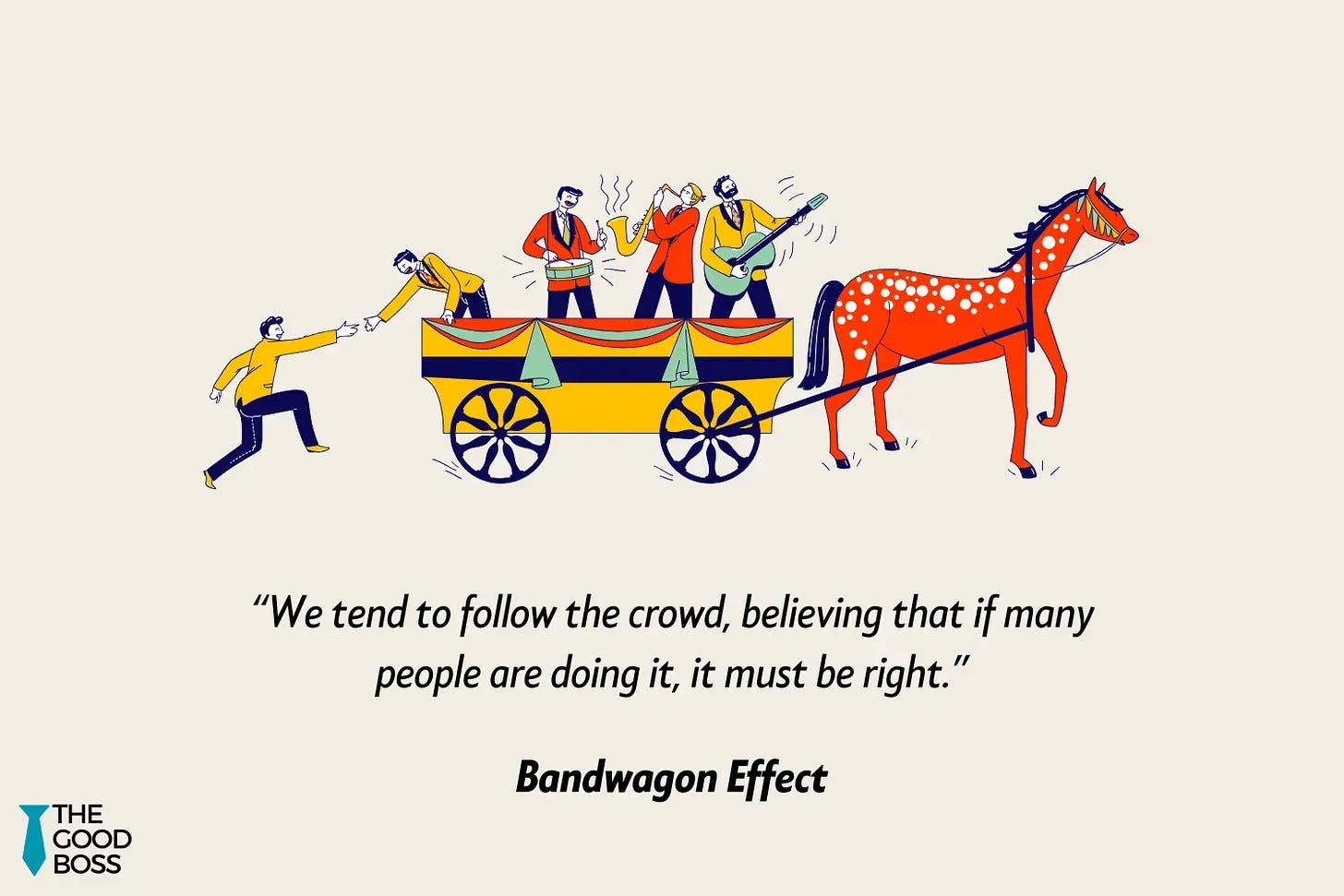
You align your behaviour with what the majority of people around you are doing, not necessarily with what you truly want to do. This is the bandwagon effect.
How the bandwagon effect impacts your leadership
When you fall for the bandwagon effect, you’re following the trends without making your own judgment of what you actually want or need. If you run towards what is popular without checking whether it fits in your situation, you will likely miss better options and end up solving a problem your team never had in the first place.
I have seen this play out many times across companies, and now especially with AI. You watch a few viral posts on YouTube or X about a new AI tool, maybe three companies you admire acrtually adopt it, and suddenly you are rolling it out in your team too. Nobody asked whether the thing it fixes is actually broken on your team.
Three ways to avoid the trap
Evaluate on the merit: Judge ideas on their merits and their fit for your situation, not their “popularity” or “virality”.
Encourage critical thinking: Build a culture where people are expected to question popular opinion. First Principles Thinking is a strong approach here (see deep-dive link below).
Encourage innovation and out-of-the-box thinking: Maybe the approach nobody is talking about is the one that fits your problem and your team needs to work on.
Frameworks to apply:


Cognitive Trap #3: Confirmation Bias
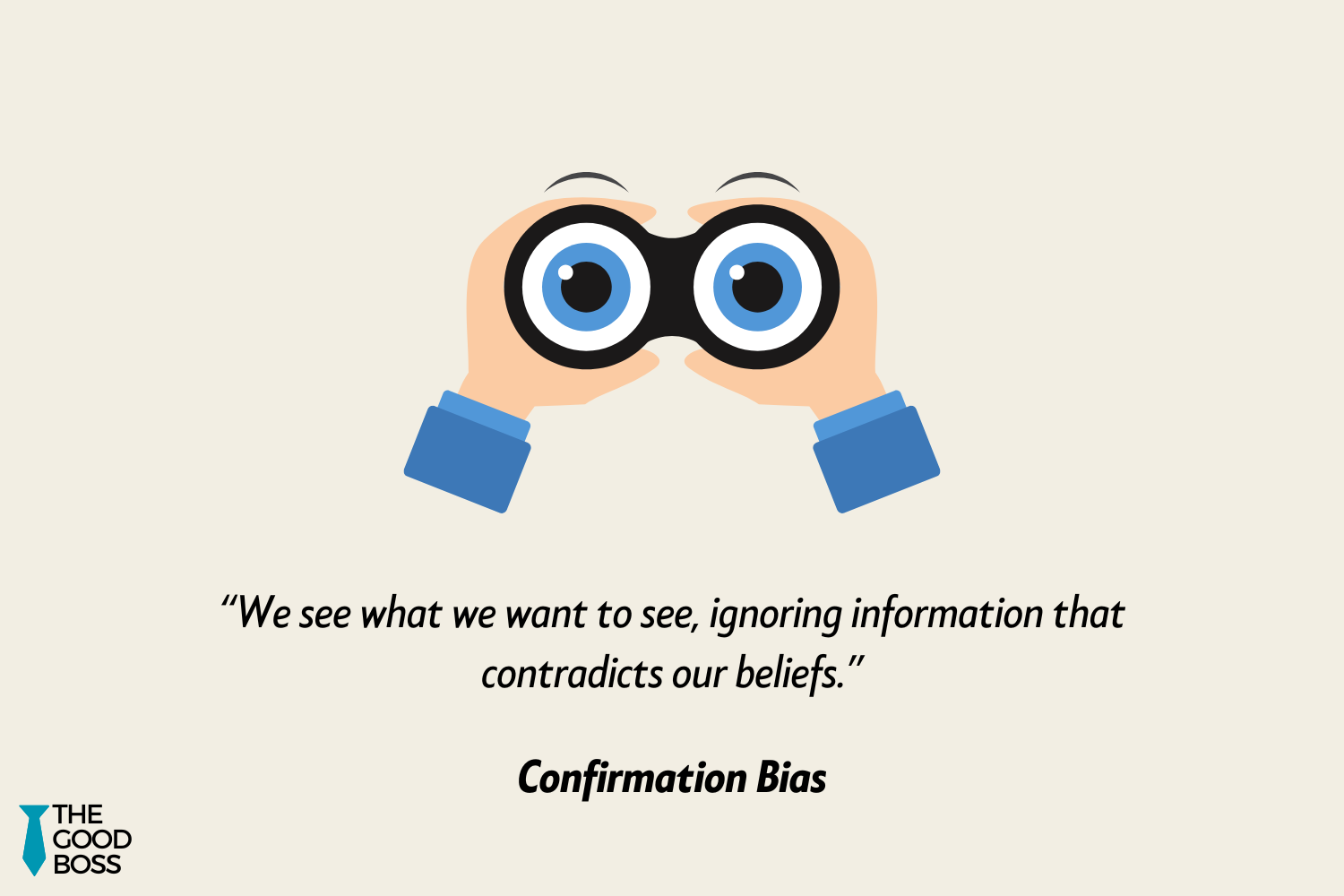
You go looking for information that supports what you already believe, and ignore anything that doesn’t. This is confirmation bias.
Impact of the confirmation bias
When you are falling for confirmation bias, you are not seeing the full picture. What you’re actually doing is collecting support for a conclusion you already reached in your mind. And this doesn’t stay hidden - your team sees it in your hiring decisions, promotion decisions, and every decision where you decided early and later selectively validated that decision.
Let’s say you have a pet project going, and you are convinced that it is going to be a great success. When your team presents the project status, you read the “green” status report closely, acknowledge and praise the team, and just skim past the ‘reds’ that were sitting a few slides later. That’s confirmation bias in action.
Here’s how you can avoid it
Go looking for the opposite: Think of this as the reverse confirmation bias. Before you decide, make yourself find the case against your position. Look for the devil’s advocate on your team (there’s usually one in every team) and have a healthy conversation with them.
Build psychological safety: Your team members and stakeholders will only tell you the thing you do not want to hear if it is safe to do that.
Use inversion: Instead of asking how it will succeed, ask how it would fail. That flip is the Inversion Principle - deep-dive link below.
Frameworks to apply:


Cognitive Trap #4: Anchoring Bias
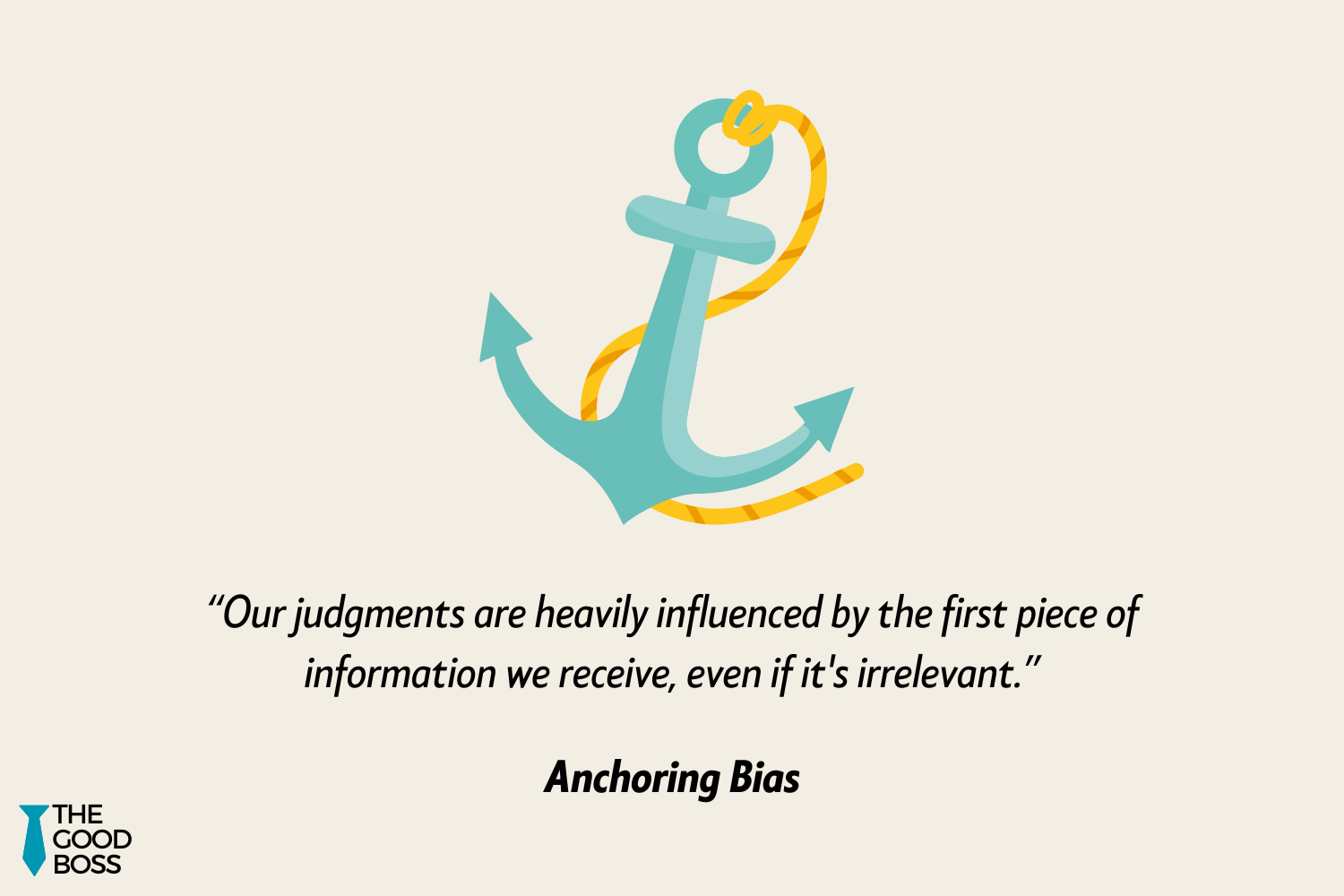
Think about the last big decision you made. Whatever number or idea you heard first probably influenced everything that came after. That is anchoring bias.
How anchoring impacts your leadership
Anchoring is very common in pricing pages or marketing campaigns. When you anchor yourself, you skew your decision towards a starting point or number that may have nothing to do with the decision at all.
I’ve seen this play out many times: Someone gives you a rough estimate for a project in a hallway conversation, off the top of his head. A few weeks later that estimate (or should I say, guesstimate) has found itself in the formal plan, and in a deck that you’re presenting to the VP, and nobody can remember that it started as a guess in the first place.
How to avoid it
Don’t rush your decision: Take time to gather other perspectives, and then decide. System 2 thinking is the right mode here (see my deep-dive link below).
Reframe the decision: Look for the alternatives and get a broader view.
Get a second opinion: Bring in someone who was not in the room when the first number was dropped. This will likely remove the effect of the bias.
Frameworks to apply:


Cognitive Trap #5: Sunk Cost Fallacy
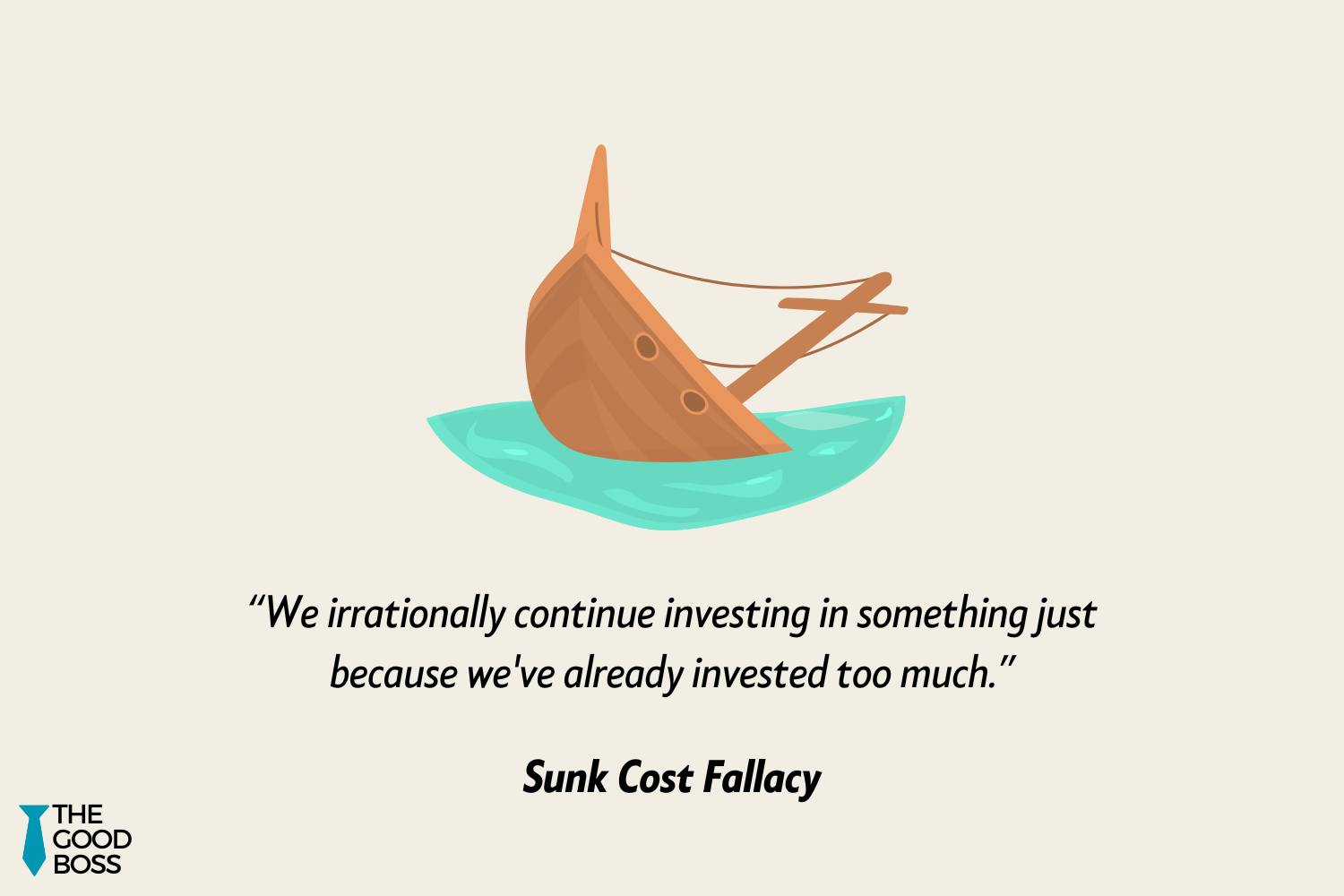
You have put time, money, and effort into something, so you keep going even though it’s clearly not working. That is the sunk cost fallacy.
The “cost” of sunk cost on your leadership
As a manager, part of your job is to know when to pull the plug. The sunk cost fallacy makes you hesitate at exactly that moment, and when you fall for it, you make the wrong decision.
I remember once a manager had her team work for eight months on a new product, and very few customers adopted or provided any feedback. The manager decided to continue to add more features to it for another quarter, because killing it felt like a failure. And what happened to it? They ended up killing it anyway later, with twelve months gone instead of eight.
Two ways to avoid the trap
Focus on future value: Ask yourself what the best decision is from here on, and ignore what is already spent. The Impact-Effort matrix helps you sort this out (see deep-dive link below).
Set clear “exit points”: Before you start, identify what would make you stop. Exit criteria written in advance are much easier to follow than exiting under pressure later on.
Frameworks to apply:


Cognitive Trap #6: Availability Heuristic
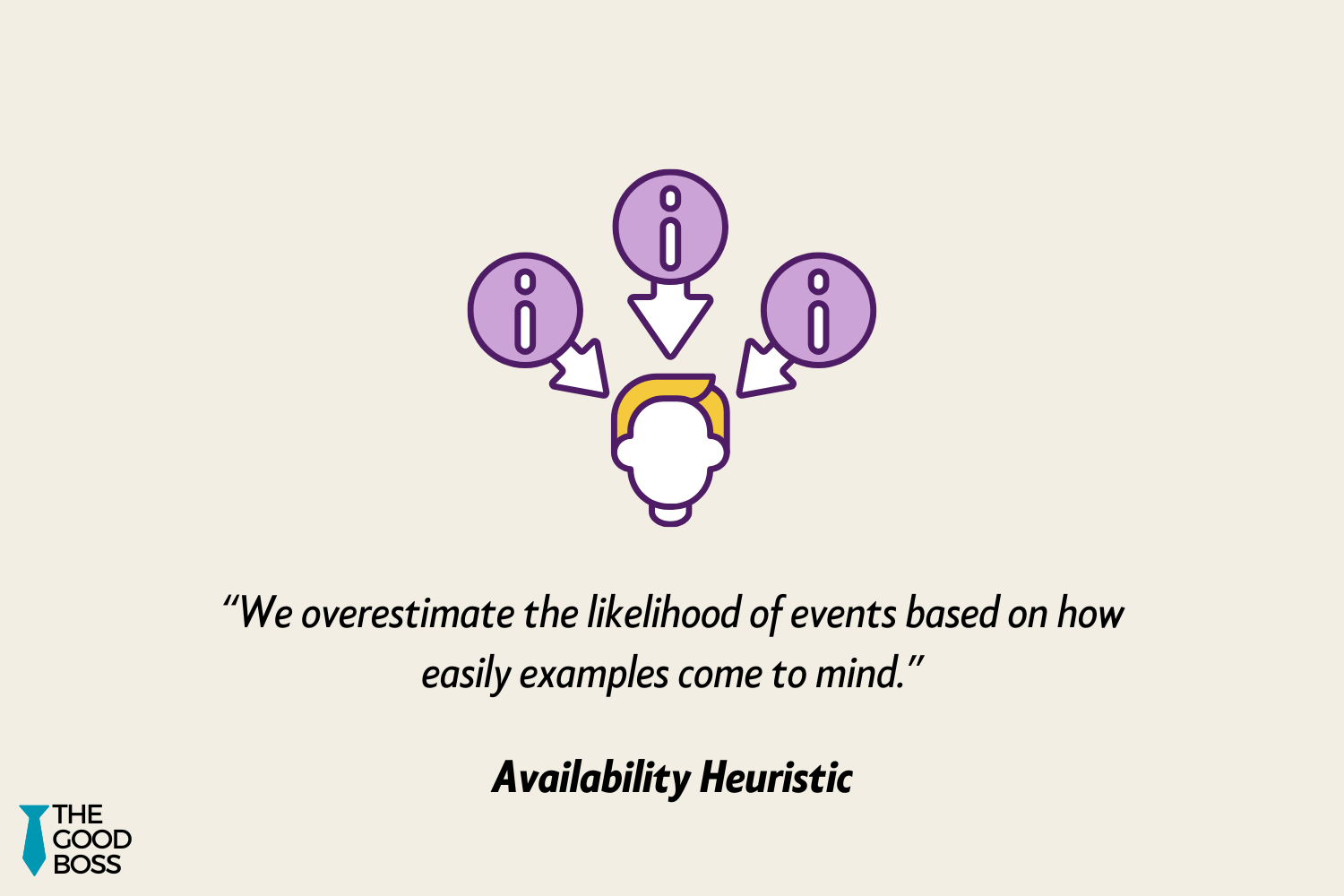
The availability heuristic is the shortcut where you judge a situation by whatever examples come to your mind first. In leadership, that means you overvalue things because they were recent, dramatic, or just easy to remember.
How this can sabotage your leadership
This bias plays out by diverting your attention to what is vivid from what is important.
Let’s say a vocal member of your team meets you in a 1:1 in the morning, and complains about something that catches your attention. That complaint sticks in your head, and when you go to your team meeting in the afternoon, you’re suddenly responding to everyone with that frame, as if that is a widespread issue.
Ways of dealing with the bias
Use data, not anecdotes: Look for the actual numbers and hard evidence before you decide how big something is.
Review long-term trends: Zoom out over quarters, not weeks. Most “big issues” will likely drop out of your view once you look at the bigger picture.
Frameworks to apply:


Cognitive Trap #7: Endowment Effect
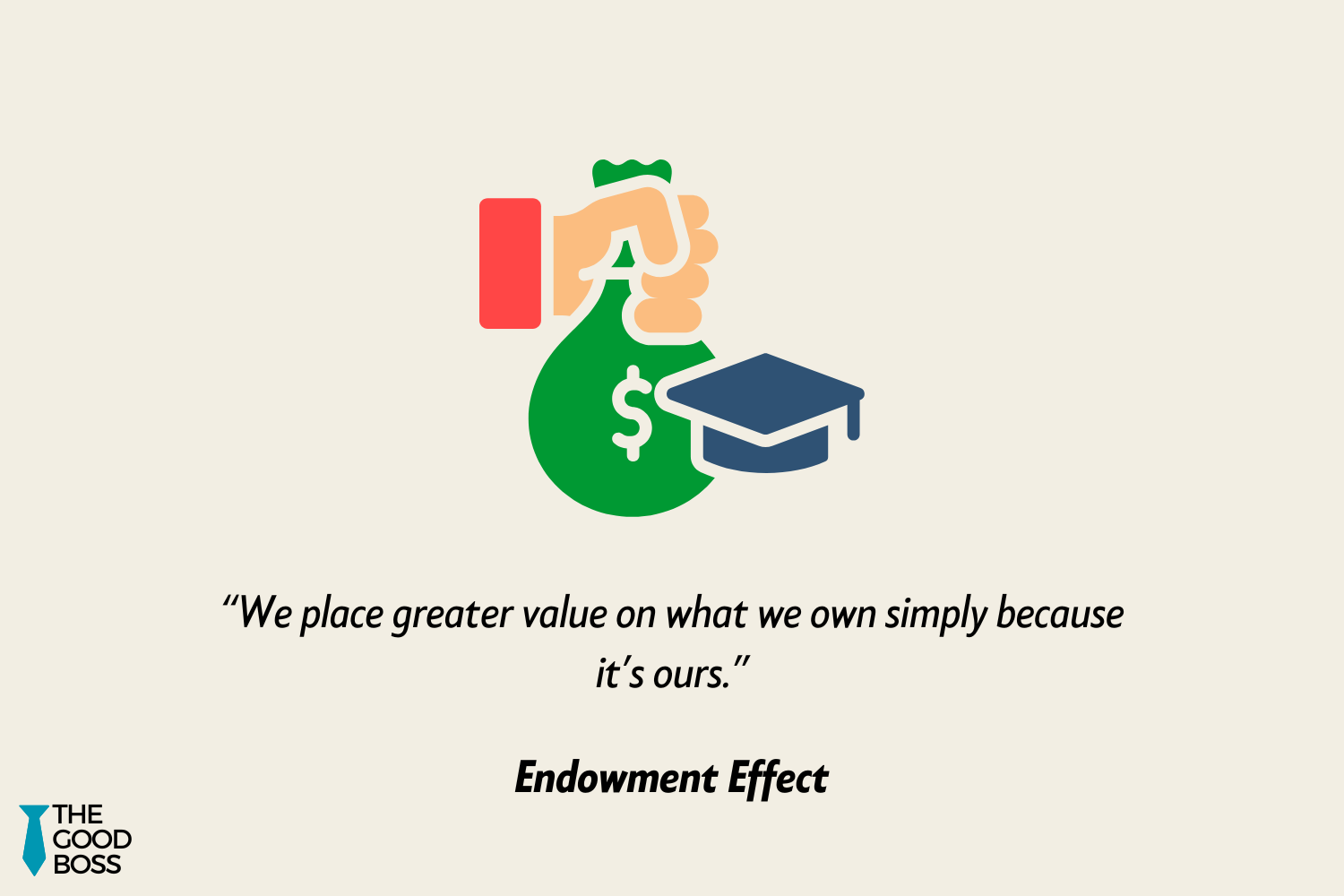
You value things more highly simply because they are yours. This is the endowment effect.
The subtle ways this can impact your leadership
In a nutshell, the endowment effect makes you defensive about your own work. This comes from basic human nature: if you are attached to a process because you designed it, you will have a tendency to resist a better version someone else proposes.
I’ve also seen this show up with people and relationships. When a manager is closer to a particular individual on the team (maybe because of their tenure, or because they’re a high performer), he may have a tendency to overlook bad behavior by that person, while have a very different response to another person they’re not as close to.
Ways you can avoid it
Get outside input: Ask stakeholders who have no stake in the thing you built for a more honest, unbiased opinion.
Be open to change: Make it normal for your team to improve on your work in front of you - this tells your team that you’re not emotionally attached to your work and they shouldn’t be either.
Frameworks to apply:

Cognitive Trap #8: Groupthink
You have a strong, high-performing team, but somehow everyone in the room agrees with everyone else. That is called groupthink.
How groupthink sabotages your leadership
Groupthink, by its very nature, suppresses the counterargument or the opposing views from even showing up in your meetings.
The tell-tale signs of groupthink are:
Instead of pressure-testing each other, everyone falls into agreement quickly.
Nobody calls out the risks or challenges.
Nobody shares “better” options
Let’s say you are in a planning meeting and propose an approach based on your point of view. Three people in the meeting agree to your proposal, and nobody else questions it because they think it will slow things down or make them feel awkward. Your approach may well be fine, but you will never know because nobody checked.
Two ways to avoid the trap
Encourage disagreement: Say out loud that disagreement is expected, and remember to reward it when it happens.
Assign a devil’s advocate: Give one person the job of playing the devil’s advocate and question the popular approach.
Frameworks to apply:

Cognitive Trap #9: Halo Effect
Someone in your team impresses you once, and after that everything they do looks “good”. This is the halo effect.
How the halo effect shows up in leadership
The halo effect is very common in leadership, and in the corporate environment, this is generally called favoritism.
Let’s say someone on your team ran a difficult migration successfully two years ago, and since then that person has been your “go-to person” for everything. Good so far, but when that same person misses a deadline today, you tend to overlook it, but if someone else on the team does the same, you mark it in their performance notes. That’s the impact of the halo effect.
How you can deal with the trap
Focus on current behaviours: Assess people on what they are doing on the current project, not on a highlight from two years ago.
Separate likeable from effective: Some people are indeed easy to work with, but that doesn’t make them effective for the job.
Frameworks to apply:


Cognitive Trap #10: Recency Bias
Recency bias is the tendency to put more weight on what just happened compared to everything that happened before it.
Impact of the recency bias
In a nutshell, the recency bias makes the last two weeks “stand in” for the whole year.
I remember once, one of my team members delivered well above expectations for nine months of the year, and then he had a bad sprint in October. When I started the annual performance calibration process in November, his sprint performance was overshadowing everything else he had delivered in the year, and I had to work really hard not to let that happen.
A couple of ways to deal with it
Look at long-term trends: Zoom out and look at the longer-term picture. Mind Boxing is a framework I built to help balance short-term reaction against longer-term thinking (deep-dive link below).
Set review checkpoints: I like to do quarterly reviews so it provides regular points of assessment vs a single check at the end of the year.
Frameworks to apply:


Cognitive Trap #11: The Dunning-Kruger Effect
We have all met someone who is completely confident about himself in an area where he actually knows very little. That is the Dunning-Kruger effect.
The dunning-kruger effect in action
Dunning-Kruger is one of those suble traps that hides your own gaps from you. You make calls on false confidence and never uncover your blind spots.
And if you don’t pay attention to it, it can also distort how you assess your team members. You may end up promoting those who are confident, even when they’re less impactful than others.
Ways to handle the bias
Know your blind spots: Map your gaps by asking for feedback from those who work with you. The Johari Window is an excellent framework to identify those blind spots (deep-dive link below).
Promote based on impact and results, not confidence or visibility: Confidence is not the same as competence. Learn to dig deeper to tell the difference before you make any promotion decision. Deep-dive into the Dunning-Kruger trap below.
Frameworks to apply:


Cognitive Trap #12: Projection Bias
You assume other people think and feel the way you do, even when they don’t. That is projection bias.
Projection bias in action
Projection bias plays out in very suble ways, and that’s why I think it’s also quite dangerous.
When you fall for the projection bias, you assume that you already know what someone wants, so you never ask, and then end up making decisions that weren’t needed or correct in the first place.
How you can avoid it
Listen actively: Check in with people about what they want, not just what they are working on. Your team member working on a project doesn’t automatically imply that they like working on that project.
Ask for feedback: Test your assumptions against what others tell you, not just what you assumed to be true.
Frameworks to apply:


Cognitive Trap #13: Self-Serving Bias
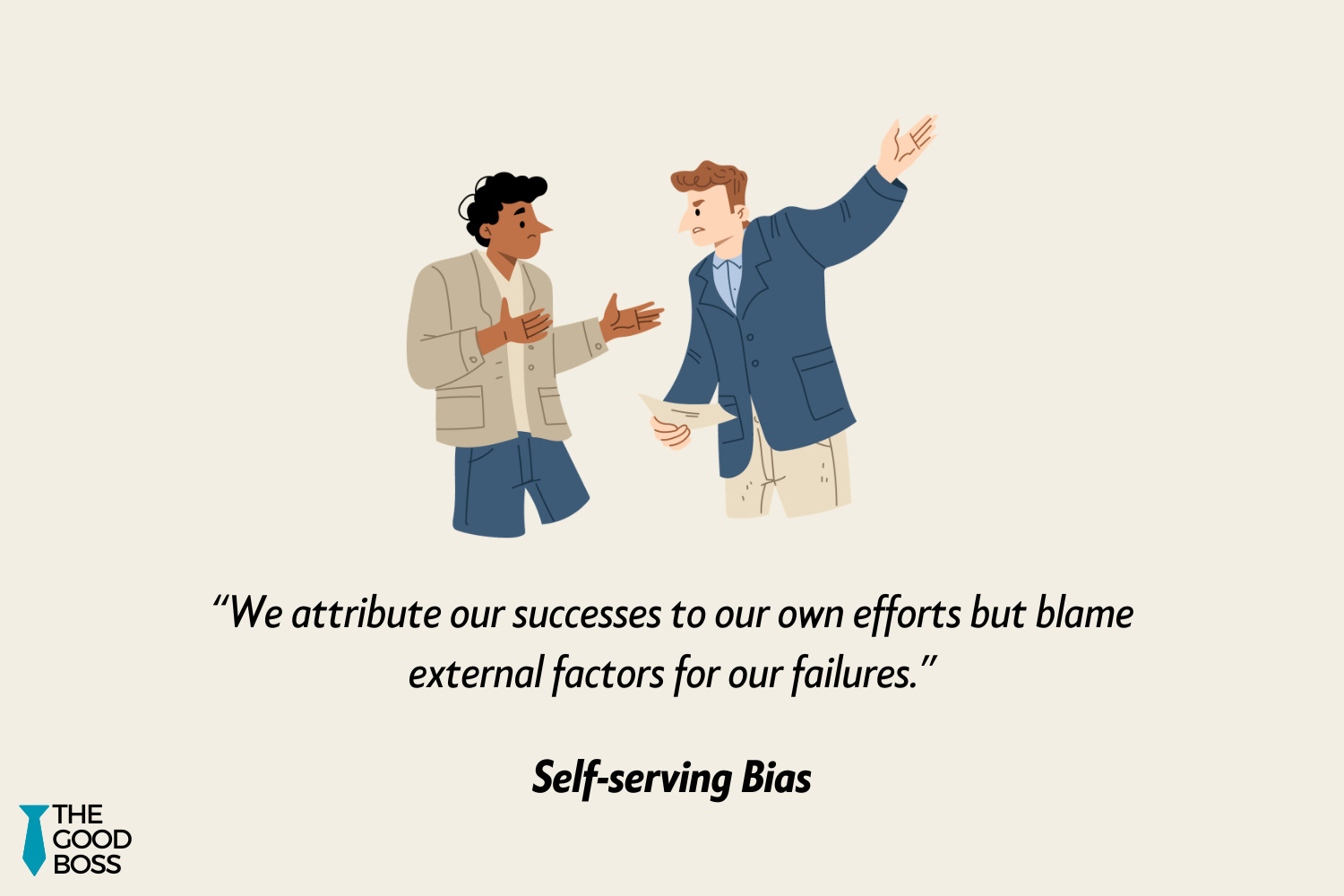
You credit your successes to your own skill and blame your failures on circumstances. This is the self-serving bias.
How self-serving impacts your role as a leader
Self-serving bias, by its very nature, breaks your ability to accurately assess yourself. And when you can’t assess yourself, you can’t improve.
In leadership, it looks like this: when a project is successful, you talk about the decisions you made, the teams you coached, the impact you had on the project, etc. But when it gets delayed, you suddenly turn your attention to external factors, and start talking about the market, the timeline, and the dependency on the “other team” that led to the delays.
And when you do this, your team notices this pattern much faster than you think. It teaches them that credit flows up and blame flows down.
Avoiding the self-serving bias
Have a servant leadership mindset: Look at your role as serving your team, not owning your team by applying the Servant Leadership mindset. Check out the deep-dive link to this framework below.
Ask for honest feedback: Make it easy for people to tell you where you got it wrong on a regular basis.
Frameworks to apply:


Cognitive Trap #14: Illusion of Control
You overestimate how much of the outcome you actually control. This is the illusion of control.
I wrote about this in Confessions of a Middle Manager: Secrets, Regrets and Guilty Pleasures (linked below), where the gap between how much control managers think they have and how much they really have is the whole story.
How middle managers can get trapped
The illusion of control, in effect, produces risky decisions, and you end up making plans that have little or no contingency.
If you believe you can fully control your team’s output and results, you may not pay attention to the brewing tension between team members, the issues with the CI pipeline, or even the lack of engagement in the team. And all those things will likely result in a decline in your team’s output and results eventually.
Avoiding the illusion
Acknowledge what you can’t control: Name the factors you can’t control, then plan around them instead of ignoring them.
Manage risk deliberately: Have a real approach to spotting and mitigating risk. The Animal Risk Matrix lays out a structured approach to manage risk (deep-dive link below).
Frameworks to apply:


Cognitive Trap #15: Hindsight Bias
Once you know how something turned out, it starts to feel like it was always going to turn out that way. This is hindsight bias.
When you get trapped in hindsight
Hindsight bias makes you judge your or others’ past decisions more critically than they deserve.
For example, when a project fails, it may look obvious in hindsight. And you may conclude that you “should have seen it coming earlier”. But you’re ignoring the fact that back then you didn’t have all the information you have now. When you judge an old decision with new information, it actually doesn’t help you to decide better next time.
How you can avoid it
Document decisions: Write down what you knew and what you assumed at the time, not now.
Use the Premortem Technique: A structured way to assess risk on a project before it happens is the Premortem Technique, which I discuss in a deep-dive (link below).
Frameworks to apply:


In Summary: Avoiding the Cognitive Traps
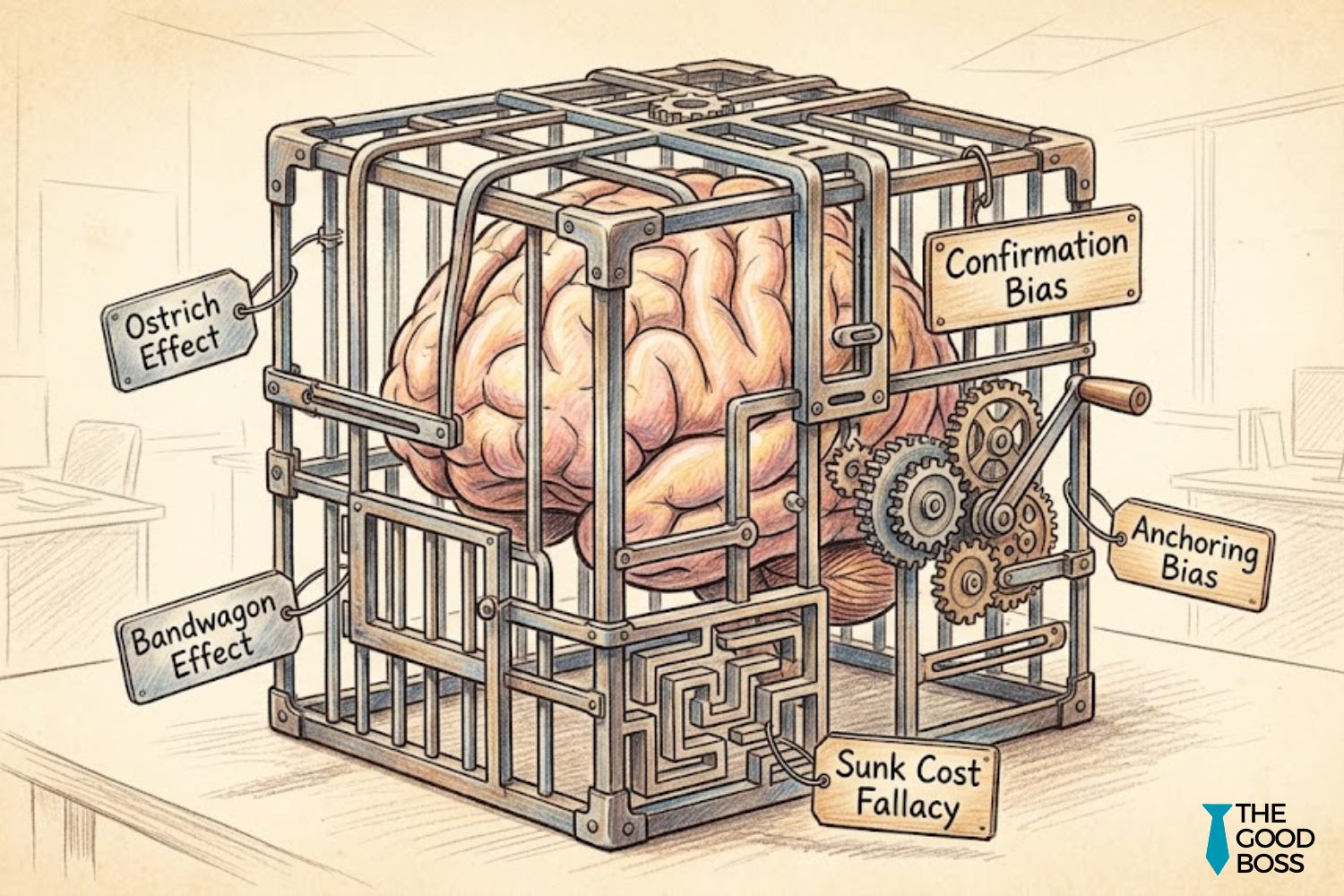
Here’s the full list of cognitive traps we reviewed in this post, for your quick reference:
The Ostrich Effect: you avoid the problem because facing it is uncomfortable, and it gets bigger while you wait.
Bandwagon Effect: you adopt what is popular without checking whether it’s really needed.
Confirmation Bias: you collect proof for the conclusion you already reached in your mind.
Anchoring Bias: the first number you hear pulls every number after it, subconsciously.
Sunk Cost Fallacy: you keep investing resources and energy because of what you already spent, not because of what you will get from here on.
Availability Heuristic: the most memorable example wins, even when it is not the most common one.
Endowment Effect: you overvalue the process, the idea, or the person because it is yours, not because it’s truly valuable.
Groupthink: everyone agrees fast, and the argument or opposing views that could have improved the decision never happen.
Halo Effect: one strong impression by a person changes and influences how you judge everything else that person does.
Recency Bias: what you see happen in the last two weeks influences how you think of the entire year that just passed.
The Dunning-Kruger Effect: you are most confident in the areas where you know the least.
Projection Bias: you assume your team wants what you want, so you never ask.
Self-Serving Bias: you take credit for the wins, and attribute the losses to the circumstances or external factors.
Illusion of Control: you build a plan assuming you have full control over things you actually don’t.
Hindsight Bias: once you know the outcome, it feels like it was always obvious.
💬 Which of the traps above have you found yourself or your team fall for most often? Drop it in the comments below!
❤️ Found this helpful?
If you found this post helpful, please like and share it with other managers who can benefit from it, including your boss :) If you have any feedback, please drop your comment below - it helps me keep improving the content. Thank you!
💬 Join the conversations
Join The Good Boss community if you’re tired of leadership content that sounds good but doesn’t work when you’re actually in the room.
No performative LinkedIn BS. Just real stuff.

Guilty of Anchoring Bias. But it's usually around a big creative idea that I have, that might work in the moment, but when the moment passes, I have trouble judging my idea against the new circumstances. I gotta work on it, now that it has a label.
What a great list. The outline of a college level course in “The Cognitive Affect on Leadership”